How Germany's Cannabis Club Model Actually Works
On April 1, 2024, Germany did something no other large European economy had done: it legalized cannabis for adult use, but skipped the dispensary storefront entirely. There's no German equivalent of a Colorado pot shop or an Amsterdam coffeeshop with a counter and a menu. Instead, the country built its entire legal supply chain around member-owned, nonprofit growing collectives called Anbauvereinigungen -- Cannabis Clubs, in the shorthand most people use.
It's an unusual middle path, closer to Uruguay's club model than to anything California or Canada tried, and it was designed specifically to avoid the appearance of commercial cannabis marketing. Understanding how these clubs actually operate -- who can join, what they can grow, and where the real friction points are -- says a lot about where German and EU drug policy is headed next.
The Two-Pillar Law

Photo by Christian Wasserfallen via Pexels.
Germany's Cannabisgesetz (CanG) split legalization into two pillars. Pillar one, which took effect in April 2024, decriminalized possession and personal cultivation: adults 18 and over can carry up to 25 grams in public, keep up to 50 grams of dried cannabis at home, and grow up to three plants themselves. Pillar one also created the club system.
Pillar two was supposed to introduce licensed, commercial pilot sales through regulated shops in select regions, modeled loosely on Swiss trial programs. That piece has stalled repeatedly amid coalition politics and EU legal concerns, which is part of why the club model has become, for now, the only legal way to get cannabis in Germany outside of growing your own.
What an Anbauvereinigung Actually Is

Photo by Adrian Infernus via Unsplash.
An Anbauvereinigung is a registered nonprofit association -- legally similar to a sports club or a community garden association -- that exists solely to cultivate cannabis and distribute it to its own members. Clubs must incorporate formally, appoint a managing board, and register with regional authorities, who then conduct background checks on the people running it. Directors can't have relevant criminal convictions, and clubs must submit to inspections of their cultivation sites, security measures, and record-keeping.
Membership caps out at 500 people per club, and a person can only belong to one club at a time. Clubs can't advertise, can't operate near schools or playgrounds (a minimum distance rule applies), and can't let anyone under 18 anywhere near the premises. There's also a one-year residency requirement for joining -- new members typically need to have lived in Germany for at least six months before they can sign up, a measure aimed squarely at preventing cannabis tourism.
Growing Limits and the 25-Gram Ceiling
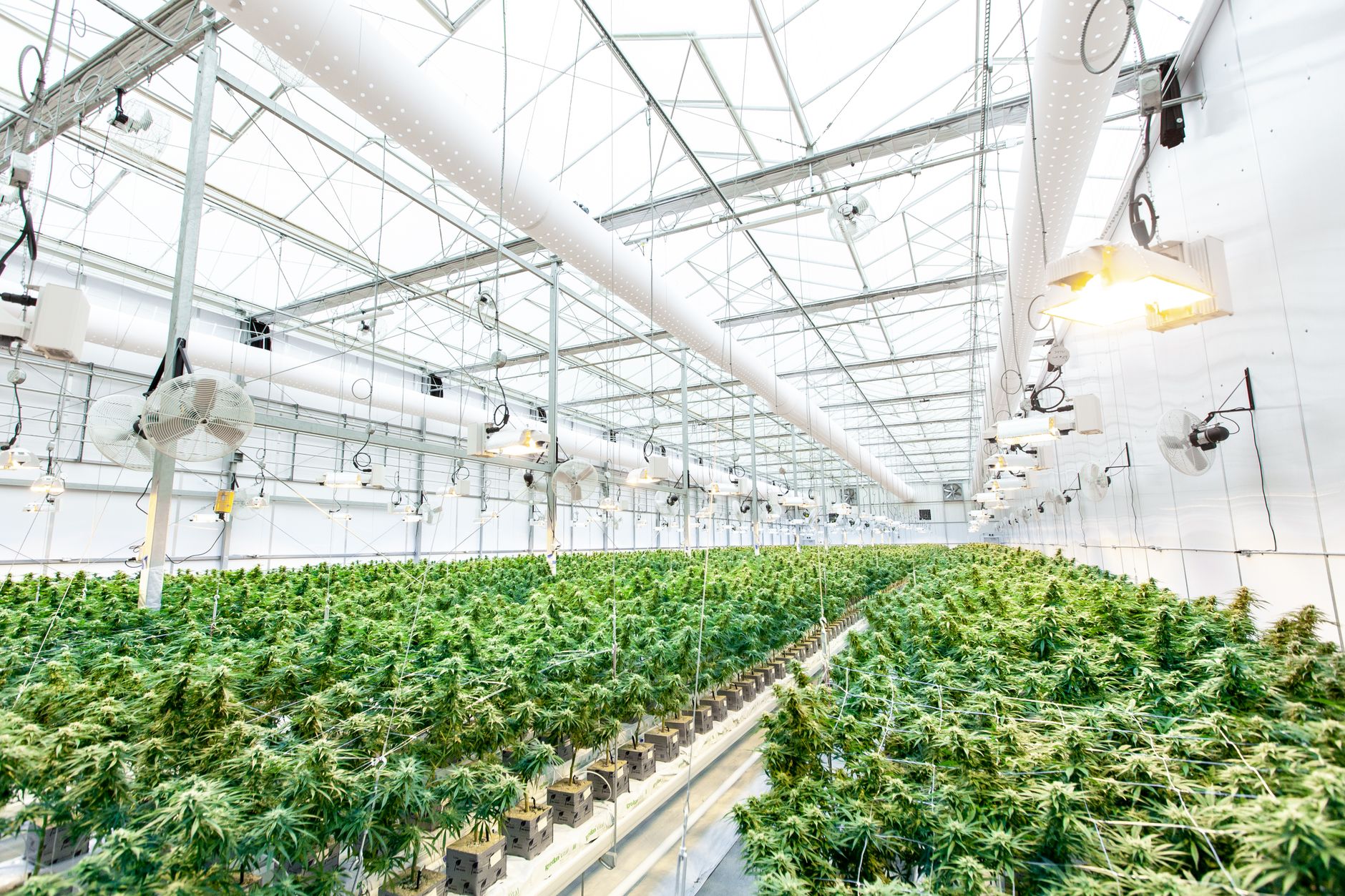
Photo by Richard T via Pexels.
Clubs are capped at cultivating enough to serve their own membership -- no exporting product, no selling to non-members, no wholesale relationships with other clubs. Each member is limited to 25 grams per day and 50 grams per month, dropping to 30 grams per month for members under 21, who also face a THC potency cap intended to reduce risk for younger brains still developing.
Because clubs can't sell to the public and can't operate as businesses in the traditional sense, they cover costs through membership fees rather than per-gram pricing in the retail sense -- though in practice members do pay something roughly tied to what they take home, calculated to cover cultivation costs, rent, and utilities rather than to generate profit. No club is allowed to turn a profit; any surplus has to go back into operations. That nonprofit structure is the legal backbone that lets Germany call this something other than commercial sales, which matters under both domestic law and Germany's international treaty obligations.
The Licensing Bottleneck
Photo by Wolfgang Weiser via Pexels.
The law took effect nationally, but licensing runs through Germany's 16 states, and the pace has varied enormously. Bavaria, unsurprisingly given its conservative CSU-led government, has been notably slow and skeptical, while states like Berlin, North Rhine-Westphalia, and parts of the former East have moved faster to approve applications. Some clubs waited eight months or longer just to get their cultivation license approved after incorporating, dealing with fire-safety inspections, odor-control requirements, and security audits (reinforced doors, CCTV, alarm systems) on top of the paperwork.
By the end of 2024, several hundred clubs had applied nationwide, but the number actually up and growing product remained a fraction of that -- a bottleneck German cannabis advocates have complained about publicly, arguing the bureaucratic load undercuts the law's stated goal of pushing people out of the black market quickly.
Why Germany Chose Clubs Over Shops

Photo by Yunus Erdogdu via Pexels.
The club structure wasn't an accident of caution -- it was a legal workaround. Germany is a signatory to the UN Single Convention on Narcotic Drugs and sits inside the EU, both of which constrain straightforward commercial retail sales of cannabis. Framing legal access as nonprofit, member-to-member distribution within a closed association gave German lawmakers, particularly then-Health Minister Karl Lauterbach, a way to argue the law complies with international obligations while still delivering on a coalition campaign promise.
There's a domestic political logic too. The governing coalition wanted to avoid images of storefront weed shops and billboard-style advertising that critics associate with U.S. state markets. Clubs keep cannabis visually and socially low-key -- it's produced in unmarked buildings, distributed to vetted members, and never marketed to the general public. Whether that satisfies Germany's neighbors and the EU's own drug-control apparatus long-term is still being tested; several member states have watched the rollout closely, and any future EU-level friction could still shape how far pillar two ever gets to go.
What's notable a year and change in is how unglamorous the whole system is by design. There's no green-cross signage, no dispensary aesthetic, nothing resembling the retail experience legalization produced in North America. It's paperwork, inspections, membership rosters, and a strict per-member gram count -- bureaucratic by nature, which is exactly the point for a government trying to thread a needle between reform and treaty compliance.
Whether Germany ever gets pillar two's commercial pilot shops off the ground will say a lot about the club model's long-term staying power. If licensed retail eventually rolls out in cities like Frankfurt or Hannover, the clubs may end up looking like a transitional structure rather than the permanent backbone of German cannabis access. For now, though, if you want legal weed in Germany, you don't walk into a shop -- you join a club, wait for your allotment, and grow your own patience along with it.
Photo by Pavel Danilyuk via Pexels.