Best Tent Size and Airflow Setup for 4 Plants
Four plants is the sweet spot for a lot of home growers — enough to run a real perpetual harvest or a decent single pull, but small enough to hide in a spare closet or corner of a garage. The problem is that most people size their tent off the plant count alone and forget that the tent is really a climate box. Get the footprint wrong or skimp on airflow, and you'll spend the next four months fighting humidity spikes, hot spots, and stretched, floppy growth instead of just growing weed.
This is the setup I'd actually build if someone handed me four seedlings and a budget today — real numbers on tent size, fan CFM, ducting, and canopy management, not vague "get a good exhaust fan" advice.
Picking the Right Tent Footprint

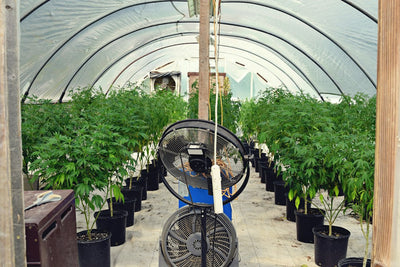
Photo by 2H Media via Unsplash.
For four plants grown to a normal indoor size — think 2-3 foot canopy spread each after topping or a modest LST job — a 4x4 (48"x48") tent is the standard answer, and for good reason. That gives you roughly 16 square feet of floor space, or about 4 square feet per plant, which is enough room to keep individual canopies from merging into one solid mat before you can manage it with training.
If you're planning to run four plants with minimal training (topped once, maybe some LST, no serious defoliation schedule) and want big single-cola-dominant colas, size up to a 5x5 (25 sq ft). That's especially true for sativa-leaning genetics that stretch hard in the first 3 weeks of flower — I've had certain sativa-dominant hybrids nearly double in height during stretch, and a cramped 4x4 turns that into a light-burn problem fast.
Go smaller than 4x4 — a 3x3 or 2x4 — and four plants gets tight unless you're running a scrog net or heavy topping to keep each plant under 18 inches wide. It's doable, but you're adding training work to compensate for square footage you don't have. Height matters too: a 4x4 tent in the common 80" height gives you room for a full-size 4-inch inline fan, ducting, and a light with enough hanging distance without your plants kissing the LEDs. If your ceiling allows it, the 84"-96" tall versions are worth the extra cost — they buy you flexibility for stretch without having to bend main colas sideways in week 3.
Calculating Exhaust Fan CFM for a 4x4 or 5x5

Photo by Adrien Olichon via Pexels.
This is where most first-time growers guess, and guessing is how you end up with a fan that's either too weak to control heat or so strong it's ripping moisture out of the air and stressing your plants. The math isn't hard.
Take your tent's volume in cubic feet, divide by the minutes you want for a full air exchange (aim for 1-3 minutes), then subtract for filter and duct restriction. For a 4x4x80" tent: 4 x 4 x 6.67 = about 107 cubic feet. At a 2-minute exchange rate, that's roughly 54 CFM of bare minimum air movement — but that number is deceptively low because it ignores your grow light's heat load and the resistance of a carbon filter and ducting, which typically costs you 25-35% of a fan's rated CFM.
In practice, for a 4x4 with a single 400-600W LED (or equivalent HPS), I run a 4-inch inline fan rated around 190-220 CFM, filtered and ducted, with the fan on a speed controller so I'm not maxing it out 24/7. For a 5x5 tent with the same lighting, bump to a 6-inch fan in the 300-350 CFM range. If you're running two full-spectrum LED bars pushing serious wattage (anything north of 650W actual draw) in a 4x4, size up to a 6-inch fan too — the extra ducting resistance from a bigger filter is worth it once heat becomes the limiting factor rather than CO2 exchange.
Intake, Ducting, and Negative Pressure
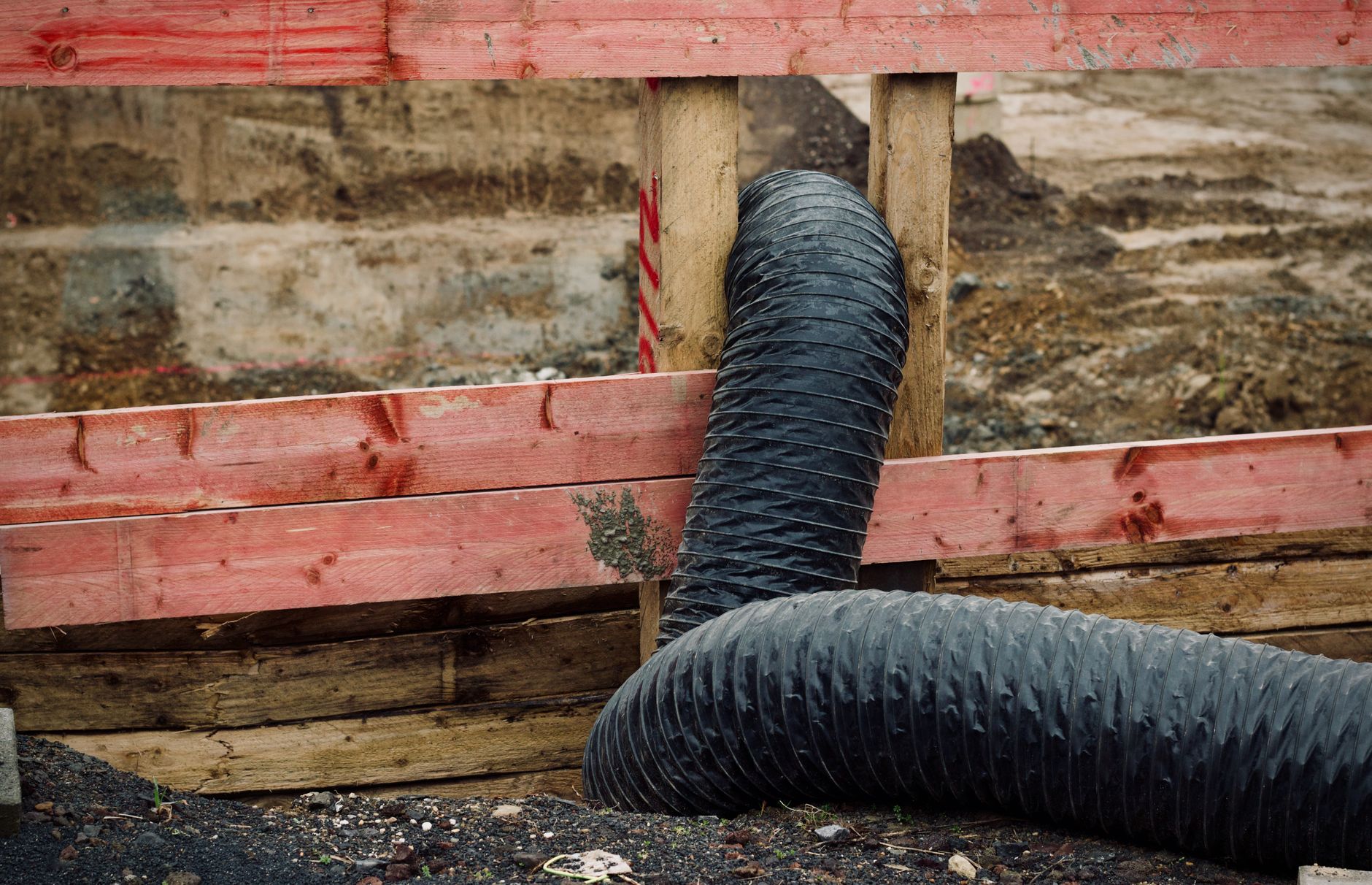
Photo by Peter Dyllong via Pexels.
An exhaust fan without a matched intake path just makes your tent walls suck in against the frame — you'll see the fabric bow inward, which actually tells you something useful: it means you've got negative pressure, which is what you want so odor and stray moisture don't push out through seams. But if there's no dedicated intake, that negative pressure comes from starving the fan, and CFM output drops even if the fan is technically running at full speed.
Passive intake (just leaving a lower vent flap open) works fine for smaller setups, but once you're running 190+ CFM exhaust, I'd add a small passive intake port at minimum — an 8-10 inch cut with bug mesh — sized larger than your exhaust duct diameter so it's not the bottleneck. Some growers add a low-speed intake fan too, particularly in cold basements where make-up air needs slight warming or filtering first.
Duct length and bends matter more than people expect. Every 90-degree elbow in flexible ducting costs you roughly 5-10 CFM of effective flow, and cheap crinkled ducting is worse than smooth-wall for the same reason — turbulence. Keep total duct run under 15-20 feet where possible, use the fewest bends you can manage, and if you're venting through a wall or into another room, upsize the duct diameter one size over the fan's port rather than matching it exactly. A 6-inch fan choked into 10 feet of 4-inch flex duct will underperform badly compared to its rated spec.
Placing Circulation Fans Inside the Canopy

Photo by Enrique Zafra via Pexels.
Exhaust and intake move air through the tent; circulation fans are what actually keep your canopy healthy, and this is the part people skip after buying the expensive inline fan. Four plants packed into a 4x4 or 5x5 create dead air pockets between and under canopies — exactly where powdery mildew and bud rot start, and exactly where CO2 depletes fastest right at the leaf surface.
For four plants, run at least two oscillating clip fans, positioned to create a figure-eight or crosswise pattern rather than pointing them straight at each other. One should sit low enough to move air along the lower branches and under the canopy where light doesn't reach and humidity pools; the other should skim just above or across the canopy top to bend stems slightly, which actually strengthens stem tissue over the grow. Don't blast fans directly at bud sites at close range for weeks on end — it causes wind burn, which shows up as curled, crispy leaf edges that get mistaken for nutrient problems.
A rule I use: you should see leaves moving gently everywhere in the tent, all the time, but nothing should be thrashing. If a corner of the tent feels still when you check with the back of your hand, that's your next mold outbreak waiting to happen — reposition a fan there before it becomes a problem in week 6 of flower when dense colas trap moisture.
Dialing In VPD and Humidity for Four Plants
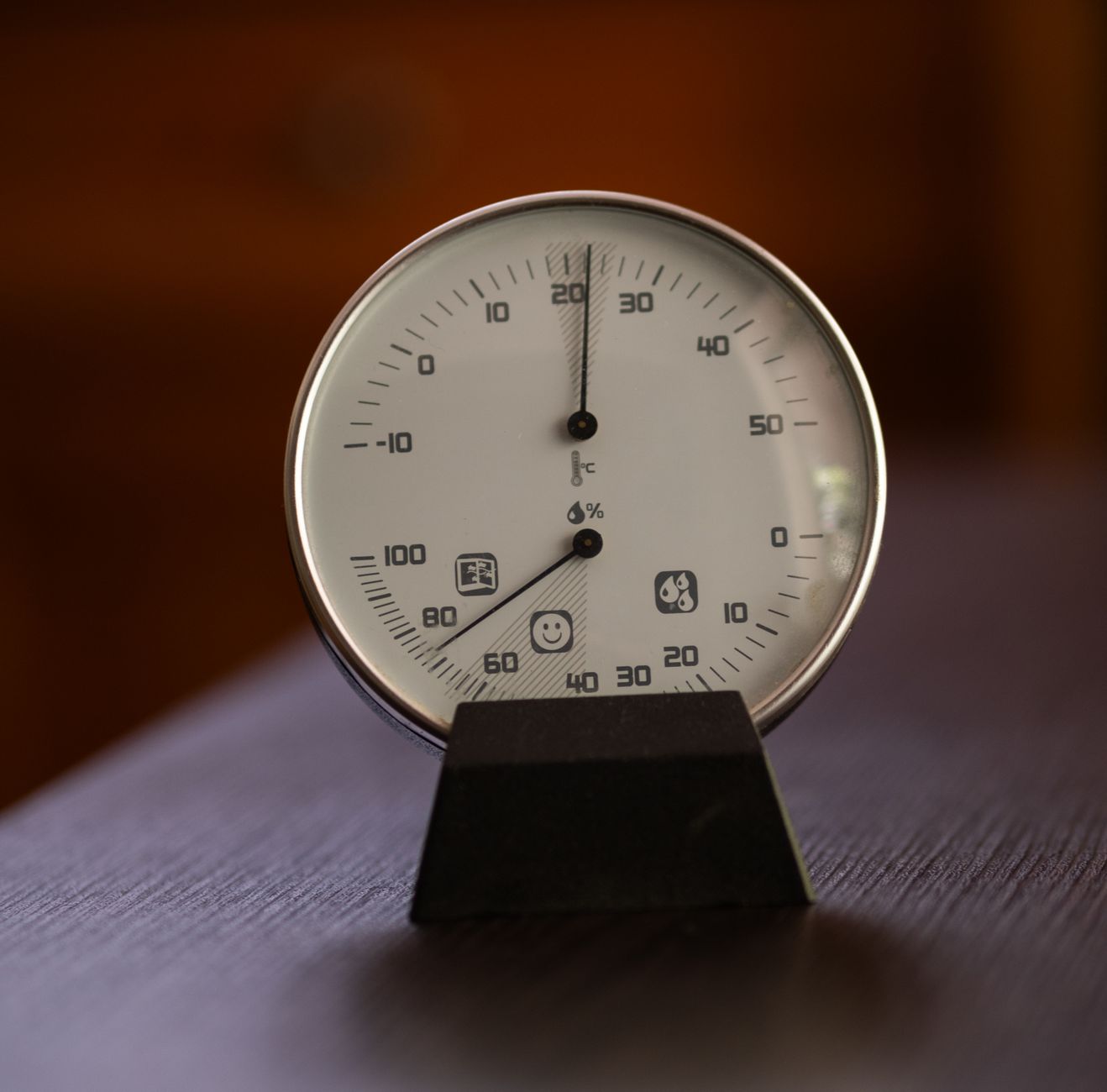
Photo by Doğan Alpaslan Demir via Pexels.
Airflow and dehumidification work together, and with four plants transpiring in a sealed tent, humidity climbs faster than people expect once you hit week 3-4 of flower and canopy density peaks. A single healthy plant might transpire half a liter of water a day at that stage; four plants in a 4x4 can push several liters daily into a space with maybe 100-160 cubic feet of air. Without active dehumidification or a strong exhaust cycle, you'll watch RH climb into bud-rot territory (65%+) overnight.
Target VPD ranges of roughly 0.8-1.0 kPa in vegetative growth and 1.0-1.2 kPa through flower, which at typical grow temps (75-80°F) translates to keeping RH around 55-65% in veg and stepping it down to 45-55% by mid-late flower. A small inline dehumidifier or even a standalone unit vented into the tent's intake path earns its keep fast in a 4-plant tent — it's often cheaper than replacing a lost harvest to bud rot in a dense sativa cola.
Run your exhaust fan on a humidity-triggered controller if your budget allows it, rather than a flat timer. Static timers don't account for the fact that four mature flowering plants push far more moisture into the air than four seedlings did eight weeks earlier — your airflow needs literally change as the grow progresses, and the setup that worked in week 2 will underperform by week 8 unless you're adjusting fan speed or filter draw along the way.
None of this airflow math matters much if the plants you're growing aren't suited to how much space and light you can give them — a lanky sativa-dominant strain in a short 4x4 is going to fight you regardless of fan size, while a compact indica hybrid might thrive in a setup that would cramp something else. Starting with well-bred genetics from a reputable seed source, Seedtiva included, at least means you're not also compensating for unpredictable, unstable plants on top of everything else.
Build the airflow system for the grow you'll actually be running in week 8, not week 1. A tent that handles four small vegging plants easily can get overwhelmed once those same plants are dense, resinous, and transpiring hard in late flower — plan your fan sizing and dehumidification for that peak load, and the early weeks take care of themselves.
Photo by Jan van der Wolf via Pexels.