How Much Sunlight Outdoor Cannabis Needs to Maximize Size
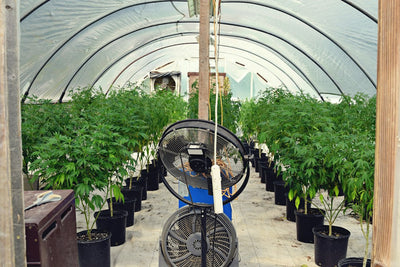
Photo by Cannafornia via Pexels.
Ask ten growers what makes a cannabis plant get big and you'll get ten different answers about soil amendments, root pruning, mycorrhizae, and training techniques. Almost none of them will lead with the actual answer: how many hours of direct sun hit that spot in the yard. Genetics set the ceiling, soil feeds the engine, but sunlight hours are the throttle, and it's the one variable you control entirely through a decision you make before you ever put a seed in the ground -- where to plant it.
There's a real, measurable gap between a plant that survives outdoors and one that maximizes its genetic potential. A plant getting 5 to 6 hours of direct light will live. It'll even produce something smokable. But a plant getting 12+ hours of unobstructed direct sun in a spot with a long, unbroken vegetative window is playing an entirely different game -- one that produces the kind of specimens growers photograph next to ladders for scale.
That gap is what this article is about. And if you want proof that light exposure isn't a minor tweak but the dominant factor, look at the record-setting outdoor giants -- plants documented at 13, 19, even over 24 feet tall. Every single one of them shared the same non-negotiable trait: zero shade, full-day sun, from the moment they broke ground until harvest. Nothing else about their setup was identical. That one thing was.
The Bare Minimum: What Happens Below 5-6 Hours

Photo by Adonyi Gábor via Pexels.
Most cultivation guides agree on a floor, and it's lower than a lot of growers assume they need. The consensus minimum is roughly 5 hours of direct sun plus several additional hours of bright indirect or filtered light through the day. Some of the more conservative guides push that number to a flat 6 hours of uninterrupted direct sun as the absolute survivable baseline for a healthy plant. Below that floor, you're not really growing cannabis outdoors anymore -- you're keeping a plant alive that happens to be cannabis.
Here's what actually happens at that minimum. Growth slows noticeably compared to plants getting optimal light, and it slows in a way that compounds over the season rather than evening out. A plant that's behind in June is way behind by September, because every day of reduced photosynthesis is a day of reduced carbohydrate production feeding root and branch development. The yield that does come in is lighter and lower quality -- not just less of it, but worse in composition.
Visually, under-lit plants tell you exactly what's wrong with them if you know what to look for. Branches get long and lanky, stretching out with big internodal gaps as the plant searches for more light than it's getting. Bud sites end up sparse and spread thin along those stretched branches instead of dense and stacked. The buds that do form come in light and airy, with visibly less trichome coverage and resin production, because the plant simply doesn't have the photosynthetic output to fund dense, resin-heavy flower development.
The structural problem is arguably worse than the yield problem. A plant stretching toward marginal light builds a weak frame -- thin stems, wide spacing between nodes, minimal lateral branch development. That's the opposite of what you need if size is the goal, because a tall plant with a weak frame just falls over or snaps under its own bud weight later in flower. Real size potential requires a sturdy structural foundation, and that foundation only gets built when a plant has abundant light and isn't wasting energy stretching to find it.
The Real Target: 8-12+ Hours of Direct Sun

Photo by Mark Stebnicki via Pexels.
Grower-guide consensus lands on 6 hours of direct sun as the hard floor and 8+ hours as the gold standard for genuinely vigorous growth. Once you're consistently clearing 8 hours of direct exposure, you start seeing the kind of stem thickness, branch density, and node spacing that signals a plant building real structure rather than just getting by.
Timing matters almost as much as total hours. Morning-to-midday sun is the most valuable light of the day for a few concrete reasons. It burns off overnight dew and condensation fast, which cuts down on the humid window where powdery mildew and botrytis get a foothold. It also drives the bulk of daily photosynthetic output before afternoon heat stress kicks in -- in hot climates, intense late-afternoon sun combined with high ambient temperature can actually push a plant into stomatal closure, where it closes pores to conserve water and photosynthesis drops off even though the sun is still blasting it. A site that gets strong morning-through-early-afternoon exposure is doing more useful work than one that's shaded until noon and then baked from 3 to 6pm.
Push past 8 hours and you enter the range where multiple horticultural sources describe plants reaching their maximum possible size: 12+ hours of direct sunlight daily, sustained through the season. This is where site selection stops being a minor consideration and becomes the single highest-leverage decision a grower makes. A spot that looks fine in April but picks up partial afternoon shade from a fence, a neighbor's tree line, or even your own house as the sun angle shifts through summer is quietly capping the plant's potential for months, often without the grower noticing until harvest disappoints.
The benchmark to aim for, if you're in the Northern Hemisphere, is open ground on the south-facing side of your property with nothing -- no structure, no tree, no fence line -- interrupting the sun's path from sunrise to sunset. That's rare in most residential yards, which is exactly why growers who find or create that spot tend to be the ones posting photos of plants taller than their fence.
Why Vegetative and Flowering Stages Need Different Light Schedules

Vegetative growth and flowering aren't just two phases of the same process -- they're triggered by opposite light conditions, and understanding that distinction is what separates growers who get size from growers who get an average plant that flowers too early. During the vegetative stage, cannabis thrives on long days: 14 to 18 hours of light per 24-hour cycle, with most experienced growers targeting at least 16 hours as the sweet spot for building structure and mass before flowering begins.
Cannabis is what's called a short-day (or long-night) photoperiod plant, and the mechanism matters more than most growers realize. As long as it's receiving roughly 15 or more hours of light per day, it reads that as summer and stays locked in vegetative mode -- building branches, stacking nodes, thickening stems. This is precisely why plants started in early spring end up dramatically bigger by summer than plants started in June: they get weeks or months more of that long-day signal telling them to keep growing before anything tells them to flower.
Flowering isn't triggered by light -- it's triggered by darkness. The plant is measuring the length of uninterrupted dark period, not counting hours of sun. The ideal ratio once a grower wants flowering to begin (or once nature delivers it via shortening autumn days) is 12 hours of light to 12 hours of darkness. Most strains need a minimum of 12 uninterrupted hours of darkness before the hormonal shift that initiates flower production actually kicks in -- interrupt that dark period with even brief light exposure and you can delay or confuse the transition.
The practical takeaway for anyone chasing size is straightforward: plant early. Early spring planting gives the plant the maximum possible stretch of natural long-day conditions before autumn's shortening days push the dark period past that 12-hour threshold and flip the plant into flower. A plant that vegges for 10 weeks under 15+ hour days is going to dwarf one that only got 5 weeks before the light schedule turned against it -- same genetics, same soil, wildly different outcome, purely because of when the calendar started the clock.
What the Record-Setting Giants Prove About Light and Size

Photo by Tim Foster via Unsplash.
If you want the clearest possible demonstration that sunlight hours dominate size outcomes, look at the actual record-setting specimens rather than theory. The tallest documented cannabis or hemp plant on record reached 24 feet 1 inch -- over 7.3 meters -- grown in California and certified in September 2021. Guinness World Records itself declined to formally accept the submission, citing a standing policy against certifying tobacco- and cannabis-related records, but the plant was independently measured and documented regardless, and the height stands as the tallest verified specimen on record.
That plant wasn't a fluke sitting alone at the top of the list. Other giants tracked in Oregon and California landed in the 13 to 19 foot range, and every one of them shares the same detail when you look at the grow reports: full, completely unobstructed sun exposure from planting to harvest. No partial shade, no fence-line clipping, no tree canopy eating into the afternoon hours. These weren't plants that happened to do well despite average conditions -- they were placed deliberately in locations chosen for maximum light capture.
The second thread running through every one of these giants is an extended vegetative window from very early planting -- getting seeds or clones into the ground as early in spring as the local climate allowed, maximizing the number of long-day weeks before autumn's shortening light forced the flip into flower. Combine months of extra vegetative growth with zero shade and you get a plant with the time and the fuel to build a genuinely massive frame before it ever turns its energy toward flower production.
Genetics is the third piece, and it's not interchangeable with the other two -- it's multiplicative with them. The documented giants were overwhelmingly sativa-leaning hybrids, strains like Amnesia Haze and Moby Dick, genetics specifically known for aggressive internodal stretch and a strong response to extended light exposure. Put that genetic tendency into a shaded backyard corner and you get a tall, floppy, disappointing plant. Put it into full sun with a long veg window and you get a specimen that needs a ladder to harvest. None of these three factors alone produces a record-setter. All three together do.
Scouting and Improving Your Site's Sun Exposure

Photo by Helena Lopes via Pexels.
Before you commit a season to a planting spot, spend a day actually watching it. Track the sun path across the ground you're considering from sunrise to sunset, and specifically note the moment shadows from trees, fences, sheds, or the house itself first creep into the plant zone. Most people eyeball a spot in the morning, see full sun, and assume that holds all day -- it rarely does once you account for how much the sun's angle shifts from March through September.
Not all shade is equally costly. Losing light in the late afternoon, say after 5 or 6pm, is far more forgivable than losing it during the 10am to 3pm window, which is when the sun is highest and the plant is doing the bulk of its daily photosynthetic work. A spot that's sunny all morning and shades out by early evening will still perform respectably. A spot that's shaded until 11am and only opens up in the afternoon is a much bigger handicap, even if the total hour count looks similar on paper.
If your yard has genuinely mixed exposure -- decent morning sun in one corner, better afternoon sun in another -- container growing gives you an option that in-ground planting doesn't: you can physically move the plant to chase the best light as the season progresses. It's more labor, and container-grown plants generally won't match the raw size ceiling of an in-ground root system with unlimited room to spread, but relocating a container a few times through the season beats leaving a plant parked in a mediocre fixed spot for four months.
Longer-term, consider whether the site can be improved rather than just accepted. Pruning back a neighboring tree's lower branches, or picking a spot that naturally opens up more as the sun angle climbs through spring, are legitimate strategies serious outdoor growers use rather than settling for whatever exposure a yard happens to offer by default. Pair that kind of full-sun site with genetics actually bred for outdoor vigor -- which is the standard we breed to at Seedtiva -- and you've stacked the two biggest levers available in your favor before you've even amended a single cubic foot of soil.
Everything else in this hobby -- nutrients, training, pot size, pest management -- is something you actively do to the plant. Sunlight hours are different. They're decided the moment you pick a spot in the yard, and after that the decision is basically locked in for the season. That makes it the rarest kind of variable in cultivation: one that's pure site selection, not skill or effort applied later.
That's also why it's the variable most growers underrate. A grower with premium genetics tucked into a partially shaded corner will, season after season, get outgrown by a grower running ordinary genetics in a completely open, full-sun spot. It's not close, and it's not really a fair fight -- light is that dominant. Good genetics matter, but they're multiplying whatever the site allows, not overriding it.
So before you spend money on seeds, soil amendments, or a fertilizer program, go walk your yard with a notebook and actually clock the hours of unobstructed direct sun a candidate spot gets, start to finish, across a full day. That number, more than almost anything else you'll decide this season, predicts your ceiling. Results will still vary with climate, setup, and the genetics you choose to plant -- nothing here is a guarantee -- but get the light right first, and everything else you do has something worth building on.
Sources
- How Much Sunlight Do Outdoor Cannabis Plants Need To Grow? - RQS USA - RQS Blog
- How Much Sunlight Do Outdoor Cannabis Plants Need? | Dutch Passion
- How Much Sunlight Do Outdoor Marijuana Plants Need? (Scientific)
- How Much Sunlight Do Outdoor Cannabis Plants Need?
- Outdoor Grow Spot Guide: Sun, Soil & Stealth - WSE