Humidity Swings in Flowering: The Hidden Terpene Killer
You can nail your nutrient program, run PPFD in the 900s, and still end up with jarred flower that smells like hay instead of gas. Nine times out of ten, the culprit is humidity instability during flowering -- not just running it too high or too low, but letting it whipsaw between the two.
Terpenes are volatile monoterpenes and sesquiterpenes, and "volatile" is the operative word: they off-gas readily under environmental stress, especially rapid shifts in relative humidity (RH) that force the plant to open and close stomata erratically and that accelerate trichome degradation. Stable, well-tuned humidity isn't just a mold-prevention checkbox -- it's a potency and flavor preservation strategy.
Why Terpenes Are So Sensitive to RH Instability
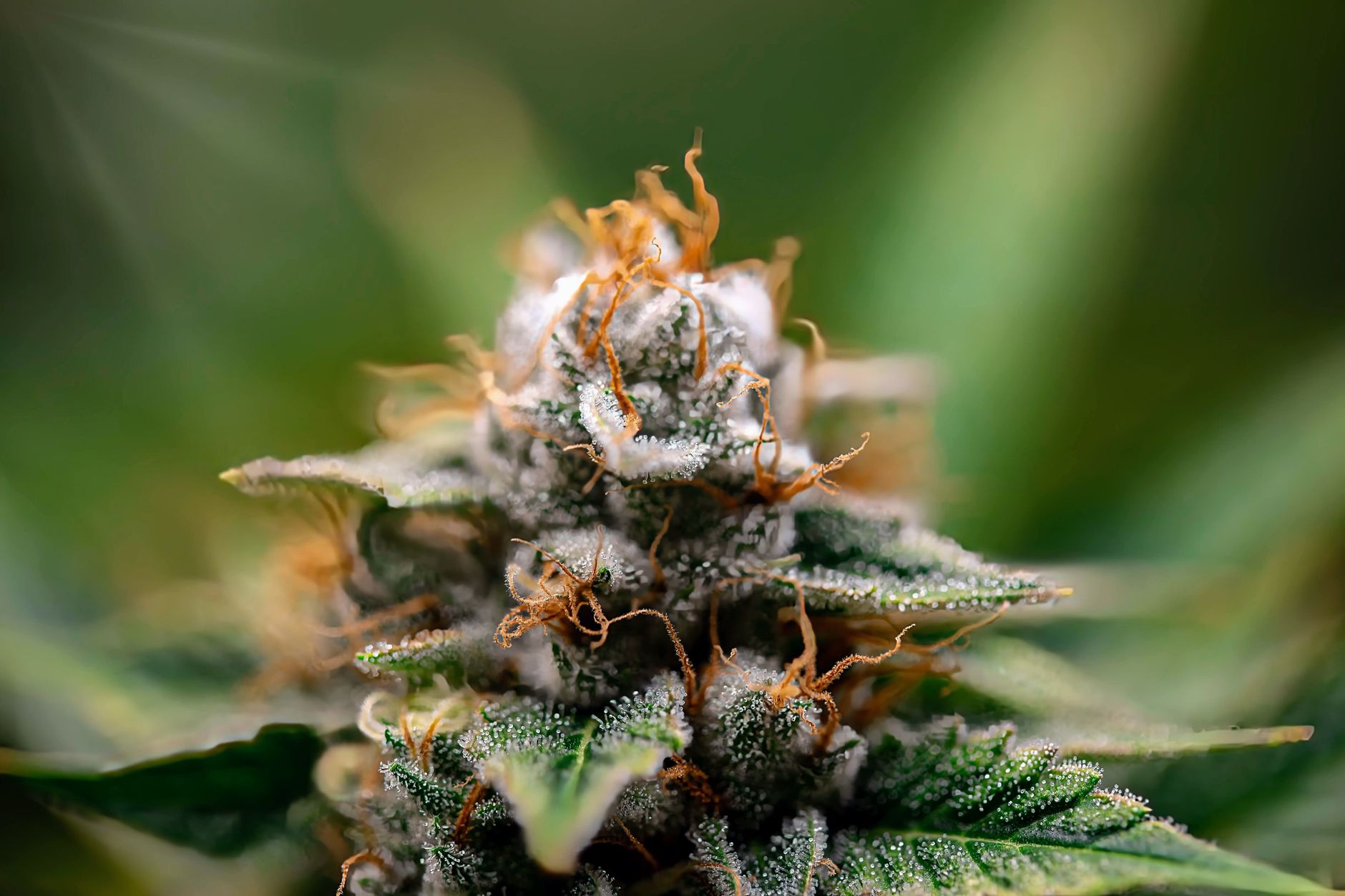
Photo by Diego Barros via Pexels.
Terpenes are synthesized and stored in the glandular trichomes, primarily as a defense mechanism against pests, UV stress, and pathogens. They're low-boiling-point compounds -- many volatilize starting around 70-80°F depending on the specific molecule (myrcene and limonene are especially fragile compared to heavier sesquiterpenes like caryophyllene). Trichome heads are essentially small sacs of essential oil sitting on the outside of the flower, fully exposed to the surrounding air.
When RH swings hard -- say from 55% down to 30% and back up to 60% within a 24-hour cycle -- the vapor pressure deficit (VPD) between the leaf/bud surface and the surrounding air spikes and collapses repeatedly. Every spike pulls moisture (and with it, volatile aromatics) out of the trichome heads faster than the plant can replenish oil production. Every collapse back into a humid, stagnant zone invites microbial activity around the calyx, which further degrades trichome integrity.
Unlike a nutrient deficiency, this damage doesn't show up as a visible symptom until it's too late -- you won't see it, you'll smell it (or fail to). The result is flower that tests fine on cannabinoid percentage but falls flat on total terpene content and specific profile ratios, which is increasingly what discerning consumers and dispensary buyers are grading against.
The RH and VPD Targets That Actually Protect Terpenes

Photo by Peter Klauss via Pexels.
Stop thinking in RH percentage alone and start thinking in VPD, since it accounts for both temperature and humidity together and reflects what the plant actually experiences. Target ranges by flowering stage:
- Weeks 1-3 of flower (stretch/transition): 55-60% RH, canopy temp 75-78°F, VPD 1.0-1.2 kPa
- Weeks 4-6 (bulking): 45-50% RH, 74-77°F, VPD 1.2-1.4 kPa
- Weeks 7+ (ripening/finishing): 40-45% RH, 70-74°F, VPD 1.3-1.5 kPa
The number itself matters less than consistency around it. A grower running a steady 50% RH will retain more terpenes than one oscillating between 35% and 65% even if their average also comes out to 50%. Swings greater than 10-15 percentage points within a 24-hour window are where you start seeing measurable terpene loss on lab panels.
Dial in your dehumidifier and humidifier to work off the same controller with a tight deadband (2-3% RH), not two independent units fighting each other. If you're running a controller with hysteresis set too wide, you'll get exactly the sawtooth pattern that strips terpenes -- humidifier kicks on, overshoots, dehu kicks on hard, undershoots, repeat every hour.
Common Causes of Humidity Instability in Flower Rooms
Photo by Anna Shvets via Pexels.
Most swings aren't caused by equipment failure -- they're caused by mismatched capacity and poor room design. The usual suspects:
- Undersized dehumidifiers relative to transpiration load. A dense flowering canopy under high PPFD can transpire several liters of water per day per square meter. If your dehu can't keep pace during lights-on, RH creeps up all day then crashes when lights-off transpiration drops.
- Lights-off RH spikes. This is the single most common swing in tent and small-room setups. Transpiration doesn't stop the second lights go out, but temperature drops fast, so RH spikes 10-20 points within an hour of lights-off. Undersized exhaust or no active dehumidification overnight is almost always the cause.
- Door/vent openings during inspection. Walking in with a flashlight for a five-minute check can dump outside humidity into a sealed tent and take 30-45 minutes to re-stabilize.
- Watering events. Hand-watering a full room at once creates a humidity bomb from soil evaporation and runoff. Stagger watering or switch to automated drip to smooth this out.
- Outdoor and greenhouse grows face this worst -- afternoon thunderstorms, morning dew, and coastal fog cycles can swing RH 40+ points in hours with zero control input available. This is one of the arguments for genetics bred with strong trichome density and mold resistance if you're growing in a humid climate; starting with well-bred seeds suited to your environment reduces how much the plant is stressed by conditions you can't fully control.
Late-Flower and Drying: Where Most Terpene Loss Actually Happens
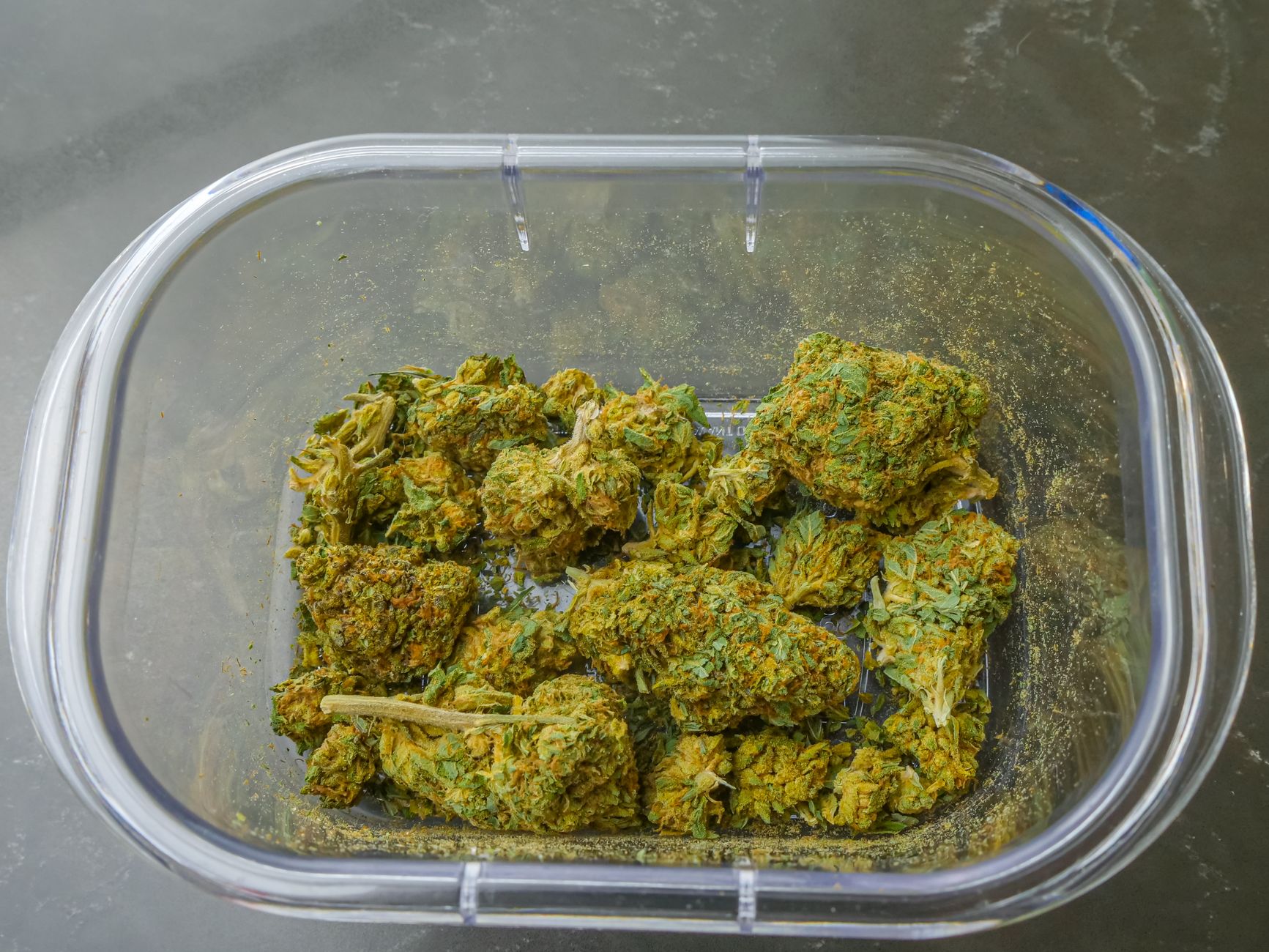
Photo by Kindel Media via Pexels.
The final 2-3 weeks of flower and the first 10 days of drying are the highest-risk window for terpene loss, because trichomes are at peak size and fragility right as the plant's own moisture regulation becomes less reliable (senescing fan leaves transpire less predictably, and you're often flushing, which changes root-zone water uptake).
This is also exactly when growers get impatient and start yanking tent zippers open constantly to check trichomes with a loupe, letting humidity crash and spike repeatedly. Minimize inspection frequency to once every 2-3 days in late flower and use a clip-on scope through a sealed window or glove port if your tent has one.
At chop, the swing risk shifts to the dry room. Terpenes are most vulnerable during the first 72 hours of drying, when moisture is leaving the flower fastest. A dry room bouncing between 45% and 70% RH will strip far more aromatic content than one held steady at 58-62% RH and 60-65°F for a slow 10-12 day dry. Rapid drying (under 5 days) at low, unstable humidity is the single fastest way to torch a terpene profile you spent 9 weeks building -- the oils volatilize off before curing can lock them into the flower matrix. Slow it down, hold RH steady, and resist the urge to speed-dry for a faster turnaround.
Practical Fixes for Rock-Solid Humidity Stability
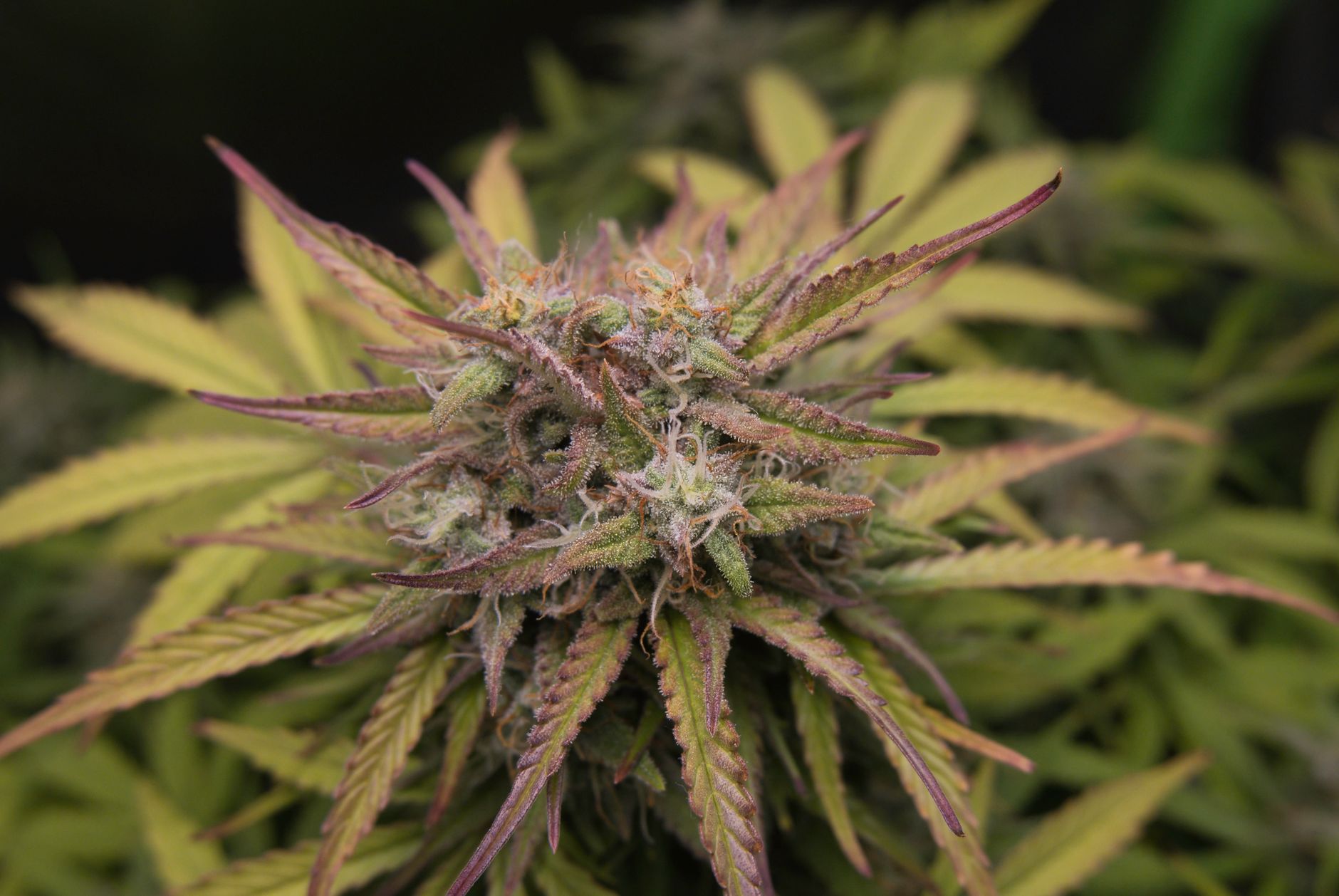
Photo by Philipp via Pexels.
A few concrete changes eliminate most of the swing problems growers deal with:
- Oversize your dehumidifier by 25-30% above your calculated peak transpiration load, so it's never running flat-out and struggling to catch up.
- Run a single environmental controller tied to both humidification and dehumidification with a tight 2-3% deadband, rather than two devices set independently on their own built-in humidistats.
- Add a small oscillating fan at canopy level to prevent humid microclimates from forming inside dense colas -- localized stagnant pockets swing independently of your room average and your sensor won't catch it.
- Log data, don't just glance at it. A cheap data-logging hygrometer (checked weekly) will show you the swing pattern a single point-in-time reading never will. If you see a sawtooth graph, that's your smoking gun.
- Automate lights-off transitions with a dehumidifier set to kick in 30 minutes before lights-out, anticipating the transpiration/temperature mismatch rather than reacting to it after RH has already spiked.
None of this requires exotic equipment -- it requires treating humidity control as a stability problem, not a setpoint problem.
Chasing a single "ideal" humidity number misses the point. Terpene retention is a function of stability -- minimizing the swings that force rapid moisture loss from trichome heads, not just avoiding extremes. Get your VPD dialed by flowering stage, oversize your dehumidification capacity, and treat the first days of drying with the same discipline you gave the last weeks of flower.
Results will still vary with strain, room design, and climate -- a sesquiterpene-dominant phenotype in a dry indoor tent behaves differently than a myrcene-heavy one in a humid greenhouse. But the underlying principle holds across every setup: smooth, controlled RH curves protect the aromatic oils you worked all season to build.
Photo by GB The Green Brand via Pexels.