LED vs HPS in 2026: Which Actually Wins on Yield?
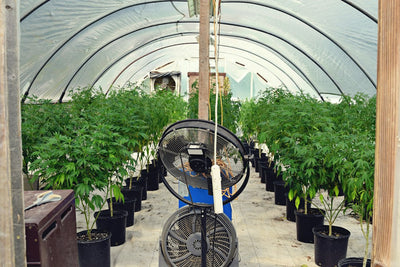
Photo by Washarapol D BinYo Jundang via Pexels.
Walk into any commercial flower room built in the last two years and the light fixtures over the canopy tell you most of what you need to know about where this industry landed. The LED-versus-HPS argument that dominated grower forums for a decade is basically over on the adoption question — it isn't over on the numbers. Growers still argue about grams per square foot, and vendors on both sides still cherry-pick data to win that argument. But the room itself has already voted.
The most recent independent survey work puts hard numbers behind what most cultivators already sense: 80% of commercial growers now use LED for vegetative growth, up 63 percentage points since that survey series began tracking the market. Of the growers still running HPS in flower, 60% say they plan to switch within the next twelve months, and another 16% are actively considering it. That's not a niche technology anymore — that's a market that has made its decision.
What's left to argue about isn't LED versus HPS. It's which LED, at what spectrum, tuned for what stage of growth. And increasingly, growers aren't even optimizing purely for yield — crop quality has climbed to sit almost even with yield as the deciding factor when choosing a lighting system. That shift changes the whole conversation, and it's worth digging into exactly what the 2026 data does and doesn't support.
What the 2026 adoption numbers actually show

Photo by Michael Hystead via Unsplash.
The numbers worth trusting here come from the Fluence-sponsored, Cannabis Business Times-published 'State of the Cannabis Lighting Market' survey, fielded by Readex Research. It's not a vendor white paper dressed up as research — it's an independently administered survey of working commercial cultivators, which makes it the closest thing this industry has to a credible census of what growers are actually doing with their lighting budgets.
The headline figure: 80% of commercial growers used LED for the vegetative stage in 2025, up from 78% the prior year, and a 63-point climb since the survey started tracking adoption. Vegetative lighting was always the easier sell for LED — lower PPFD requirements, less concern about canopy penetration — so that number alone isn't shocking. What's more telling is the flower-room data: 60% of growers not yet running LED in flower say they plan to switch within twelve months, with another 16% actively evaluating it. That's the segment that actually decides the yield argument, and it's moving fast.
The prior year's edition of the same survey found at least 70% of commercial indoor and greenhouse operations using LED somewhere across propagation, veg, or flower, and — more relevant to the yield debate — 66% of LED growers reported yields exceeding 50 grams per square foot, an 11-point jump from 2022. That's a meaningful year-over-year gain, and it happened during a period when fixture efficacy and spectrum tuning both improved substantially.
But the number that reframes the entire debate is this: when asked to rank what matters most in a lighting decision, growers rated crop quality and yield almost evenly as the second most important consideration — 24% versus 31%. That's a narrow enough gap to tell you this isn't a pure yield argument anymore. Growers are making lighting decisions based on a blended calculation of grams, potency, terpene expression, and operating cost, and any conversation that reduces 2026 lighting strategy to 'which one makes more weight' is already behind where the market actually is.
The efficacy numbers: grams per watt, HPS vs LED

LED grow lights consistently outperform HPS in energy efficiency, delivering 1.0–1.5 grams of yield per watt compared to just 0.5–0.8 g/W for HPS.
Strip away the marketing copy and the raw physics still favor LED on efficacy. Full-spectrum LED fixtures running current-generation diodes typically deliver 1.0 to 1.5+ grams per watt of photosynthetically useful light, compared to 0.5 to 0.8 g/W for a typical double-ended HPS system. That's not a marginal gap — it's roughly double the photon efficiency per watt of electricity consumed, and it's the single biggest reason the adoption numbers in the previous section moved as fast as they did.
Side-by-side commercial trials running comparable canopy setups — same room, same genetics, same feed schedule, lights swapped — generally show LED matching or beating HPS by 10 to 15% on total yield. One of the more detailed public case studies, from SLT MAKS's 2026 ROI documentation, reported 3.15 lbs per light under LED versus 2.42 lbs per light under HPS in a matched trial — a gain of 0.73 lbs per light, which at scale across a multi-light room adds up fast.
Worth saying plainly: most of this efficacy data comes from lighting manufacturers — SLT MAKS, FOHSE, Nanolux, and similar companies publishing their own case studies and ROI calculators. That doesn't make the numbers false, but it does mean they're directionally useful rather than independently verified. A vendor publishing a case study has an obvious incentive to select the trial that makes their fixture look best, and none of these figures have gone through peer review.
The more useful way to read this data isn't 'LED makes more flower.' It's that efficacy gains show up more reliably in electricity cost per gram produced than in raw flower weight on the scale. A grower chasing pure yield numbers from vendor case studies is looking in the wrong column — the real story in most of this data is the power bill, not the harvest weight.
The PLOS ONE study: the inconvenient data point

Photo by Pixabay via Pexels.
Here's the data point that vendor marketing conveniently leaves out of most pitch decks: a peer-reviewed trial published in PLOS ONE found that a white-plus-red LED fixture yielded 4.6% less flower per unit of canopy area than HPS, in a controlled, independently conducted comparison. That's a real result, published through actual peer review, and it directly contradicts the blanket claim that LED simply outyields HPS across the board.
The same study found something that matters just as much: that same LED fixture produced 27% more yield per dollar of electricity spent than the HPS comparison. In other words, the LED lost slightly on raw grams but won decisively on efficiency once you account for what it cost to run. The researchers' conclusion was blunt — once photon flux density is high enough to not be limiting, fixture efficacy and upfront capital cost matter more to overall return than spectral distribution.
This is worth taking seriously precisely because it's independent, peer-reviewed, and inconvenient. Most of what circulates in grower forums and trade press is vendor-published or anecdotal, and it almost universally favors LED because that's who's funding the case studies. A result showing HPS ahead on raw yield, from a study with no fixture manufacturer's name attached to it, deserves more weight than another glossy ROI calculator — not less.
The honest bottom line: at high PPFD with a well-designed fixture, a properly tuned HPS system can match or slightly edge out a mediocre LED setup on raw grams per square foot. Where LED wins, consistently and by a wide margin, is the electric bill. If your only metric is flower weight off the scale and you already have a well-built HPS room dialed in, the case for ripping it out isn't as airtight as it's often presented. If you're weighing total cost of production, the calculus tips hard toward LED, and that tilt gets steeper the longer you run the room.
Spectrum tuning matters more than the LED-vs-HPS label

Photo by MySeeds DE via Pexels.
Here's where the LED-versus-HPS framing starts to break down entirely, because two LED fixtures can produce meaningfully different yields even running identical wattage into identical canopy area — the difference is spectrum, not the underlying technology. Research cited by Thrive Agritech found a consistent, linear yield decrease of about 12% as the blue photon fraction in the spectrum rose from 4% to 20%. That's a big swing for a variable most growers don't even think to check on a spec sheet.
HPS never had this problem in the way LED does, because its red-heavy, fixed spectrum was never adjustable — but that rigidity was historically an advantage for flower bulking. HPS's dominant orange-red output happens to sit close to where a lot of late-flower photosynthetic and hormonal signaling wants light concentrated, which is a big part of why HPS held on in flower rooms long after LED had already won propagation and veg.
The practical implication is that swapping an HPS fixture for an LED one-for-one on wattage and expecting an identical or better result is a mistake growers are still making in 2026. The fixture matters, but so does whether you're running a veg-heavy spectrum with more blue during stretch, then shifting toward a red-weighted spectrum as the plant moves into bulking — full-spectrum LED's real advantage over HPS is that it lets you make that adjustment at all. A static spectrum tuned for the wrong stage of growth will underperform regardless of the diode quality behind it.
This is also where genetics stop being a side note and become central to the conversation. A strain that was bred and stabilized under one spectral environment doesn't always respond identically when moved under a different one — internode spacing, trichome density, and finishing time can all shift. Starting with stable, well-bred genetics gives you a more predictable baseline to tune spectrum around, rather than trying to solve two unknowns — an unfamiliar light and an unfamiliar plant — at the same time. It's one of the reasons growers dialing in a new lighting setup are better served starting with quality genetics they can trust to behave consistently, so the light is the only variable actually changing.
Quality and potency: where LED's real edge shows up

Photo by Ndispensable via Unsplash.
If yield is roughly a wash between well-built systems on both sides of this argument, quality is where LED's advantage stops being debatable. Dutch Passion ran a trial using identical genetics under both lighting types and found 17% THC under HPS versus 23% THC under LED — a six-point swing on the exact same plant, same nutrients, same grower, with lighting as the only variable changed.
Dutch Passion's own conclusion is worth quoting in spirit rather than softening: few LED growers can honestly claim a large yield advantage over HPS, but the potency and quality gain is real and repeatable. That's a more disciplined, more credible claim than most of what circulates in lighting marketing, and it lines up with what the independent survey data in the first section already showed — growers now rank crop quality nearly as high as yield when making lighting decisions, and results like this explain why.
Terpene and cannabinoid expression respond to spectral quality and UV/blue content in ways that raw wattage or grams-per-square-foot numbers simply don't capture. Two rooms can produce the same dry weight per light and still turn out product that smells, tastes, and tests completely differently, because the plant's secondary metabolite production is driven by signals — light quality, stress, temperature swings — that aren't visible on a yield report.
For a craft or premium-tier grower, that trade is usually the right one to take. A modest yield difference, or none at all, in exchange for flower that tests six points higher on potency and carries a noticeably richer terpene profile is a better business outcome in nearly every market where flower is sold by quality tier rather than pure bulk weight. The grower chasing the last gram per square foot off HPS may be optimizing for the wrong scoreboard in 2026 — the market increasingly pays for what's in the jar, not just how much of it there is.
ROI, running costs, and fixture lifespan

Photo by namrata kotak via Pexels.
The financial case for LED in 2026 rests less on the harvest and more on the utility bill and the fixture's working life. SLT MAKS's published case study on replacing a 1000W HPS fixture with a 650W high-efficacy LED found a typical payback period of 12 to 18 months, driven by roughly a 40% reduction in lighting electricity draw plus a meaningful drop in HVAC load needed to remove waste heat from the room.
Fixture longevity favors LED just as clearly. Current-generation LED diodes typically degrade only 5 to 10% in output over 36,000 to 50,000 hours of operation, depending on diode bin quality and driver design — call it three to five years of daily flower-room use before you're looking at meaningful output loss. HPS bulbs, by comparison, lose 10 to 15% of their output in roughly half that time, and the spectrum itself shifts as the arc tube ages, drifting away from the color balance the bulb was rated for when new. That means HPS growers are on a recurring rebulbing schedule just to keep spectral consistency, and it's a real, recurring line item that often gets left out of simple wattage comparisons.
It's also worth retiring the old argument that HPS's extra heat output is some kind of hidden benefit for cold climates or winter rooms. In practice it isn't an advantage — it's a cooling cost. Every watt of heat an HPS fixture throws into the room is a watt your HVAC system has to remove to hold target canopy temperature and VPD, and that removal isn't free. LED's lower heat output shrinks that cooling load directly, which is a real part of why the total operating cost gap between the two technologies is wider than the electricity meter alone suggests.
As with the efficacy numbers earlier, these specific payback and lifespan figures come from lighting manufacturers, and they should be read as directional rather than gospel. Your actual payback period depends heavily on local electricity rates, existing HVAC efficiency, and room size — but the direction of the trend across every source, vendor-published or independent, points the same way.
Run the numbers side by side and the honest conclusion is less dramatic than either camp wants it to be: on raw yield, the gap between a good LED system and a good HPS system in 2026 is narrow, sometimes nonexistent, and occasionally in HPS's favor depending on fixture quality and spectrum tuning. The PLOS ONE data makes that case more credibly than any vendor white paper ever will. Chasing "LED versus HPS" as if it's still the deciding question is chasing the wrong variable.
The stronger, more durable case for LED isn't a guaranteed yield jump — it's the compounding stuff that shows up over a year of operation rather than one harvest: lower electricity draw, reduced HVAC load, longer fixture life before you're rebulbing or replacing diodes, and a documented, repeatable bump in potency and terpene expression that a growing share of the market is now willing to pay a premium for. Add those up over a three-year fixture life and the case for LED gets substantially stronger than any single grams-per-square-foot comparison suggests.
None of it replaces genetics. Whichever light you're running, the plant's genetic ceiling still caps what any spectrum tweak or wattage upgrade can deliver — a mediocre cut under a perfectly tuned LED array will still finish mediocre. Starting with stable, well-bred seeds adapted to your climate and setup will move the needle on your outcome more reliably than another lighting upgrade, and it's worth treating that as the first investment rather than the last one. Results will still vary with your room's climate control, your skill at reading the plant, and how well your setup is actually dialed in — no fixture, however efficient, fixes a room that isn't.
Sources
- LED vs HPS Grow Lights in 2026: What Large-Scale Cultivators Need to Know
- LED vs. HPS Grow Lights: Which Is Better for Cannabis Cultivation?
- LED Full-Spectrum vs HPS in 2026: Who Won? - Seeds Genetics
- Bigger Yields With HPS Vs. LED Grow Lights - Herb.co
- LED vs HPS Grow Lights ROI: Commercial Cannabis Guide | SLT MAKS