Nutrient Lockout in Cannabis: Diagnosis and Fix
You've dialed in your feed schedule, run the same nutrients for three grows straight, and suddenly your plants are yellowing, curling, and clawing like you've never fed them at all. Your gut says "deficiency," so you add more nutrients. The plant gets worse. That's the classic lockout trap -- the roots are sitting in a soup of everything they need, but they physically can't take it up.
Lockout isn't one problem, it's usually two or three stacked on top of each other -- a pH swing that locks up phosphorus and micronutrients, salt buildup that raises osmotic pressure at the root zone, or root damage that just shuts uptake down mechanically. Sorting out which one you're dealing with is the difference between a plant that recovers in five days and one that limps through the rest of flower.
What's Actually Happening at the Root Zone
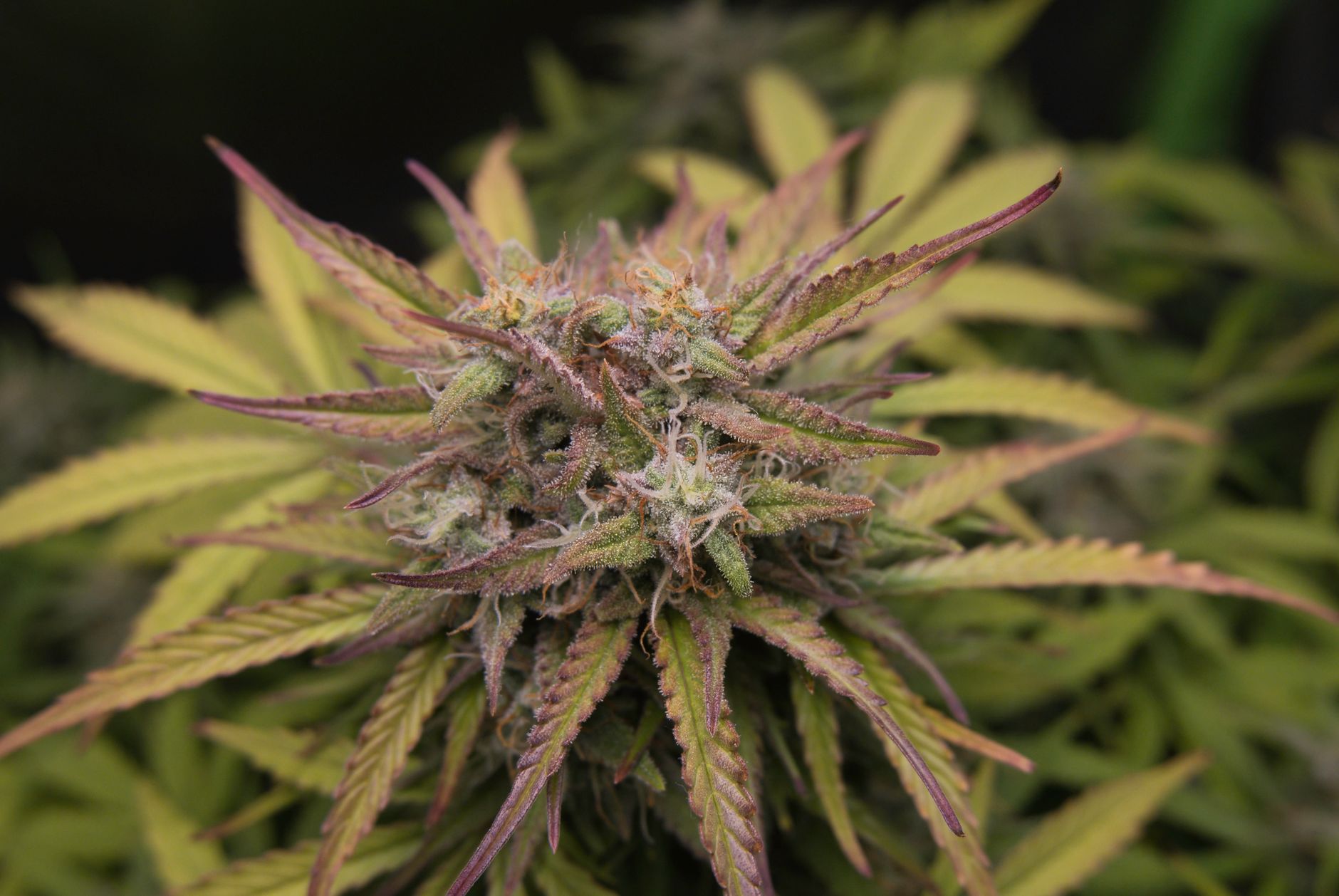
Photo by Philipp via Pexels.
Nutrient lockout means the elements are present in the medium but unavailable to the roots. It's almost never a supply problem -- it's an availability problem, and that distinction changes everything about how you fix it.
Three mechanisms cause it. First, pH drift: each nutrient ion has a narrow window where roots can absorb it. In soil, that's roughly 6.0-7.0, with the sweet spot around 6.3-6.8. In coco or hydro, it's 5.5-6.5, ideally 5.8-6.2. Push outside those ranges and specific elements precipitate out or become chemically unavailable -- iron and manganese lock up above pH 7.0, phosphorus and calcium lock up below pH 5.5.
Second, salt buildup. Every feeding leaves mineral salts behind, and if runoff isn't managed, the root zone's electrical conductivity climbs past what the plant can handle -- generally above 2.5-3.0 mS/cm (EC) for most vegetative feeding, lower for seedlings and clones. High EC creates osmotic pressure that makes it physically harder for roots to pull in water and dissolved nutrients, even when those nutrients are chemically available.
Third, root damage -- from overwatering, root rot pathogens like Pythium, or heat stress above 85°F at the root zone -- destroys the root hairs responsible for nutrient uptake. You can have perfect pH and EC and still see lockout symptoms if the roots themselves are compromised.
Reading the Symptoms Correctly

Photo by Keloke Grow via Pexels.
Lockout mimics deficiency, which is exactly why growers get fooled. The tell is the pattern and the speed. A true deficiency develops gradually over 1-2 weeks and usually follows a predictable map -- nitrogen shortage starts on lower fan leaves, calcium shortage shows up on new growth. Lockout tends to hit fast, across multiple leaf positions at once, and often shows several deficiency symptoms simultaneously because several elements are locked up at the same time.
Look for interveinal chlorosis (yellowing between the veins while veins stay green) paired with leaf curling, clawing tips, or a rusty brown spotting pattern -- that combination screams pH-driven lockout rather than a single-nutrient shortfall. If you check your reservoir or runoff pH and it's crept to 7.5 in soil or dropped to 5.0 in coco, you've found your answer before you even look at the leaves.
Nutrient burn confuses things further because it can occur alongside lockout -- crispy, dark leaf tips and edges point to salt buildup, and that same buildup is often the cause of the lockout itself. Check EC of your runoff against your input EC. If runoff EC reads significantly higher than what you're feeding in, salts are accumulating in the medium and you've got your culprit.
Always test before treating. A cheap pH pen and an EC/TDS meter cost less than one bag of nutrients and will save you weeks of guessing.
The Diagnostic Sequence

Photo by CRYSTALWEED cannabis via Unsplash.
Work through this in order rather than jumping straight to a flush -- it saves you from re-creating the same problem next feeding.
- Test runoff pH and EC first. Water in at a known volume (20% of pot volume is standard), collect runoff, and measure both. This tells you what's actually happening in the root zone, not what you think you're feeding.
- Check your source water. Tap water with high alkalinity (measured as calcium carbonate, often 100-300+ ppm in municipal supplies) buffers pH upward over time regardless of what you dial in going into the reservoir. If you've never tested your tap water's baseline pH, EC, and hardness, do it now.
- Inspect the roots. If you can, slide the root ball out of a fabric pot or check a clear net pot. Healthy roots are white to cream-colored and firm. Brown, slimy, or foul-smelling roots mean you're dealing with root rot, not a simple chemical lockout, and the fix is different.
- Review your feeding history. Have you been feeding the same EC for three-plus weeks without a flush? Have you top-fed without checking runoff in a while? Salt buildup is cumulative and often traces back to skipped flushes rather than any single feeding mistake.
This sequence usually points clearly at one of the three mechanisms -- pH drift, salt accumulation, or root damage -- and sometimes all three if the problem's been building for a while.
Fixing pH-Driven and Salt-Driven Lockout

Photo by Priscila Dramisino via Pexels.
For pH drift, the fix is a flush at the correct pH, not more nutrients. Run plain water, pH'd to 6.3 for soil or 5.8 for coco/hydro, through the medium at 2-3 times the pot's volume. This resets the rhizosphere pH and dissolves precipitated mineral deposits that have built up around root hairs. Follow immediately with a light feed (around half your normal EC) at the correct pH so the plant isn't sitting in bare water for days.
For salt-driven lockout, the flush needs more volume -- 3x pot volume minimum, done slowly so it has time to move through the whole root mass rather than channeling straight through and out the drainage holes. Use a product that includes a chelating or flushing agent if your medium has heavy buildup, though plain pH'd water works fine for moderate cases. After flushing, drop your feed EC back by 25-30% from where you were before the lockout hit, and rebuild up gradually over the next 1-2 weeks while watching runoff EC closely.
In soil, don't flush more than once every 1-2 weeks -- it strips beneficial microbial activity along with the salts, and overdoing it creates its own set of problems. In coco or hydro, a weekly flush as routine maintenance (not just as a fix) is standard practice and prevents lockout from developing in the first place. Reservoirs in recirculating hydro systems should be dumped and refreshed every 5-7 days regardless of how good your numbers look, since EC climbs as plants selectively uptake water faster than nutrients.
When It's Root Damage, Not Chemistry

Photo by Sony Shooter via Pexels.
If your pH and EC numbers check out fine but symptoms persist, the problem is mechanical, not chemical. Overwatering is the most common cause -- saturated media pushes oxygen out of the root zone, and roots without oxygen stop functioning as nutrient pumps regardless of what's available to them. Let the medium dry back appropriately between waterings (in soil, until the top 2-3 inches are dry; in coco, closer to a 20-30% moisture swing) and make sure pots have real drainage.
Root rot pathogens like Pythium and Fusarium thrive in warm, low-oxygen, overwatered conditions and physically destroy root tissue. If you pulled roots and saw brown, mushy sections with a sour smell, you're not dealing with lockout anymore -- you need a beneficial bacteria/fungi inoculant (Bacillus and Trichoderma-based products both have solid track records here) and, more importantly, a fix to the watering and drainage practices that let it start.
Root zone temperature matters more than most growers account for. Above 85°F, roots struggle to take up oxygen and nutrients efficiently even when everything else is correct, and it creates a favorable environment for pathogens. Keep root zone temps between 68-75°F -- raised pots off hot floors, insulated reservoirs, and airflow underneath fabric pots all help in hot grow rooms or greenhouses.
Preventing Lockout Before It Starts

Photo by GB The Green Brand via Pexels.
Prevention comes down to consistency and checking your numbers instead of assuming. Test runoff pH and EC every 3-4 waterings as routine, not just when something looks wrong. Keep a simple log -- date, input EC/pH, runoff EC/pH -- and you'll catch drift before it becomes a visible problem on the leaves.
Use pH'd water every single time, even for plain water flushes, and recalibrate your pH pen monthly with calibration solution since drift in the meter itself is a sneaky, underrated cause of chasing phantom problems. Match your feed strength to plant stage and don't chase faster growth by pushing EC higher than the plant's actual demand -- seedlings want 0.4-0.8 mS/cm, vegetative plants 1.2-1.8, and flowering plants topping out around 1.8-2.2 for most strains, though heavier feeders can run higher.
Genetics play a role here too. Some strains are simply more sensitive to pH swings and salt buildup than others, and starting a grow with strong, stable genetics from a reputable source -- Seedtiva included -- gives you more margin for error when environmental conditions aren't perfect. A resilient plant tolerates a missed flush or a day of drifted pH far better than a stressed or genetically weak one.
Results here vary with medium, climate, and water source -- a grower on soft well water in coco will manage lockout very differently than someone on hard municipal tap water growing in soil. Build your routine around your specific setup rather than a generic schedule.
Lockout gets diagnosed wrong constantly because the symptoms look exactly like a deficiency, and the instinct to feed harder is understandable but almost always backwards. The meter is cheaper than the mistake -- test before you treat, and let runoff numbers tell you what's really going on at the root zone instead of guessing from leaf color alone.
Once you've flushed and reset, resist the urge to immediately push feed strength back to where it was. Rebuild gradually, keep logging your numbers, and the plant will tell you when it's ready for more. Most lockout cases fully resolve within one to two weeks of correction -- the leaves that were already damaged won't recover, but new growth coming in clean is the sign you've actually fixed the root cause and not just masked it for a few days.
Photo by Raphael Brasileiro via Pexels.