Nutrient Timing Through Flower for Maximum Resin
Resin isn't an accident of genetics alone -- it's a metabolic response, and you can push it hard or leave it on the table depending on how you feed through flower. Most growers run a static "bloom nutrient" from stretch to chop and wonder why their buds look good but don't smell or hit like they should. The reality is that flowering is at least three distinct metabolic phases, each with different nutrient demands, and matching your feed to those phases is one of the highest-leverage things you can do for trichome density and terpene expression.
This isn't about dumping more bottles into your reservoir. It's about timing the right ratios and concentrations to the plant's actual physiology week by week, then backing off at exactly the right moment so the plant finishes clean instead of stressed.
Why Nutrient Timing Drives Resin, Not Just Total Nutrients
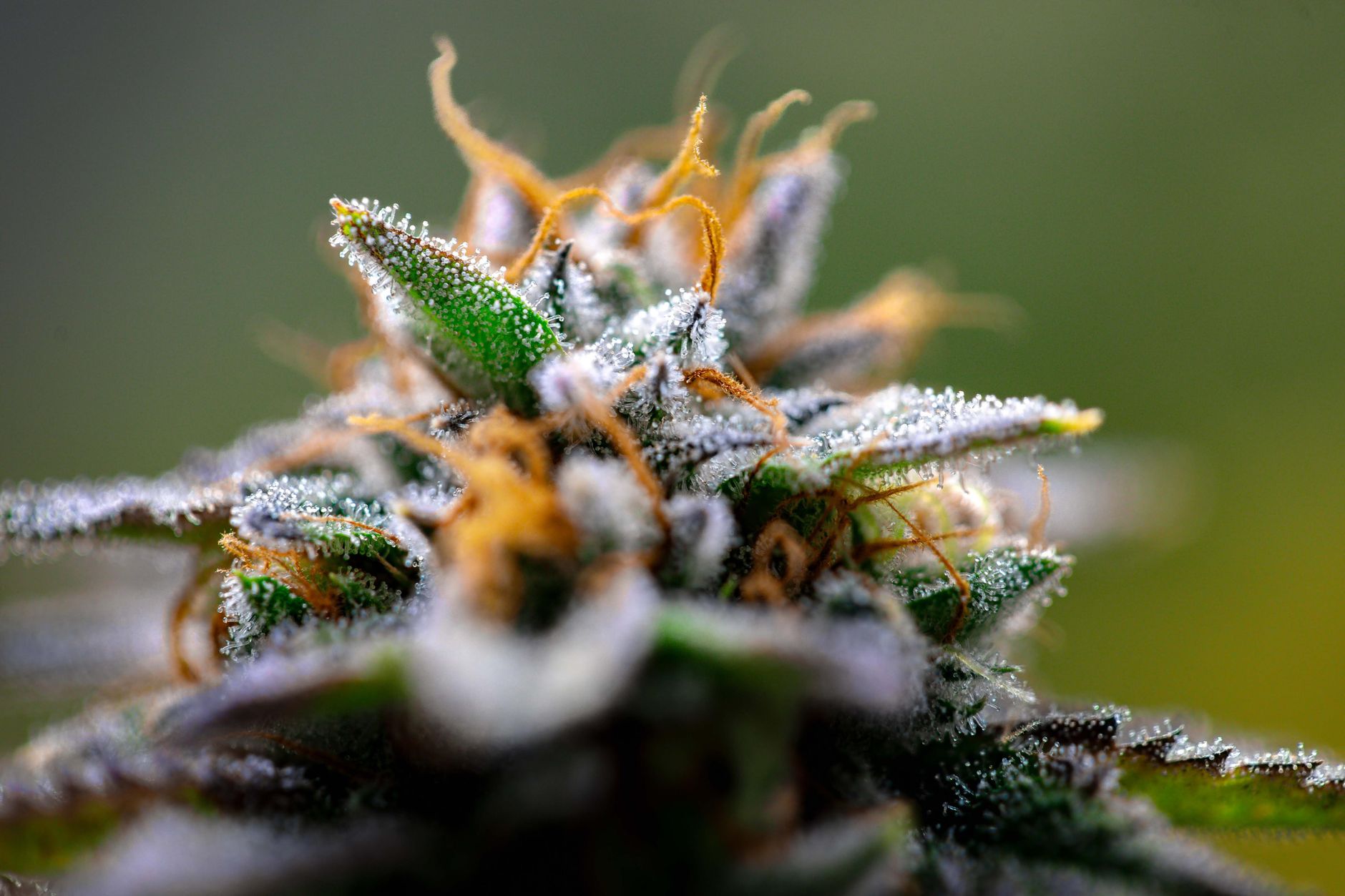
Photo by Diego Barros via Pexels.
Trichome production is the plant's chemical defense system -- cannabinoids and terpenes are secondary metabolites synthesized from the same photosynthate and nutrient pool the plant uses for structural growth. Early in flower, the plant is prioritizing cell division and floral site formation, which demands more nitrogen (N) and phosphorus (P) than it will need later. As buds swell and begin packing on density (roughly weeks 4-7 of a typical 8-10 week flower cycle), the demand shifts hard toward potassium (K) and phosphorus, with nitrogen needs dropping by 30-40% relative to vegetative levels.
Feed a static ratio through this whole window and you get one of two failure modes: nitrogen toxicity late in flower (dark, clawed leaves, delayed ripening, harsh smoke) or nutrient lockout from an EC that's too high without matching uptake capacity. Both suppress resin output because the plant is spending energy on stress response and nutrient processing instead of secondary metabolite synthesis.
The other piece most growers miss: micronutrients like sulfur, zinc, and boron are directly involved in terpene and cannabinoid synthase pathways. Sulfur especially is a precursor for several terpene compounds. A bloom feed that's NPK-focused but micronutrient-thin will cap your resin output even with perfect macro ratios. This is why timing matters more than raw quantity -- you're trying to have the right building blocks available exactly when the plant's biosynthesis pathways are most active.
Weeks 1-3 of Flower: Transition Feeding

Photo by Haley Bee via Pexels.
The first two to three weeks post-flip are still mostly vegetative in demand even though the plant is showing pre-flowers and starting to stretch. Don't slam the bloom nutrient in on day one of 12/12. Ease into it.
- EC/PPM target: 1.4-1.8 mS/cm (700-900 ppm on the 500 scale), ramping up from your late-veg number rather than jumping.
- NPK ratio: Roughly balanced to slightly P-heavy, something like 3-1-3 or 2-1-2 equivalent. Nitrogen should stay present -- this is still active vegetative growth on top of flower initiation.
- Cal-mag: Stretch is when calcium demand peaks for cell wall structure in rapidly elongating stems. Run supplemental cal-mag at 1-2 ml/gal if you're on RO water or a coco/hydro system.
This is also the window to make sure your genetics are set up to succeed -- if you're growing from well-bred seeds with strong resin expression built into the line, this transition period is where that genetic potential starts translating into floral site density. Weak or unstable genetics will show inconsistent bud site formation here regardless of how well you feed.
Watch runoff EC and pH closely during this phase (target pH 5.8-6.2 in coco/hydro, 6.3-6.8 in soil). A lot of stretch-phase problems are actually pH lockout misread as a deficiency, leading growers to overcorrect nutrients when the real fix is a flush and pH correction.
Weeks 4-7: The Resin-Building Window
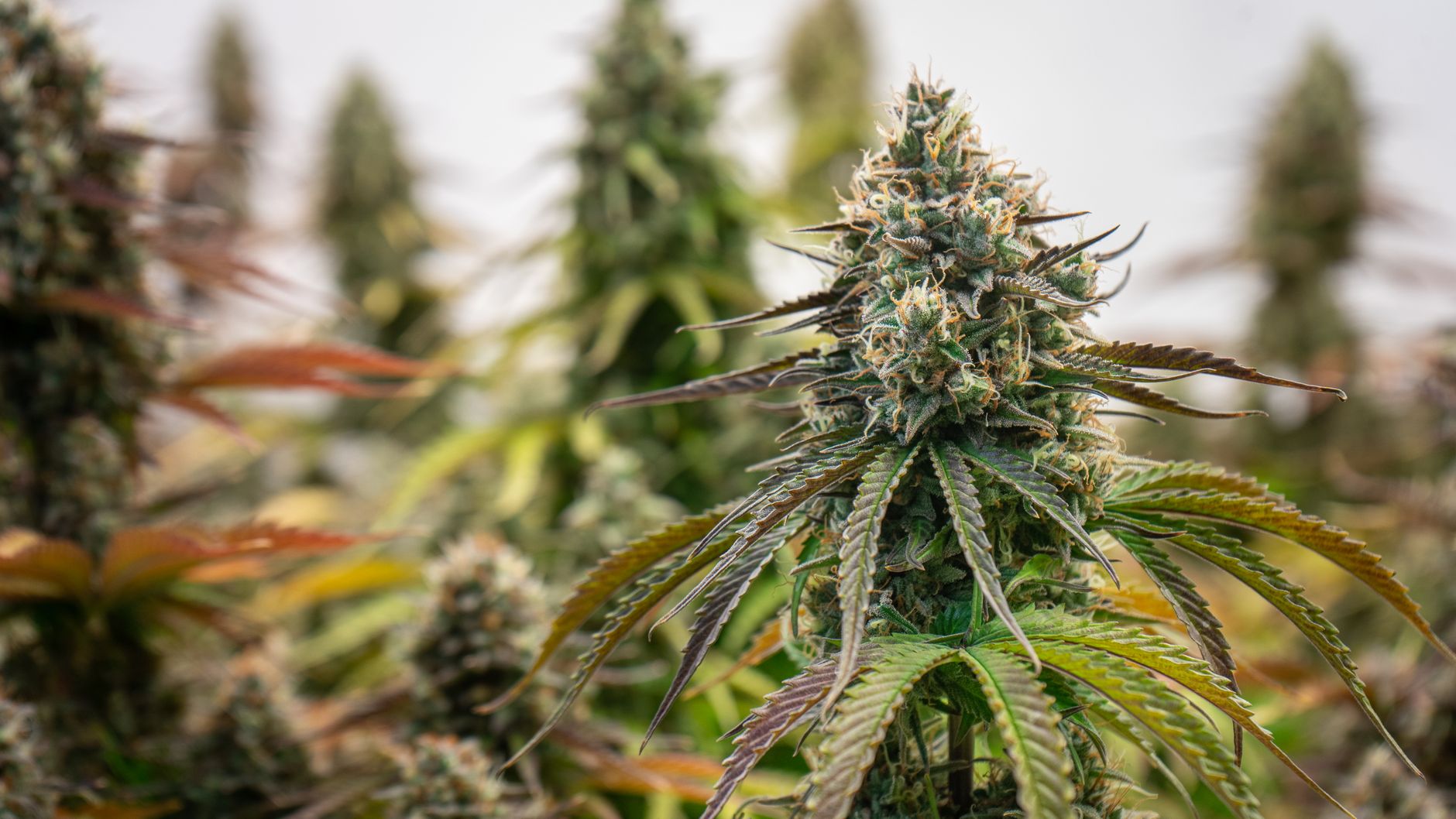
Photo by GB The Green Brand via Pexels.
This is the phase where feeding decisions matter most. Bud density and trichome development both accelerate here, and nutrient uptake capacity is at its highest of the entire grow.
- EC/PPM target: 1.8-2.4 mS/cm (900-1200 ppm), pushed toward the top of that range for vigorous, heavy-feeding phenotypes and kept lower for sensitive landrace or low-tolerance genetics.
- NPK ratio: Shift to P-K dominant, roughly 1-2-3 or 0-3-4 depending on your base nutrient line. Nitrogen should drop to 40-60% of veg levels -- enough to support leaf function, not enough to delay ripening.
- Bloom boosters: This is where a PK booster or bloom enhancer earns its keep, but add it as a supplement on top of a complete base nutrient, not as a replacement. Overloading P and K without balanced micronutrients causes lockout of magnesium and zinc, both critical for chlorophyll function and enzyme activity in terpene synthesis.
- Sulfur and micronutrients: If your line doesn't already include a sulfur-rich micro supplement, this is the window to add one at label rate. Growers chasing terpene density specifically often see the clearest response here.
Maintain leaf temp-driven VPD in the 1.0-1.4 kPa range through this stage -- mild stress from slightly lower humidity (45-55% RH) can nudge resin production upward as a defensive response, but push it too far and you'll trigger nutrient uptake problems instead.
Weeks 8+: Ripening and the Flush Decision

Photo by Diego Barros via Pexels.
The final 10-14 days before harvest is about finishing clean, not adding more. Nitrogen especially needs to taper hard here -- residual nitrogen in late flower is directly linked to harsh, grassy-tasting smoke and can actually suppress final trichome maturation because the plant keeps investing in leaf tissue instead of finishing cannabinoid and terpene production.
- EC/PPM target: Step down to 1.0-1.4 mS/cm (500-700 ppm) over the final 10-14 days, dropping in stages rather than cutting all nutrients in one shot.
- NPK ratio: Minimal N, light P-K carrier if using any feed at all. Many growers run plain pH-balanced water for the final 3-7 days in soil, or a dilute finishing solution in hydro/coco to avoid a full flush shock.
- Flushing: A hard flush (plain water only) for 7-14 days works well in soil where there's nutrient buffering in the medium. In coco or hydro, where there's no buffer, a full flush risks starving the plant and stalling final resin production -- a tapered reduction generally preserves quality better than an abrupt cutoff.
Trichome color -- shifting from clear to cloudy to amber -- is your real harvest signal, not the calendar. But the nutrient environment in these final weeks determines whether the plant reaches full maturation smoothly or shuts down early under stress, so don't treat the taper as optional.
Reading the Plant: Adjusting Timing to Reality

Photo by Tima Miroshnichenko via Pexels.
Every chart is a starting point, not a rulebook. Genetics, medium, and climate all shift the actual timing of these phases, sometimes by a week or more in either direction.
- Fast finishers (7-8 week strains): Compress the resin-building window -- start your P-K shift by week 3 instead of week 4, and begin tapering by week 6.
- Long-flowering sativa-dominant lines (10-12+ weeks): Extend the resin-building phase and watch for a second wave of bud swell around week 8-9 that can benefit from a brief EC bump before the final taper.
- Coco vs. soil vs. hydro: Coco and hydro respond to nutrient timing changes almost immediately since there's no buffering; soil lags by several days, so make adjustments earlier than you think you need to.
- Leaf tissue signs: Slight yellowing of lower fan leaves in weeks 7-8 is normal nitrogen mobilization, not deficiency -- don't chase it with more N. Dark green, clawed leaf tips late in flower mean you're still running too hot on nitrogen and need to taper sooner.
Keep a simple log of EC, pH, and runoff numbers alongside photos each week. Patterns that look random in the moment become obvious once you can compare week 5 of this grow to week 5 of the last one, and that comparison is what actually refines your feeding schedule over time -- far more than any generic chart, including this one.
Maximum resin production isn't the result of a special bottle or a secret additive -- it's the result of matching nutrient availability to what the plant is actually doing at each stage of flower, then getting out of the way during ripening so it can finish. Outcomes will still vary based on your specific genetics, medium, and climate, so treat these ranges as a calibrated starting point and adjust based on what your plants show you week to week.
Good feeding technique amplifies genetic potential -- it doesn't create it. Starting with quality, well-bred seeds gives you a plant that's actually capable of the trichome density and terpene expression this kind of nutrient timing is designed to unlock.
Photo by Diego Barros via Pexels.