Supercropping: The High-Stress Technique for Bigger Colas
Supercropping is the fastest way to turn a tall, lanky plant into a wide, even canopy stacked with heavy colas -- but it's also the training technique growers botch most often, either snapping stems clean through or pinching too gently to do anything at all. Done right, you're deliberately crushing the internal tissue of a branch without breaking the outer skin, forcing the plant to flood the wound site with auxins and callus tissue that thickens the stem into a rigid, nutrient-highway knuckle.
That knuckle does two things every yield-focused grower wants: it flattens your canopy so light hits more bud sites evenly, and it creates a structural chokepoint that redirects sugars and hormones into the colas below it. This guide covers exactly when to do it, how to do it without losing a branch, and how to stack it with topping and LST for a genuinely bigger harvest.
What Supercropping Actually Does to the Plant

Photo by Jave Lr via Pexels.
Supercropping is a form of high-stress training (HST) where you pinch and bend a branch between your fingers until you feel the inner stem tissue crunch -- the cortex and xylem fracture internally -- while the outer epidermis stays intact. Unlike a snapped branch, there's no open wound for pathogens to enter, but the plant still responds as if it's been injured.
Within 24-48 hours, the damaged site swells as the plant deposits callus tissue and lignin to reinforce the area. This creates a hard, knobby bend that's actually stronger than the original stem. More importantly, the localized injury triggers a redistribution of auxin (the hormone responsible for apical dominance) away from the bent branch and toward lower, previously suppressed bud sites. That's the mechanism behind the classic supercropping result: colas that were shaded and thin start swelling because they're suddenly getting a larger share of the plant's hormonal and photosynthetic resources.
It also has a purely mechanical benefit. Bending main colas horizontal opens up the canopy, letting light penetrate into what would otherwise be a shaded lower third. In an indoor tent running 700-900 PPFD at the canopy, that redistribution can mean the difference between popcorn larf and dense secondary colas that actually finish dense.
Timing: When to Supercrop for Maximum Cola Development
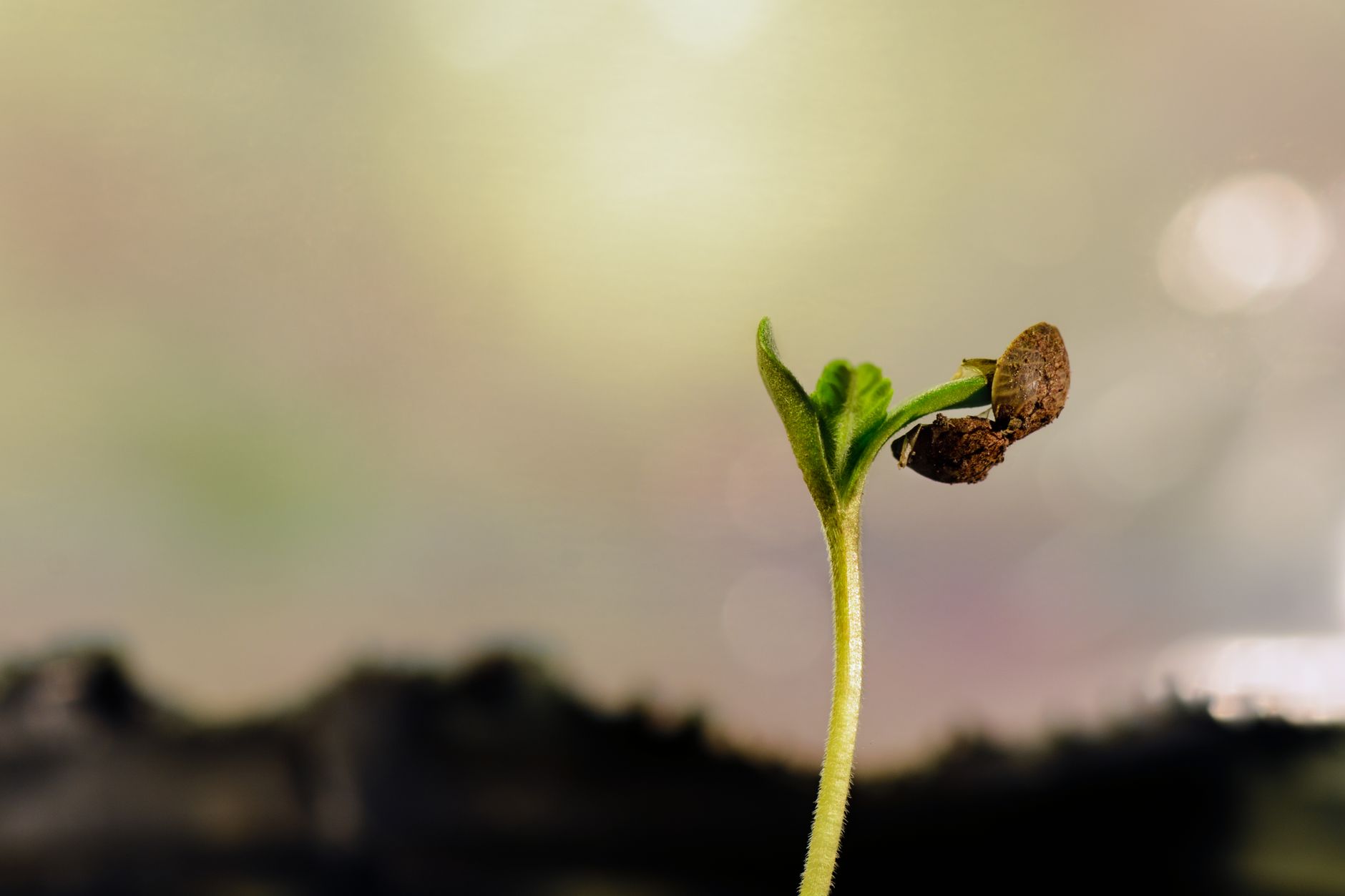
Photo by Priscila Dramisino via Pexels.
Timing separates a technique that adds real weight from one that just costs you recovery days. Supercropping works best during the vegetative stage and the first 1-2 weeks of flower, before the plant locks into reproductive growth and stretch slows down.
- Late veg (2-3 weeks before flip): Ideal window. Plants have thick enough stems to handle the pinch and enough remaining vegetative growth to recover and lignify fully before they need to focus energy on bud production.
- Week 1-2 of flower (during stretch): Still effective, especially on main colas that are shooting up faster than the rest of the canopy. This is prime time to bend dominant tops down to even out the canopy height before flower sites are fully set.
- Mid-to-late flower: Avoid unless it's a minor correction. Stems become brittle and less pliable as they lignify for flower support, and any stress response competes with the plant's energy budget right when it should be packing on trichomes and calyx mass. A snapped cola at week 5 is lost yield, not gained yield.
As a rule, stop any high-stress training at least 2 weeks before you expect to see pistils turn and swelling really kick in -- generally by mid-flower for photoperiod strains. Autoflowers can be supercropped too, but only gently and only in the first 2-3 weeks of their life cycle, since they don't have time to recover from a botched attempt.
The Correct Technique, Step by Step
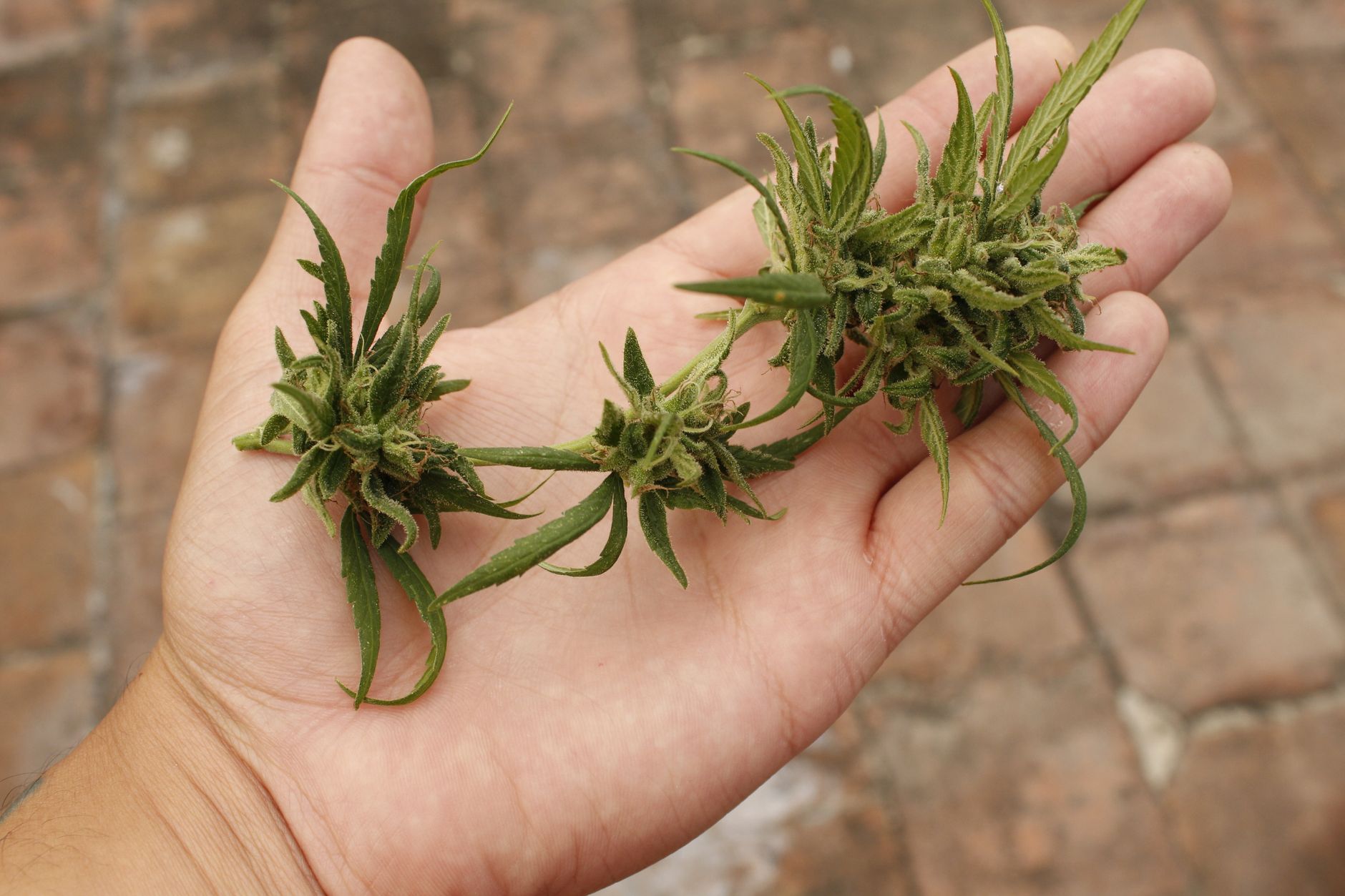
Photo by Alexis Cervantes via Pexels.
Pick a branch that's still somewhat green and flexible -- ideally pencil-thick, not yet fully woody. Woodier stems near the base are more likely to snap outright.
- Locate the spot: Choose a point 4-6 inches below the growing tip, on a section of stem that isn't a node itself.
- Pinch and roll: Using your thumb and forefinger, firmly squeeze the stem and roll it gently between your fingers for 10-15 seconds. You're trying to soften and crush the inner fibers, not tear the skin.
- Feel for the crunch: You should feel (and sometimes hear) a soft crackling as the internal tissue gives way. The stem will suddenly go limp and floppy at that point.
- Bend, don't fold: Once it's pliable, slowly bend the branch to the desired angle -- usually 90 degrees or more, laid nearly horizontal. Do this gradually; don't crank it over in one motion.
- Support if needed: If the bend is severe or the branch is heavy, brace it with a soft plant tie, gauze, or a small splint of tape for 48-72 hours until the callus starts forming.
If you feel the stem give way completely and it flops with no resistance, you've gone too far and torn through the skin -- wrap it immediately with grafting tape or a twist tie for support and treat it as a repair, not a training success. It'll usually still heal, just with a weaker knuckle.
Stacking Supercropping With Other Training Methods
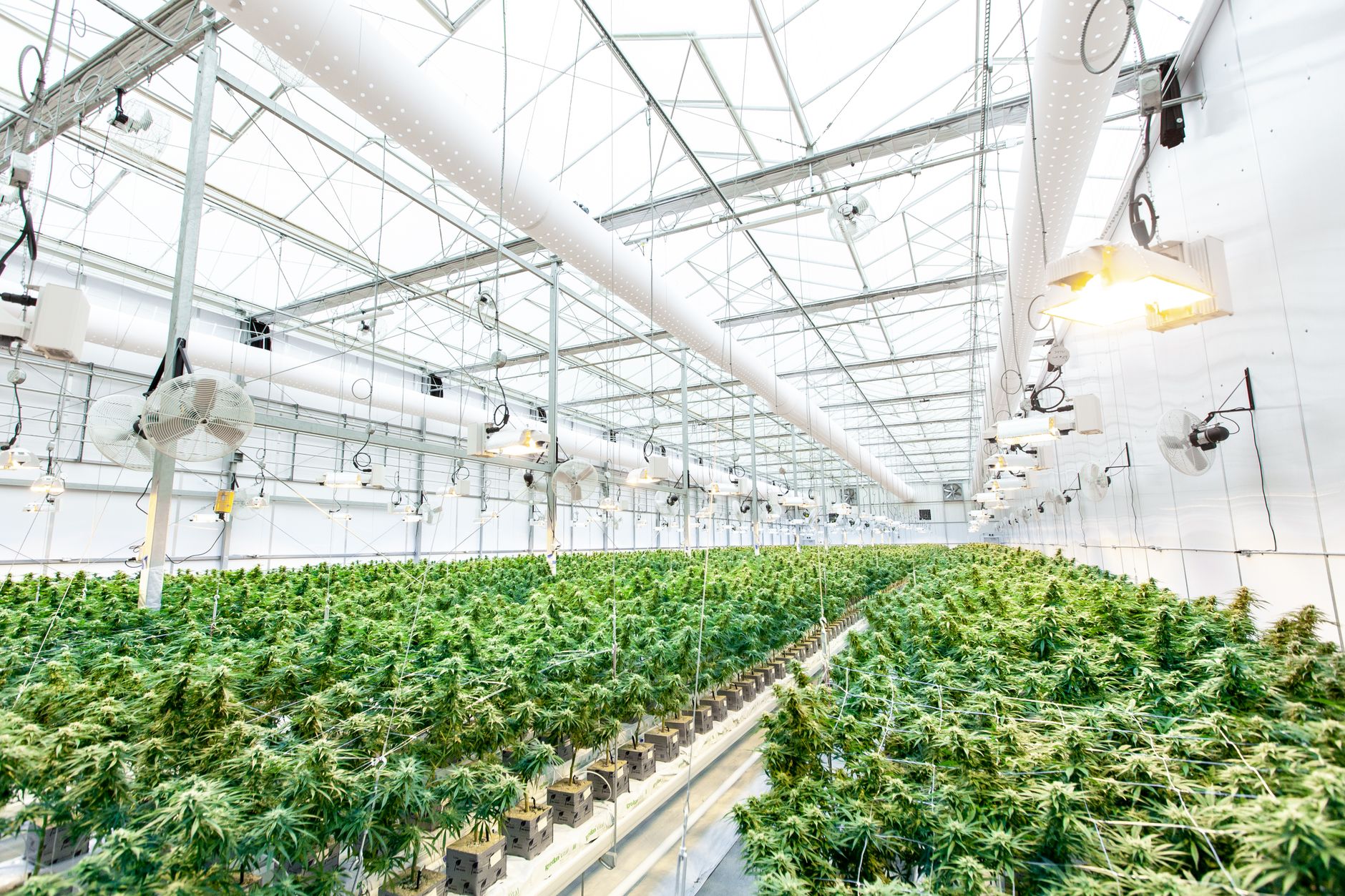
Photo by Richard T via Pexels.
Supercropping rarely works alone in a serious yield program -- it's most effective layered with structural techniques that set up the canopy it's manipulating.
Top or FIM your plants first, 3-4 nodes in during early veg, to establish multiple colas instead of one dominant spire. Once those colas are growing and starting to outpace each other in height, use supercropping to bend the tallest ones down to match the canopy line, rather than topping them again. This preserves more total bud sites than repeated topping while still leveling the canopy.
Low-stress training (LST) -- tying down branches with soft ties or training wire -- pairs naturally with supercropping. Use LST for gentle, gradual shaping throughout veg, and reserve supercropping for the stubborn branches that won't hold a bend or that are racing ahead of the rest during stretch. A screen (ScrOG) works well here too: supercrop branches that push above the screen line back down through the gaps instead of just tucking them, and you get the stem-thickening benefit on top of the canopy-leveling effect.
The plants that respond best to this combined approach tend to have vigorous branching and strong lateral bud development to begin with -- another reason starting with well-bred, quality genetics matters as much as the training itself. A genetically weak structure will fight you at every stage no matter how good your technique is.
Recovery, Feeding, and Avoiding Common Mistakes

Photo by MySeeds DE via Pexels.
After supercropping, plants typically show a droopy, wilted look at the bend site for 24-48 hours -- this is normal and not a sign of failure. Full lignification and knuckle formation takes 5-7 days. During this window, keep humidity slightly elevated (55-65% RH) and avoid heavy nutrient adjustments; this isn't the time to push EC higher or introduce a new product.
A few mistakes account for most failed attempts:
- Bending too fast: Rushing the bend before the tissue has fully softened is the number one cause of full snaps. Take the full 10-15 seconds to crush before bending.
- Working on wet, turgid plants: Stems are more brittle when fully hydrated and pressurized. Some growers supercrop in the last few hours of the light cycle, or skip watering the day before, when stems are slightly more pliable.
- Over-supercropping the same plant: Bending more than 20-30% of a plant's branches in a single session creates too much simultaneous stress and can stall growth for a week or more. Spread major sessions out every 5-7 days.
- Ignoring environment during recovery: A stressed, bent plant in a room running poor VPD (outside the 0.8-1.2 kPa range for veg/early flower) recovers far slower and is more prone to a full break at the injury site.
If a branch does snap completely, don't discard it -- support it firmly with tape or a splint immediately and it will often heal within a couple of weeks, sometimes even producing a bigger cola at the injury point than an unstressed branch would have.
Supercropping is a simple mechanical trick with an outsized effect on yield: bend a stem enough to crush its inner tissue, and you flatten your canopy, thicken your stems, and redirect the plant's resources into colas that would otherwise sit in the shade. The technique itself takes minutes to learn, but the timing, restraint, and follow-through -- knowing when to stop, how much to do in one session, and how to support the plant through recovery -- are what separate growers who add real weight from those who just add stress.
Results will always vary with your strain's branch flexibility, your room's environment, and how much recovery time you build into your schedule, so treat your first few attempts as practice on less critical branches before you commit your main colas to the technique.
Photo by Kindel Media via Pexels.