At-Home Cannabis Testing: How Close Are We to Lab-Grade?
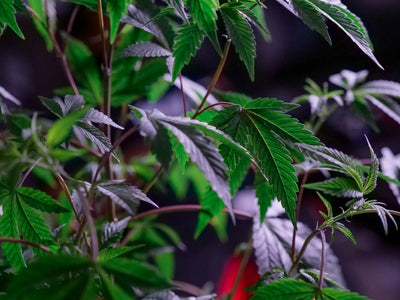
Photo by liberatori via Pixabay.
Set a piece of dried flower on a small tray, close the lid, and ten seconds later a number pops up on a screen: 22.4% THC, 0.6% CBD. That's not a lab demo -- that's a Purpl PRO doing its job on a kitchen counter. A decade ago, getting that same number required a benchtop HPLC system, a trained technician, and something in the neighborhood of $50,000 in equipment. The compression of that workflow into a handheld device is one of the quieter but more consequential pieces of cannabis technology to mature over the last several years, and it's easy to assume it means testing in general has been solved.
It hasn't. Potency testing -- figuring out how much THC and CBD is actually in a sample -- and safety testing -- figuring out whether that sample is carrying pesticide residue, heavy metals, mold toxins, or leftover solvent -- are different problems that happen to get lumped together under the word testing. Consumer technology has made real, measurable progress on the first one. It has made almost none on the second. That gap isn't a marketing failure or a matter of someone not building the right app yet; it's rooted in what different classes of molecules require to be detected, and in how concentrated they are when they show up in a sample.
This isn't purely an equipment story, either. States are still building out the regulatory infrastructure that determines who has to test for what, and how often. Maine's LD 1847, a 2026 bill aimed at bringing medical cannabis growers under testing requirements closer to what recreational operators already face, is a useful reminder that even the boring, official version of cannabis testing is still under construction in plenty of places. The consumer device story and the regulatory story are more connected than they look -- and understanding where each one actually stands is the point of this piece.
The State of At-Home Potency Testing in 2026

Photo by CRYSTALWEED cannabis via Unsplash.
The clearest way to see how far consumer potency testing has come is to look at what's currently on the market rather than what's promised. tCheck, one of the longest-running names in this space, is now on its third hardware generation. The tCheck 2, still widely used, measures THC and CBD in dried flower to within about plus or minus 3 percentage points of lab HPLC results -- accurate enough to tell a grower whether a harvest landed closer to 18% or 24% THC, which is exactly the kind of decision home cultivators and small-batch processors actually need to make.
That accuracy doesn't hold up uniformly across product types, though, and it's worth being specific about where it breaks down. With winterized concentrates -- shatter, wax, and similar extracts that have had fats and waxes removed -- tCheck's margin of error roughly doubles, to about plus or minus 7 percentage points. Non-winterized isolates aren't supported by the device at all. For flower-focused home growers this is a minor asterisk. For anyone working seriously with concentrates, it's a real ceiling on how much they can trust the number on the screen.
Purpl PRO takes a different technical approach and gets tighter results. It uses near-infrared spectroscopy, a method with FDA-endorsed precedent in food and pharmaceutical testing, to read total THC, total CBD, moisture content, and water activity in under ten seconds. Purpl calibrates its readings against HPLC lab data -- the same reference standard state-licensed labs use -- and claims roughly plus or minus 2% precision, noticeably tighter than tCheck's already-respectable flower accuracy. The catch is price: Purpl's Starter Kit runs $2,495. That's lab-quality performance in a portable footprint, but it's nowhere near an impulse buy, and it puts the device solidly in prosumer or small-business territory rather than the average patient's price range.
Put those two products side by side and a real trend emerges: the accuracy gap between consumer-facing NIR devices and full lab HPLC/GC-MS setups, at least for potency specifically, has narrowed substantially. But that convergence didn't happen overnight -- it took roughly a decade of NIR sensor miniaturization, better calibration datasets, and falling component costs to get here. That timeline matters for what comes next, because contaminant testing hasn't had its equivalent decade yet.
Why Contaminant Screening Is a Harder Problem

Photo by PublicDomainPictures via Pixabay.
Cannabinoids are, chemically speaking, cooperative targets. THC and CBD show up in flower and concentrates at concentrations ranging from single digits up into the twenties or thirties as a percentage of total mass -- high enough that near-infrared spectroscopy, which reads how light gets absorbed by specific molecular bonds, can pick up a clean signal. That's the whole reason Purpl PRO and Sage Analytics' devices work: NIR light interacts predictably with the chemical bonds common in cannabinoid molecules, and there's enough of that molecule present to generate a readable pattern in seconds.
Pesticides, heavy metals, mycotoxins, and residual solvents don't play by those rules. Regulatory action levels for these contaminants are typically set in parts per billion or low parts per million -- concentrations thousands of times lower than cannabinoid percentages. Detecting them reliably still requires HPLC or GC-MS instrumentation, the same category of equipment that used to be required for potency testing, and that chemistry hasn't proven to be miniaturizable the way NIR was. NIR spectroscopy works because its target is abundant; it fails at parts-per-billion detection because there simply isn't enough of the molecule present to generate a distinguishable absorption signature against everything else in the sample.
Home users do have some options, mostly color-chart kits and thin-layer chromatography (TLC) tests marketed for cannabis contaminant screening. Decent versions of these can give a reasonably reliable potency range. For contaminants, though, they're considerably cruder -- capable of flagging gross, obvious contamination in some cases, but far short of the sensitivity or specificity a compliance lab delivers, and not something anyone should treat as a pass/fail safety verdict.
It's worth being explicit that this is a hard physical and chemical limit right now, not simply a matter of the market not having gotten around to it yet. Closing this gap probably requires a genuine sensor breakthrough rather than incremental refinement of what already exists -- something like inexpensive biosensors or lateral-flow assays borrowed from food-safety testing, adapted specifically for cannabis contaminant profiles. And even if that breakthrough arrives, there's a conservative counter-case worth sitting with: regulatory bodies would almost certainly still require lab-confirmed results for any compliance purpose, meaning a consumer device -- no matter how good -- would likely always be a screening tool sitting alongside official lab testing, not a replacement for it.
Professional-Grade Portable Analyzers: A Middle Tier Emerges

Photo by Jess Loiterton via Pexels.
Between the countertop consumer device and the state compliance lab sits a middle tier that gets less attention than either end, but that arguably shows the more realistic near-term trajectory. Orange Photonics' LightLab 3 lets cultivators and processors test up to 18 different cannabinoids in both flower and concentrates in-house, with no chemistry background required to operate it. Sage Analytics' Profiler II, also built on near-infrared spectroscopy, evaluates THC and CBD levels in a matter of seconds. Neither device is marketed to consumers -- both are pitched squarely at growers and processors who need fast, repeatable in-house quality control before product ever leaves the facility.
These aren't stripped-down versions of lab equipment, and they aren't scaled-up consumer devices either -- they occupy their own tier, priced and engineered for business use: accurate enough to inform real decisions about batch consistency, blending, and labeling, but not positioned or priced for a home user's kitchen counter.
The existence of this professional middle tier is itself informative. It suggests the more realistic path forward isn't a sudden leap to affordable consumer contaminant testing, but a slower trickle-down: professional tools get adopted first by businesses that can justify the cost through operational efficiency, then gradually get cheaper and simpler until a consumer version becomes viable. That's not a novel pattern in health and safety technology -- it's the same one home pregnancy tests and blood glucose meters followed decades earlier.
The glucose meter comparison is worth dwelling on because the timeline is instructive. Clinical blood glucose monitoring devices existed in professional settings by the 1970s. It took roughly two decades -- into the 1990s -- before affordable, easy-to-use meters showed up on drugstore shelves for diabetic patients to use at home. That's a two-decade gap between professional and consumer availability for a technology solving a comparatively simpler chemical problem than parts-per-billion contaminant detection. If cannabis contaminant testing follows anything like that pacing, the professional tier represented by LightLab 3 and Profiler II today is closer to where the technology actually is than any hoped-for consumer timeline.
Law Enforcement's Field Kits Point to What's Technically Possible

Photo by cottonbro studio via Pexels.
Law enforcement field kits are an odd but genuinely useful data point in this conversation, because they show what's technically achievable at low cost when the question being asked is simple. SwabTek makes presumptive field kits that let officers determine, on the spot, whether a cannabis sample's Total THC concentration falls above or below the 0.3% threshold that legally separates hemp from marijuana under federal law.
The process is more chemically involved than it sounds. The kit requires heating the sample to 220°F, a step that converts roughly 87% of the sample's potential THC -- meaning THCA plus THC -- into its active, measurable form. That detail matters beyond law enforcement: it's a reminder that decarboxylation math has to be built into any rapid-test design that's trying to report Total THC rather than just raw THC content, because raw, undecarbed cannabis reads very differently than what a smoker or lab test is actually measuring.
What these kits are built for, though, is fundamentally narrower than what a tCheck or Purpl device attempts. SwabTek's kits answer a binary legal question -- above or below 0.3% -- not a precise potency percentage, and they say nothing at all about pesticides, heavy metals, or mold. That's a much simpler engineering target than quantifying THC to within a couple of percentage points or detecting contamination at parts-per-billion levels, and the kit's design reflects it: fast, cheap, and legally defensible in court, rather than precise or repeatable across a wide concentration range.
That contrast is the real point here. Law enforcement wants speed and a defensible yes-or-no answer that can support probable cause; consumers and growers want precision and consistency across repeated tests on their own product. Those are two different engineering priorities producing two different kinds of devices, and it's worth being clear that SwabTek's kits aren't consumer products in the first place -- they're generally not legal or practical for consumer use in most jurisdictions. They're included here purely as evidence of what a low-cost, rapid presumptive test can accomplish when the underlying question is simplified down to a threshold rather than a precise measurement.
Regulation Hasn't Caught Up Either -- The Maine Example

Photo by Brett Sayles via Pexels.
Maine's LD 1847 is a small bill with a bigger signal attached to it. The legislation would bring most of the state's medical cannabis growers under testing requirements similar to what recreational operators already have to meet -- mandatory lab screening that, in many cases, medical growers currently aren't required to do at all. It's a compliance-and-paperwork story on its face, but it's also direct evidence that testing infrastructure, even at the level of legal mandates, is still being built out state by state rather than existing as a settled baseline everywhere cannabis is legal.
That's directly relevant to the at-home testing conversation. In states where medical growers aren't yet required to send samples to a lab, a consumer-grade device -- even one with the limitations described earlier -- is filling a real information gap right now for growers and patients who otherwise have no way to check their product at all. That's a meaningfully different value proposition than in states with mature recreational testing regimes, where lab-verified numbers are already on every label.
This pattern isn't new, and reasoning from how it played out before is useful for judging where Maine fits. In Colorado and Washington, the first states to build mature recreational markets around 2014, mandatory contaminant testing regimes for the recreational side were built out years after medical markets had already existed in some form. Other states that legalized recreational use later have followed a similar lag: medical rules come first and loosely, recreational testing mandates get built more rigorously afterward, and eventually legislatures circle back to bring medical programs up to the same standard. Maine's 2026 bill fits neatly into that historical sequence -- it's not an outlier, it's a state catching its medical program up to where its recreational testing requirements already sit.
Extrapolating from that pattern, and flagging this clearly as projection rather than fact: as more states pass parity bills like LD 1847, demand for affordable interim tools -- including consumer devices with their known limitations -- likely grows among small medical growers and caregivers who can't yet access or afford full lab panels on a routine basis. The counter-case deserves equal weight, though. State legislatures move unevenly and often slowly on exactly this kind of bill; LD 1847 could stall in committee, get watered down before passage, or simply never come to a vote. Some states may never fully harmonize their medical and recreational testing rules, leaving this patchwork in place indefinitely rather than resolving toward a single national standard.
What Would Actually Close the Gap

Photo by Pavel Danilyuk via Pexels.
If potency testing's decade-long path from lab to countertop is the template, it's worth asking what specific ingredients made that path possible -- because those same ingredients, or their equivalents, are what would need to show up for contaminant testing to follow a similar curve. NIR spectrometer components got cheap for largely the same reason a lot of consumer optical sensors got cheap: broader demand from industries like smartphone cameras and food-quality sensing drove down the cost of the underlying optical hardware, and cannabis testing device makers rode that cost curve down rather than having to fund miniaturization from scratch. That's a big part of why Purpl and tCheck became commercially viable products rather than remaining lab curiosities.
A comparable cost decline in biosensor or microfluidic chip manufacturing could plausibly do the same thing for contaminant testing, and there's a real precedent suggesting it's not far-fetched. Lateral-flow assay technology -- the same basic format behind at-home COVID tests and pregnancy tests -- is already used in food-safety labs to screen for pesticide residues at relatively low cost. Adapting that same lateral-flow approach into cannabis-specific pesticide or mycotoxin panels is chemically plausible. It just hasn't been commercially demonstrated for cannabis consumers yet, and going from plausible to shelf-ready is exactly the gap that took NIR about ten years to close for potency.
Given that contaminant detection is chemically harder -- targeting concentrations thousands of times lower than cannabinoid percentages -- it's reasonable to expect a longer curve than potency testing's decade, unless a specific biosensor breakthrough accelerates things faster than incremental refinement would. That's a real possibility worth watching, but it's speculative, not a forecast anyone should bank a business plan on without more evidence.
That said, it's also a genuinely open commercial niche. Neither tCheck nor Purpl offers any contaminant detection at all today, and whoever successfully adapts lateral-flow or microfluidic pesticide and mycotoxin detection into a sub-$500 consumer device first would be moving into essentially uncontested territory. The realistic customer base for that device, though, is worth being precise about: home growers, caregivers, and medical patients rather than licensed dispensaries. Even a genuinely good consumer contaminant device would very likely still sit alongside, rather than replace, state-mandated lab testing for anything sold at retail -- regulators have shown no sign of treating consumer devices as compliance-equivalent, and there's no strong reason to expect that to change.
The honest summary of where things stand is that potency testing got fast and affordable because it had two things going for it that contaminant testing doesn't: a sensing technology, near-infrared spectroscopy, that could actually be shrunk down and cheapened, and a target molecule present in high enough concentration for that technology to read reliably. Contaminants fail on both counts today -- the chemistry that finds them isn't yet miniaturizable, and the concentrations involved are orders of magnitude too low for the tools that solved the potency problem.
The more realistic near-term future isn't a sudden consumer contaminant-testing product -- it's a widening professional and semi-professional middle tier. LightLab 3 and Profiler II already show what that looks like: capable, in-house tools built for cultivators and processors, priced and designed for business decisions rather than home use. If the glucose-meter precedent holds even loosely, that middle tier is where the real progress happens for a while, gradually trickling toward smaller growers and caregivers, well before anything resembling true consumer-grade contaminant testing shows up.
Keep an eye on bills like Maine's LD 1847 as a leading indicator rather than a footnote. As more states extend testing mandates to medical and craft-grower markets, the population of small operators who need some kind of interim answer -- even an imperfect one -- grows right along with it. That's the commercial pressure that eventually gets an affordable contaminant tool built. It hasn't happened yet, and there's no guarantee it happens on any particular timeline. But the demand side of that equation is visibly assembling itself, one state testing bill at a time.