Beyond Canada and the Netherlands: The New Cannabis Export Map
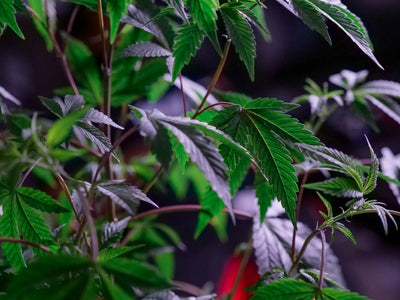
Photo by Wolfgang Weiser via Pexels.
For most of the last decade, if you wanted to talk about legal cannabis export infrastructure, you were really talking about two countries. Canada built the licensing, cultivation, and cold-chain logistics to move product internationally starting around 2018. The Netherlands leaned on its existing pharmaceutical manufacturing base and Bedrocan's decades-old medical cannabis program to become Europe's default supplier. Everyone else was theoretical -- a country with the right climate or the right politician making noise, but no actual shipments clearing customs.
That's no longer an accurate picture. Canadian medical cannabis exports grew more than 250% year-on-year to 275,343kg in 2025, a volume so large it's reshaping the economics for everyone else in the business. That much supply hitting international buyers -- primarily Germany, Australia, and the UK -- pushes wholesale prices down, and it's forcing anyone entering the trade now to compete on cost, climate, or a niche Canada simply can't serve as cheaply. That pressure is exactly what's pulling a second wave of producer countries into real, documented export activity rather than press-release speculation.
This piece is about that second wave, and it sticks to what's actually shipping in 2025 and 2026, not what's merely permitted. Colombia, Thailand, Portugal, North Macedonia, a cluster of African nations, Paraguay, New Zealand, Morocco, and Jamaica all show up in trade data or licensing records with real figures attached -- some modest, some surprisingly large. None of them threaten Canada's scale yet. But the pattern of who's moving product, and why, tells you a lot about where the next five years of this trade are actually headed.
Colombia's Slow Climb and Its Trade Map

Photo by Sebastian Laverde via Unsplash.
Colombia's cannabis export numbers read like a company finding its footing rather than a country making a dramatic entrance. Exports rose from US$4.2 million in 2021 to US$8.4 million in 2022, then to over US$10.8 million in 2023 -- a doubling, then a further 29% jump. That's real, compounding growth, but set against Canada's 275,343kg in medical exports alone, Colombia's dollar figures are still a rounding error on the global ledger. What matters more than the topline number is the concentration and direction of that trade.
Roughly 71% of Colombian exports in the most recent reporting period went to just three markets: Brazil took 32%, Australia 25%, and Germany 14%. That's a country building relationships with specific pharmacy-supply buyers rather than dumping product on a spot market, which is a more durable strategy even if it's a slower one. In August 2024, Colombia added North Macedonia to its export map, shipping Cannabis sativa plant material as part of a network the government now counts at more than 12 international partners.
There's a second, less-discussed trade running in parallel: genetics. Colombian seed exports now reach Argentina, Canada, Spain, the US, England, Lesotho, Peru, Uruguay, Switzerland, and Thailand. That's a wider footprint than the flower and extract trade, and it matters because seed exports are usually a leading indicator -- countries buy genetics years before they're producing exportable volume themselves. Thailand and Lesotho both show up on that seed-import list, and both also appear later in this piece as emerging producers in their own right.
Colombia's regulators have also moved to fix a specific, documented bottleneck: product degrading in transit before reaching distant buyers. The extension of THC-product shelf life from two years to four years directly targets that problem, and it's the kind of unglamorous regulatory fix that matters more to export viability than any cultivation subsidy. Companies worth tracking here include Clever Leaves, Khiron Life Sciences, and Richmond Seeds S.A.S. -- the first two built around flower and extract export, the third specifically playing the genetics trade that's quietly running alongside it.
Portugal and North Macedonia: The Quiet Mid-Tier Workhorses

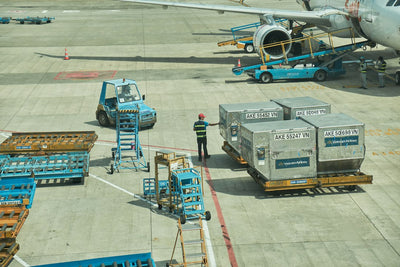
Photo by adham borhan via Unsplash.
Portugal doesn't get talked about as an emerging exporter because it isn't emerging -- it's already there, and has been quietly moving volume while headlines chase newer stories. By volume, the top three cannabis exporters globally are the UK, Canada, and Portugal. That's a genuinely surprising list to anyone who assumes this is a two-country story, and it means Portugal already outproduces essentially every country most outlets are now excited about.
The mechanism is worth understanding because it explains why Portugal behaves the way it does. Portugal's domestic medical cannabis market is small -- patient counts and prescriptions haven't scaled the way Germany's have. For a licensed cultivator based there, the commercial logic is almost entirely export. But getting product out requires clearing two separate regulatory gates: authorization from INFARMED, Portugal's medicines regulator, and a matching import permit from the receiving country. That dual-approval structure is a genuine bottleneck -- it's not enough to be cleared to grow and ship; the buyer's country has to independently clear you to land there. Any forecast about Portugal's export growth has to account for the fact that expansion depends as much on Germany's or the UK's import bureaucracy as on Portuguese cultivation capacity.
On the raw agricultural side, Portugal's hemp footprint is expanding fast: hemp cultivation area jumped from 68 hectares in 2024 to roughly 480 hectares in 2025, nearly a sevenfold increase in a single growing season. That's a strong signal of investor confidence, though hemp acreage and medical cannabis export volume are different metrics tracking different markets, and it would be a mistake to conflate the two.
North Macedonia belongs in the same conversation, not as an upstart but as a maturing node. It has over a decade of regulatory experience in medical cannabis licensing, predating much of the current export conversation entirely. Its role as a receiving market for Colombian plant material -- rather than a competitor to Colombia -- suggests something more interesting than isolated national markets: an actual supply chain forming across continents, where raw material moves to wherever processing capacity and regulatory clearance happen to sit. It's also worth flagging that the top producers by volume (Canada, Australia, UK) don't fully overlap with the top exporters (UK, Canada, Portugal) -- Australia produces heavily for its domestic market, while Portugal punches above its production weight specifically because it exports almost everything. That distinction matters for anyone trying to figure out where investment dollars should actually point.
Thailand's Sudden Arrival on the Supply Chain

Photo by Tom Fisk via Pexels.
Industry analysts flagged Thailand as a genuine new entrant to the international medical cannabis supply chain in early 2026, and the analyst most cited on this, Khourdaji, has framed it less as a surprise and more as an inevitability given the country's underlying cost structure. Thailand has abundant land and labor, a tropical climate that supports outdoor and low-cost greenhouse cultivation year-round, and operating costs that undercut Canadian and European producers by a wide margin. On paper, that's the same formula that made Colombia and later several African nations attractive to investors.
What's notable is the sequencing. Thailand already appears as a destination for Colombian seed exports -- meaning it's building genetic stock and cultivar diversity before it scales output for export. That's the same pattern seen with Lesotho and other newer entrants: import genetics first, prove out agronomy domestically, then push toward export-grade certification. It's a slower path than simply announcing production capacity, but it's the one that's actually shown up historically among producers that went on to sustain export relationships rather than flame out after one harvest.
The caveat here is significant enough that it deserves its own paragraph rather than a footnote. Thailand's cannabis policy has been genuinely unstable. Recreational-adjacent rules loosened dramatically starting in 2022, effectively decriminalizing possession and cultivation in ways that made Thailand briefly look like Southeast Asia's cannabis capital, only for the government to partially walk those rules back in 2024 and 2025 amid domestic political pushback and public health concerns. That's not a minor regulatory footnote -- it means Thailand's export infrastructure is developing under conditions where the underlying legal framework itself has changed direction twice in three years. Any exporter or foreign investor building a supply relationship with a Thai producer right now is underwriting genuine policy risk, not just market risk.
The conservative read on Thailand is straightforward: low production cost alone doesn't guarantee export success. Buyers like Germany and Australia require GACP (Good Agricultural and Collection Practice) and GMP (Good Manufacturing Practice) certification before they'll import pharmaceutical-grade cannabis, and those certifications take years to build out, require consistent regulatory backing, and are hard to secure when the underlying national policy keeps shifting. Thailand has the agronomic case. It hasn't yet demonstrated the regulatory stability to convert that into sustained pharmaceutical export volume.
Africa's Low-Cost Production Bet

Photo by Luanda Bauma Primo via Unsplash.
Lesotho deserves recognition it rarely gets in cannabis coverage: it became the first African nation to issue legal cannabis cultivation licenses back in 2017, giving it nearly a decade of regulatory maturity most of the continent, and frankly much of the world, doesn't have. That head start shows up in Lesotho's role as one of the destinations for Colombian seed exports and in its position as the most cited African name in pharmaceutical-grade cannabis discussions.
The bigger near-term event for the continent is South Africa's Hemp and Cannabis Commercialisation Policy, due by April 2026. If it lands roughly as expected, it moves South Africa toward an actual commercial hemp market rather than the patchwork of research permits and limited licenses that have defined the space there so far. That matters regionally, not just domestically. South Africa has manufacturing, logistics, and capital infrastructure that smaller neighbors lack, and a functioning commercial policy there could pull surrounding markets into its orbit.
This is where the more interesting projection comes in, and it's worth being explicit that it's a projection rather than settled fact: if South Africa's policy arrives as anticipated, Lesotho is well-positioned to become a regional processing hub rather than remaining just a raw cultivation site. It already has licensed operators with years of operating history -- the kind of track record that's expensive and slow to replicate, and that gives Lesotho a logical role processing and certifying product from across the region rather than competing purely on raw cultivation.
Zimbabwe, Zambia, and Rwanda are each separately pursuing pharmaceutical-grade export ambitions, and notably they're doing it by following Lesotho's licensing model rather than each trying to invent their own decade-long regulatory buildout from scratch. That's a sensible bet -- reasoning from a working precedent rather than reinventing the framework -- but it doesn't remove the real structural hurdle facing all of them. African producers face the same GMP and EU-GMP certification requirements as Thailand, and in several of these markets, weaker cold-chain logistics and less developed export infrastructure than Colombia or Thailand can currently offer. A cost advantage on the farm doesn't automatically translate into shelf placement in a German pharmacy; it has to survive certification, transport, and customs first, and that's where several of these programs remain unproven.
The Smaller Players Making Real Noise

Not every emerging exporter is trying to be the next Colombia or Thailand, and some of the more interesting activity in 2025 came from countries too small to make most trade roundups at all. Paraguay had 17 licensed cannabis firms and an estimated US$10-15 million in exports in 2025. That's a genuinely modest number next to Colombia's US$10.8 million from a single year earlier, let alone Canada's figures, but it's real revenue moving through a licensed system in a market almost nobody covers, and it suggests South America's export base is wider than just Colombia.
New Zealand's 2025 numbers tell a different kind of story: 2.3 tonnes exported, with 92% of that volume moving through a single company, Puro. That concentration is worth sitting with. It means New Zealand's entire export credibility currently rests on one operator's continued execution -- there isn't yet a diversified base of producers behind that number. It's a useful reminder that a country appearing on an export list doesn't mean the trade there is broad-based; sometimes it means one company found a buyer.
Morocco is the outlier in this group by sheer scale: a 1,958-tonne harvest in 2025, up 4% year-on-year, spread across 5,765 permits and 4,776 growers. That's by far the largest raw output figure of any country covered here, dwarfing even Canada's medical export tonnage. But the figure needs context -- this is overwhelmingly industrial hemp production, not pharmaceutical-grade medical cannabis, and Morocco's long-standing informal cannabis economy means formalized export volume and total cultivation are two very different numbers. Morocco's scale is real, but it's playing in a different product category than Portugal or North Macedonia.
Jamaica's contribution in this period is symbolic more than volumetric, but symbolism has commercial value in this industry. JACANA completed the country's first medical cannabis export on January 7, 2026, shipping to the Cayman Islands. For a country with one of the world's longest cannabis cultures and almost no formal export history, that first shipment is a genuine milestone -- proof that the licensing and export infrastructure work, even if the volume behind it is currently tiny. Taken together, these five markets aren't yet a threat to Canadian scale. Their significance is diversification -- proof that the trade can work in more places, under more regulatory models, than the two-country story suggested even three years ago.
Why Canada's Oversupply Changes Everyone's Math

Photo by wal_172619 via Pixabay.
Put the numbers next to each other and the scale gap is almost comic. Canada's medical cannabis exports grew more than 250% year-on-year to 275,343kg in 2025. Morocco's entire 1,958-tonne harvest is mostly industrial hemp, not comparable product. Every other country in this piece -- Colombia's dollar figures, Paraguay's US$10-15 million, New Zealand's 2.3 tonnes -- combined wouldn't come close to matching Canadian volume. We're talking roughly two orders of magnitude of difference. That gap is the single most important fact shaping how every emerging exporter is actually behaving right now.
There's real historical precedent for what happens next, and it comes from agricultural commodities rather than cannabis specifically. When a dominant producer oversupplies a global market -- Brazil in coffee, Ivory Coast and Ghana in cocoa -- smaller producing nations that survive don't try to out-produce the leader. They compete on niche quality, specialty certification, cost advantage, or proximity to specific buyers. Vietnam didn't beat Brazil at coffee volume; it carved out a robusta niche at lower cost. That's the playbook now visible in cannabis: Colombia and the African cluster leaning on climate and cost, Portugal and North Macedonia leaning on EU regulatory proximity that Canadian shipments can't replicate as cheaply, Thailand betting on labor cost, Jamaica betting on cultural and brand positioning that no other producer can credibly claim.
The more speculative read, and it should be labeled as such, is what happens if Canadian oversupply persists rather than correcting. Price compression at the wholesale level tends to hurt the operators with the thinnest capital reserves first, and that describes a lot of the smaller Latin American and African producers profiled here -- companies operating on licensing wins and early harvests rather than years of retained earnings. If spot prices keep falling, the operators most likely to survive are the ones that lock in long-term supply contracts with buyers like Germany's pharmacy-distribution networks before that happens, rather than those still selling into the spot market when Canadian volume floods in.
For emerging exporters to actually gain share rather than just survive at the margins, a specific set of conditions would need to hold: faster GMP and GACP certification pathways so new entrants aren't stuck behind multi-year approval queues, harmonized import rules across buyer countries so a Colombian or Lesotho shipment doesn't face a different bureaucratic gauntlet in every market, and continued growth in German and Australian medical cannabis demand that outpaces however fast Canadian output keeps growing. None of those three conditions is guaranteed, and each is a distinct, trackable variable worth watching independently rather than assuming they'll move together.
Nobody in this group is building a second Canada, and it's worth being direct about that instead of dressing up modest numbers as something bigger. The next five years more plausibly produce a patchwork of specialists than a single new dominant exporter: Portugal and North Macedonia locking in steady EU pharmaceutical demand through regulatory proximity Canada can't easily match, Colombia and the African cluster competing on cost and genetics with Lesotho potentially graduating into a regional processing hub, Thailand and Jamaica shipping opportunistic, symbolically important first proof points that may or may not scale into recurring volume.
If you're trying to track which of these actually converts into revenue rather than headlines, watch certification and trade-agreement news far more closely than harvest reports. Hectares planted and tonnes harvested make for better photos, but GMP and GACP approvals, and the bilateral import permits that let product actually clear customs in Germany, Australia, or the UK, are the real gating events. Colombia's shelf-life extension from two to four years is a more consequential development for its export future than any single season's yield, precisely because it fixes a documented failure point rather than just adding more product to a system that couldn't move it fast enough.
The honest uncertainty running through all of this is political rather than agronomic. Thailand's policy has already reversed course once since 2022, and there's no guarantee it won't again. South Africa's commercialisation policy, due by April 2026, is still pending as of this writing, and pending policy is not policy -- it can slip, get watered down, or stall entirely for reasons that have nothing to do with soil, climate, or cost. Export capacity built on cheap land and favorable weather means very little without a stable regulatory floor underneath it, and that floor is the one thing none of these countries can simply cultivate.
Sources
- Could Colombian Cannabis Become the Next Big Thing in Europe?
- Colombia cannabis exports reach $10.8M; sell-by dates extended
- Colombia Authorizes Exports of Dried Cannabis Flower for Medicine | Cannabis Business Times
- Colombia to export legal cannabis to North Macedonia: President Petro calls for legalization | Medellin Labs
- Colombia expands cannabis exports to more than 12 countries, including North Macedonia | Medellin Labs