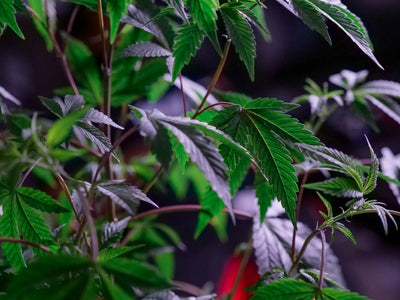
Cannabis Clinical Research in 2026: The Findings That Actually Hold Up
Photo by Mikhail Nilov via Pexels.
Two things happened in the same six-month window this year that don't fit the usual cannabis-news template. A randomized trial found high-dose CBD meaningfully reduced neuropathic pain in people with spinal cord injuries. And the largest review of medicinal cannabis research to date concluded it doesn't work for anxiety, depression, or PTSD — three of the most common reasons people actually use it. Both are real findings from 2026. Neither cancels the other out, and that's the point.
This isn't the advocacy-versus-prohibition argument that's dominated cannabis coverage for thirty years. It's what randomized controlled trials and systematic reviews are actually finding, condition by condition, dose by dose, now that there are finally enough of them to compare. Some of it is genuinely encouraging. Some of it is a sobering correction to popular belief. Both matter more than the usual yes-or-no framing suggests.
The backdrop matters too. The federal government spent decades making this kind of research needlessly hard to do, and 2026 is the year that bottleneck started to visibly loosen — a Schedule III shift moving through a DEA administrative hearing that wrapped testimony on July 15, with post-hearing briefs due August 17. That process won't retroactively produce the trials that should have happened in 2005 or 2015. But it's worth understanding exactly what's proven, what's promising but early, and what's been quietly debunked, before getting into what regulatory change can and can't fix.
Why Rigorous Cannabis Research Has Been So Scarce

Photo by MissCaraWrites via Pixabay.
Cannabis has sat in Schedule I of the Controlled Substances Act since the law took effect in 1970, the category reserved for substances the DEA considers to have no accepted medical use and a high potential for abuse — the same tier as heroin, at least on paper. That classification didn't just make cannabis illegal to possess; it required any researcher who wanted to study it to obtain a separate, specific DEA registration on top of the standard research protocols required for any controlled substance. The paperwork, security requirements, and approval timelines were substantial enough that many university IRBs and grant reviewers simply steered investigators toward easier subjects. The predictable result was decades of thin trial volume relative to how many people were using the drug.
An economics analysis out of the University of Massachusetts Amherst, published in April 2026, put a number on the disconnect this produced. Looking at the state-by-state legalization wave, the researchers found that legal markets drove substantial product innovation — new formulations, delivery methods, potency tiers — but strikingly little of the rigorous clinical research needed to actually validate medical claims attached to those products. The commercial track and the scientific track decoupled almost completely; states built enormous retail infrastructure without a parallel expansion in trial infrastructure.
Congress made one real attempt to fix the registration problem specifically. The Medical Marijuana and Cannabidiol Research Expansion Act, signed into law in December 2022, created a dedicated registration pathway meant to streamline the process for researchers studying marijuana and CBD, separate from the old blanket Schedule I hurdles. It was a narrow, targeted fix rather than a rescheduling — but it planted the administrative groundwork now feeding into the bigger shift.
That bigger shift has moved slowly and unevenly. The DEA's rescheduling proposal drew more than 42,000 public comments, and administrative delays pushed the promised hearing from an original August 2024 target all the way through 2025. Momentum picked up on December 18, 2025, when President Trump signed an executive order directing the attorney general to expedite completion of the rescheduling process to Schedule III. Then, on April 23, 2026, Acting Attorney General Todd Blanche issued an order moving FDA-approved and state-licensed medical marijuana products into Schedule III immediately, while setting an expedited hearing date of June 29 to resolve the broader question.
Inside the DEA Hearing: What the Testimony Revealed

Photo by SHOX ART via Pexels.
The hearing itself ran from June 29 through July 15, 2026, overseen by DEA Chief Administrative Law Judge Derek Julius — an expedited timeline by the standards of federal drug scheduling proceedings, which have historically dragged on for years. The compressed schedule reflects the political pressure building behind the December executive order and April interim rule, not a change in how thorough these proceedings are supposed to be.
The testimony itself is where things got genuinely interesting. An FDA scientist and a physician from New Hampshire both described patients using cannabis for pain relief and, specifically, as an alternative to opioids — testimony aimed squarely at the abuse-potential and medical-use criteria that determine scheduling. What stood out to observers wasn't just who testified, but what DEA officials themselves said during proceedings: agency representatives highlighted evidence on marijuana's relative safety compared with alcohol and opioids. That's a notable departure from the DEA's historical institutional posture, which has for decades resisted conceding any comparative-safety argument for cannabis. It doesn't mean the agency has reversed its position, but it's a documented shift in the terms of the internal debate.
Post-hearing briefs, capped at 50 pages per party, are due August 17, and they'll carry the closing arguments from every participant in the proceeding — DEA components, industry groups, medical associations, and individual expert witnesses among them. After that, Judge Julius will issue a recommendation. That recommendation is advisory, not binding: the actual rescheduling decision rests with the DEA Administrator, and there's no statutory deadline forcing a ruling by any particular date.
That last point is worth sitting with, because it's where speculation needs a label. Several industry analysts are working off an estimate that a DEA confirmation could land sometime in late 2026 or early 2027, based on the pace of the interim rule and the expedited hearing schedule. That's a projection built on momentum, not a fact grounded in any published DEA timeline — the agency has given no formal date, and administrative rescheduling decisions in prior cases have taken considerably longer than initial expectations suggested. Anyone treating late-2026 as a lock is getting ahead of what the record actually supports.
The Trials Showing Real Promise

Photo by Oliver King via Pexels.
Set the regulatory drama aside for a moment and look at what the actual trial data from this year shows, because some of it holds up well. A 2026 clinical trial found that high-dose CBD significantly reduced neuropathic pain in people with spinal cord injuries — a population with genuinely limited pharmacological options, since standard neuropathic pain drugs like gabapentin often underperform in this group. This is a narrow, well-defined patient population with an objective pain mechanism, which is exactly the kind of setup where cannabis-derived compounds have tended to show their clearest signal.
A separate randomized trial looked at low-dose full-spectrum CBD in adults with long-term, virally suppressed HIV, and found it well tolerated with no meaningful harm to liver or kidney function and no disruption to HIV viral markers. That's a safety finding more than an efficacy claim, but it matters — it clears a path for the HIV-related pain trials now recruiting on the back of it, discussed further below.
On the THC side, a controlled trial testing marijuana oil combining THC and CBD found improvements in both pain and sleep among fibromyalgia patients, a condition notoriously resistant to conventional treatment and long self-medicated with cannabis anecdotally. And in a finding that deserves more attention than it's gotten, a cannabis-based herbal formula performed comparably to lorazepam for chronic insomnia in a randomized trial. That comparison matters because lorazepam is a benzodiazepine carrying real dependence and withdrawal risk — a cannabis-based alternative performing on par with it, even in one trial, is a legitimate data point for harm reduction in sleep medicine, not just a wellness anecdote.
Maybe the most provocative result: adults who used cannabis-infused beverages during a monitored drinking period cut their alcohol intake by roughly half. That's a substitution effect, and it's consistent with a harm-reduction hypothesis researchers have floated for years — that cannabis availability could reduce alcohol-related harm at the population level. It's one trial, not a policy mandate, but it's the kind of result that deserves a larger follow-up.
The common thread across all five: narrow, well-defined conditions — nerve pain, sleep, substitution behavior — not broad psychiatric claims. That specificity is exactly what's been missing from cannabis research for decades, and it's exactly where the next section's null results become instructive rather than contradictory.
Where the Evidence Falls Apart: Mental Health and Chronic Pain

Most 2026 UC Health cannabis trials reported positive outcomes—Spinal Cord Pain, HIV Safety, Fibromyalgia, Insomnia, and Alcohol Reduction studies all showed benefit—while trials on Anxiety/Depression/PTSD and Chronic Nerve Pain yielded null results.
Here's where the picture gets genuinely uncomfortable for the industry's most common sales pitch. The largest review of medicinal cannabis conducted to date, published in March 2026, concluded that cannabis doesn't effectively treat anxiety, depression, or PTSD. That's a direct collision with real-world use patterns — millions of patients across state medical programs list one of those three conditions as their qualifying diagnosis, and dispensary marketing leans hard on calming, mood-stabilizing framing.
The same review goes further than a simple null result: it warns that cannabis could actually worsen mental health outcomes in some users. That's not a minor caveat. It's a direct counterweight to the popular self-medication narrative that's driven a large share of state-level medical cannabis enrollment, and it deserves to be reported with the same prominence as any positive trial result — which, historically, it hasn't been.
Chronic pain, the other pillar of cannabis's medical reputation, took its own hit. A January 2026 review analyzing more than 20 clinical trials and over 2,100 patients found the evidence for cannabis-based medicines in chronic nerve pain simply isn't there yet — not disproven, but not established at the level rigorous evidence review demands.
Sit that finding next to the spinal-cord-injury CBD trial from the same year and the tension is obvious: one trial found real neuropathic pain relief in a specific population using a specific high-dose CBD formulation, while a much larger review of the broader nerve-pain literature found the aggregate evidence weak. Both can be true simultaneously. It's exactly why condition-specific, dose-specific claims carry more weight than blanket statements like cannabis helps pain — a single well-designed trial in spinal cord injury patients doesn't generalize to the far more heterogeneous population of chronic nerve pain sufferers using inconsistent products at inconsistent doses.
That heterogeneity is the likely explanation for the gap generally. Most real-world cannabis use for pain or mood is self-directed, with unregulated products, inconsistent THC-to-CBD ratios, and doses nobody is tracking. Clinical trials use standardized, often high-dose, pharmaceutical-grade formulations administered on a fixed schedule. Comparing outcomes across those two worlds is comparing apples to a fairly different orchard. For the picture to flip on mental health or broad chronic pain, future trials would need larger sample sizes, standardized dosing protocols, and a clean separation between THC-dominant and CBD-dominant formulations — right now, too many trials and reviews still lump both under one umbrella.
The Active Pipeline: Who's Enrolling Patients Right Now

Photo by RDNE Stock project via Pexels.
The most useful place to look for where this field is actually headed isn't the DEA hearing record — it's the active trial registries. UCLA and UC San Diego, along with other University of California system sites, currently have trials enrolling for complex regional pain syndrome, a severe and poorly understood chronic pain condition with few effective treatments and a patient population desperate enough to seek out experimental options.
Veteran-focused trials are recruiting for cannabis-based treatment of neuropathic pain as well, targeting a population with unusually high rates of opioid exposure from military medical care and correspondingly high rates of treatment-resistant chronic pain. This is a population where the opioid-alternative argument that surfaced in DEA hearing testimony has direct clinical stakes rather than just rhetorical weight.
HIV-related pain trials are also actively enrolling, building directly on the 2026 safety data showing full-spectrum CBD was well tolerated in virally suppressed HIV patients without harming liver, kidney, or viral-suppression markers. That's a textbook example of how a safety trial unlocks a pipeline of follow-on efficacy trials — the safety data had to exist first before an IRB would sign off on testing therapeutic dosing in the same population.
Behind all three of these enrollment efforts sits an infrastructure change: the dedicated marijuana research registration pathway created by the 2022 Research Expansion Act is starting to shorten the lag between a trial being designed on paper and a first patient actually getting dosed. That lag used to be measured in years partly because of duplicate registration requirements between DEA and individual state authorities.
If Schedule III is finalized, researchers broadly expect two practical improvements: easier sourcing of study drug from approved suppliers, and fewer duplicate DEA and state registration hurdles for investigators running multi-site trials. It's worth being precise here — Schedule III still means federal research restrictions apply, just lighter ones than Schedule I. Cannabis wouldn't join the ranks of an over-the-counter research subject.
This is also where the real near-term business opportunity is concentrated, and it's narrower than the wellness-brand framing most companies use. The money and the science are converging around pharma-grade, single-molecule or defined-ratio formulations aimed at specific diagnoses — CRPS, neuropathic pain in veterans, HIV-related pain — not broad-spectrum wellness claims. Companies positioning for FDA drug approval pathways, rather than state dispensary shelf space, are the ones best aligned with where the enrolling trials are actually pointing.
What Rescheduling Would and Wouldn't Change for Research

Photo by Kampus Production via Pexels.
History offers a useful check on how much rescheduling actually accelerates research, and it's a more modest picture than the current optimism suggests. When other substances have moved schedules under the Controlled Substances Act, research volume has tended to increase gradually over subsequent years rather than jump immediately after the statutory change — funding cycles, IRB approvals, and grant review timelines all lag behind the legal shift by design, since none of those processes are built to move as fast as a Federal Register notice.
It's also worth restating plainly what Schedule III does not do: it still requires DEA registration for researchers, and it is not descheduling. Cannabis under Schedule III would not suddenly be handled like a standard prescription drug for research purposes — it would sit alongside substances like ketamine and certain anabolic steroids, which face their own registration and tracking requirements even at that tier.
The case for acceleration is real, though. Easier researcher registration lowers the up-front cost of designing a trial. Once the institutional stigma attached to Schedule I funding applications eases — and NIH program officers have historically been more willing to fund research on substances outside that top tier — grant volume could plausibly rise. More pharma investment in defined-dose, defined-ratio formulations follows naturally once regulatory risk drops, which is consistent with what's already happening around the CRPS and neuropathic pain trials described above.
The conservative counter-case deserves equal weight. The DEA Administrator's final decision carries no set timeline and could stall well past 2027 — nothing in the record obligates a ruling on any particular schedule. And even after a final rule is issued, scheduling changes have historically faced litigation that delays actual implementation by months or years, a pattern seen in prior contested DEA rulemakings. A signed order is not the same as an operational change on the ground.
The UMass Amherst analysis is the piece that keeps this honest: state-level medical programs already show product innovation badly outpacing rigorous study, and rescheduling doesn't automatically fix that mismatch unless research funding actually follows. A schedule change removes a legal obstacle; it doesn't write a grant check. Watch three concrete things over the next year: the substance of the August 17 post-hearing briefs, whether Judge Julius's eventual recommendation aligns with or pushes back against the interim Schedule III order, and whether NIH cannabis-specific funding lines actually expand in the next budget cycle. That third one is the tell — without it, the infrastructure gap persists regardless of what schedule the drug sits on.
Put the two halves of 2026's data side by side and the honest picture is bifurcated, not triumphant and not damning. There's a real, replicable signal for specific pain and sleep conditions — spinal cord injury neuropathic pain, fibromyalgia, chronic insomnia, alcohol substitution — each backed by a controlled trial with a defined dose and a defined population. And there's a genuine null or outright warning signal for anxiety, depression, and PTSD, the conditions that account for a huge share of real-world self-medication and marketing claims. Both conclusions come from 2026 peer-reviewed data. Neither should be quietly dropped to make the other story cleaner.
Rescheduling to Schedule III is a real regulatory unlock — it lowers the registration barrier that's throttled trial volume since 1970, and the testimony coming out of the DEA's own hearing suggests even the agency's internal posture is shifting. But it is not a finish line. The research infrastructure gap the UMass Amherst economists identified — legal markets sprinting ahead of rigorous science — doesn't close automatically just because a federal agency moves a plant from one numbered category to another. That gap closes when NIH funding lines expand, when IRBs staff up for cannabis-specific protocols, and when pharma companies commit capital to defined-dose formulations rather than dispensary branding. Some of that is already visibly underway in the CRPS, veteran, and HIV pain trials now enrolling. Most of it is still an open question.
The next eighteen months will tell the field more about its own credibility than any single headline trial result could. The substance of the August 17 post-hearing briefs, whatever recommendation Judge Julius eventually issues, and whether the next NIH budget cycle actually opens new cannabis-specific funding lines — those three data points, taken together, will say more about where this research is actually headed than any one more study on pain or sleep or mood ever could.
Sources
- University of California Health Cannabis Clinical Trials for 2026 — California
- Over 70 Cannabis-Related Studies Published in 2026 Highlight the Diverse Medical Potential of Cannabis
- Why Cannabis Clinical Trials Will Explode by 2026 (And Who Will Lead)
- A Breakdown of Nearly 200 Cannabis Studies Published in 2026
- UCSD Cannabis Clinical Trials for 2026 — San Diego