Craft Beer's Deregulation Blueprint for Cannabis Micro-Licensing
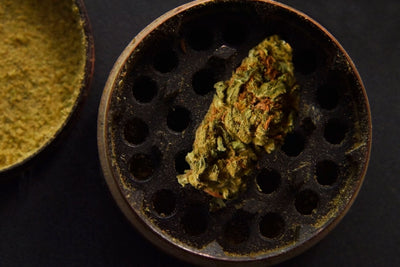
Photo by Meritt Thomas via Unsplash.
On September 9, 2026, Missouri ran the third and final lottery in its microbusiness licensing program. Roughly 888 applications chased what regulators expect will shake out to about 77 licenses -- a ratio that tells you everything about how scarce, and how desired, these small-operator permits have become. Applicants spent months assembling ownership structures, business plans, and capital just to get a number in a drawing, the way lottery hopefuls have done in half a dozen other states over the past three years. It has the feel of a gold rush. It is worth remembering that an earlier American industry went through almost exactly this same scramble, decades before anyone thought to call it craft beer.
Craft brewing did not arrive as a sudden cultural wave. It took from President Carter's signature on home-brewing legalization in October 1978 to the early 2000s -- roughly twenty years -- before the industry had any real scale, measured in thousands of breweries rather than hundreds. That timeline gets lost in the retelling, because by the time most people noticed craft beer, it already looked inevitable. It wasn't. It was built fee tier by fee tier, state law by state law, home brewer by home brewer, over two decades of incremental deregulation that nobody at the time was confident would add up to anything.
Cannabis micro-licensing is tracing a strikingly similar curve. The same ingredients are showing up in the same order: small deregulatory riders attached to bigger bills, fee structures tiered to favor small producers over incumbents, and a pipeline that runs from hobbyist-to-caregiver-to-licensee rather than from venture capital straight to a dispensary shelf. That pattern is worth taking seriously, because it points to both a real opportunity and a real amount of patience that the opportunity is going to demand.
How Homebrewing Became an Industry, Almost by Accident

Photo by Tiago Antonio via Pexels.
Jimmy Carter signed H.R. 1337 on October 14, 1978, a bill primarily concerned with energy and fuel taxation. Buried inside it, effective February 1, 1979, was a provision legalizing home production of beer and wine -- up to 100 gallons per adult per year, or 200 gallons per household with two or more adults. That provision wasn't the point of the bill. It was added by California Senator Alan Cranston as a rider, the kind of amendment that gets a line in a committee report and little else at the time. This is worth sitting with, because it's a pattern that repeats: liberalization of a controlled or heavily taxed product rarely arrives as a standalone reform with its own headline. It arrives attached to something else, something that was already moving through Congress for unrelated reasons.
Two years earlier, in 1976, Gerald Ford had signed a law cutting the federal excise tax on the first 60,000 barrels a brewery produced annually, from $9 to $7 per barrel. That's a direct, mechanical lowering of the entry barrier for small producers -- not a cultural shift, not a vibe, just a tax schedule that made it arithmetically possible to run a small brewery without being crushed by the same per-barrel cost structure Anheuser-Busch absorbed easily. Tiered taxation and home-production legality did the same job from two different angles: one made the hobby legal, the other made the business survivable.
None of this flipped a national switch. Washington State legalized brewpubs -- allowing a brewery to sell its own beer on-site, retail, without a separate distribution tier -- in 1982. California passed its own Brewpub Law the same year. Other states picked it up unevenly over the following two decades, each on its own timeline, each with its own quirks. The result was a slow accumulation rather than an event: roughly 8 craft brewers existed in the early 1980s, a little over 500 by 1994, and 1,509 by 2000. Twenty years to go from a handful of operations to fifteen hundred. That's the actual shape of the curve craft beer drew, and it's the shape cannabis advocates pushing microbusiness programs would do well to study before promising anyone an overnight market.
The Caregiver-Grower Pipeline: Cannabis's Version of the Homebrewer

Photo by Jeff W via Unsplash.
Roughly 90% of craft brewers who built commercial operations in the 1980s and 1990s started as home brewers first. That statistic is the whole story in miniature: homebrewing wasn't a parallel hobby running alongside the beer industry, it was the industry's farm system. People learned fermentation science, recipe development, and quality control in their garages years before they ever filed for a federal brewer's notice, and by the time they did, they already had the technical competence the business required.
Cannabis has its own version of that pipeline, and it's been running far longer than most microbusiness programs have existed. Home growers, medical caregivers operating under state caregiver statutes, and small legacy cultivators who never stopped growing through prohibition all carry the same kind of embedded expertise -- cultivation skill, sometimes an existing customer base, sometimes both. States building microbusiness tiers are, whether they say so explicitly or not, trying to convert that informal workforce into a licensed one.
Missouri's experience this year shows how messy that conversion can get. In May 2026, the state adopted tougher ownership-review rules requiring regulators to communicate directly with an applicant's majority owners rather than through consultants or intermediaries. The change followed the revocation of roughly three dozen microbusiness licenses, where investigators found outside parties effectively controlling businesses that were nominally owned by qualifying applicants -- veterans, people with low-income status, or residents of high-impact areas, depending on which eligibility category the state was trying to serve. The point of a microbusiness tier is to get licenses into the hands of people who couldn't otherwise compete with a multi-state operator's capital. When outside money finds a way to sit behind a qualifying name anyway, the program isn't doing the job it was built for.
That's also where the analogy runs out of road a little. Homebrewers never needed a government lottery to open a brewpub -- once the Brewpub Law passed in a given state, you filed for the license and, assuming you cleared basic health and safety review, you got it. Cannabis microbusiness hopefuls in Missouri entered a drawing against 887 competitors for one of roughly 77 slots. The structural similarity -- hobbyist to licensee, tiered fees, shared skills pipeline -- is real. But cannabis is carrying a much heavier residual regulatory load, a function of the plant's federal status and the scarcity built into most state programs, and that load shows up as rationing mechanisms beer never needed.
Microbusiness Licensing's Current Numbers Tell a Two-State Story

The number of U.S. craft breweries surged from just 8 in the early 1980s to over 1,500 by 2000, with the sharpest growth occurring in the 1990s.
Nationwide, 1,256 new cannabis licenses were issued in the second quarter of 2026. Break that number down, though, and it stops looking like a broad national trend and starts looking like a two-state story: nearly 90% of all new microbusiness licenses issued that quarter came from just two states, Minnesota and New Mexico. Both states use a hybrid single-license structure, letting one license cover cultivation, processing, and retail under one roof rather than forcing an operator to hold and pay for three separate permits. That structural choice -- bundling instead of separating -- appears to be doing a lot of the work in making microbusiness licensing actually scale in a given state, rather than just existing on paper.
Missouri's third and final required microbusiness lottery, the one that ran on September 9, 2026, drew those 888 applications for an expected yield of about 77 licenses -- at least 29 wholesale and 34 dispensary licenses, with roughly 20 of the total stemming from previously revoked or surrendered licenses getting re-issued. That last detail matters: a meaningful share of this round isn't new market entry at all, it's regulatory cleanup from the ownership-control problem discussed above finally resolving into fresh lottery slots.
Missouri's fee structure is where the craft-beer parallel gets concrete. A microbusiness license there costs $2,500, compared to $40,000 for a dispensing facility license and $20,000 to $50,000 for a cultivation license. That's not a subtle gap -- it's the same logic as the 1976 federal excise-tax break that cut small brewers' per-barrel rate nearly in half. Scale the fee to the size of the operation, and you make small-operator entry mathematically possible instead of merely legally permitted.
Other states are pacing this very differently. Virginia has capped its first wave at exactly 100 Microbusiness Licenses, due on or before May 1, 2027 -- a hard ceiling, deliberately small, deliberately controlled. New York, by contrast, keeps its broader licensing track vertically integrated and is currently limiting new activity to Processor Type 3 and Type 3 Branding applications, a much narrower door than Minnesota's or New Mexico's hybrid model. Three states, three fairly different theories of how fast and how wide this tier should open. Craft beer's spread through the states in the 1980s and 1990s was similarly uneven -- some states moved on brewpub laws almost immediately, others took until the 2000s -- and there's no reason to expect cannabis microbusiness rules to converge any faster.
Shared Infrastructure as the Next Lever, Just Like the Brewpub Law

Photo by Ricardo Gomez Angel via Unsplash.
The brewpub laws Washington and California passed in 1982 mattered as much as the federal excise-tax cut did, arguably more, because they solved a different problem: distribution. Before brewpub legalization, a small brewer still had to sell through a separate wholesale distribution tier, the same three-tier system that applied to the national beer conglomerates, which ate margin and added friction a tiny operation could barely absorb. Letting a brewery sell what it made on-site, directly to customers, removed an entire cost layer that had nothing to do with brewing and everything to do with regulatory structure left over from Prohibition-era thinking.
Maryland's cannabis program is now testing a structurally similar idea, aimed at a different cost layer: fixed capital costs rather than distribution costs. On August 28, 2026, the state issued a request for information seeking a nonprofit operator to run what would be the nation's first state-run cannabis incubator -- shared processing space, shared equipment, and workforce training offered to micro licensees who otherwise would need to finance all of that themselves before producing a single legal gram. That's a direct answer to the capital-cost problem that killed off plenty of would-be small brewers in the 1980s before the brewpub model gave them another way to generate revenue early.
The logic connecting these two eras is straightforward: whether it's a tax break, a brewpub license, or a shared incubator space, each mechanism lowers the fixed-cost floor a small operator has to clear before they can generate their first dollar of legal revenue. Lower that floor enough, and people who have the skill but not the capital -- home brewers then, home growers and caregivers now -- can actually cross into licensed operation instead of staying permanently priced out.
Here's the honest caveat, though: brewpub laws took roughly twenty years to spread state by state across the country, and there's no evidence yet that cannabis incubator models will move any faster. If anything, the unevenness already visible between Missouri's lottery system, Virginia's hard 100-license cap, and New York's narrow processor-only track suggests the opposite -- that cannabis regulatory innovation is, if anything, even more fragmented state to state than beer's was, which could stretch this timeline out rather than compress it.
Where the Analogy Breaks Down

Photo by Brayden Prato via Unsplash.
Beer's deregulation, start to finish, happened entirely within a legal federal framework. Once Carter signed H.R. 1337 and Ford's excise-tax cut took effect, there was no federal agency treating beer production as a scheduled controlled substance running in parallel with the state-level liberalization. Cannabis doesn't have that luxury. Every microbusiness license Missouri, Minnesota, Virginia, or any other state issues still operates against a federal Schedule I backdrop, and that backdrop caps access to ordinary banking relationships, blocks interstate commerce between state markets no matter how adjacent, and shuts licensees out of SBA-style small business lending that homebrewers-turned-commercial-brewers could eventually tap once they graduated into a normal regulated industry. A craft brewer in 1985 could walk into a community bank for a loan. A cannabis microbusiness licensee in 2026 generally cannot, regardless of how clean their state paperwork is.
Missouri's licensing scandal -- the roughly three dozen revocations tied to outside parties controlling nominal equity owners -- also has no clean craft-beer equivalent. Homebrewing never developed an equity-ownership integrity problem at this scale, because the entry point into commercial brewing was a brewer's notice and a tax filing, not a scarce, lottery-rationed state license with eligibility categories worth gaming. Scarcity creates the incentive to game it; beer's regulatory path was restrictive in cost, but not restrictive in slots, so there was nothing analogous to game.
There's a reasonable conservative case that cannabis's curve could actually move slower than beer's, not faster: craft beer's twenty-year build happened without having to compete against an already-licensed, vertically integrated incumbent industry occupying the same shelf space. Today's cannabis microbusinesses are launching directly into competition with multi-state operators that already have capital, brand recognition, and retail footprint -- an asymmetry 1980s home-brewers-turned-brewers never had to overcome, since no incumbent craft-beer MSO existed yet to compete with.
The counterpoint to that counterpoint is just as real, though: unlike 1979 America, today's cannabis market already carries three decades of medical and adult-use demand data, going back to California's 1996 Compassionate Use Act and the first adult-use votes in 2012. Microbusinesses entering this market aren't starting from zero consumer awareness the way early craft brewers were explaining what an IPA even was. That's a genuine tailwind beer never had, and it could offset at least some of the incumbent-competition drag.
If the craft beer timeline is any real guide, the honest expectation is that cannabis microbusiness scale -- meaning thousands of operating small licensees, not a few hundred lottery winners -- gets measured in decades from California's 1996 Compassionate Use Act or the 2012 adult-use votes in Colorado and Washington, not years from any single state's 2026 lottery cycle. Craft beer took from 1978 to roughly 2000 to go from a legalized hobby to 1,509 operating breweries. Cannabis is arguably further along the curve than beer was at its equivalent point, given three decades of medical and adult-use market data already baked in, but it's also carrying federal constraints beer never had to clear. Patience, not speed, is the actual lesson this history offers.
The states worth watching over the next few years aren't necessarily the ones with the splashiest headline programs. They're the ones copying beer's actual working mechanism -- fee tiers that scale genuinely with production volume, the way Ford's 1976 excise-tax break did, and shared infrastructure that lowers the fixed-cost floor, the way Washington's and California's 1982 brewpub laws did. Missouri's $2,500 microbusiness fee against a $40,000 dispensing fee, and Maryland's incubator RFI from August 2026, are both live experiments in exactly that mechanism. Watch whether other states adopt similar tiering and shared-space models over the next two or three licensing cycles -- that's the signal to track, more than any single lottery's application count.
The one variable this analogy genuinely cannot help predict is federal rescheduling or descheduling. There's no beer-era precedent for it, because beer was never a Schedule I substance fighting its way out of federal prohibition through state-by-state workarounds. If federal policy moves meaningfully in the next few years, it's the single lever capable of compressing this twenty-year-style timeline well below twenty years -- opening banking, interstate commerce, and conventional lending all at once rather than state by state. It's also precisely the piece of the puzzle that history can't forecast for us, because nothing in brewing history ever had to clear that bar.
Sources
- Vicente LLP
- Cannabis microbusiness application timeline announced for third round
- Missouri 2026 Microbusiness Lottery: New DCR Rules Guide for Applicants - CannDelta Cannabis Licensing Consultants
- Q1 2026 Cannabis Business Licensing Activity - CRB Monitor News
- 5 Cannabis Licensing Trends Shaping the Market: Q2 2026