Craft vs. Consolidation: Which Way Is US Cannabis Bending?
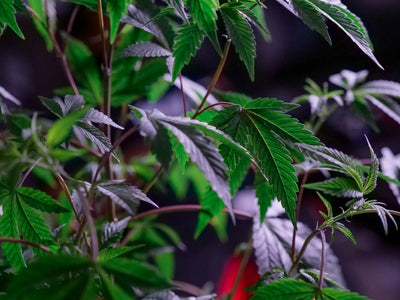
Photo by Pexels via Pixabay.
Walk the floor at any state cannabis conference this summer and you can feel the split. In one corner, multi-state operators are trading war stories about credit facilities coming due, restructuring counsel, and which bankruptcy court is friendliest to a cannabis debtor. In the other, small growers are leaning harder into the stuff that doesn't show up on a term sheet: sun-grown flower, single-origin genetics, the farmer's name on the jar. Both groups will tell you they're playing the same game. They aren't, really -- and the gap between them is the most useful lens right now for figuring out where the US market actually goes next.
This isn't a debate about authenticity versus scale, even though it gets dressed up that way in trade press. It's being forced by a roughly $6 billion wall of MSO debt maturing over the next couple of years, much of it issued when capital was cheap and growth projections were rosier. That maturity wall is why we're seeing actual receiverships and Chapter 11 filings among operators that were household names in cannabis investing five years ago, not hypothetical distress. Craft and legacy growers, meanwhile, aren't carrying that leverage -- they never had access to it -- so they're competing on different terrain entirely.
The question worth sitting with: is craft cannabis a genuine structural counterweight to consolidation, or just a slower-motion version of the same shakeout, running a few years behind?
The Debt Wall That's Forcing the Issue

Curaleaf leads the pack with $460 million in debt maturing in 2026, closely followed by Cresco Labs and Trulieve at around $390-400 million, highlighting a significant refinancing wall facing major multi-state cannabis operators that year.
Start with the number that's actually driving headlines about mergers and shutdowns right now: close to $6 billion in cannabis company debt comes due before the end of 2026. That's not a forecast or a vibe -- it's a maturity schedule, printed in the same 10-Ks and Canadian securities filings that got these companies their capital in the first place. When a note matures, the company either pays it off, refinances it, or defaults. Multi-state operators took on a lot of that debt between 2019 and 2021, when capital was cheap and everyone assumed federal rescheduling or banking reform would arrive before the bills did. It didn't, at least not on schedule, and now the wall is here.
Two maturities anchor the top of that pile. Curaleaf has $460 million coming due in December 2026, and Cresco Labs is sitting on $400 million maturing that August. Trulieve carries roughly $390 million, Ayr Wellness somewhere in the $358-368 million range, and Verano around $350 million due that October. Add up just these five names and you're already past $1.9 billion, more than a third of the entire industry's 2026 wall, concentrated in the companies that spent the last cycle buying up licenses in Florida, Illinois, Pennsylvania and Arizona. These are not marginal players. They're the operators that were supposed to be the winners of consolidation's first round -- and now they're the ones facing the tightest clock.
Here's the part that makes cannabis debt behave differently from debt in almost any other American industry: normal companies in financial distress have an entire toolkit for buying time. Chapter 11 reorganization, debtor-in-possession financing, syndicated bank refinancing at investment-grade or leveraged-loan rates -- all of it assumes access to the federally regulated banking system and a bankruptcy code that treats the underlying business as legal. Cannabis touches the plant, so federal courts have repeatedly held that plant-touching operators can't use Chapter 11 at all, and IRC 280E still bars them from deducting ordinary business expenses because marijuana remains a Schedule I substance under the CSA. No FDIC-backed lender wants that exposure, so cannabis companies borrow instead from a small circle of specialty and private credit funds, at rates often in the mid-teens, secured against licenses and real estate.
That's why maturity walls in this industry don't resolve the way they would at, say, a retail chain or a regional airline. There's no orderly refinancing market standing by, and no bankruptcy judge available to impose a haircut on creditors while the business keeps operating. What happens instead is a lender calling the note, an operator running out of runway, and licenses or facilities getting sold off piecemeal or absorbed whole by whichever competitor still has a working credit line. Judge this pattern less as a strategy chosen by ambitious executives and more as triage. Consolidation right now is substantially a story about balance sheets colliding with a regulatory structure that offers no soft landing -- and the companies buying assets in 2025 and 2026 aren't necessarily the ones with the best thesis about scale, just the ones whose maturities happen to sit further out on the calendar.
Who's Absorbing Whom: The Consolidation Casualties of 2026

Photo by ELEVATE via Pexels.
Follow the paper trail on any of 2026's big multi-state operator deals and you keep landing in bankruptcy court, not a boardroom. AYR Wellness's exit from Florida, New Jersey, and Nevada is the cleanest example of how this cycle actually works. On June 2, 2026, AYR completed the court-driven handoff of its 60-plus Florida dispensaries, three New Jersey stores, and six Nevada locations to Arboretum Bidco LLC, a vehicle created by AYR's own creditors. The mechanics had been locked in months earlier, via a Master Purchase Agreement dated November 14, 2025, and the whole thing only closed once Arboretum lined up a $275 million refinancing in April 2026. That sequence matters: the lenders didn't wait for a buyer to show up and pay a premium. They built the buyer themselves, financed it, and took the assets in-house rather than absorb a loss on the open market.
TerrAscend's Michigan unit shows what happens when that kind of restructuring doesn't get arranged in advance. The operation landed in court-ordered receivership over $210 million owed to lender FocusGrowth, against roughly $5.2 million in assets on the books -- a liability-to-asset ratio near 40 to 1. A gap that size doesn't happen because a good business had one bad quarter. It reflects years of debt-financed expansion in a state where wholesale flower prices have been grinding lower since Michigan's licensed grower count outpaced demand, leaving little cushion once the lender decided it wanted its money back.
Cannabist's collapse is the starkest of the three because of how far the company had climbed before falling. Once considered a marquee MSO name, Cannabist filed Chapter 15 bankruptcy owing $270 million to lenders and the IRS combined -- tax debt sitting alongside institutional debt is its own warning sign, since it means the company was already choosing which creditors to stiff before the filing. It's now selling its Ohio and Delaware permits for a combined $63.5 million, a divestiture that follows a separate $130 million Virginia exit closed back in February. Permits that once represented long-term optionality in emerging markets are getting liquidated piecemeal to service debt.
Vireo Growth is the counterexample, and it's worth naming as such rather than treating every 2026 deal as symmetrical distress. Vireo closed four transactions in May 2026 alone, then announced a fifth roughly six weeks later, building toward a footprint of more than 160 dispensaries across ten states and a dominant position in Nevada specifically. Part of that buildout came from absorbing Hawthorne Gardening's balance sheet contribution, worth roughly $110 million. But calling this horizontal growth from strength misreads what's happening. Vireo isn't out-competing anyone on retail execution or product quality -- it's positioned with enough liquidity to buy distressed licenses and stores at what are almost certainly steep discounts to what AYR, TerrAscend, and Cannabist originally paid to acquire or build them. That's consolidation by balance sheet, not consolidation by better cannabis.
Why Valuations Stay Cheap Even as Margins Look Good

Photo by Alesia Kozik via Pexels.
Look at what actually happened to multifamily operator stocks last year and the disconnect gets obvious fast. Trulieve, Green Thumb, Curaleaf, Verano — the big vertically integrated names — all ran up through the back half of 2025 as traders priced in Trump's December executive order directing the DEA to move marijuana off Schedule I. That was a real catalyst, not vapor: an actual White House directive, covered as such, with the kind of specificity that had been missing from prior rescheduling chatter. Shares popped. Options volume spiked. Then the calendar flipped to 2026 and something didn't add up. The EV/EBITDA multiples on these companies still sit in the mid-single digits, even though plenty of them are posting operating margins north of 25 percent — numbers that would draw a mid-teens multiple, easily, in almost any other consumer packaged goods category.
That gap is the tell. A cheap multiple next to a fat margin doesn't mean the market thinks the business is bad — it means the market doesn't trust what's sitting below the operating line. And what's sitting below the operating line for most MSOs is debt raised at brutal rates because federally illegal companies can't access normal commercial credit, plus a 280E tax bill that taxes gross profit rather than net income because these are, on paper, still Schedule I trafficking operations under the IRS code. A 25 percent operating margin means very little to an equity holder if debt service and a distorted tax rate eat most of what's left. Investors aren't discounting the cannabis business. They're discounting the capital structure wrapped around it.
Layer on top of that two pieces of regulatory news from late 2025 that cut the other way from the rescheduling optimism. Congress redefined hemp in a way that bans most intoxicating hemp-derived products — closing the loophole that let delta-8 and similar compounds flood gas stations and bottle shops outside the licensed cannabis system entirely. Around the same time, California's AB 8 folded hemp-derived cannabinoids into the state's existing licensed cannabis framework rather than leaving them in a separate lightly regulated lane. Both moves arguably help licensed operators by narrowing unlicensed competition, but both also signal that the regulatory floor is still moving under everyone's feet state by state and federally, at the same moment rescheduling headlines suggested things were about to stabilize.
Here's the counter-case, and it's a real one: if rescheduling actually lands on Schedule III, 280E disappears, and that alone could flip after-tax cash flow enough to justify a genuine re-rating — multiples catching up to where margins already say they should be. But rescheduling has been called imminent before. It was expected in 2022, then 2023, then again through 2024 as the DEA review dragged on, and none of those windows closed. Treat the current timeline with the same skepticism. The honest read on cheap multiples isn't that the market doubts cannabis is profitable — it's that the market has been burned enough times on regulatory promises that it's now pricing in continued ambiguity, not confidence in any particular outcome.
The Craft Counter-Narrative: Emerald Triangle and Beyond

Photo by ClickerHappy via Pixabay.
Drive up Highway 101 into Humboldt County and you're in the closest thing American cannabis has to a control group. This is where the plant went underground during prohibition and where, for decades, small hillside grows supplied most of the country's illicit weed. Now it's the place where growers are testing whether craft production can survive legalization at all, let alone compete with it. The Emerald Triangle -- Humboldt, Mendocino, and Trinity counties -- has lost roughly two-thirds of its licensed cultivators since California's adult-use market opened in 2018, undercut by falling wholesale prices, compliance costs, and competition from Central Valley greenhouse operations stacking dozens of licenses on single properties. What's left is a smaller, more concentrated group of growers betting that the region's answer isn't to out-produce the mega-farms but to stop competing with them on the same terms entirely.
The structural tools for that bet are borrowed, loosely, from wine country. California's cannabis appellations program, finalized by the Department of Cannabis Control, lets growers label flower by county or sub-region -- Humboldt, or eventually more granular zones within it -- the way Napa growers can put Rutherford or Stags Leap on a bottle. The idea is to let terroir and reputation carry pricing power the way they do for wine, so a Humboldt-grown eighth can command a premium over a greenhouse product from Santa Barbara County without either side needing to justify it on THC percentage alone. Farming cooperatives are the second tool, pooling small growers' volume for distribution and marketing muscle they couldn't afford individually -- essentially a mutual aid structure standing in for the economies of scale that license-stacked mega-farms get by simply being enormous.
Natalynne Delapp, executive director of the Humboldt County Growers Alliance, has been careful not to oversell this. She's said publicly that appellation branding is a multi-year project, not a quarterly campaign -- closer to how Napa's reputation took decades to build than to a marketing push that shows results by the next harvest. That's a useful gut-check for anyone tempted to treat craft as a quick counterweight to consolidation. Wine appellations worked because regulators, growers, and buyers all had years to let the association between place and quality compound. Cannabis appellations are maybe five years old and still building the legal and reputational infrastructure that wine took most of the twentieth century to establish.
The same instinct is showing up elsewhere, minus the formal appellation system. Around Asheville, North Carolina, small growers navigating a hemp-derived THC market rather than a licensed adult-use one are leaning into premium flower and hyper-local branding -- farm names, small-batch labeling, direct relationships with local shops -- to avoid competing purely on price against larger hemp processors. It's worth naming what this actually is: a survival strategy, not a growth strategy. Growers there say plainly that further federal tightening of hemp definitions, following the intoxicating-hemp crackdown that took effect in November 2025, could hit them hardest of all, since they lack the legal and compliance budgets multistate operators use to pivot quickly when the rules change. Craft, in both states, is real and worth watching. It is not, at current scale, a competing growth model to consolidation -- it's a counterweight, and a fragile one.
Historical Precedent: Does Craft Survive Consolidation in Other Industries

Photo by Alexander Popadin via Pexels.
Beer is the cleanest comparison we have, and the numbers are worth sitting with. In 1980 the US had roughly 100 breweries and the top three -- Anheuser-Busch, Miller, Coors -- were already grinding toward the roughly 80% combined volume share they'd hold by the 1990s. Regional breweries died by the dozen through that decade, unable to match the marketing budgets and distribution muscle of the majors. By most tellings that should have been the end of small-scale beer in America. It wasn't. The Brewers Association counts craft brewing's share of US beer volume at around 13% as of the early 2020s, built from a base that had cratered to under 50 breweries nationwide in the early 1980s to over 9,000 today. Craft didn't win by underpricing Bud Light. It won by selling something Bud Light structurally cannot: a taproom you can walk to, a brewer whose name you might actually know, a can that says something about where you live.
Coffee ran a parallel track with different mechanics. Folgers, Maxwell House, and later the big canned-and-bagged supermarket brands consolidated the commodity end of the business, wringing out cost through scale roasting and national distribution deals. Specialty coffee didn't try to fight that battle on price -- it built an entirely separate tier around direct-trade sourcing, single-origin storytelling, and the ritual of a local roaster or café. The Specialty Coffee Association has tracked that segment growing into a durable double-digit share of US coffee dollars, and importantly, the two tiers mostly don't compete for the same purchase occasion. Nobody buying a $9 bag of Ethiopian Yirgacheffe was ever a Folgers customer to begin with.
The mechanism in both cases is the same: consumers sort themselves into a price-driven commodity tier and a smaller, stickier premium tier that pays for provenance, identity, and experience rather than milligrams-per-dollar or ounces-per-dollar. That segmentation is durable precisely because it isn't really about the product -- it's about what buying the product signals and how it makes the purchase feel. A flight of local beer at a taproom your neighbor opened is a different transaction than a case of Coors Light, even though both end in the same blood alcohol content.
Cannabis has one protection beer and coffee never had: no interstate commerce. Every state market is legally sealed off from every other, which means a craft grower in Humboldt County isn't just competing on brand -- California-grown flower cannot legally cross into Ohio or Michigan, full stop. That's a regulatory moat, not a market one, and it's propped up small and mid-sized cultivators in ways no amount of brand loyalty could on its own. The open question is what happens when that moat drains. If federal legalization arrives with interstate shipping rights intact, the biggest multistate operators get to do overnight what Anheuser-Busch needed decades of trucking infrastructure to build. That would compress craft cannabis's runway to establish name recognition into a much narrower window than craft beer ever had to work with.
The reasonable projection, not a certainty, is a bifurcated market persisting through the current debt-driven shakeout over the next 12 to 24 months, with craft settling into something like beer's single-digit-to-low-teens share in mature state markets such as California, Colorado, and Michigan. Whether that holds past a federal interstate-commerce shift depends entirely on which arrives first: durable craft brand identity, or the trucks.
What This Means for New Entrants and Existing Operators

Photo by Ron Lach via Pexels.
If you're a capital-backed entrant looking at this market today, the arithmetic has flipped from 2021. Back then the move was greenfield: win a license lottery, build cultivation from scratch, pay retail-grade prices for a storefront in a limited-license state. That math made sense when MSO stock valuations were rich enough to fund expansion with equity. It doesn't make sense now. Vireo Growth's approach — picking up distressed assets in New York, New Jersey, and Maryland through direct negotiation with lenders and receivers rather than competing at license auction — is the more replicable playbook for anyone with dry powder in 2025. A dispensary footprint or a cultivation license that cost eight figures to originate in 2021 is trading at a fraction of that when it's attached to a company in receivership. The operational risk is real — you're often inheriting deferred maintenance, unpaid vendor obligations, and IRS 280E liabilities — but the entry price already reflects that. Building new is no longer the cheap option; buying troubled is.
Small and craft operators are in a different fight, and trying to out-scale an MSO is not a fight they can win on unit economics alone. The tools with actual precedent run the other direction: appellation-style branding tied to a specific growing region, the way Mendocino, Humboldt, and Trinity counties have leaned on Emerald Triangle heritage to command a premium buyers associate with terroir and reputation rather than price per gram. Cooperative models for processing, testing, and distribution — spreading compliance costs that would sink a single small farm — have precedent in Asheville's craft cannabis and hemp cooperative arrangements, where shared infrastructure lets individually tiny operations meet the same lab-testing and packaging requirements as a large processor without each of them owning that infrastructure. Direct-to-consumer relationships and tight local retail partnerships matter more than square footage here; a farm that fifty dispensary buyers know by name has a moat an MSO's supply chain can't easily replicate.
A genuine new business line is opening up in the seam between these two groups: distressed-cannabis-asset workout expertise. With TerrAscend, Cannabist, and Ayr Wellness all moving through some version of receivership, restructuring, or creditor negotiation at once, there's real demand for people who understand both cannabis licensing transferability rules and standard bankruptcy or receivership mechanics — a combination most conventional restructuring firms don't have in-house.
Two things should temper enthusiasm on the capital-backed side. Rescheduling optimism has already burned investors twice, in 2022 and again in 2024, when confident predictions of imminent DEA action didn't hold to schedule — anyone building a plan around a specific rescheduling date rather than a range of outcomes is underwriting real timing risk. And the hemp regulatory tightening visible in the federal November 2025 changes and California's AB 8 suggests intoxicating hemp — the cash-flow bridge some smaller operators leaned on — is narrowing as a channel, not widening.
None of this resolves into a clean verdict, and it shouldn't. The roughly $6 billion in high-interest debt sitting on MSO balance sheets is coming due in a tight window, and refinancing math doesn't bend to policy hopes -- that part of the consolidation story plays out on a fairly fixed schedule through 2026 whether or not rescheduling ever lands. It's the closest thing to a mechanical certainty in this whole picture.
Craft's trajectory is fuzzier, and probably smaller than its advocates want to admit. The realistic comparison isn't cannabis reclaiming ground from big producers -- it's craft beer, which carved out a durable but modest 13% of US beer volume and stayed there. That's a legitimate business, not a reversal of the majors. And it only holds if interstate commerce stays blocked long enough for regional identity to mean something at all; open the borders too soon and scale wins outright, the way it has in nearly every other agricultural commodity.
The place to actually watch is the Emerald Triangle, where appellation rules and co-op structures will either mature into real market infrastructure over the next two or three years or stay a niche curiosity. That's the test.
Sources
- Craft Cannabis Market Size, Insights, Demand, & Forecast 2033
- Craft Cannabis Market Report: Strategic Insights
- Cannabis Vertical Farming Analysis Report 2026: Market to Reach $1.8 Billion by 2032 from $472.9 Million in 2025 - Expansion of Craft Cannabis Brands Emphasizing Quality Through Vertical Cultivation
- Cannabis Vertical Farming Analysis Report 2026: Market to Reach $1.8 Billion by 2032 from $472.9 Million in 2025 - Expansion of Craft Cannabis Brands Emphasizing Quality Through Vertical Cultivation
- Craft Cannabis Market Evolution: $9.75B Projection by 2033