Delta-8 Retailers and a DEA Synthetic Cannabinoid Rule
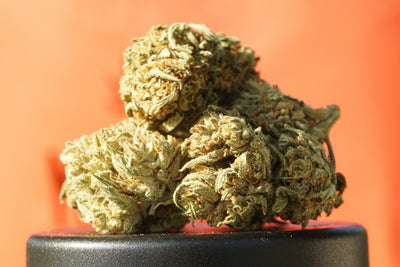
Photo by Kampus Production via Pexels.
Picture a smoke-shop owner closing up on a Tuesday night. The back room holds a few dozen cases of delta-8 gummies, vape carts and pre-rolls, and a phone on the counter buzzes with a Federal Register alert. Whether that alert says anything useful is the whole question.
Here is the plain status: I could not confirm that the DEA has proposed or published an interim final rule on synthetic cannabinoids. This piece is a scenario analysis, not a news report, and nothing here should be read as saying the rule is imminent.
The more useful question is what a retailer should do before such a rule exists. I reason from precedent rather than a predicted date, and I mark which sentences are fact, which are extrapolation and which are open speculation.
Key takeaways
- An interim final rule can take legal effect without a prior comment period, which is why retailers get so little warning.
- The 2025 hemp redefinition, not a DEA rule, is the larger threat to delta-8 shelves, and its effective date needs verifying.
- Past DEA actions on hemp THC and synthetic cannabinoids show slow, uneven enforcement, but payment and shipping partners react first.
What We Can Say About the Rule, and What We Can't
Start with what is unconfirmed. I have not verified that any DEA interim final rule on synthetic cannabinoids has been proposed or published. Before anyone acts on this article, check federalregister.gov, regulations.gov and dea.gov directly. The phrase finally publishes in the title is a premise to test, not a forecast.
An interim final rule, or IFR, is a rule an agency issues without first running notice-and-comment. It takes effect, then the agency accepts comments afterward. Agencies usually justify this with a good-cause finding, a statement that waiting would be impracticable or contrary to the public interest. That much is established administrative law.
I will use three layers throughout, and I will label them:
- Established fact: current law and past rules, which I state flatly.
- Reasoned extrapolation: how an IFR would probably operate, based on how earlier ones did. Look for phrases like if that pattern holds.
- Open speculation: the timing and scope of any new rule. Nobody outside the agency knows these, and I say so when I go there.
If a sentence has no marker, it is fact, and I have tried to keep those few and checkable. Anything about dates, effective periods or enforcement posture is projection. The point is that you can take each forecast with a grain of salt, because the salt is in the sentence.
The Legal Ground Delta-8 Stands On Today
Established fact first. The 2018 Farm Bill removed hemp from the Controlled Substances Act, defining it as cannabis with no more than 0.3 percent delta-9 THC by dry weight. That definition created the delta-8 market. Producers could convert hemp-derived CBD into delta-8 THC and argue the output was still hemp-derived.
A Ninth Circuit decision in AK Futures v. Boyd Street Distro is the best-known court support for that reading. As I understand it, the court held that delta-8 products derived from hemp fell within the lawful definition. Verify the holding and its limits before citing it, since a ruling from one circuit does not bind the rest of the country.
The most direct precedent for this article's premise is DEA's August 2020 interim final rule on hemp. It stated that synthetically derived THC remains Schedule I. The fight ever since has been over whether converting CBD into delta-8 counts as synthetic. That unresolved question is the opening a new DEA rule would try to close.
Now the part that needs verification. The federal appropriations law signed in November 2025 reportedly redefined hemp to exclude most products with more than 0.4 mg total THC per container, effective about 365 days later, roughly mid-November 2026. Check that against the text on congress.gov before relying on it.
My argument, if that redefinition takes effect as reported: it does far more to delta-8 retail than a DEA rule on synthetics could. A DEA rule would attack one production method. A per-container cap on total THC would reach almost any intoxicating hemp product, however it was made. A typical delta-8 gummy contains milligrams of THC many times over that limit.
The counter-case is that statutes get delayed or amended, and I cover that in the last section. But a retailer planning around the narrower DEA question may be watching the wrong clock.
Day One: What an Interim Final Rule Does to a Retail Counter
Everything in this section is reasoned extrapolation, not reporting. It assumes a DEA IFR on synthetic cannabinoids reaches a retailer in a form like the 2020 hemp rule.
First, timing. An IFR could take effect immediately or after a delay of weeks or months. Retailers should plan around the effective-date language in the Federal Register text, not headlines or social posts, which routinely get this wrong.
Second, who moves first. If the pattern holds, it will not be agents at the door. Intermediaries tend to cut off risk early: payment processors, shipping carriers, wholesale distributors and online marketplaces. They have little to gain from ambiguity, so a shop might lose card processing or a carrier account before any enforcement action touches it.
Third, inventory becomes the central problem. Products made by converting CBD into delta-8 are the likely target of a synthetics rule. Minor cannabinoids extracted as they occur in the plant might be argued differently, though nobody can say how an agency would draw that line without seeing the text.
A retailer would then face four choices, each with its own legal risk worth discussing with counsel before acting:
- Sell through existing stock, which may be unlawful after the effective date.
- Return stock to suppliers, who may be unreachable or insolvent.
- Reformulate toward compliant products, if any exist in the catalog.
- Destroy product, which creates a loss and a disposal question of its own.
The counter-case deserves weight. An IFR can be vague, DEA enforcement priorities are limited, and agents have historically pursued distributors and manufacturers before storefronts. A small shop is rarely the first target. It can still be the first to lose its payment processor.
What Past Crackdowns Suggest About the Timeline

Photo by Belova59 via Pixabay.
History offers three useful reference points. Verify the details of each before citing them, since I am working from memory.
Precedent one is the DEA's early temporary scheduling of K2 and Spice-type synthetic cannabinoids, followed by the 2012 Synthetic Drug Abuse Prevention Act, which wrote a class of such compounds into statute. The lesson is that manufacturers reformulated quickly, and Congress later had to move from compound-by-compound action to broader language.
Precedent two is the 2020 hemp IFR. It drew litigation and did not end the delta-8 market. The Ninth Circuit decision followed it and went the other way on the products. The gap between what a rule says and what happens at retail was wide.
Precedent three is state action. States restricted delta-8 on very different terms, from outright bans to age limits and testing rules. I will not give a count, because a vague number is worse than none. Anyone planning should pull current status for each state they sell in, with dates.
Extrapolating from that pattern: federal rules tend to reshape supply chains over quarters, not days. Compliance spreads through banks, carriers and wholesalers first, and enforcement against shops comes later and unevenly. If that holds, the practical shock of a DEA rule would be gradual, with sharp edges at the intermediaries.
The counter-case is real, and I take it seriously. This time the statute itself reportedly changed. In 2020, the hemp definition stayed intact and the DEA was reinterpreting it, which is why courts could push back. If Congress has actually narrowed the definition, that legal leverage disappears, and the 2020 experience may understate how hard enforcement could be.
My read: use the old episodes as a guide to speed and sequence, not to outcomes.
Where Retailers Could Go From Here
Here are the realistic paths, with their costs. None is a recommendation for a specific shop, since the right answer depends on state, sourcing and balance sheet.
Option one: a state cannabis license. Where adult-use or medical markets exist, a license is the most durable route to selling THC products. It is also slow and expensive, and local bans can shut the door in a given town regardless of what the state allows.
Option two: non-intoxicating hemp lines. CBD, CBG and similar wellness items, kept free of detectable THC and CBN. This stays closest to the existing customer. The catch is that the reported 0.4 mg per container cap would hit many products with trace THC too, so lab results matter even here.
Option three: adjacent categories. Tobacco-alternative goods, accessories and non-cannabinoid beverages. Margins differ from delta-8 and the competition is steep, since grocery and convenience chains already sell them.
Who is most exposed, on reasoned judgment:
- Online-only sellers, who depend on payment processors and carriers.
- THC beverage brands, whose products sit squarely in the per-container cap.
- Stores drawing a majority of revenue from intoxicating hemp.
I am not giving market-size figures. Credible revenue estimates for the delta-8 sector need proper sourcing, and published numbers vary widely by methodology, so any single figure should be treated with suspicion.
The more speculative read is that the stores best placed are the ones that already have a second revenue line. A shop with 70 percent of sales in one product category has a planning problem. One at 30 percent has a margin problem.
What Could Delay, Narrow or Reverse This

Photo by Saul Rivera via Pexels.
Several things could delay, narrow or reverse the picture above. Start with Congress. I have not verified whether any bill to delay or revise the hemp definition has advanced since November 2025. Check congress.gov. Statutory deadlines have been pushed before, and industry groups have strong incentives to lobby for that.
Litigation is the second path. An IFR's good-cause justification is a typical legal target, since challengers argue the agency skipped comment without a real emergency. Past challenges to the 2020 hemp rule give a template, and trade groups have shown they will file.
Third is agency capacity and design. DEA priorities compete with opioids and other work. FDA and USDA have roles in testing and labeling. A regulatory framework with age limits, potency caps and testing standards could replace a ban. That is a plausible compromise, though speculative, and it would favor operators who already document their compliance.
A short watch list for the coming months:
- Federal Register notices from DEA, FDA and USDA.
- Effective-date language in any rule text.
- Statements from state attorneys general.
- Payment-processor and carrier policy updates.
- Trade-group litigation filings.
My stance: retailers should treat the 2026 hemp definition deadline, if it checks out against the law's text, as the real planning date. A DEA rule on synthetics is a possible accelerant, not the main event. If it never publishes, the statute still comes due.
Plan around the statute's effective date first. A DEA interim final rule, if one ever appears, would speed up and sharpen a change that the law itself already sets in motion. Retailers who stare only at the agency risk missing the bigger calendar.
The shops best placed to pivot are the ones doing unglamorous work today: documenting where product comes from, keeping current third-party lab results on every SKU, and verifying age at the counter. Those records help under a ban, a cap, a licensing regime or a regulated framework. Whichever rule arrives, they are the thing it will ask to see.
Sources
- R.I.P. Delta-8 THC - Canna Law Blog™
- Congress Gave Delta-8 Another Month. It Didn’t Give It Schedule III.
- Hemp-Derived THC Beverages Face Federal Regulatory Crossroads · CannIntel
- DEA Synthetic Cannabinoid Ban: Regulations, Legal Challenges & Industry Impact — ongoing CannIntel coverage · CannIntel
- Is Delta 8 & Delta 9 Synthetic? The 2026 Breakdown
- Is Delta-8 Legal Federally? (2018 Farm Bill Explained)