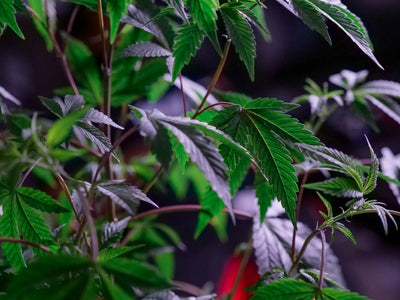
Hemp Bioplastics: The Real Science and the Slow Road to Scale
Photo by Engin Akyurt via Pexels.
On April 30, 2026, a team out of the University of Connecticut published something that reads, at first glance, like the kind of press release hemp advocates have been writing for a decade: a bioplastic made from cannabis. But the paper in Chem Circularity is not another feasibility study or a life-cycle-assessment thought experiment. It's a working thermoplastic, synthesized from CBD extracted from hemp biomass, with measured performance data that puts it in the same conversation as polycarbonate and PET -- the plastics that make up water bottles, eyewear, medical tubing, and a meaningful slice of everything else made of clear, tough polymer.
Hemp bioplastic pitches aren't new. Hemp fiber composites have been in door panels and dashboard trim for over a decade, and hemp-oil-based resins have circulated in niche composite markets for years. What's genuinely different here is the chemistry itself: polycannabidiol carbonate, built directly from the CBD molecule rather than from hemp fiber or seed oil as a filler. It's engineered as a direct substitute for bisphenol-A-based polycarbonate, the plastic behind an endocrine-disruption problem that regulators and parents alike have been arguing about since the early 2000s.
Here's the part that keeps this from becoming another optimistic hemp headline: the researchers say so themselves. There is not remotely enough CBD produced on the planet to replace PET at any meaningful scale. That admission, buried in the same paper announcing the breakthrough, reframes the entire story. The interesting question isn't whether this plastic works -- it does, on paper and in the lab. The interesting question is whether the hemp supply chain, built over the last seven years mostly to serve tinctures and gummies, can ever catch up to an industrial demand curve measured in tens of millions of tons a year.
What Sotzing's Team Actually Made

Photo by Pavel Danilyuk via Pexels.
The material at the center of the paper is polycannabidiol carbonate, and the name tells you most of what you need to know: it's a carbonate polymer, chemically related to the same family as polycarbonate, but built from a cannabidiol backbone instead of bisphenol-A. The team, led by UConn chemistry professor Gregory Sotzing, describes it as roughly 92% bio-based by content, extracted from hemp biomass and processed into a thermoplastic that behaves like conventional plastic once it's synthesized -- not a bio-additive blended into petroleum plastic, which is how a lot of past bio-based plastic marketing has worked.
The performance numbers are what make this worth taking seriously rather than filing under interesting-but-impractical. The paper reports stretchability up to 1,600%, an elevated glass transition temperature, full melt processability, and transparency and thermal stability that the authors say are comparable to PET. Melt processability matters more than it sounds: it means the material can, in principle, run through the injection-molding and extrusion equipment that already exists in plastics manufacturing, rather than requiring an entirely new production infrastructure. It's also reported as non-toxic and water-resistant, and processable into films and coatings -- the physical forms that most consumer and industrial plastic actually takes.
Sotzing has been explicit about the comparison he wants people to draw: conventional polycarbonate is made from bisphenol-A, a compound with a well-documented history as an endocrine disruptor, implicated in decades of research on hormone signaling disruption and linked to regulatory action in multiple countries restricting BPA in food-contact plastics and baby products. A plastic with PET-like performance that doesn't carry that liability is a genuinely different pitch than fiber-filled composites, which mostly compete on weight and sustainability marketing rather than on removing a known toxicant from the material itself.
Sotzing isn't treating this as a pure academic result. He's launched a startup, PolyC Plastics and Composites, to commercialize the material, which is the clearest signal that the team sees a path from published chemistry to an actual product line rather than a citation count.
Why Medical Implants, Not Grocery Bags, Come First

Photo by Elements Interactive via Pexels.
Sotzing's own stated expectation for where this material lands first is telling, and it runs against the instinct most people have when they hear hemp plastic: the first commercial application isn't going to be a shopping bag or a food container. He expects high-performance, high-price applications like medical implants to be the entry point, not disposable packaging.
That sequencing isn't unique to hemp, and it's worth naming the precedent because it's a well-worn pattern in materials science. Carbon fiber spent decades as an aerospace and Formula 1 material before it showed up in bicycle frames and eventually consumer goods, because the manufacturing cost only made sense where performance mattered more than price. PLA bioplastic followed a similar arc, entering through medical sutures and drug-delivery devices -- applications that could absorb a cost premium -- years before it became cheap enough for compostable cutlery and cold cups. Novel materials almost always debut where margins are fat and volumes are small, then work their way down to commodity uses only if production costs fall enough to compete on price rather than performance.
Medical-grade plastics are a plausible landing spot for polycannabidiol carbonate for a specific reason: the volumes required are minuscule next to PET packaging. A single implant coating or device component might use grams of material, not the tons per hour that a beverage-bottling line consumes. That volume mismatch means the current cost of CBD-derived plastic -- which is undoubtedly far higher than commodity PET -- is far easier to absorb in a device that might sell for hundreds or thousands of dollars than in a product that competes on pennies per unit.
The fit also runs deeper than economics. Transparency, thermal stability, and non-toxicity are exactly the properties implant manufacturers care about, and bisphenol-A leaching from polycarbonate components has been a live regulatory and litigation concern for medical device makers for years. A material that offers comparable clarity and stability without that specific liability solves a problem device makers already know they have.
All of that said, this is reasoned extrapolation, not an announced roadmap. No FDA clearance has been filed as of this writing, and no named medical-device partner has signed on. The historical pattern for how novel biomaterials enter markets makes this a sound bet -- but it remains a bet, not a confirmed product timeline.
The Bottleneck: There Isn't Enough CBD on Earth

Photo by Mark Stebnicki via Pexels.
The most important sentence in the UConn paper isn't about performance specs -- it's the admission that there is not enough CBD produced worldwide to replace PET for plastics at any meaningful scale. That's not a hedge or a caveat buried in a discussion section; it's the authors stating plainly the limitation of their own breakthrough. This is documented fact, not speculation: the numbers don't remotely line up.
Global PET production runs in the tens of millions of tons annually, feeding beverage bottles, textile fiber, and packaging across every consumer economy on earth. The CBD supply chain that currently exists was built for an entirely different market -- tinctures, gummies, topicals, and vape products aimed at wellness consumers buying in milligram doses, not industrial buyers needing tons of feedstock. Retooling that supply chain to feed plastics manufacturing isn't a matter of building a bigger extraction machine; it's a matter of dramatically expanding the acreage of hemp under cultivation and the processing capacity to turn that biomass into usable CBD at industrial volumes.
Sotzing's own proposed fix underscores where the real bottleneck sits: he's stated that costs of CBD would drop upon the planting of more hemp, which is a chemist correctly identifying that his constraint is agricultural, not chemical. The synthesis works. The problem is upstream of the lab, in farmland, seed genetics, extraction infrastructure, and the capital required to build all three out at a scale nobody has needed before because nobody has been buying CBD by the ton.
This is the throughline connecting essentially every hemp-material venture operating right now, whether it's building bioplastic, bio-epoxy, or molded pulp packaging: the chemistry keeps outrunning the farmland. Labs can publish a viable material faster than farmers, processors, and financiers can stand up the supply chain to feed it. It's worth being precise about what's fact here and what's projection. The supply gap -- current CBD volumes versus PET-scale demand -- is documented and not in dispute. How fast cultivation and extraction capacity could close that gap is genuinely unknown, and depends on variables like commodity hemp pricing, farmer willingness to shift acreage, and whether investment follows the lab result at all.
Zila BioWorks and Renw: Two Different Bets on Solving Scale

Photo by Sohan Rahat via Pexels.
Sotzing's plastic isn't operating in isolation -- it's one bet among several on how to solve the scale problem that dogs every hemp-material venture, and two other companies illustrate just how differently that bet can be placed.
Zila BioWorks, based in Renton, Washington and founded in 2014 by Jason Puracal and Evan Bouchier, makes Hempoxy, a bio-epoxy resin derived from hemp seed oil rather than CBD. It's already found its way into Burton snowboard prototypes and other composite applications where epoxy resin is the binding agent holding fiber layers together. What's notable about Zila's approach is as much structural as chemical: the company operates bootstrapped, leaning on six universities including Washington State, two Department of Energy labs, and two contract manufacturers instead of owning its own dedicated production facilities. That arrangement is itself a signal worth reading -- it tells you how thin the dedicated hemp-material manufacturing infrastructure still is in the U.S. When even an established, decade-old player is renting capacity from universities and national labs rather than running its own plant, that's a supply chain still in its infancy, not one approaching industrial maturity.
Renw takes a different approach entirely, betting on volume of infrastructure rather than novel chemistry. It's a joint venture between Papacks and element6 Dynamics, launched in September 2024, focused on molded hemp-pulp packaging -- the kind of thing that could realistically replace molded fiber trays or protective packaging inserts. Renw's model is to build dedicated plants, each targeted to produce 30 tons of industrial hemp pulp per day, which is a meaningfully larger and more industrial ambition than Zila's contract-manufacturing approach. As of a 2024 report, Renw was evaluating four potential sites with a first plant targeted for Q4 2026. That date is close enough now to function as a real test case rather than a distant promise -- within the timeframe of this article, we should know whether that plant opens on schedule.
What these two ventures make clear is that the hemp-materials space isn't converging on one feedstock or one product. Sotzing is working with CBD extract, Zila with seed oil, Renw with pulp fiber. That diversification is arguably healthy -- it means the sector isn't making a single bet on a single bottleneck -- but it also means none of these approaches yet has the combined scale to move the needle against commodity plastics on its own.
How Big Is This Market, Really?

The hemp bioplastics market is projected to grow steadily from $160 million in 2024 to $290 million by 2031, with the fastest growth occurring in the earlier years before the rate of increase levels off after 2028.
Numbers help ground the enthusiasm, so long as they're labeled correctly. Non-peer-reviewed industry estimates put the hemp bioplastics market at roughly $150 to $170 million as of 2024, with projections reaching about $290 million by 2031 on a compound annual growth rate somewhere between 13.6% and 20%, depending on the source. It's worth being blunt that these are industry-blog and market-research figures, not audited or peer-reviewed data, and the wide range in the CAGR estimate alone should tell you how much guesswork underlies them.
Europe currently leads global hemp plastic production, which likely reflects two structural advantages rather than any single breakthrough: longer-standing EU allowances for hemp cultivation compared to the U.S., where hemp only became federally legal in 2018, and sustained automotive-sector demand for hemp fiber composites in door panels and interior trim, an application European manufacturers have used for years.
Here's the context check that matters most: even the high end of that 2031 projection, $290 million, is a rounding error against the global plastics market, which runs into the hundreds of billions of dollars annually. Put the hemp bioplastics figure next to global PET production alone -- tens of millions of tons a year, worth tens of billions of dollars -- and the gap isn't close. This is the same scale problem from Section 3 showing up again in market-size terms rather than tonnage terms.
The realistic reading threads between two extremes. Dismissing the sector because the absolute dollar figures are small misses that the growth trajectory, if these estimates hold even directionally, is real and driven by genuine demand from automotive, packaging, and now potentially medical applications. But treating $290 million as evidence that hemp bioplastics are about to challenge conventional plastic misreads the scale entirely. Growth is likely real; the absolute numbers stay niche unless cultivation acreage and CBD extraction capacity multiply well beyond where they sit today -- which loops back to the agricultural bottleneck rather than anything happening in a chemistry lab.
The Legal Floor This All Sits On

Photo by Matheus Lara via Pexels.
Every part of this story sits on a single piece of federal legislation: the 2018 Farm Bill, which legalized hemp cultivation nationally and ended the era when planting cannabis sativa, even the non-intoxicating industrial variety, was a federal crime regardless of THC content. That bill is still the operative framework. As of this writing, there's no indication that a 2026 Farm Bill overhaul of hemp provisions has passed, meaning the regulatory floor underneath this entire supply chain -- Sotzing's CBD sourcing, Zila's seed oil, Renw's pulp -- has been legally unchanged since 2018.
History offers a useful precedent for how fast a hemp-derived material boom can actually materialize once the legal floor is set. The 2018 Farm Bill itself triggered exactly this kind of scaling event once already: within about a year, by 2019 and 2020, it produced a genuine CBD wellness-product boom, with extraction facilities, farmland, and retail distribution scaling up fast enough to put CBD products into gas stations and grocery store shelves nationwide. That's the same CBD infrastructure -- the extraction capacity, the farmer networks, the processing know-how -- that Sotzing's plastic now depends on. It's a real precedent for how quickly agricultural and processing capacity can follow a legal green light, not a guarantee that it will happen again at the scale plastics manufacturing would require.
The risk case cuts the other way, though, and it's worth taking seriously. Since 2023, several states have moved to restrict intoxicating hemp-derived cannabinoids -- delta-8 THC and similar compounds synthesized from CBD -- responding to concerns about unregulated products reaching consumers, including minors, through gas stations and smoke shops. Those restrictions target intoxicating derivatives specifically, not non-intoxicating CBD itself, but regulatory tightening rarely stays perfectly surgical. A state crackdown aimed at delta-8 could easily complicate the broader hemp-derived cannabinoid supply chain that CBD-for-plastics manufacturing would need to draw from, even if that wasn't the intent.
This is where legislative reasoning has to stay honest about its limits: nothing here predicts new federal hemp law is coming, and nothing suggests the 2018 baseline is about to be repealed. What the historical pattern does support is a read on fragility -- the entire hemp-materials supply chain, present and future, rests on a seven-year-old federal framework that state-level cannabinoid regulation is already nibbling at from the edges.
Strip away the hedging and one thing is clear: the chemistry is arguably ahead of schedule. A non-toxic, PET-performance plastic synthesized from a renewable crop, with published stretchability and thermal data to back it up, is a real result sitting in a peer-reviewed journal -- not a press release promising a lab breakthrough that's still five years from replication. That's worth sitting with, because a lot of hemp-material claims over the past decade haven't cleared that bar.
But the limiting reagent here, literally and figuratively, isn't further lab work -- it's hectares of hemp under cultivation and tons of extraction capacity built out to serve an industrial buyer rather than a wellness one. That means the realistic timeline for this material mattering at any real scale tracks farm economics, land use decisions, and extraction infrastructure investment far more than it tracks what comes out of chemistry journals next. Sotzing can publish a dozen follow-up papers refining the polymer, and none of it moves the needle if hemp acreage doesn't grow to match.
Two concrete, near-term signals will tell you whether this is moving from published study toward actual supply chain rather than staying an interesting result in a journal. Watch whether Renw's first plant, targeted for Q4 2026 at 30 tons of hemp pulp per day, actually opens on that timeline -- it's a direct test of whether hemp-material infrastructure can be built on the schedule its backers claim. And watch whether PolyC Plastics and Composites lands a named medical-device partner, which would be the first sign that Sotzing's high-margin, low-volume entry point is more than a reasonable prediction drawn from how carbon fiber and PLA once scaled. Either of those landing on schedule would be the first real evidence that hemp bioplastics are catching up to their own chemistry, rather than the other way around.
Sources
- Hemp Bioplastics Market 2026: Global Trends, Stats & Future Opportunities
- Hemp-Based Plastic Shows Promise As Environmentally Friendly Alternative To Traditional Packaging Materials, Study Finds | Cannabis Promotions News
- Can Hemp Replace Plastic? An Honest Look in 2026
- Is Hemp Biodegradable? The Complete 2026 Guide | Hurcann
- Hemp-derived plastic can serve as renewable alternative to PET, study finds