Hemp Carbon Credits: The Honest Math Behind the Hype
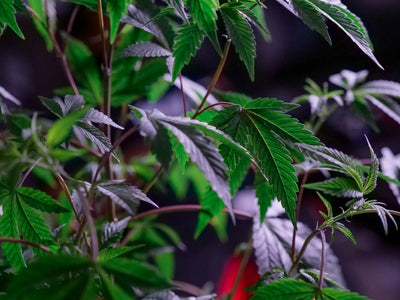
Photo by trilemedia via Pixabay.
Search "hemp carbon sequestration" and you'll find a number floating around like it's settled science: up to 22 tonnes of CO2 per hectare, sometimes framed as beating forests outright. It's a compelling pitch — a crop that grows in four months, needs little water, and apparently locks up carbon faster than a century-old oak stand. Except the world's largest voluntary carbon registry, Verra, doesn't currently have a working methodology for hemp cultivation at all. The proposed framework has been sitting on hold, and Verra isn't expected to even reevaluate its status until the first quarter of 2026.
That gap — between what marketing copy claims and what's actually been validated by a third party — is wide enough that anyone thinking about a hemp carbon project, whether as a grower, an investor, or a corporate buyer looking for offsets, needs to know exactly where the line sits between proof and promotion. Some of hemp's carbon story is real and published in peer-reviewed journals. Some of it is a single farm trial or one researcher's estimate getting repeated until it sounds like consensus. And some of it is just SEO content written for a market that doesn't exist yet. This piece walks through each layer — what's proven, what's plausible, and what's noise — starting with why the registry that matters most hit pause.
Why Verra Hit Pause on Hemp

Photo by RDNE Stock project via Pexels.
Verra runs the Verified Carbon Standard, the registry that most corporate buyers actually trust when they want to claim a credit is real. If a credit isn't Verra-registered, or registered with one of the handful of comparably rigorous programs, plenty of sustainability teams simply won't touch it. That's why Verra's proposed Methodology for Carbon Sequestration Through Cultivating Hemp matters so much — and why its current status, on hold, is the single most important fact in this entire conversation.
The proposed methodology was never meant to cover just any hemp field. It restricted eligibility to degraded or marginal agricultural land rather than prime farmland, presumably to avoid rewarding growers for simply switching what they'd have planted anyway, and to target soils where a carbon gain would be more additive. That's a sensible design choice on paper. But Verra paused the concept note because non-permanence risk — the chance that sequestered carbon gets released back into the atmosphere before it's supposed to — still needs proper assessment and resolution. Verra has said it plans to look at other climate mitigation pathways for the building sector in the meantime, and will reevaluate the hemp methodology's status in Q1 2026.
The practical upshot is blunt: there is currently no functioning global standard for hemp carbon credits through the registry that dominates corporate demand. Not a slow-moving one, not an imperfect one — none. Any claim about hemp credits being sold, verified, or priced against a Verra benchmark today is either referring to a different, less-trusted registry or getting ahead of the facts.
That hasn't stopped infrastructure from being built in anticipation. Companies like Hemp Blockchain are developing track-and-trace systems designed to document hemp production with the kind of granularity a future methodology would require — planting dates, biomass yields, end-use destination of the harvested material. It's a reasonable bet to make, structurally similar to how forestry-credit infrastructure got built ahead of full market maturity. But it's still a bet on a standard that doesn't exist yet, not a service built for one that does.
The Permanence Problem: Why Biology Complicates the Ledger

Photo by Kindel Media via Pexels.
Carbon credits only mean something if the carbon actually stays put. The carbon-farming literature generally puts the bar at 25 to 50 years of storage for a sequestration claim to carry real climate value — long enough that the removal isn't just deferring the emission by a few growing seasons. That threshold is where hemp's soil-carbon pitch runs into trouble, because biological carbon pools are inherently reversible in a way that, say, carbon locked into a rock formation is not. Drought, wildfire, a pest outbreak, a change in land use, or simply a farm switching management practices five years later can release stored soil carbon right back into the atmosphere. This is called the permanence problem, and it isn't unique to hemp — it's the central unresolved tension in nearly all soil- and forest-based carbon accounting.
A 2022 life-cycle assessment published on ScienceDirect gives the clearest picture of how this plays out specifically for hemp. Researchers modeled a scenario where hemp stems were left on the field after harvest rather than removed, and found soil organic carbon rose by 25.8 tonnes per hectare over a 100-year horizon. That's a real, measured, peer-reviewed number — not a marketing estimate. It sounds like a win.
But the same study found that the greenhouse gas emissions generated by converting land use over to hemp cultivation in the first place weren't fully offset by that soil carbon gain on its own. In other words, the leave-it-in-the-field scenario, taken by itself, didn't actually mitigate warming when the full lifecycle was accounted for. The climate benefit only showed up clearly in a different scenario: when the hemp biomass was converted into long-lived products — insulation boards, automotive interior panels, hempcrete — rather than left as raw biomass or plowed back into the soil.
That distinction is the whole story in miniature. It's not that hemp doesn't sequester carbon; it's that raw biomass and tilled-under stubble are exactly the kind of carbon pool that's easiest to reverse and hardest to verify over decades. Yield isn't the bottleneck here. Permanence is.
Whose Numbers Do You Trust? The Yield Figures Problem

Cited CO2 sequestration estimates vary widely across sources, with industry marketing claims (22 t/ha) far exceeding academic figures like Shah's Cambridge study (8-15 t/ha) and typical temperate forest sequestration (4 t/ha), highlighting inconsistency and potential overstatement in hemp cultivation carbon claims.
Ask three sources how much CO2 a hectare of hemp captures and you'll likely get three different answers, none of which cite the same underlying study. The low end of the commonly cited range, 8 to 15 tonnes per hectare, traces back largely to work by Cambridge materials researcher Darshil Shah, whose research on hemp's material properties has been widely referenced in the carbon-sequestration conversation even though it wasn't necessarily designed as a definitive field-carbon benchmark. The high end, 22 tonnes per hectare, shows up repeatedly in industry marketing material without a clearly traceable, independently replicated source behind it.
More recent field data leans toward the conservative end. A January 2026 writeup from the Swedish sustainability organization Axfoundation covered small-scale trials run in partnership with the carbon-sequestration group Svensk Kolinlagring, citing figures in the 10 to 15 ton range — consistent with Shah's lower-bound estimate, not the marketing-material high end. That's a meaningful signal: a real, if small, field trial landing closer to the conservative published figure than to the number that shows up on hemp-industry sales pages.
The comparison that makes hemp look dramatically superior to forests deserves particular scrutiny. Forest carbon sequestration is commonly cited at 2 to 6 tonnes per hectare per year, which on its face makes hemp's 10-plus tonnes look like an easy win. But that comparison mixes methodologies that aren't counting the same thing — different time horizons, different carbon pools (above-ground biomass only, versus above- and below-ground, versus soil organic carbon), and different assumptions about what happens to the harvested material afterward. A forest left standing for decades and a hemp field harvested every four months are not directly comparable carbon systems without a lot of careful normalization that most marketing comparisons skip entirely.
The pattern worth noticing is that most of the widely repeated high-end figures trace back to a small number of original sources, rather than a body of independently replicated research converging on a number. That's not the same evidentiary standard as, say, agricultural yield data with decades of trials behind it. A single-farm trial, or one researcher's modeled estimate, is a data point worth taking seriously — but it isn't the same thing as a validated, third-party methodology that a registry like Verra would accept, and the industry's marketing language routinely blurs that distinction.
How a Hemp Carbon Credit Would Actually Have to Work

Photo by Flint Huynh via Pexels.
Suppose the permanence and standardization problems eventually get resolved. What would actually issuing a hemp carbon credit require in practice? A December 2025 analysis from Marijuana Moment laid out the mechanics, and they're considerably less simple than "plant hemp, get paid." Growers need to measure carbon capture using accepted quantification tools — COMET-Farm or the Cool Farm Tool are the two most commonly referenced — which means data collection on soil sampling, biomass measurement, and management practices over time, not a one-time estimate.
From there, getting a credit actually issued means working with a carbon project developer to structure the project, registering it with a verified registry, and passing third-party validation and verification audits. Each of those steps costs money and time, and none of them are things a small or mid-sized hemp farm can typically absorb on its own without aggregating into a larger project or working through an intermediary. This is the same structural reason smallholder farmers have historically struggled to access forestry and soil-carbon markets directly — the transaction costs of proving a claim often exceed what an individual small project can recoup.
Biochar offers a useful real-world comparison, because it shows what a durable-carbon pathway looks like once it clears registry standards. Biochar carbon credits have sold for upward of $500 per ton of CO2 in recent transactions — a striking price relative to typical soil-carbon credits — and Verra already maintains a separate, functioning biochar methodology. That's proof of concept that a carbon-storage pathway built around a stable, long-lived material can get through registry validation and find real buyer demand at a meaningful price.
Raw hemp cultivation credits, by contrast, remain unstandardized specifically because the storage isn't stable in the same way. That's precisely why converting hemp biomass into biochar, or into hempcrete and other long-lived building products, looks like the faster path to market — those pathways store carbon in a form closer to what biochar already proved can clear a registry, rather than leaving it in a soil pool subject to the permanence problems described earlier.
On the US policy side, there are tax angles worth watching rather than relying on today. IRS Section 45Q credits, designed around carbon capture and storage, and participation in both voluntary and compliance carbon markets are the two most-discussed mechanisms — but eligibility specifics for hemp-derived carbon storage remain unsettled, and nothing here should be treated as a confirmed tax strategy until the relevant guidance actually says so.
Reading Past the Hype: What's Fact, What's Forecast

Photo by Michael Orshan via Pexels.
Several pieces of content dated into 2026 — an industry blog post and at least one hemp cultivation guide among them — describe carbon markets for hemp as though they're already mature, name-dropping blockchain and satellite verification systems as if they're routinely operating pipelines. That doesn't square with the documented reality of a stalled, still-under-review Verra methodology. When promotional content describes a market moving faster than its own regulatory foundation, that's usually a sign the content is written to sell something — land, seed, consulting services — rather than to report where things actually stand.
History offers a useful check on how fast this is likely to move. Forestry carbon credits took roughly two decades to go from early-2000s pilot methodologies to a standardized, reasonably liquid market — and even now, forestry credits face ongoing controversy over permanence and additionality, the same two issues hemp is currently stuck on. If hemp's carbon market follows a similar arc, the more plausible sequence is that a narrow, product-embedded methodology — hempcrete, insulation panels, biochar — clears registry review well before any broad, field-level soil-carbon methodology does. That's the pattern biochar has already demonstrated works.
There's a reasonable counter-case worth taking seriously, though. Hemp's growing cycle is roughly four months, compared to forestry rotations measured in decades, and hemp can plug into existing row-crop agricultural infrastructure rather than requiring new land management regimes built from scratch. Those two facts could compress the maturation timeline significantly relative to forestry's twenty-year arc. But that compression only happens if the permanence problem gets solved — and forestry, with two decades and vastly more research funding behind it, still hasn't fully solved that problem for its own credits. Betting that hemp solves it faster requires evidence, not just optimism about hemp's shorter growing season.
What that leaves, practically, for growers looking at real business opportunity today: the more solid ground is supplying the hempcrete, insulation, and biochar value chain, where a buyer and a market price already exist independent of whether a carbon-credit methodology ever gets finalized. That's not a speculative bet on registry timing — it's a materials market that functions today, on its own economics.
Strip away the marketing language and the honest math is this: hemp's soil-carbon story, on its own, doesn't currently pencil out as a standalone climate solution. The 2022 life-cycle study made that plain — leaving stems in the field raised soil carbon, but not enough to offset the emissions from converting land use to hemp in the first place. The part of hemp's carbon story that does have real evidence behind it is the product pathway: carbon locked into hempcrete, insulation board, and biochar, where the storage is stable enough and long-lived enough to actually matter on a 25-to-50-year horizon.
For farmers and investors evaluating any hemp carbon credit pitch that predates Verra's Q1 2026 reevaluation, the right posture is skepticism, not excitement. That's not a market yet — it's pre-regulatory speculation dressed up as an investment opportunity, and treating it as a bankable line item before a validated methodology exists is how money gets lost on paper credits that never clear verification.
The more durable move, if this analysis holds, is building the supply chain now — securing offtake agreements for hemp hurd going into biochar or construction materials, investing in processing capacity, learning the hempcrete and insulation markets on their own commercial merits. If a credible carbon methodology eventually does land, whether that's Q1 2026 or later, the growers and processors who already have functioning product pipelines will be positioned to capture whatever additional value a credit adds. The ones who spent that time chasing a soil-carbon credit that didn't exist yet will be starting from zero.
Sources
- Methodology for Carbon Sequestration Through Cultivating Hemp - Verra
- Hemp – The Ideal Crop for Carbon Sequestration?
- Hemp Carbon Credits Explained, Sequestration, Biochar
- The Hemp Carbon Revolution: Scaling Industrial Hemp Sequestration in 2026
- What is hemp biomass? A 2026 guide to eco-friendly wellness – 23rd State