Hemp Hurd to PHA Bioplastic: The Fermentation Bet
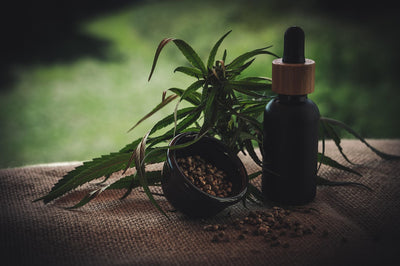
Photo by Tara Winstead via Pexels.
Walk through a hemp decortication site and you will see two piles. One is the long, tough bast fiber that fetches a price. The other is hurd: pale, woody chips from the stalk core, usually sold cheaply as animal bedding or garden mulch. The question worth asking is whether that second pile is worth more as a fermentation feedstock than as litter.
The candidate product is polyhydroxyalkanoate, or PHA. These are biodegradable polyesters that many bacteria store as internal granules when carbon is plentiful and another nutrient, such as nitrogen, runs short. Think of them as bacterial fat reserves that happen to behave like plastic.
A plain note on sourcing: this is a reasoned forecast built on established fermentation science and documented bioplastics history. I cite no hemp-hurd-to-PHA yields, companies or titers, because none could be verified, and I would rather leave a gap than fill it with a guess.
My stance is that the route is scientifically plausible and economically unproven. The useful question is what would have to be true for it to matter by the early 2030s.
Key takeaways
- PHAs are polyesters that bacteria store as carbon reserves, and hemp hurd's cellulose and hemicellulose can in principle be converted into the sugars they eat.
- The hard parts are pretreatment, fermentation inhibitors, and cost against cheap petrochemical plastics, not the underlying biology.
- Within 3-7 years, expect pilot-scale and niche-product progress at best, not hemp PHA competing with commodity plastic.
What PHAs Are and Why Bacteria Make Them
Polyhydroxyalkanoates are polyesters that bacteria such as Cupriavidus necator accumulate as intracellular storage granules. The trigger is nutritional imbalance: plenty of carbon, but limited nitrogen or phosphorus. The cell cannot divide, so it banks the surplus carbon as polymer. Everything in this section is established science.
The best-known family members are PHB (polyhydroxybutyrate) and the copolymer PHBV. Properties depend on monomer composition. Pure PHB tends to be stiff and brittle, while copolymers with other monomers become more flexible and easier to process. That tunability is a real selling point, because one fermentation platform can in principle yield several grades of material.
The detail that matters most for this article is that PHA is a fermentation product, not a chemical synthesis. You feed microbes sugar, grow them, push them into storage mode, then break open the cells and recover the polymer. Because the microbes eat the sugar, the feedstock is the biggest cost driver you can actually control. Choose a cheap carbon source and you move the whole cost curve. Choose an expensive one and the polymer cannot compete.
Biodegradability is the other draw. PLA, the best-known bio-based plastic, generally needs industrial composting conditions to break down. PHAs are known to biodegrade in a wider range of environments, including soil and marine settings, though rates vary with the polymer type, thickness and conditions. Wider is not the same as fast or guaranteed, and anyone promising a PHA bag that vanishes in the ocean within weeks is overselling.
That is the foundation. From here the article moves from fact toward projection, and I will flag the shift each time it happens.
Why Hemp Hurd Is a Plausible Feedstock
Hurd is the woody core of the hemp stalk, left over once the bast fiber is separated. It makes up a large share of stalk mass, so it is not a rare byproduct to be coaxed into existence. It already exists wherever fiber is processed, and today it mostly sells cheaply.
Like other lignocellulosic biomass, hemp hurd is built from cellulose, hemicellulose and lignin. Published composition ranges for hurd fit that general pattern, and I will describe them only as approximate, since values vary by variety, growing conditions and analysis method. After hydrolysis, cellulose yields glucose and hemicellulose yields mostly xylose. That matters because the fermenting organism has to cope with a mixed sugar stream.
The case for hurd has three parts:
- It is low-value today, so the raw material is cheap.
- It is non-food, which sidesteps the food-versus-fuel complaint that dogged corn-based plastics.
- It is collected at processing sites rather than scattered across fields, which cuts logistics cost.
Now the counter-case, which is substantial. US fiber-hemp processing capacity is thin, so hurd supply is regional and small next to corn stover or sugarcane bagasse. Competing uses such as hempcrete and animal bedding already absorb much of it, and those buyers set a price floor a fermentation plant would have to beat.
One caution about evidence. I am not citing a specific hurd-to-PHA study, because none could be verified. The claim rests on the general science of converting lignocellulose to PHA, which is well established for other biomass. Whether hurd behaves as well as those materials is exactly the data point still missing.
From Stalk to Sugar: The Pretreatment Problem
Lignin wraps the cellulose and hemicellulose, locking up the sugars. Hurd therefore has to be pretreated before enzymes can release glucose and xylose. Options include steam explosion, dilute acid and alkaline treatment, and each trades off cost, sugar recovery and by-products.
Those by-products are the catch. Pretreatment can generate inhibitors such as furfural, HMF, acetic acid and phenolic compounds, which can stall bacterial growth or kill it outright. Removing them, called detoxification, adds cost and process steps.
Enzymes are the next hurdle. Cellulase cost was a major barrier for lignocellulosic ethanol, the closest commercial precedent, and that experience is the best guide we have. I will not assert a number, but the lesson is that sugar release, not fermentation, is where these projects have often struggled.
Then there is the organism. Many PHA-producing strains grow poorly on xylose, so the field leans on strain selection or genetic engineering. This is an open technical challenge, not a solved one.
The optimistic read is that hurd is relatively small-particle and hardwood-like, so it may respond well to mild pretreatment. That is extrapolation, and it needs real hydrolysate data to confirm. The generic pipeline looks like this:
- Pretreat the hurd to open up the lignin-wrapped structure.
- Hydrolyze with enzymes to release glucose and xylose.
- Detoxify the hydrolysate to remove inhibitors.
- Ferment with a PHA-accumulating strain, then trigger storage.
- Extract and purify the polymer from the cells.
Every arrow in that list is a place where cost can leak out. A credible hemp PHA claim has to account for all five steps, not just the bacteria.
The Precedents: What Bioplastics History Warns Us About

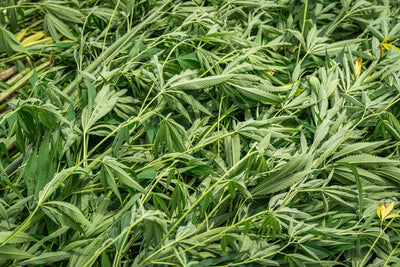
Photo by Patrick Gamelkoorn via Pexels.
History is the best guide we have, and it is sobering. An early commercial PHA material, Biopol, proved the technology worked but struggled on cost against petroleum plastics. Later PHA ventures, including Metabolix and its Mirel line, show that scientific viability has not guaranteed commercial survival. I am keeping those details broad because specifics should be checked before anyone repeats them.
Brazil's sugarcane-based PHA pilot effort is a useful parallel. It tied PHA to a cheap local sugar stream, which is precisely the logic hemp hurd would rely on. The lesson is that a good local feedstock helps but does not by itself close the cost gap.
PLA tells the other half of the story. Its growth rested on corn-derived sugar and a large dedicated producer. Scale and a steady feedstock mattered as much as polymer properties. A hurd stream scattered across small processors looks very different from that.
From these cases I would extrapolate one pattern. Bioplastics tend to gain a foothold in premium, regulated or niche applications first, such as medical uses, compostable foodservice and agricultural film, long before anything resembling commodity use. If hemp PHA arrives at all, I expect it there.
I will not detail recent PHA company financial troubles, since I could not verify them. What I can say in general terms is that the sector is capital-intensive and volatile, and that investors should price in the possibility of failure even when the chemistry works.
Economics, Policy and the Hemp Supply Chain
PHA competes against polyethylene and polypropylene, which cost far less per kilogram. I am not inventing a cost figure for hemp-derived PHA. The honest forecast is that it needs a premium market or policy support to exist at all.
Four levers decide the cost:
- Feedstock price: hurd is cheap, but pretreatment is not.
- Fermentation titer and yield: how much polymer per liter and per kilogram of sugar.
- Downstream polymer recovery, which can be costly and solvent-heavy.
- Plant scale, since fermentation economics improve with volume.
Policy could plausibly help. Single-use plastic restrictions and extended producer responsibility rules exist in several jurisdictions, and both can raise the value of compostable or biodegradable materials. I will describe them only generally. Their strength and timing vary a lot by place.
Hemp law is a separate wrinkle. The 2025 federal change to the hemp definition, which I believe takes effect in November 2026, targets intoxicating hemp-derived products. Industrial fiber and grain hemp are likely less affected, but that needs verification, and I will not state specifics.
The conservative counter-case is infrastructure. US decortication capacity is limited, so hurd volumes may stay too small to justify a fermentation plant. A fermenter wants steady, large inputs, and a few scattered processors may not provide them.
One business hypothesis follows. A small fermentation unit co-located with a decortication facility could monetize hurd without long hauls. The risks are real: capital cost, technical complexity, and dependence on a single feedstock supplier. Treat it as a hypothesis to test, not a plan.
A 3-7 Year Outlook: What to Expect and What to Watch

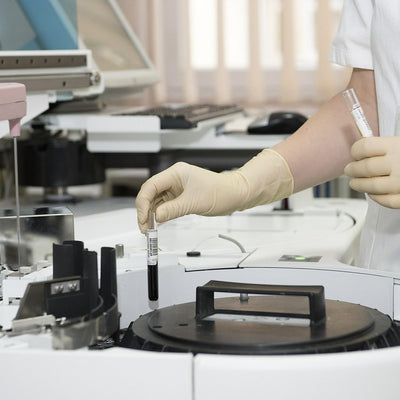
Photo by Jesus Carlon via Pexels.
Here is my reasoned extrapolation for the early 2030s, not a dated prediction. The most likely outcome is peer-reviewed lab and pilot demonstrations, perhaps a handful of niche products or partnerships. That is how most bioplastic routes begin.
The more speculative read is a regional plant tied to a hemp processor, producing specialty PHA for packaging or agricultural uses. It is possible. I would not bet heavily on it.
Signals worth watching:
- Published titers and yields on real hurd hydrolysates.
- Techno-economic analyses with transparent assumptions.
- Pilot-plant announcements with named scale.
- Hurd pricing, and whether competing buyers bid it up.
- Growth in decortication capacity.
What would stall it? Persistently low oil prices would keep petroleum plastic cheap. Enzyme and pretreatment costs that fail to fall would keep sugar expensive. Cheaper competing feedstocks, such as corn stover, bagasse or food-industry waste, could win the same fermentation capacity. Regulatory uncertainty around hemp could also chill investment.
My verdict is plain. The biology is credible, the economics are unproven, and readers should treat claims of imminent hemp bioplastic dominance with suspicion. A modest, niche, regional outcome is a fair expectation. Anything bigger would need evidence we do not yet have.
The best case for this route is not that hemp is special. It is that a cheap, non-food, already-collected residue meets a fermentation platform that works on other lignocellulose. That is a sensible match, not a miracle. What it still lacks is hurd-specific data, which this piece could not verify.
So when a hemp bioplastic claim lands in your feed, ask for four numbers: titer, yield, feedstock cost and plant scale. Those decide whether you are looking at a product or a press release.
Sources
- Exploration of polyhydroxyalkanoate-producing bacteria in diverse soils with emphasis on bioremediation - PubMed
- In Silico Design of phaCAB Expression Constructs for Cellulolytic Hosts Toward Hemp Hurd Valorisation and Polyhydroxybutyrate Biosynthesis
- Lignocellulosic biomass as a sustainable carbon source for microbial production of polyhydroxyalkanoates
- Advances in Polyhydroxyalkanoate (PHA) Production, Volume 4
- Bacterial species-structure-property relationships of polyhydroxyalkanoate biopolymers produced on simple sugars for thin film applications - PMC
- Optimization of polyhydroxyalkanoate biopolymer production from lignocellulosic wood waste using statistical experimental designs