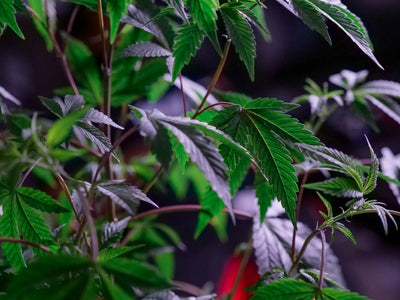
Hemp Textiles Just Solved Their Cost Problem
Photo by Максим Вышарь via Pexels.
For as long as hemp fabric has been marketed as the eco-conscious alternative to cotton, it's carried an inconvenient secret in its supply chain. Getting usable textile fiber out of a hemp stalk meant stripping away lignin and pectin, the natural glues holding the bast fiber to the plant, and for decades that meant chemical degumming: caustic soda or acid baths, huge volumes of water, and an effluent problem not so different from what critics already hammer conventional cotton and viscose producers for. You could sell hemp as the sustainable fabric of the future, but if someone asked what it took to actually produce a bolt of it, the honest answer undercut the pitch.
That's the part that's changed, and it changed through processing, not marketing. Mechanical cottonization -- crushing and carding-style separation that breaks the fiber structure apart using force alone -- eliminates the chemical bath and the water draw that came with it. The number that makes this more than a lab curiosity is the cost: cottonized hemp fiber now runs roughly half the price of chemically degummed fiber. That's the figure that decides whether a fabric stays a boutique product forever or actually starts showing up in supply chains that buy by the ton.
None of this is speculative branding. It's a specific engineering shift with a named commercial anchor: Panda Biotech, running the largest hemp decortication operation in the Western Hemisphere out of Wichita Falls, Texas, and already shipping cottonized fiber into denim and yarn partnerships through 2026. What follows is what that infrastructure looks like, what it's already produced, and where the economics could plausibly go from here -- and where they might not.
Why Degumming Was Hemp's Bottleneck for Decades

Photo by Sohan Rahat via Unsplash.
Bast fiber is the long, strong outer layer of the hemp stalk -- the part that actually makes good yarn and woven cloth, as opposed to the woody hurd core that gets used for building material or animal bedding. The problem has never been the fiber itself; hemp bast fiber is stronger than cotton by most tensile measures. The problem has always been getting it off the stalk. Lignin and pectin bind that fiber tightly to the plant structure, and for most of hemp's industrial history, separating them required either slow field retting (leaving cut stalks to partially decompose in the field, weather-dependent and inconsistent) or chemical degumming in a processing plant.
Chemical degumming works, but it works the way a lot of legacy textile chemistry works: with caustic soda or acid solutions applied at scale, followed by heavy water rinsing to get the residual chemistry out of the fiber before it can be spun. That's the same basic footprint problem that's dogged conventional cotton processing and viscose rayon production for years -- large water draws, chemical handling and disposal, and a cost structure that assumes those inputs are cheap and their environmental cost is externalized. For a fiber whose entire market positioning rested on being the responsible choice, that was an awkward foundation. Brands could say hemp grows with less water and fewer pesticides in the field -- true -- while quietly not mentioning what happened to the stalk after harvest.
Mechanical cottonization sidesteps the chemistry problem instead of trying to green it. The process uses purely physical action -- crushing the stalk, then carding-style mechanical separation -- to break down the fiber bundle structure without a chemical bath at all. No caustic soda, no acid, no rinse water. That's not an incremental efficiency gain on the old process; it's a different process that happens to produce a comparable textile-grade output.
The economic result is the part worth sitting with: cottonized hemp fiber now costs roughly half what chemically degummed hemp fiber costs to produce. That's the first time in hemp's modern industrial history that the fiber has had a real shot at approaching cotton price parity rather than sitting permanently in premium-fabric territory justified mostly by story rather than spreadsheet.
]Inside the Largest Hemp Decortication Plant in the Western Hemisphere

Photo by Lalit Kumar via Unsplash.
Panda Biotech's Wichita Falls facility is worth naming specifically because the scale is the news, not the concept. The plant runs two decorticators each rated at 10 tons per hour of throughput -- described by industry sources as the largest industrial hemp decortication equipment ever put into commercial operation. Combined, the two lines give the facility close to 300 million pounds of industrial hemp processing capacity per year. That's not a pilot line or a demonstration project; that's an industrial-scale commodity processing operation, on par in ambition with the kind of fiber mills that built the cotton and flax industries a century ago.
What comes out the other end is the figure that matters for the textile side of this story: more than 35 million pounds of apparel-grade, cottonized hemp fiber annually, suitable for knit and woven fabric production. That's a meaningful volume of a genuinely spinnable, garment-ready input, not a specialty batch destined for a handful of niche brands. The rest of the plant's throughput goes toward hurd and other co-products, which matters economically too -- decortication only pencils out if you can monetize both the fiber and the woody byproduct stream, and Panda's model is built around using the whole stalk rather than treating hurd as waste.
The economic impact claim attached to the facility is roughly $30 million per year flowing to Texas farmers who supply the stalk. That figure is Panda's own reported estimate rather than an independently audited number, so it's worth treating as a company claim rather than verified fact -- but it's directionally consistent with what a plant processing hundreds of millions of pounds of stalk annually would need to pay growers to keep supply flowing, and it gives a concrete sense of what regional hemp fiber infrastructure can mean for farm income beyond the retail fabric story.
The reason this facility matters more than another few thousand acres of hemp planted somewhere would is that acreage was never the bottleneck. American farmers have proven for years they can grow hemp. What's been missing is exactly this: decortication and hurd-refinement capacity sized to match that growing capacity. A stalk sitting in a field or a warehouse isn't worth much until something like Panda's decorticators turns it into a sellable fiber stream. Infrastructure, not planting, is the constraint this facility is built to relieve.
]From Fiber to Finished Denim: Panda's 2026 Supply Chain Moves

Photo by Michaela St via Pexels.
Having the processing capacity is one thing; proving the fiber can move through a real apparel supply chain is another, and Panda's 2026 moves are specifically aimed at that second problem. In April 2026, Panda partnered with denim maker TDMI Twin Dragon to debut what they billed as the first Made in the Americas hemp denim collection, unveiled at Kingpins Amsterdam -- one of the denim industry's major trade shows, the kind of venue where mills and brands actually source fabric rather than just look at concept pieces. Putting a hemp denim line in front of that specific audience is a different kind of statement than putting it on a sustainability-branded direct-to-consumer website; it's an attempt to get the fiber evaluated by the people who decide what goes into next season's jeans.
Then, on May 21, 2026, Panda announced a partnership with Culturewell Trading LLP to build what they're calling India's first fully integrated hemp fiber-to-yarn supply chain ecosystem. That deal matters beyond its own numbers because of what it represents structurally: it's the first time American-grown, mechanically cottonized fiber has moved into Indian spinning mill infrastructure, one of the largest textile manufacturing bases in the world. If that integration holds, it establishes a template -- U.S. fiber production feeding into established Asian spinning and weaving capacity rather than the U.S. trying to build an entire parallel apparel manufacturing base from scratch.
Together, these two moves mark a real shift in strategy: from raw fiber production toward vertically integrated apparel supply chains. That's the step that actually determines whether hemp fiber reaches a retail rack as a finished garment, as opposed to sitting in a warehouse as an interesting commodity with no buyer downstream who knows how to spin it at volume.
The honest counter-case here is proportion. One processing facility and two partnership announcements is still a modest footprint set against a global textile industry that processes cotton in the tens of billions of pounds annually. Kingpins debuts and single-mill integrations are the right first moves, but they're pilot-scale by definition -- the real test is whether Twin Dragon and Culturewell convert into recurring, expanding orders over the next several seasons, or whether they stay one-off showcase collections that make good press releases without changing volume.
]Europe Is Pushing Hemp Into Structural Materials, Not Just Fabric

Photo by Creapattern via Pexels.
While the U.S. story has centered on apparel fiber, Europe's hemp processing push has been aimed somewhere else entirely: structural materials. The Paris-based Alliance for European Flax-Linen & Hemp announced on June 1, 2026 that hemp and flax composite manufacturing is moving beyond hand lay-up -- the slow, labor-intensive method of manually placing fiber and resin layer by layer -- toward scalable industrial manufacturing processes. That's a significant shift in kind, not just degree: hand lay-up caps how much composite material an industry can produce regardless of demand, while industrial processes remove that ceiling.
The showcase piece was the Hemp Halo Canopy, a 3.3 metre architectural prototype displayed at JEC World 2026, the composites industry's major trade event. It was built using long-fiber hemp pultrusion for its structural elements. Pultrusion itself isn't new or exotic -- it's a continuous manufacturing process where fiber is pulled through a resin bath and then a heated die, and it's already the standard method for producing fiberglass rebar and structural profiles used in construction. Applying that established, already-industrialized process to hemp fiber is the meaningful signal here: it suggests a credible path toward construction-grade hemp components manufactured at production scale, not a one-off art installation.
This connects back to the textile story more directly than it might first appear. The same bast-fiber refinement improvements driving better apparel-grade cottonized fiber -- better fiber alignment, lower defect rates, more consistent fiber length -- are exactly the qualities that make fiber usable in pultruded composites too. Progress on one front tends to transfer to the other, because both applications are ultimately fighting the same problem: turning a variable, plant-grown fiber into a consistent industrial input.
And the market data suggests composites aren't just a side story -- they may be the main one, at least near-term. Automotive and transportation applications are projected to hold a 31% share of the total hemp fiber market in 2026, which makes composites the dominant near-term application for hemp fiber overall, ahead of apparel. The fashion collaborations get the press coverage, but the tonnage is arguably headed toward car door panels and structural profiles first.
]The Market Numbers and the Processing Gap Nobody's Solved Yet

The global hemp fiber market is projected to grow rapidly, expanding from about $248 million in 2025 to roughly $825 million by 2036, more than tripling over the decade.
The market numbers, taken at face value, tell a growth story: the hemp fiber market surpassed $248.0 million in 2025, is projected at $276.0 million in 2026, and is forecast to reach $825.0 million by 2036 -- an 11.2% compound annual growth rate over that stretch. Those are real, cited figures, and an 11.2% CAGR sustained over a decade is a genuinely strong growth trajectory by industry standards.
But that growth curve depends entirely on one variable: processing capacity, not planting capacity. Multiple 2026 industry trend reports flag the same structural problem -- U.S. hemp cultivation has outpaced domestic decortication and hurd-refinement infrastructure for years now. Farmers have been able to grow hemp faster than the industry has been able to build plants to turn it into anything sellable. That mismatch is precisely why raw hemp stalk, absent a nearby decorticator, is a low-value commodity: the value only unlocks post-decortication, once the bast fiber is separated out and refined to a spinnable grade. A ton of hemp stalk sitting in a barn a hundred miles from the nearest processing facility is worth very little, no matter how many acres produced it.
That's exactly why Panda-style regional processing hubs are now where the real investment focus is going, rather than toward incentivizing more acreage. The industry has learned this lesson the expensive way -- there have been well-documented boom-and-bust cycles in U.S. hemp cultivation since the 2018 Farm Bill legalized it, where growers planted heavily into a market that had nowhere near enough processing capacity to absorb the crop, and prices collapsed. Building the mill before flooding the field with more raw stalk is the more disciplined sequence.
The conservative read on the market-size numbers matters too, and it's worth stating plainly rather than glossing over. An 11.2% CAGR sounds strong in isolation, but an $825 million total hemp fiber market by 2036 is still a rounding error next to global cotton, an industry valued in the tens of billions of dollars annually. Hemp fiber's realistic ceiling over the next decade is very likely a niche premium and technical-application segment -- denim capsule collections, technical textiles, composite reinforcement -- rather than anything resembling a wholesale cotton replacement. For that growth curve to bend meaningfully steeper than projected, several things would need to hold simultaneously: several more Panda-scale regional processing hubs actually getting built and financed, denim and fashion brands moving from pilot collections into sustained recurring orders, and the cost-parity advantage of mechanical cottonization holding up as production scales rather than eroding under real-world throughput demands.
]What This Could Unlock -- and What Could Stall It

Photo by Monstera Production via Pexels.
If mechanical cottonization's cost advantage holds as volume scales up -- and that's a real if, not a settled fact -- hemp has a plausible route to becoming genuinely price-competitive with cotton for mainstream apparel, rather than remaining a premium eco-niche fabric bought mostly on principle. There's a useful historical precedent for how that kind of transition actually happens: recycled polyester. It existed as a marginal, expensive alternative to virgin polyester for years, and it only scaled into mainstream apparel once processing costs dropped close to virgin-material parity. The environmental story didn't move the volume; the cost curve did. Hemp cottonization looks like it's trying to walk the same path, just starting from bast fiber instead of recycled plastic bottles.
The India partnership model is worth watching as a template rather than a one-off. Exporting U.S.-grown, mechanically cottonized fiber into existing Indian spinning mill infrastructure, as the Culturewell deal aims to do, sidesteps the enormous capital cost of building spinning and weaving capacity domestically from scratch. If that arrangement proves out over the next couple of production cycles, there's no obvious reason it couldn't replicate in other established textile manufacturing hubs like Bangladesh or Vietnam, which already have the spinning and weaving infrastructure and labor base -- they'd just need a reliable, cost-competitive fiber input to feed it.
There's a regulatory wrinkle that deserves attention even though it's a step removed from the processing story itself. Federal Farm Bill THC threshold definitions are evolving on a separate track from industrial fiber policy, driven mainly by concern over intoxicating hemp-derived cannabinoid products rather than fiber hemp itself. But regulatory tightening aimed at that cannabinoid problem could still create compliance friction for fiber-variety hemp growers if Congress doesn't draw a clean line between the two categories in whatever legislation eventually emerges. That's worth watching specifically in how Congress structures any Farm Bill update -- whether it separates fiber and grain hemp from cannabinoid-focused hemp with distinct thresholds and testing regimes, or lumps them together in a way that raises compliance costs across the board.
The realistic risk factors for the industry's next few years come down to three things: the capital intensity of building more Panda-scale plants, since decortication equipment at that scale isn't cheap and needs a reliable multi-year supply contract with growers to justify the investment; whether denim and fashion brands move past pilot collections into recurring, contracted orders rather than one-season showcases; and whether pultrusion-based composite applications end up pulling investment capital toward automotive and construction uses instead of textile-grade fiber refinement, simply because that market segment is already larger and better established.
]Hemp fabric itself isn't the news -- it's existed, in one form or another, for centuries. What's actually changed is the cost structure underneath it, and that's the variable that has always determined whether a material stays a boutique curiosity or becomes a genuine industrial input. Chemical degumming kept hemp fiber expensive and its sustainability pitch a little hollow. Mechanical cottonization, at roughly half the cost, is the first credible reason to think that could flip.
If there's one number worth tracking over the next two to three years, it's not the market-size projection and it's not planted acreage -- it's processing capacity. Decortication plants like Panda's Wichita Falls facility are the bottleneck that just got partly solved, and how many more facilities like it actually get financed and built will tell you more about hemp's real trajectory than any headline CAGR figure. Acreage without processing capacity has already proven, in past hemp boom cycles, to be a fast way to crash a market rather than build one.
Don't be surprised if composites end up scaling faster than apparel in the near term, even though the denim collaborations and Kingpins showcases are what generate the coverage. A 31% automotive market share in 2026 and an established, already-industrial pultrusion process aimed at construction-grade components suggest the tonnage may move toward car parts and structural profiles before it moves toward T-shirts. The fashion story is the more compelling one to write about. The composites story may well be the one that actually pays for the next decorticator.
Sources
- Innovations In Hemp Fiber Processing For 2026
- Further technical advances with flax and hemp - Innovation in Textiles
- European Flax-Linen And Hemp Step Into Advanced Manufacturing: Enabling Filament Winding, 3D Printing And High-Performance Composite Processes | Textile World
- innovations-hemp-fabric-developments-applications
- Breakthrough: How Processing Innovation Is Making Hemp Commercially Viable for Mainstream Textiles