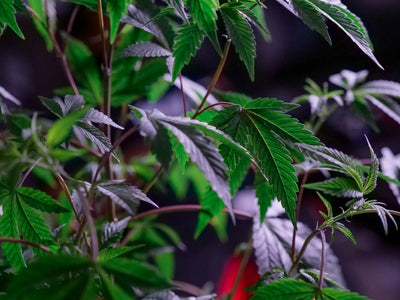
Hempcrete Prefab Panels: Why Investors Are Watching Now
Photo by Freek Wolsink via Pexels.
Buried in the appendices of the 2024 International Residential Code is a 15-page document that most homebuilders will never read: Appendix BL, Hemp-Lime (Hempcrete) Construction. It's the first standardized code pathway for hemp-lime building in the United States, and it landed with almost no fanfare outside a small circle of natural-building advocates and hemp-industry newsletters. That quiet arrival is the story here -- not because hempcrete is new, but because the legal and financial infrastructure around it is finally starting to catch up.
Here's the tension worth sitting with: a code pathway now exists, but nobody is required to use it. Appendix BL is only live where a state or city has formally adopted it, and as of this writing that's a short list -- Austin, Texas and the state of Minnesota, both targeting their 2026 residential codes. Everywhere else, hempcrete still sits in the same regulatory gray zone it's occupied for years, built case-by-case under alternative-materials provisions and a builder's willingness to fight with a local plan reviewer.
Over the next few thousand words we'll walk through what's actually changed and what hasn't: a fire-rating update passed by a code committee in Cleveland in October 2025, an AUD$2 million Australian grant to a startup called Living Canvas, a North Dakota panel manufacturer named Homeland Hempcrete claiming a 75% cut in wall construction time, and an industry cost estimate putting a full-scale hempcrete facility at roughly USD 12 million to build. None of these numbers, taken alone, adds up to an industry. Taken together, they describe a real inflection point -- and a genuine warning, borrowed straight from the modular housing sector's recent bankruptcy history, about exactly where this kind of story tends to go wrong.
The Code Change That Actually Matters

Photo by Tima Miroshnichenko via Pexels.
To understand why Appendix BL matters, you have to understand what an IRC appendix actually is -- and what it isn't. The International Code Council doesn't pass laws or send inspectors to job sites. It publishes model code language that states, counties, and cities can adopt, amend, or ignore entirely when they write their own building codes on their own cycles. An appendix is even more optional than the base code: it's language the ICC has vetted and made available, but which a jurisdiction has to affirmatively opt into, section by section, the way Texas or California might adopt some IRC appendices on radon control or swimming pool barriers but not others.
That distinction has real teeth. The ICC has published plenty of appendices over the decades that sit unused in most of the country for years -- sometimes indefinitely -- because adoption requires a local jurisdiction to spend political and staff capital updating its code books, training plan reviewers, and fielding questions from an inspector who's never seen the assembly in question. Publication is necessary but nowhere close to sufficient. A material can be fully codified at the national model-code level and still be functionally unbuildable in 49 states because nobody has picked it up locally.
Which is exactly why Austin and Minnesota matter as concrete, checkable facts rather than industry talking points. The City of Austin and the state of Minnesota have both moved to adopt Appendix BL into their 2026 residential codes -- meaning a builder in those jurisdictions will, for the first time, be able to permit a hempcrete wall assembly against a recognized code section rather than negotiating an alternative-materials variance from scratch on every single project. That shift is the precondition for everything downstream: appraisers can comp it, lenders can underwrite against a known standard instead of a one-off engineering letter, and insurers have something codified to point to. It doesn't make hempcrete mainstream. It makes it buildable, in specific places, for the first time.
October 2025: Fire Ratings Change the Insurance Conversation

Photo by Josh Fields via Pexels.
Five months after Appendix BL landed in the IRC, the code itself kept moving. On October 23, 2025, the International Residential Code Committee voted 11-0 at the IRC Hearings in Cleveland to approve updates to Appendix BL, adding fire-rated wall assemblies backed by new ASTM E119 one-hour fire tests. ASTM E119 is the standard fire-endurance test used across the US building code system generally -- the same category of test that rates gypsum assemblies, wood-frame walls, and concrete construction. Getting a hempcrete assembly a documented one-hour rating against that standard puts it in a language that every fire marshal, structural engineer, and insurance underwriter in the country already reads fluently.
That last part is the real story. Underwriters price wildfire exposure off documented, testable performance data, not off a material's reputation for being natural or breathable. A builder can talk all day about hempcrete's mold resistance and thermal mass, but an insurer in California, Colorado, or the broader Mountain West wants a number from a recognized test protocol before it prices a policy or a lender extends construction financing. A one-hour ASTM E119 rating is precisely the kind of data point that starts that conversation.
There's a useful precedent here, and it's reasoned extrapolation rather than established fact: insulated concrete form (ICF) construction went through something similar in the 2000s and 2010s. ICF spent years as a niche, somewhat suspect alternative to stick-frame walls until it accumulated a track record of fire and wind-resistance test data that insurers and code officials could actually cite. That data trail, more than any marketing effort, is what pushed ICF from custom-home curiosity into a recognized mainstream option in wildfire- and hurricane-exposed markets. If hempcrete's fire-rated assemblies follow a comparable path, wildfire-urban-interface adoption becomes a plausible near-term wedge market. That's a reasonable bet, not a guarantee.
The caveat has to be stated plainly, because it's the same bottleneck from Section 1 showing up again: this was a code committee vote, not a jurisdiction adoption. The fire-rated assembly now exists in model code language. Whether any wildfire-state jurisdiction actually adopts the updated Appendix BL into its local code is a separate, still-open question -- and the honest timeline for that kind of local pickup, based on how slowly appendices typically move, is measured in code cycles, not months.
Where the Capital Is Actually Going

Photo by Ivan via Pexels.
In early August 2026, Australian startup Living Canvas was reported to have received AUD$2 million in grant funding to manufacture hempcrete structural insulated panels -- prefabricated wall, floor, and roof cassette systems rather than material sold by the bag for on-site mixing. Critically, the grant is earmarked to help build a regional industrial hemp processing and prefabricated panel manufacturing facility, meaning the money is aimed at the supply chain -- growing, decorticating, and processing the hemp hurd that goes into the panels -- not just at product development or marketing.
That's a meaningfully different kind of funding than a product grant, and it's worth taking seriously. But it's also worth sizing correctly. An industry cost analysis estimates a full hempcrete production facility costs roughly USD 12 million to establish -- covering the processing equipment, panel-forming lines, curing infrastructure, and building shell needed to run at real volume. An AUD$2 million grant, even at a favorable exchange rate, covers a fraction of that build-out. It's seed capital for a facility, not the facility itself, and the gap between the two is exactly where projects like this tend to stall.
A report linked to the Australian Hemp Council names the structural barriers directly, and they're worth quoting in substance rather than paraphrasing away: inconsistent government support compared with the more sustained public investment programs in Europe and parts of the US, a genuinely difficult regulatory environment for industrial hemp processing, and -- perhaps most bluntly -- buyers who are currently prioritizing raw cost over sustainability credentials in a higher-interest-rate environment where every construction line item gets scrutinized. None of that is a knock on Living Canvas specifically. It's a description of the market conditions any hempcrete manufacturer is building into right now.
The honest read on this capital story is that it's early-stage, grant-driven capital formation -- the kind of funding that proves a government agency believes the concept is worth de-risking, not the kind that proves private investors believe it's ready to scale. That's not a dismissal. Grant funding is frequently how capital-intensive, pre-commercial manufacturing gets its first real facility built, in industries from battery recycling to biofuels. But the signal to actually watch for over the next year or two is follow-on private investment -- venture or infrastructure capital coming in behind the grant once there's a working facility to point to. That's the moment this stops being a subsidized experiment and starts looking like an asset class.
The Panel Systems Doing the Actual Building
If there's a company making the strongest case that hempcrete can actually be built at production speed, it's Homeland Hempcrete, a Bismarck, North Dakota manufacturer founded by Matt Marino. The company has developed an interlocking prefab panel kit system -- factory-formed hempcrete panels that snap together on site rather than requiring hempcrete to be mixed and tamped into wall forms by hand, board by board, the way it's traditionally been built. Marino estimates the system cuts wall construction time by 75% and, just as importantly, eliminates the roughly 45-day cure time that cast-in-place hempcrete typically requires before a wall can be finished and loaded.
That cure-time number is the whole ballgame. Traditional hempcrete is hemp hurd mixed with a lime binder, cast in place, and left to carbonate and dry for weeks before construction can proceed -- a timeline that makes it essentially unworkable for a production builder trying to turn houses in a normal construction schedule. Curing panels off-site, in a controlled factory environment, in parallel with foundation and framing work elsewhere, is the same logic that made prefabricated wall panels and roof trusses standard in conventional stick-frame construction decades ago. It's not a new idea in construction generally -- it's a new application of an old idea to a material that's historically resisted it.
Homeland isn't alone. Australia's HemPanel offers a comparable interlocking, tilt-panel system engineered to work with standard slab and footing construction, which matters more than it might sound like it does: a builder doesn't have to relearn foundation work or bring in specialty subcontractors just to use the panels. That compatibility with conventional trades is part of what determines whether a material stays a custom-home novelty or becomes something a production builder will actually put on a bid sheet.
All of that said, these figures need to be read for what they are: a founder's estimate and a manufacturer's product claim, not independently verified third-party lab results or code-body testing data. A 75% time reduction is entirely plausible given how slow cast-in-place hempcrete is, and it lines up with the general logic of prefabrication elsewhere in construction. But until that number, or something like it, is confirmed through independent testing or documented in-field builder data across multiple projects, it belongs in the same category as any other vendor performance claim -- worth taking seriously, not yet worth taking as settled fact.
The Modular Housing Graveyard: A Necessary Gut Check

Photo by ArtisticOperations via Pixabay.
CBC News reported in October 2025 that multiple modular housing startups in the US and UK had filed for bankruptcy in recent years, and the pattern across those failures is worth studying closely before anyone gets too enthusiastic about hempcrete panels. These weren't companies that failed to build good product -- several produced genuinely impressive prototype homes that performed well on efficiency and design. What killed them was the production math: factory-built housing only beats site-built housing on cost once you're running a facility at volumes high enough to spread fixed costs across enough units, and getting from an impressive prototype to that volume requires sustained capital and reliable offtake that most of these companies never secured. It's a capital-intensive scaling trap, and it's claimed well-funded, well-designed companies before.
That history maps onto hempcrete prefab with uncomfortable precision. The USD 12 million facility cost cited in Section 3 only pencils out if there's reliable demand on the other end -- builders and developers committing to buy panels at volume, not just curious early adopters doing one custom home at a time. Right now, that kind of offtake commitment doesn't exist at scale for hempcrete anywhere in the world. A facility built on grant money and hope, without a signed pipeline of buyers, is exactly the setup that has bankrupted modular housing companies with far deeper pockets and far more conventional materials.
There's a second, more structural headwind specific to hempcrete that compounds the volume problem: it's part of the 2024 IRC, which governs detached one- and two-family dwellings and townhouses, but it is absent from the current International Building Code, which governs larger multifamily and commercial structures. Regulators simply don't yet treat hempcrete as a standard option for apartment buildings, mixed-use projects, or anything beyond low-rise residential. That caps the addressable market artificially, at exactly the scale of project that could generate the kind of reliable, large-volume offtake a $12 million facility needs to justify its own existence.
The conservative case follows directly from these two facts. Without IBC inclusion opening up larger commercial-scale projects, and without state-level Appendix BL adoption spreading well beyond Austin and Minnesota, hempcrete prefab has a ceiling. It stays a boutique, regional product serving custom and small-production single-family builders in a handful of adopting jurisdictions -- a real business, but not yet a national housing category, and not for lack of demand for sustainable building materials so much as for lack of the regulatory and volume infrastructure to make the economics work.
The realistic one-to-three-year trajectory looks less like a breakthrough and more like a slow, jurisdiction-by-jurisdiction crawl. Expect more states and cities to quietly adopt Appendix BL into their 2026 and 2027 residential code cycles, following the template Austin and Minnesota have already set -- probably concentrated in places with either strong sustainable-building constituencies or hemp-friendly agricultural politics. IBC inclusion, which would open the door to multifamily and commercial-scale hempcrete construction, remains years off by comparison; that's a much bigger, slower-moving code body, and there's no current evidence it's on a near-term docket.
The investment thesis worth taking seriously isn't hempcrete as a material -- the material chemistry has been understood for decades and isn't the bottleneck. It's hempcrete as a manufacturing and logistics problem. Whoever actually solves panelization and cure time at real production volume, the way Homeland Hempcrete and HemPanel are attempting, captures the value in this space -- not whoever has the best hemp-lime mix ratio. And that manufacturing bet is precisely where the modular housing bankruptcies point to real risk: prototypes are cheap to make impressive, factories are expensive to run profitably, and the gap between the two has buried better-capitalized companies than any hempcrete startup operating today.
Two concrete signals are worth watching over the next 24 months, and both are checkable rather than speculative. First, whether Living Canvas's Australian facility actually gets built out beyond its AUD$2 million grant and starts producing panels at commercial volume, or whether it stalls the way so much grant-seeded manufacturing does when follow-on private capital doesn't materialize. Second, whether the ASTM E119 fire-rated assembly approved in Cleveland gets picked up into the local code of an actual wildfire-exposed jurisdiction -- California, Colorado, or elsewhere in the Mountain West -- rather than sitting in the model code unused. If both of those happen, that's real evidence of a category forming, built on facility throughput and insurer acceptance rather than press releases. If neither happens, hempcrete prefab stays exactly what it is today: a genuinely promising, well-documented niche, still waiting on the capital and code infrastructure to become something bigger.
Sources
- Prefabricated Houses Market To 2035: Growth Fueled by Chronic Global Housing Deficit and Affordability Crisis - News and Statistics - IndexBox
- The Hempcrete Revolution: Building Houses That Breathe - Home & Art Magazine
- Thermal insulation by Hempcrete panels and prefabricated Hempcrete... | Download Scientific Diagram
- Modular system offers framed hempcrete panels for faster builds
- INFORMATION | hempanel