How AI Automation Is Reshaping Commercial Cannabis Grows
Photo by noexcusesradio via Pixabay.
Start with a number that should make cultivation operators nervous: $172 a pound. That's where wholesale flower has been trading in some of the more saturated legal markets, a price that barely covers the cost of a manual harvest crew in a lot of states once you account for trimming, packaging, and compliance overhead. It's the kind of price that turns a business model upside down, and it's happening at the exact moment the industry's other numbers are telling an equally uncomfortable story.
The 2025 Vangst Jobs Report put legal cannabis retail sales at $30.1 billion for the year, a real and continued climb. Total full-time-equivalent employment in the industry, meanwhile, fell 3.4% over the same period, landing at roughly 425,002 jobs nationally. Sales up, headcount down -- that's not a rounding error, it's a decoupling. Flowhub's market projections put legal cannabis sales approaching $47 billion by 2026, and if employment holds anywhere near flat while revenue climbs that far, output per worker has to rise sharply, not gradually. Something has to give, and increasingly that something is automation.
This piece is an attempt to separate what's actually happening -- documented acquisitions, functioning hardware, vendor claims that are labeled as such -- from the flood of generic "top AI innovations in cannabis" content clogging trade press right now. Some of that content is directionally right. Most of it treats speculation as settled fact. We're going to try not to do that.
The Math Forcing Growers' Hands

Photo by Petr via Unsplash.
Before getting into what the technology does, it's worth sitting with why growers are adopting it at all, because the sequence matters. This is fundamentally a cost-of-production story, and the technology is following the economics rather than creating them.
Per Vangst's 2025 data, cultivation makes up roughly 30% of cannabis industry jobs, with processing and packaging adding another 17%. Put those together and you're looking at close to 200,000 positions nationally -- and critically, these are concentrated in exactly the entry-level, hourly, physically repetitive roles that automation vendors target first: trimmers, harvesters, line workers moving product from drying racks to jars to boxes. These aren't peripheral jobs in the industry's labor structure; they're close to half of it.
Now overlay the revenue trajectory. Retail sales at $30.1 billion in 2025, an FTE count that actually shrank 3.4% that same year, and a Flowhub projection putting the market near $47 billion by 2026 with employment expected to stay roughly flat near that 425,002 figure. Do the arithmetic and the implication is stark: labor productivity in this industry needs to roughly double for margins to hold at anywhere near current levels, and that's assuming wholesale prices stabilize rather than keep falling.
They may not stabilize. Wholesale flower prices as low as $172 per pound have already been reported in mature, oversupplied markets, and at that price point, an operation running a traditional labor-heavy harvest and trim crew is structurally uncompetitive against a large-scale cultivator running automated trimming, sorting, and packaging lines. This is the same dynamic that has played out in other commodity agriculture sectors for decades -- when per-unit prices fall faster than labor costs, the operations that survive are the ones that convert variable labor cost into fixed capital cost. Cannabis cultivation is now hitting that threshold at scale, and it's worth being explicit that this is a documented market condition, not a forecast: the prices, the job numbers, and the revenue projections are all reported figures. What we don't know yet is how fast individual operators will move, and that's where the reasoning necessarily gets more speculative.
What These Systems Actually Automate

Photo by Erwan Hesry via Unsplash.
Strip away the marketing language and what's actually being automated in cannabis cultivation falls into a few concrete categories, and it's worth being precise about each one rather than treating grow automation as a single monolithic thing.
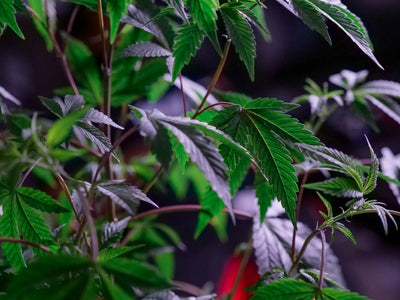
Environmental control is the most mature piece. Modern controllers now manage light cycles, temperature, humidity, and nutrient delivery automatically, and increasingly they're doing it by referencing prior crop data tied to specific genetics -- meaning the system has a record of how a particular cultivar responded to particular conditions in previous grow cycles and adjusts accordingly rather than running a generic program. The underlying pitch here is genuinely interesting: taking the tacit, hard-won knowledge that veteran growers accumulate over decades -- when to back off nitrogen, how a strain responds to a humidity swing two weeks before harvest -- and converting it into a repeatable, data-driven process that doesn't live entirely in one person's head and leave with them.
Harvesting is the second major front, and it's where AI video analytics have started showing up on robotics platforms. Instead of harvesting an entire room on a fixed calendar date, these systems assess plant-by-plant readiness -- trichome development, coloration, other visual maturity markers -- and flag individual plants or sections for harvest when they actually hit peak condition rather than when the calendar says they should.
The real selling point across both categories isn't primarily labor reduction, even though that's the headline. It's consistency. A harvest triggered by actual plant readiness rather than a fixed schedule should, in theory, reduce batch-to-batch variance in potency and yield -- which matters enormously to processors and brands trying to hit a consistent product spec for a shelf item that gets tested and labeled.
That said, a real caveat belongs here: a lot of the specific yield and quality improvement numbers circulating in trade press trace back to vendor marketing material and aggregator listicles rather than independently verified trials. The mechanism -- environmental consistency reducing variance -- is sound agronomic logic. The specific percentage improvements attached to it in press releases deserve to be treated skeptically until third parties, universities, or state testing labs publish independent numbers.
Follow the Deals: Consolidation in Cultivation Software

Photo by Dad Grass via Pexels.
If you want a read on where this technology actually stands, watch the deals rather than the press releases, because acquisitions tell you something marketing copy doesn't: where real money thinks the value actually sits.
In January 2026, Canix, a cannabis ERP platform, acquired Trym, an eight-year-old cultivation management software company. That's a meaningful signal on its own. Trym wasn't a startup with an unproven product -- eight years is a long run in this industry, and being acquired rather than continuing to compete independently suggests the cultivation software space is consolidating around a smaller number of platforms rather than supporting a large field of standalone competitors. Consolidation of this kind usually means the market has decided it's more valuable to own a connected suite than to keep operating point solutions separately.
On the hardware side, Sorting Robotics is a useful case study. Founded in 2020 in Los Angeles by Nohtal Partansky, a former NASA/JPL engineer, alongside Cassio Santos and Sean Lawlor, the company builds automated pre-roll and vape infusion equipment. One customer using the company's Stardust machine reportedly reached 2,000 infused joints per day with a single operator running the line -- a productivity figure that, if accurate and representative, is genuinely striking against a manual infusion process.
Sorting Robotics also claims that most of its customers recover their equipment investment in under 12 months. That's worth flagging plainly as a vendor-reported figure rather than an independently audited one. It may well be accurate for the customers who report it, but companies selling capital equipment have an obvious incentive to publicize their best-performing accounts, and there's no independent third-party data set yet confirming that ROI timeline across a broader customer base.
What the consolidation pattern actually tells you is that the market is still assembling a single connected data layer rather than having already built one. ERP platforms buying cultivation-specific tools is what happens when a category realizes its customers want one integrated system, not five separate logins -- and that assembly process is still underway, not finished.
The Missing Layer: Why Nobody's Connected the Whole Grow Cycle Yet

Photo by Anna Shvets via Pexels.
Here's the gap nobody's quite closed yet, and it's arguably the most important thing in this whole space right now: multiple 2026 industry sources point to the absence of a genuine cultivation intelligence platform -- something that ties environmental data, yield outcomes, and quality metrics together across an entire grow cycle, from clone to cure.
What exists today tends to specialize. Environmental controllers manage light and climate. Harvesting robotics assess plant readiness. ERP and tracking software handles compliance, inventory, and now increasingly cultivation records post-Canix/Trym. But these systems mostly don't feed each other automatically yet -- a grower can't easily pull a report that says exactly which environmental variable in week six correlated with a potency shift at harvest, because the data lives in separate systems that weren't built to talk to each other.
There's a useful historical precedent here, and it's not from cannabis at all. Precision agriculture in row crops -- corn, soybeans -- took roughly two decades to move from disconnected tools (yield monitors, GPS guidance systems, soil sensors sold by different vendors) to integrated farm management platforms like Climate FieldView, which pulls that data together into a single decision-support system. Cannabis cultivation looks like it's earlier in that same arc -- it has the separate instruments, not yet the platform that unifies them.
Why does this matter commercially rather than just technically? Because whoever closes that gap first hands growers a real cost advantage. A cultivator who can directly correlate a specific environmental input -- a humidity curve, a light spectrum shift -- with a measurable potency or yield outcome is optimizing the whole system. A cultivator running excellent but disconnected subsystems is still optimizing in pieces, and pieces optimized in isolation rarely add up to a globally optimal result.
The conservative counter-case deserves equal weight, though. Row-crop agriculture had something cannabis doesn't: USDA-backed data standards and a fairly uniform national regulatory environment to build integration on top of. Cannabis cultivation operates under a genuine regulatory patchwork -- different state seed-to-sale systems, different testing protocols, no federal legalization and therefore no federal data standard at all. That patchwork could slow this integration well past the two-decade timeline mainstream agriculture needed, simply because there's no common foundation to build the connective layer on top of.
What Happens to the Workforce

Photo by Tima Miroshnichenko via Pexels.
The labor question is where this whole conversation gets uncomfortable, and it's worth resisting the urge to flatten it into a simple job-loss story, because the historical precedent suggests something more specific than that.
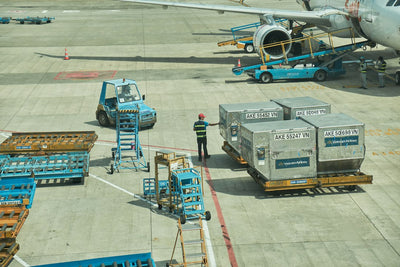
The roles most exposed are the entry-level cultivation and processing positions -- trimming, harvesting, packaging-line work -- the same roughly 200,000 positions that make up cultivation and processing's combined share of the 425,002 total FTE figure. At the same time, new roles are visibly emerging around operating and maintaining the automated systems replacing that labor: environmental data technicians, robotics maintenance staff, systems calibration specialists. These are real jobs, but there are fewer of them per unit of output than the labor they're replacing, and they typically require different skills and pay differently.
The closest historical parallel isn't in cannabis at all -- it's mechanization in U.S. produce agriculture, particularly lettuce and wine-grape harvesting from the 1990s through the 2000s. In both cases, mechanization shrank low-skill field labor substantially while creating a smaller number of higher-paid technical roles, and importantly, net job counts in those sectors fell even as total output rose. That's the specific pattern worth watching for in cannabis, not a vague "automation costs jobs" generality but this particular shape: fewer total positions, but a mix shifted toward technical work, layered on top of rising output.
Applied directly to the numbers already on the table: if Flowhub's $47 billion market projection materializes while headcount stays roughly flat at 425,002, the likely outcome isn't that the total job count collapses further -- it's that the composition of those jobs shifts meaningfully toward technical and supervisory roles even without much change in the total number.
There's a legitimate counter-case here too, and operators themselves are making it: labor shortages are frequently cited as a driver of automation adoption, with some cultivators framing these systems as filling positions they genuinely can't hire for in tight regional labor markets, rather than eliminating jobs that would otherwise be filled. Whether that framing holds up depends a lot on locality -- a saturated labor market in one state looks nothing like a chronic shortage in another, and state licensing rules that vary widely add another layer of unevenness. Whether this nets out as displacement or reallocation isn't a national question with one answer; it's a regional one, and the data to settle it definitively doesn't exist yet.
If there's one signal in all of this worth remembering after the specific product names fade, it's not any individual AI feature or robotics demo. It's that ERP and cultivation software companies are consolidating -- Canix buying Trym being the clearest example -- at the same time wholesale flower prices keep sliding toward levels like $172 a pound. That combination means the economic pressure driving automation predates any single vendor's marketing cycle and will outlast it too. Companies will come and go, claims will get revised, but falling per-unit prices against flat or shrinking headcount is a structural condition, not a trend piece.
The real opportunity sitting in plain sight is the missing cultivation intelligence layer -- the connected system that ties environmental inputs, yield, and quality data together across a full grow cycle, the way Climate FieldView eventually did for row crops after two decades of separate tools. Nobody's built cannabis's version of that yet. Whoever does first, and does it credibly, has a legitimate shot at becoming the platform the rest of the industry has to plug into.
In the meantime, the discipline worth applying to every vendor claim is the same one applied throughout this piece: treat per-operator productivity numbers like 2,000 infused joints a day, or sub-12-month ROI claims, as marketing until independent, third-party data catches up to confirm them. What's actually verified -- falling wholesale prices, a 3.4% employment decline against $30.1 billion in retail sales, a $47 billion market projected against flat headcount -- is unglamorous by comparison. But it's the part of this story that doesn't need anyone's press release to be true, and it's the part that will keep pushing automation forward regardless of which specific companies win.
Sources
- | AI-Powered Cannabis Compliance in 2026: Practical Automation That Reduces Enforcement Exposure
- Monthly Tech Dispatch: AI Supported Tech Across the Grow, Processing Floor and Lab - Cannabis Tech
- Cannabis Automation: A Comprehensive Guide [2026]
- Top 9 Innovations Driving Cannabis Cultivation in 2026 | Cannabis Risk Manager
- Top 9 Cannabis Cultivation Technologies to Watch in 2026 | Cannabis Risk Manager