Lesotho's Cannabis Exports Wait on EU CBD Isolate Approval
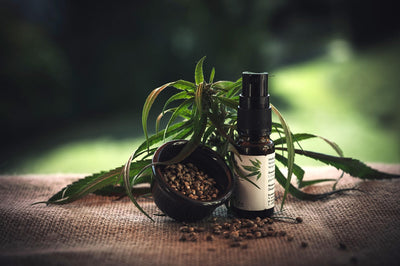
Photo by TeeFarm via Pixabay.
On 4 May 2026, the EFSA Panel on Nutrition, Novel Foods and Food Allergens adopted a scientific opinion on cannabidiol isolate. It reached the public on 27 May 2026 in the EFSA Journal, under DOI 10.2903/j.efsa.2026.10124. That is a dry piece of administrative history, and it matters a great deal to anyone selling CBD into Europe.
The tension is easy to see. The opinion was written in Parma by a scientific panel. The people who may feel its consequences sit in a small, landlocked country, Lesotho, whose cannabis sector depends on foreign buyers it cannot control.
My stance is that EU novel food approval is a real gate, but it may not be the only gate, and for many Lesotho products it may not be the tightest. This article tests that premise rather than assuming it.
A note on evidence. The EU-side facts here are sourced from the EFSA Journal listing. I have not read the opinion's conclusions, so I will not characterise its outcome. Lesotho export figures, licence counts and company details were not retrieved, and wherever I discuss them they are labelled as unverified or as assumptions.
Key takeaways
- EFSA adopted its CBD isolate opinion on 4 May 2026 and published it on 27 May 2026, but the Commission has more steps to complete.
- An EFSA opinion is not an authorisation: the Commission implementing act and a PAFF Committee vote still decide when CBD isolate can be sold.
- Whether novel food approval is Lesotho's real bottleneck depends on its export mix, and that data still has to be verified.
What EFSA Actually Published in May 2026
The document is titled Safety of cannabidiol isolate from Cannabis sativa L. as a novel food pursuant to Regulation (EU) 2015/2283. It was adopted on 4 May 2026 and first published on 27 May 2026. It was produced under Article 10(3) of the regulation, the route in which the European Commission itself asks EFSA for a safety opinion.
The product assessed is CBD extracted with ethanol and isolated from hemp varieties of Cannabis sativa L. That description is narrow and specific. It covers one extraction method, one product form and one category of plant input, and those details will matter later when we look at who can supply it.
The opinion also checks whether the requirements of Article 26(2)(c) are met. That provision concerns data protection: proprietary data that an applicant wants to keep for exclusive use. Whether it was granted or refused is not something I have confirmed.
Now the gap. I have not read the abstract, so I do not know whether the panel found the isolate safe, whether it set an acceptable daily intake, or whether it flagged missing data. Anyone writing about this opinion should read those conclusions before saying anything about the outcome, and you should treat any summary that skips them with suspicion.
Why does the answer change the near-term forecast? Think of it as a fork. A favourable opinion with workable conditions gives the Commission something it can turn into law. An unfavourable one, or one that lists unresolved data gaps, sends applicants back to generate more evidence, and that costs time measured in years rather than months.
What is established: the opinion exists, its scope is hemp-derived, ethanol-extracted CBD isolate, and it went through the Commission-request route. What is reasoned extrapolation: the content of the conclusions will set the pace of everything downstream. Everything about timing in the rest of this piece hangs on that unread paragraph.
From Opinion to Union List: The Steps Still Ahead
An EFSA opinion is not an authorisation. After it is published, the Commission drafts an implementing act. That draft goes to the Standing Committee on Plants, Animals, Food and Feed, known as PAFF, where member states vote. Only once the act is adopted is the Union list of novel foods updated, and only then is the product legally marketable as a novel food.
I could not verify that any of these steps has begun. I found no PAFF agenda item or Union list entry for CBD isolate. Anyone tracking this should check the novel food section of the PAFF Committee's 2026 agendas and meeting summaries, and the Union list itself, because those are the primary signals.
For timing, the right method is precedent. Other novel food files have run from EFSA opinion to Union list entry over many months. I am not going to assert a specific duration, because I have not pulled a recent example with dates. A careful reader should look at two or three recent authorisations, note the gap between opinion publication and the implementing regulation, and use that range.
Here is a clearly marked projection. If the opinion's conclusions are workable, and if the Commission treats the file as routine, then a Union list entry inside the 1-3 year window is plausible. The assumptions are a straightforward committee vote and no demand for fresh data. That is a base case, not a forecast with a date.
The counter-case is real. Member states can slow or reshape a file in committee, and CBD is politically charged in a way that a new sweetener is not. The opinion's conditions also decide what is even authorisable, such as intake limits or specification requirements.
One more wrinkle. Older background knowledge puts roughly 19 CBD novel food applications in the pending queue. I have not verified that figure and it may be out of date. Still, the question it raises is sound: if one file moves, do the others follow quickly, or does each need its own evidence? The answer determines whether approval opens a market or a single door for one applicant.
Where Lesotho Sits in the Supply Chain

Photo by Kindel Media via Pexels.
Start with what I do not have. I did not retrieve Lesotho export volumes, licence counts or revenue figures. Those need to come from the Ministry of Health, the Lesotho Revenue Authority or trade press before anyone drafts a confident claim about the size of this sector. Treat any number you see elsewhere without a source with the same caution.
From background knowledge, which I have not verified here, Lesotho began licensing medicinal cannabis cultivation in the late 2010s, and operators such as Bophelo Medical Cannabis and Medigrow have appeared in coverage. Confirm those names and details before relying on them. I mention them only as starting points for reporting.
The more important question is what Lesotho actually ships. There are three plausible product forms:
- Dried flower, which is generally a medicinal or pharmaceutical input rather than a novel food.
- Crude extract, an intermediate that buyers refine elsewhere.
- Purified isolate, the form the EFSA opinion addresses.
This matters because novel food rules bite on certain forms and uses, chiefly CBD sold as a food or supplement. If most Lesotho output goes out as flower for medicinal channels, the EFSA opinion is only tangentially relevant. If a meaningful share goes out as isolate for European consumer brands, it is central.
Geography adds a layer. Lesotho is landlocked and entirely surrounded by a single neighbouring country, so goods typically transit through that neighbour's infrastructure. That plausibly affects freight costs, transit paperwork and where certification and testing happen. I have not verified specifics, so treat this as a reasonable expectation rather than a documented fact.
To keep fact and assumption apart: the EU rules are sourced. Lesotho's product mix is an assumption. The whole bottleneck thesis depends on that mix, and until export data confirms it, the claim that novel food status is the binding constraint remains a hypothesis, not a finding.
Why Origin, THC Limits and Hemp Varieties Complicate Things
The novel food assessed comes from hemp varieties. For a non-EU grower, that raises an obvious question: what counts as eligible input? EU rules refer to THC limits and to plant origin, but I did not verify how they apply to cultivation outside the Union. The place to check is Regulation 2015/2283 itself and the Commission's novel food catalogue, and anyone planning a dossier should do that first.
Here is a reasoned extrapolation. If authorisation comes with specifications, such as minimum purity and limits on contaminants and residual solvents, then isolate producers outside the EU will need documented batch testing to back every shipment. That favours operations with proper analytical labs and consistent processes, and it disadvantages anyone relying on informal quality control.
Then there is the licence question. Lesotho's regime, as I understand it, was built around medicinal cannabis. A food-grade pathway based on hemp varieties is a different product with a different compliance logic. Whether a medicinal licence, a cultivar choice and a THC profile line up with a hemp-variety food input is unverified. It is plausible that some operators would need different genetics or a separate production line.
The data protection point cuts in another direction. Article 26(2)(c) concerns proprietary data an applicant wants to keep exclusive. If a first applicant obtains that protection, later entrants may be unable to rely on the same evidence for a period, which affects who can sell and on what terms. I have not confirmed whether protection applies here, so this is a mechanism to watch rather than a conclusion.
Now the counter-case, which I think deserves real weight. For many Lesotho products, the tighter EU gate may be medicinal-grade GMP certification and import permits, not novel food status at all. A producer shipping pharmaceutical-grade flower or extract faces those hurdles whether or not any food opinion exists. If so, the bottleneck framing is only partly right: novel food approval is a gate for one product category, and possibly not the one that matters most to Lesotho.
Three Scenarios for the Next 1-3 Years
These are scenarios built on reasoning, not predictions. None carries a sourced market-size or growth figure, and I will not invent one. Each depends on the opinion's conclusions, which I have not read.
| Path | Key assumption | Early signals |
|---|---|---|
| Smooth authorisation | Workable conditions, routine committee vote | PAFF agenda listing, draft implementing act |
| Slow committee path | Member state disagreement or requests for more data | Repeated deferrals, no Union list update |
| Conditional outcome | Intake limits or data demands that raise costs | Restrictive wording in the draft act |
Smooth path. If the file moves cleanly, Lesotho producers with EU-ready isolate quality could supply European brands as the legal market opens. This is speculative. It requires that their isolate meets specifications and that buyers prefer them over suppliers closer to home. Sceptics would note that European and North American producers already have scale and established compliance records.
Stall path. If committee votes drag, CBD food products stay in a grey zone, and buyers hold off on long supply contracts because the legal footing is unclear. I am not citing national enforcement practice, since I did not verify it. The risk for Lesotho exporters is cash tied up in inventory with no confirmed market.
Conditional path. An intake limit or demanding data requirements could favour well-resourced applicants over small exporters, since compliance costs are largely fixed regardless of volume. Whether this happens depends entirely on the opinion's conclusions, which are not yet confirmed here.
Which is most likely? I lean toward a slower path than the optimistic one, simply because CBD has been politically and scientifically contested in Europe for years. That is a judgment, not a measurement. The watch list is short: PAFF agenda listings, a draft implementing act, and any Union list update.
What Lesotho Producers and Buyers Can Do Now

Photo by Tree of Life Seeds via Pexels.
Nothing here is a recommendation for a specific firm. These are hedged steps that make sense whichever scenario unfolds.
- Read the opinion and follow the file. The conclusions and any conditions will shape every dossier and supply contract. Track the Commission's next step rather than press coverage.
- Invest in third-party testing and documentation. Independent batch analysis and traceable records pay off under novel food rules, medicinal GMP or a cautious buyer's audit alike. It is the closest thing to a no-regret move.
- Consider partnering instead of going alone. An EU-based applicant or processor already navigating the regulatory process may offer a route to market. The trade-off is giving up margin and some control. Treat it as a strategic option to weigh.
- Diversify. Avoid depending on one product form or one market until the EU position is settled. If flower for medicinal channels and isolate for food both appear in the mix, a stall in one does not sink the business.
If approval lands, several opportunities could open: contract extraction for producers without their own facilities, compliant isolate supply, and analytics services for testing and documentation. These are possibilities, not forecasts.
The risks are plain. Larger producers elsewhere may compete on price, and isolate is close to a commodity, which squeezes margins. Compliance costs may fall hardest on small operators. And if the real constraint is GMP and import permits rather than novel food status, the opportunities above may arrive later than hoped, or only for a subset of producers.
Buyers face a mirror image. Those wanting Lesotho supply should ask for testing data and be realistic about what they can legally sell, rather than assuming approval is imminent.
The EFSA opinion is a real milestone, and it is not a green light. Between publication in May 2026 and legal sales sit a Commission implementing act, a PAFF committee vote and a Union list update. Over the next year those are the signals worth watching, along with the content of the opinion's conclusions, not headlines that treat a scientific opinion as a finished authorisation.
Whether novel food status is Lesotho's binding constraint is an open empirical question. The answer sits in export data on product mix, destination and certification that I flagged as still to be verified. If most shipments are medicinal flower or extract, the tighter gate is elsewhere. If isolate for consumer brands is the growth story, then Parma matters more than Maseru might like.
Sources
- Safety of cannabidiol isolate from Cannabis sativa L. as a novel food pursuant to Regulation (EU) 2015/2283 - - 2026 - EFSA Journal - Wiley Online Library
- Safety of cannabidiol isolate from Cannabis sativa L. as a novel food pursuant to Regulation (EU) 2015/2283 - PMC
- EU sets first provisional safety limit for CBD under novel food regulation
- Decisions terminating the procedure - European Commission
- Cannabidiol (CBD) guidance
- EU CBD Novel Food: 2026 EFSA Safe Level