Minor Cannabinoids Meet Precision Dosing—Right as Congress Bans Them
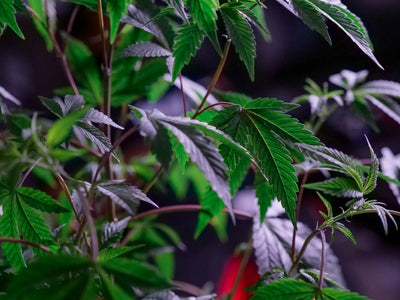
Photo by Dad Grass via Pexels.
Walk into any dispensary or hemp shop right now and you'll find shelves stocked with products promising something very specific: CBG for focus, CBN for sleep, THCV for energy and appetite suppression, all pitched as ways to get a targeted effect without the foggy, couch-locked high people associate with THC. Five years ago these were footnote cannabinoids, the stuff cultivators bred out or ignored because delta-9 THC was the only number that mattered on a lab report. Now they're the center of a formulation strategy that companies are pouring real money into, betting that the next wave of cannabis growth doesn't look like getting high at all.
The pitch is seductive because it's precise: name the molecule, name the effect, skip the ambiguity. But precision dosing implies a level of dose-response certainty that the clinical literature, honestly, doesn't yet deliver. Some of these claims hold up under controlled testing. Others are riding on vibes, aged-flower folklore, and marketing copy that outran the pharmacology a while back.
And then there's the timing problem. Just as the science and consumer appetite for these compounds are maturing, Congress signed a federal THC cap into law on November 12, 2025, that threatens to erase most of the very products this trend depends on. A molecule can be perfectly promising in a lab and still get wiped off shelves by a definitional tweak in an appropriations bill.
Why Precision Dosing Became the Industry's New Pitch

Photo by 652234 via Pixabay.
The shift toward minor cannabinoids didn't come out of a lab -- it came out of what consumers were already telling researchers they wanted. Brightfield Group data shows 64% of cannabis consumers now cite relaxation as their primary motivation for use, a figure that's edged past the old default of simply wanting to get high. Just as tellingly, 30% of consumers say they now prefer cannabis over alcohol outright, which reframes the entire product category as a wellness substitute rather than a recreational indulgence. KCSA Strategic Communications has tracked a parallel move in industry messaging, with sleep, stress, and pain management displacing potency and euphoria as the top-billed selling points across brand campaigns.
That's the demand-side story, and it explains why CBG, CBN, THCV, and CBDV moved from footnote to headline so fast. Each gets marketed as delivering a specific, named effect -- CBG for calm focus, CBN for sleep, THCV for appetite suppression and energy -- without the full intoxication that comes with THC. For a company trying to sell cannabis to someone who doesn't necessarily want to feel impaired at 2pm on a Tuesday, that's a genuinely rational pitch. It's the same logic that turned functional beverages and adaptogenic supplements into a multi-billion-dollar aisle in ordinary grocery stores: name the outcome, name the ingredient, let the consumer self-select.
Where this gets complicated is the gap between what's being promised and what's been demonstrated. A marketing claim that a cannabinoid delivers a specific, non-intoxicating, targeted effect is a testable pharmacological statement, not just a branding choice, and testing it properly requires dose-ranging human trials, not anecdote. The industry has largely skipped that step and gone straight to the label. That's the tension worth sitting with before this trend gets any bigger: the consumer appetite is real, the business logic is sound, but the clinical evidence backing the specific molecule-to-effect claims is uneven at best, and in some cases it points the other direction entirely.
What the Science Actually Shows -- and Where the Marketing Overreaches

Photo by CDC via Unsplash.
Start with THCV, because it's the clearest case of marketing running past the data. THCV is frequently sold as a non-intoxicating cannabinoid, and there's real mechanistic support for that at low doses -- it acts as a CB1 receptor antagonist, meaning it can actually blunt THC's psychoactive effects rather than add to them. But dose-ranging trials in healthy adults tell a more complicated story: at 100 mg or higher, THCV produces THC-like subjective effects, including intoxication. Calling THCV categorically non-psychoactive isn't wrong at low doses, but it's inaccurate as a blanket claim, and most consumer products don't disclose where their dose sits relative to that threshold.
CBN's reputation as the sleepy cannabinoid doesn't fare much better under controlled testing. A 2024 randomized controlled trial found that CBN did reduce nighttime awakenings, which is a real, measurable finding worth taking seriously. But the same trial found no significant effect on sleep onset time -- the thing most sleep-gummy marketing actually promises. The more plausible explanation for CBN's folk reputation as a sedative is that it accumulates as THC degrades in aged cannabis, alongside other degradation products and terpene changes that shift the overall effect profile. CBN riding along in old flower isn't the same as CBN, isolated and dosed on its own, reliably knocking someone out.
CBG is the bright spot so far. A 2024 double-blind, placebo-controlled crossover trial in 34 healthy adults found that 20 mg of hemp-derived CBG significantly reduced anxiety and stress ratings compared to placebo, and, notably, improved verbal recall rather than impairing it -- a meaningful distinction from THC, which tends to do the opposite. That's a real, replicated-in-structure result from a properly controlled trial, not an anecdote.
Put those three together and a pattern emerges: some minor cannabinoid claims survive rigorous testing, others don't, and dose is doing an enormous amount of work in both directions. The practical takeaway for consumers and regulators alike is that labeling a product by cannabinoid name alone, without dose context, obscures more than it reveals. A gummy that says CBG doesn't tell you whether it contains the 20 mg that showed an effect in that trial or a fraction of it.
Compound-Indication Matching: A More Rational Way to Formulate

Photo by elliepeek via Pixabay.
If dose-by-dose testing is where the real evidence lives, the more interesting question is whether formulators are starting to build products around that logic instead of around vibes. A mechanistic framework paper published in Pharmaceuticals roughly two weeks ago makes the case for exactly that shift: match specific cannabinoid combinations to specific clinical indications based on receptor pharmacology, rather than blending compounds because they sound complementary on a label.
The paper's central argument centers on propyl varinoids -- CBDV and THCV, the propyl-chain analogs of CBD and THC. These compounds appear to reduce CB1-mediated psychotropic liability, meaning less of the classic THC high, while still preserving engagement with CB2 receptors, which are more associated with anti-inflammatory and peripheral effects than with intoxication. That's a mechanistically coherent way to explain why THCV at low doses can behave differently from THC even though the receptors involved overlap substantially. THCV also appears to enhance 5-HT1A serotonin receptor signaling, a pathway with well-established relevance to anxiety and appetite regulation, and one that several approved pharmaceuticals already target through other molecules entirely.
What makes this framework notable isn't any single finding -- it's the shift in method it represents. Instead of empirical trial-and-error blending, where a brand tries a ratio, sees how it sells, and adjusts, this is receptor-pharmacology-driven design: start from what's known about which receptor a molecule binds and how strongly, then formulate toward a specific clinical target. It's the same basic logic pharmaceutical companies have used for decades to design drugs, applied here to a plant-derived compound class that's mostly been formulated by feel.
The necessary caveat is that a framework paper proposing mechanistic plausibility is not the same thing as a replicated clinical outcome. Papers like this synthesize existing receptor-binding data and propose testable hypotheses -- they don't themselves constitute new trial evidence. Before formulations built on this logic can make firm efficacy claims, they need the same kind of dose-ranging human trials that produced the CBG anxiety data and the CBN sleep data discussed above. The direction is promising. The proof isn't fully in yet, and anyone citing this framework as settled science is getting ahead of what it actually says.
The Market Betting on This Trend

The global minor cannabinoids market is projected to triple from $3.2B in 2025 to $9.8B by 2034, while the US market is expected to grow nearly sixfold, from $386M in 2026 to $2.2B by 2035.
None of this matters to the industry unless it can be monetized, and by that measure minor cannabinoids are already a serious bet. Estimates put the global minor cannabinoids market at $3.2 billion in 2025, with projections reaching $9.8 billion by 2034 at a 15.0% compound annual growth rate. A separate, US-specific forecast values the domestic market at $385.6 million in 2026, growing to $2,208.54 million by 2035 at a 21.40% CAGR -- a steeper growth rate on a smaller base, which is typical when a category is early and concentrated in one country before international expansion catches up.
Worth flagging directly: these numbers come from different research firms using different methodologies, different product definitions, and different market boundaries, so they shouldn't be read as precise, reconcilable forecasts. Treat them as directional signals of a fast-growing category rather than a single agreed-upon number. What's consistent across both estimates is the trajectory -- double-digit compound growth sustained over roughly a decade -- which is the more reliable signal than either headline figure on its own.
The detail that matters most for where this industry is actually heading is the segment breakdown: pharmaceuticals represent the largest application segment at 35.2% of market share in 2025, ahead of consumer wellness products. That's a meaningful signal. It suggests the money isn't primarily chasing gas-station gummies and tincture bottles -- it's chasing FDA-regulated drug development, where a cannabinoid gets formulated into a defined-dose product, run through clinical trials, and sold with an actual indication on the label. That's a fundamentally different business than a hemp brand slapping CBG on a label and hoping the wellness framing sells units.
If that pharmaceutical lead holds and widens, it points toward a bifurcated future for minor cannabinoids: a consumer wellness market that stays volatile, loosely regulated, and exposed to the kind of legal risk discussed next, alongside a slower but more durable pharmaceutical pipeline that's largely insulated from hemp-specific regulatory swings because it was never operating under the hemp exemption to begin with.
The Farm Bill Cliff That Could Wipe Out the Product Category

Photo by Ian Hutchinson via Unsplash.
All of that growth is happening against a regulatory backdrop that could gut the consumer side of this market almost overnight. The appropriations deal that ended the 2025 government shutdown, signed into law November 12, 2025, redefines hemp to exclude any finished product containing more than 0.4 milligrams of total THC per container. Read that number again: not per serving, not per package weight percentage -- per container, in milligrams, total. A standard 5 mg THC gummy contains 12.5 times that limit on its own. A typical 20-count jar of those gummies contains 250 times the federal cap. This isn't a tightening of the rules around hemp products as they currently exist -- it's a redefinition that puts nearly the entire category on the wrong side of the line.
The U.S. Hemp Roundtable, an industry trade group, estimates that roughly 95% of existing hemp-derived cannabinoid products would become federally unlawful by November 2026 if the law stands as written. That's not a niche compliance headache -- that's most of an industry.
And there's no sign of an imminent legislative rescue. The House passed its 2026 Farm Bill 224-200 on April 30 without touching the hemp THC ban, and the Senate Agriculture Committee's draft, released June 23, left the same provision untouched. Neither chamber has, so far, prioritized fixing the definitional problem through the normal Farm Bill process.
The one proposed fix on the table is the Cannabinoid Safety and Regulation Act, which would raise the threshold from 0.3% to 1% THC on finished products and direct the FDA to set maximum allowable cannabinoid limits going forward -- a more workable, product-level framework than the current per-container milligram cap. Whether it gains traction before the November 2026 deadline is genuinely an open question.
There's useful historical precedent here, and it cuts both ways. The 2018 Farm Bill's 0.3% delta-9 THC dry-weight threshold created the entire hemp-derived cannabinoid market almost by accident -- nobody in that legislative process was trying to birth a multi-billion-dollar consumer product category, but the definitional line they drew made it possible. This reversal shows exactly how fast a single definitional tweak, in either direction, can remake or unmake an entire industry.
What Happens to Minor Cannabinoid Products After November 2026

Photo by timmossholder via Pixabay.
So what actually happens if the 0.4 mg per-container cap survives past November 2026? The most direct effect is that most CBG, CBN, and THCV products currently sold as hemp-derived would need one of two things: reformulation down to near-zero total THC content, or a wholesale move into state-licensed marijuana markets, which aren't bound by the federal hemp definition at all.
Not every product faces equal risk here. Formulations built from cannabinoids with genuinely no THC contamination -- pure CBG or CBN isolates, rather than full-spectrum extracts -- could clear the new bar far more easily than THCV-inclusive blends, since THCV products are almost by definition sold alongside at least trace THC and often rely on that interplay for their effect profile. Full-spectrum products, which lean on the entourage of multiple cannabinoids and terpenes working together, are the hardest hit, because isolating out every trace of THC undermines the formulation logic that made them appealing in the first place.
That points toward an obvious channel shift: state-licensed adult-use and medical dispensaries, operating under state cannabis law rather than the federal hemp exemption, could become the primary home for minor cannabinoid products. That would accelerate a consolidation that's already been underway -- regulated cannabis markets absorbing product categories that started life in the unregulated hemp space.
The counter-case, though, deserves real weight, and it comes from recent precedent. Delta-8 THC faced state-level bans in over a dozen states starting in 2021, and the hemp industry's response wasn't to disappear -- it was to reformulate, relabel, and jurisdiction-shop, moving products and manufacturing into friendlier states while lobbying for carve-outs elsewhere. Markets facing existential-sounding restrictions have, in this industry's short history, tended to adapt rather than vanish outright. There's no guarantee a per-container milligram cap plays out identically, since the scale here is federal rather than state-by-state, but betting on total collapse ignores how resourceful this specific industry has already shown itself to be under pressure.
Meanwhile, the pharmaceutical pathway may simply sidestep this entire fight. FDA-regulated cannabinoid drugs, developed and dosed through the standard drug-approval process, were never operating under the hemp exemption to begin with -- their legal footing comes from a different part of the regulatory system entirely, one that a Farm Bill hemp definition doesn't touch.
Strip away the branding and the science on minor cannabinoids is genuinely promising, just partial and uneven across the compound class. CBG's anxiety-reduction data, from a properly controlled trial with a real placebo arm, is solid. CBN's sedative reputation is not -- it reduces awakenings but not sleep onset, and its folk status probably owes more to degraded terpenes in old flower than to the molecule itself. THCV's non-intoxicating branding depends entirely on staying under a dose threshold that essentially no consumer product currently discloses, which means people buying it for energy without a high have no reliable way to know if they're getting exactly that.
None of that pharmacology, though, is what will determine this category's near-term fate. The regulatory fight matters more right now than any single molecule's receptor profile, because a 0.4 mg per-container THC cap would flatten the hemp-derived side of this market regardless of which cannabinoids turn out to actually work in humans. Good science doesn't protect a product from a bad definition in an appropriations bill -- the 2018 Farm Bill proved that in reverse, and this one may prove it again in the other direction.
The thing worth actually watching between now and November 2026 is whether the Cannabinoid Safety and Regulation Act picks up real legislative momentum. If it does, and the threshold moves from a per-container milligram trap to something like the proposed 1% finished-product standard with FDA-set limits, precision dosing keeps developing roughly where it lives today -- across hemp brands, wellness retailers, and state dispensaries all at once. If it doesn't, the center of gravity shifts hard toward state-licensed dispensaries and FDA drug trials, and the gas-station hemp aisle that built this market's early momentum largely disappears. Either way, the molecule matters less than the milligram line drawn around it.
Sources
- The Role of Minor Cannabinoids: CBG, CBN, and THCV Explained -
- Minor Cannabinoids Explained: CBG, CBN, THCV, CBC, and CBDV | The Cannigma
- Beyond THC: The Benefits of Minor Cannabinoids in 2026
- Pharmacological Switching in Minor Phytocannabinoids: A Mechanistic Framework for Compound–Indication Matching and Precision Neurotherapeutic Development
- Minor Cannabinoids Explained 2026: CBN vs CBG vs THCV and What They Do - Waterbeds 'n' Stuff