Minor Cannabinoids: What the Research Actually Shows
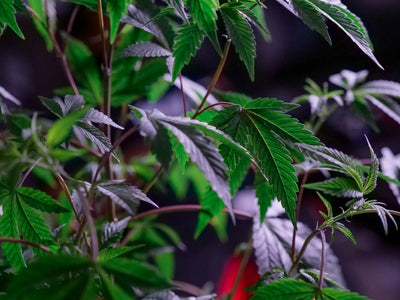
Photo by olia danilevich via Pexels.
Walk into any dispensary in 2026, and you’re not just staring at a wall of THC and CBD anymore. The shelves are now a dizzying alphabet soup—CBG gummies for focus, THCV vapes for "energy," CBN tinctures for sleep, and CBC oils for inflammation—each one packaged with the same slick confidence as a pharmaceutical breakthrough. But here’s the uncomfortable truth hiding behind those glossy labels: the science is barely out of the starting gate. After decades of near-silence in the research world, the last few years have unleashed a flood of new studies on these once-ignored molecules, with the number of scientific papers exploding from a trickle to over 1,500. Yet, for all the buzz, a massive gap remains between what we’re buying and what we actually know. For every promising human trial on THCV showing real metabolic shifts, there are a dozen compounds—like CBC or CBDV—that have never been tested in a single human being, their effects inferred entirely from petri dishes and rodent models. This is the story of minor cannabinoids in 2026: a fascinating, fast-moving field of discovery where genuine medical promise is colliding head-on with aggressive marketing, and where the line between a groundbreaking therapy and a very expensive placebo is still frustratingly blurry.
The Publication Boom, By the Numbers

Cumulative publications on minor cannabinoids have grown sharply since 2000, surging from just 40 articles by 2000 to over 700 by 2024—with the steepest rise occurring after 2017, reflecting a rapid intensification of research interest in recent years.
A bibliometric study published in the Journal of Cannabis Research in February 2026 gives us the clearest look yet at how fast the minor cannabinoid literature has actually grown, and the shape of that growth is worth sitting with before we get into what's in the papers themselves. The researchers pulled 1,516 eligible articles spanning 1969 to 2024, all focused on cannabinoids other than THC -- CBG, CBN, CBC, THCV, and the rest of the alphabet soup that used to get a single paragraph in reviews about hemp fiber and rope.
What the data actually shows is a nearly 50-year stretch of almost nothing, followed by a growth curve that looks less like a trend and more like a cliff. From 1969 through roughly 2016, output was flat -- a handful of papers a year, mostly analytical chemistry work characterizing trace compounds found alongside THC and CBD in seized plant material or lab-synthesized reference standards. Then, starting around 2017, the annual publication count began climbing steeply, and it kept climbing every year after that, peaking in 2024, the last full year the study captured. That's not a gradual maturation of a subfield. It's the kind of inflection point bibliometricians usually associate with a policy shock or a new funding stream hitting a previously starved area of research, and in this case there's an obvious candidate sitting right at the base of the curve.
Geographically, the output concentrates in a predictable but telling cluster: the United States, Italy, and Canada produce the largest share of these papers, with a dense web of international co-authorship connecting them to research groups across the UK, Germany, Australia, and Israel. Italy's strong showing is worth a second look -- Italian pharmacology and phytochemistry groups have a long history with cannabis-adjacent natural products research that predates the current commercial boom, so their presence isn't purely a hemp-market story. The US and Canada, by contrast, line up closely with the two North American jurisdictions where legal commercial cannabis and hemp markets actually exist to fund and motivate the work.
On the venue side, four journals do a disproportionate amount of the publishing: Molecules, which handles a lot of the analytical chemistry and phytochemical characterization; the Journal of Analytical Toxicology, which reflects the forensic and drug-testing angle on minor cannabinoids; the British Journal of Pharmacology, covering receptor-level and mechanistic work; and Cannabis and Cannabinoid Research, the field's dedicated specialty journal. That spread across chemistry, toxicology, pharmacology, and a cannabis-specific outlet tells you this isn't one narrow research community -- it's several adjacent ones that started paying attention to the same molecules around the same time.
The timing lines up neatly with the 2018 Farm Bill, which legalized hemp containing under 0.3% Delta-9 THC and inadvertently created a commercial incentive to explore every other cannabinoid in the plant. That's a plausible driver, not a proven one -- the bibliometric study itself doesn't establish causation, and correlation between a US law and a global publication trend deserves some skepticism given Italy's and Europe's contributions. But the sequence -- flat for decades, then a hemp market opens, then a publication surge -- is hard to wave away entirely.
CBG's Big Moment: The WSU Anxiety Trial

Photo by Cosmin Ursea via Unsplash.
Cannabigerol has been sitting in plain sight for decades, mostly ignored because plants don't make much of it and nobody had bothered to run it through a real clinical trial. That changed in July 2024, when a team at Washington State University led by psychologist Carrie Cuttler published the first human clinical trial looking specifically at CBG's acute effects on anxiety, stress, and mood, in the journal Scientific Reports. It's a modest study by the standards of pharmaceutical research, but modest is still infinitely more than existed before. Prior to this, essentially everything said about CBG and anxiety came from rodent studies and anecdote.
The design was deliberately narrow: 34 healthy adults who already used cannabis were given a single 20mg dose of hemp-derived CBG and compared against placebo in a short-duration, acute-effects setup. This is not a chronic-dosing trial and it says nothing about what happens after weeks of daily use. But for a first pass, it's a sound way to isolate what one dose of an isolated cannabinoid actually does to a person's subjective state within a defined window, without the confound of THC or CBD riding along.
The numbers that came out were genuinely interesting. Participants reported a 26.5% reduction in anxiety relative to placebo, with no intoxication and no impairment — and, somewhat unexpectedly, improved verbal memory compared to the placebo group. That last finding cuts against the general assumption that anything acting on the endocannabinoid system comes with a cognitive tax. CBG, at least in this single-dose, healthy-user context, didn't show one. If anything it nudged performance the other direction.
Cuttler's team isn't treating this as a finished story. They're now designing a follow-up trial that adds objective physiological measures — heart rate, blood pressure, cortisol — instead of relying purely on self-reported anxiety scores, which is the obvious next step for anyone who wants regulators or clinicians to take the finding seriously. The planned expansion also reaches beyond cannabis-experienced users into people who've never used cannabis at all, since tolerance and prior familiarity with cannabinoid effects could easily be shaping how the first cohort responded. There's also a stated interest in testing CBG specifically for menopause symptoms, an application with essentially no cannabinoid research behind it yet but a plausible mechanistic rationale given CBG's affinity for alpha-2 adrenergic receptors, which are involved in thermoregulation and mood.
Worth saying plainly: this is one trial, on 34 people, measuring acute effects only. There are still fewer than five randomized controlled trials in humans looking at CBG for any outcome whatsoever, and no regulatory body anywhere — not the FDA, not the EMA, not the TGA — has approved CBG for any therapeutic use. The nickname you'll see attached to CBG constantly, the mother cannabinoid, isn't marketing embellishment; it refers to cannabigerolic acid, the precursor molecule that plant enzymes convert into THCA and CBDA before decarboxylation turns those into THC and CBD. It's the biosynthetic starting point for the two cannabinoids everyone already knows. Human data on what it does in the body is only just beginning to catch up to that plant biochemistry.
CBG and CBC Against Cancer Cells: Promising, and Very Early

Photo by Thirdman via Pexels.
Cast your mind back to curcumin, the compound in turmeric that was supposed to be an anticancer wonder after decades of cell-culture studies showed it killing tumor lines in dishes. It never made it past that stage in any meaningful clinical way, largely because the doses required in vitro don't translate into a living body with normal absorption, metabolism, and clearance. That history matters here, because a June 2026 study out of Rostock University Medical Center in Germany is generating the same kind of buzz, and it's worth being precise about what the researchers actually found versus what people online are already claiming it found.
The Rostock team exposed several lung cancer cell lines to cannabigerol (CBG) and cannabichromene (CBC) in culture and tracked what happened as they increased the dose. Both cannabinoids triggered apoptosis, the cell's own programmed self-destruct sequence, in a dose-dependent pattern, meaning more compound produced more cell death up to a point. That dose-response relationship is a meaningful detail. Random or non-specific cytotoxicity tends to look messy and threshold-driven; a clean dose-response curve is one of the things toxicologists and pharmacologists look for as a signal that a real, reproducible biological mechanism is at work rather than just a chemical dumping cells into distress.
CBG stood out as the more potent of the two against certain lung cancer subtypes tested, killing cells at lower concentrations than CBC needed to produce a similar effect. That subtype-specificity is scientifically interesting even in a dish, since it hints CBG isn't just poisoning cells indiscriminately but interacting with something that varies between cancer cell types, possibly receptor density or a metabolic vulnerability specific to certain lung cancer lineages.
On mechanism, the plausible story ties back to CB2 receptor signaling and mitochondrial pathways, both of which show up repeatedly in the older cannabinoid-apoptosis literature going back to THC and CBD studies from the 2000s and 2010s. The general model in that body of work is that cannabinoid receptor activation can disrupt mitochondrial membrane integrity, releasing cytochrome c and tripping the cell's intrinsic apoptotic cascade. If CBG and CBC are working through a related route, it would fit an existing mechanistic framework rather than requiring an entirely novel explanation, which is itself a point in favor of taking the finding seriously as a starting hypothesis.
None of that changes the fundamental limitation: this is in vitro work, full stop. There's no animal model data yet showing these effects hold up in a living circulatory and immune system, and no human trials of any kind. The graveyard of oncology research is full of compounds that killed cancer cells beautifully in a petri dish and did nothing, or caused unacceptable toxicity, once tested in mice. Treat this as hypothesis-generating science that justifies the next round of animal studies, not as evidence that CBG or CBC belongs anywhere near a cancer treatment protocol today.
THCV and Metabolic Health: The Most Human Data So Far

Photo by Artem Podrez via Pexels.
Most minor cannabinoid claims lean on rodent studies and cell assays, which is a polite way of saying they lean on almost nothing that predicts what happens in a human body. THCV is the exception, and it's not close. In 2016, a randomized, placebo-controlled trial published in Diabetes Care put pure THCV in front of 62 people with type 2 diabetes for 13 weeks. Half got 5mg of THCV daily, half got placebo, and researchers tracked standard metabolic markers throughout. The THCV group showed a statistically significant drop in fasting plasma glucose compared to placebo, along with a rise in adiponectin -- a hormone secreted by fat cells that's directly tied to how well the body responds to insulin.
That adiponectin result matters more than it might look at first glance. Lots of supplement and cannabinoid claims stop at "glucose went down," which could be noise, a diet effect, or a dozen confounders. Adiponectin gives the finding a plausible mechanism to hang on: low adiponectin is a known feature of insulin resistance and metabolic syndrome, and drugs that raise it (like the thiazolidinedione class) tend to improve insulin sensitivity through that same pathway. Seeing THCV move both markers in the same trial, in the same direction you'd predict if it were genuinely improving insulin handling, is what separates a real signal from a correlation you could get from almost any intervention that makes people feel like they're doing something.
A separate, smaller pilot study looked at THCV paired with CBD in oral strip form over 90 days and reported weight loss alongside other metabolic improvements in participants. It's worth being honest about what this study is and isn't: a pilot with a small cohort, not a confirmatory trial, and it combined two cannabinoids rather than isolating THCV's effect. Nobody has run a large, multi-site, adequately powered trial confirming either of these results at scale.
Still, taken together, these two studies put THCV ahead of CBG on the one metric that should matter most to serious observers: trial rigor, not marketing spend. CBG gets far more shelf space and influencer attention right now, but its human evidence is thinner. THCV's diabetes trial was randomized, placebo-controlled, and published in a peer-reviewed endocrinology journal -- the gold-standard structure, even at modest scale.
The counter-case deserves equal weight. Thirteen weeks is a blink for a chronic condition like type 2 diabetes, where clinicians usually want data over six months to a year before drawing conclusions about durability, let alone safety. And the appetite-suppressant narrative now attached to THCV in gummies and tinctures marketed as "diet weed" runs well ahead of what these trials actually tested -- neither measured appetite or food intake as a primary endpoint. The glucose and adiponectin findings are real; the weight-loss marketing built on top of them is mostly inference.
CBC and CBDV: Real Preclinical Signals, Zero Human Trials

Photo by THLT LCX via Unsplash.
Walk through the supplement aisle of any dispensary in 2026 and you'll find CBC gummies sitting right next to CBD and CBG products, packaged with the same confident language about mood support and inflammation relief. What you won't find, if you go looking for it, is a single published human clinical trial on cannabichromene. Not one phase 1 safety study, not one small pilot trial, nothing registered on ClinicalTrials.gov that's produced results. Everything anyone knows about CBC in a living human body is inference from cell cultures and rodent models, which is a very different thing than what the marketing implies.
The rodent data itself is genuinely interesting, which is exactly why this case is worth flagging rather than dismissing. Studies going back over a decade have shown CBC interacting with TRPA1 receptors and affecting anandamide reuptake in ways that produce measurable anti-inflammatory effects in mouse models of gut and joint inflammation. Separate rodent work has found antidepressant-like behavioral changes in forced-swim and tail-suspension tests, the standard (if imperfect) screening tools researchers use before a compound is considered worth pursuing further. There's also a strand of neuroprotective research, including work suggesting CBC supports the viability of neural progenitor cells and may have relevance to neuroinflammatory conditions. None of this is fabricated or fringe science. It's published, peer-reviewed, and mechanistically plausible. The problem is entirely one of stage: these are the kinds of early signals that, historically, take fifteen to twenty years to either pan out or fall apart once human trials start.
CBDV occupies a similar spot on the research timeline, though with a narrower and arguably more promising focus. Interest here concentrates almost entirely on epilepsy and neurodevelopmental conditions, following logically from CBDV's structural similarity to CBD and its activity on TRPV1 channels implicated in seizure activity. Preclinical work, including studies out of GW Research (the same group behind Epidiolex), found CBDV reduced seizure severity in rodent and zebrafish models, and there was enough signal that a human trial for autism spectrum disorder was actually initiated. It didn't hit its primary endpoints, which is itself an important data point often left out of enthusiastic coverage. That's a rare case of CBDV actually reaching humans and the results being mixed rather than triumphant.
The CBD precedent is the right yardstick here, and it's a sobering one. Mechoulam and colleagues were publishing preclinical anticonvulsant signals for CBD back in the 1970s and 80s. Epidiolex wasn't FDA-approved until 2018. That's roughly two, sometimes four, decades between preliminary rodent-level interest and a regulator actually signing off on a specific indication, and CBD had the advantage of being the most heavily funded cannabinoid in history. CBC and CBDV have nothing like that level of institutional investment behind them. If the CBD timeline is any guide, and it's the best one available, buying a CBC tincture for mood support today is buying a product built on the same kind of evidence CBD had in 1985 -- promising, but decades from being proven in the population actually taking it.
Why Receptor Binding Doesn't Equal Clinical Proof

Photo by cottonbro studio via Pexels.
Take CBG, the minor cannabinoid getting the most academic attention right now. In vitro assays show it binds CB2 receptors, alpha-2 adrenergic receptors, and 5-HT1A serotonin receptors. That last one is worth pausing on, because 5-HT1A is the same receptor that buspirone -- an FDA-approved anti-anxiety drug on the market since 1986 -- was built to target. Seeing a plant compound hit the same receptor as an established pharmaceutical is genuinely interesting pharmacology. It's the kind of finding that gets a compound taken seriously by people who otherwise wouldn't look twice at a cannabinoid. But interesting pharmacology and clinical proof are two different things, and the distance between them is where a lot of cannabis science reporting quietly goes wrong.
Receptor binding affinity is measured in a dish, usually using isolated cell cultures or membrane preparations, at concentrations the researcher controls directly. None of that tells you what dose a human needs to swallow or inhale to reach that concentration at the target tissue, how much of it survives first-pass liver metabolism, or whether it crosses the blood-brain barrier in meaningful amounts. This isn't a cannabinoid-specific problem. Pharmacology's graveyard is full of compounds that looked perfect in a binding assay and then failed in humans because of poor oral bioavailability, rapid metabolic clearance, or off-target effects that only show up in a whole organism. Buspirone itself has famously low and variable oral bioavailability, around 4%, precisely because of extensive first-pass metabolism -- a reminder that even the drug CBG is being compared to had to solve real pharmacokinetic problems before it became clinically useful. There's no published evidence yet that CBG has solved equivalent problems for anxiety indications in humans.
This is exactly where the recent bibliometric surge in minor cannabinoid research is concentrated. Of the 1,516 articles indexed on this topic, the growth curve is overwhelmingly mechanistic: receptor-binding studies, cell-culture assays, animal models, structure-function papers. That's normal and necessary early-stage science, but it's not the same literature as randomized controlled trials measuring anxiety scores or sleep architecture in human subjects. Right now, the ratio of mechanism papers to outcome trials for CBG, CBC, and similar minor cannabinoids is heavily skewed toward the former.
That gap matters most in 2026-facing consumer content pushing THCV for appetite suppression or microdosing energy, and CBN as a sleep aid. CBN in particular carries a branding story much larger than its evidence base. Most CBN in aged cannabis is a degradation product of THC oxidation, and the popular claim that it's sedating traces back partly to older, poorly controlled studies and partly to consumer folklore about aged flower. Recent controlled human data on isolated CBN's sedative effects is thin and mixed at best, even as it's marketed on sleep gummies and tinctures with the same confidence as melatonin. That's marketing narrative riding ahead of the clinical record.
None of this means these compounds are bunk -- it means the appropriate posture is patience. Treat receptor-binding papers as promising leads worth funding, not proof worth building irreversible dosing decisions or investment theses around, and weight product claims accordingly until human outcome trials catch up to the mechanism literature.
So where does that leave the curious consumer, the hopeful patient, or the skeptical scientist? In a state of productive, cautious patience. The surge in minor-cannabinoid research is undeniably exciting—not because it has already delivered cures, but because it has finally started asking the right questions. The bibliometric spike tells us that the scientific community has woken up to these molecules, and early signals from CBG's anxiety trial or THCV's diabetes study are genuine reasons for optimism. But if this deep dive has shown us anything, it's that cannabinoid science is still playing the long game. Receptor binding in a dish is a far cry from a prescription pad, and the road from a promising cell-culture result to an FDA-approved therapy is measured in decades, not dispensary drop cycles. The lesson here isn't cynicism—it's discernment. These compounds hold real potential, but potential is not proof, and the marketing machine will always run faster than the peer-reviewed literature. As the research catches up to the hype in the coming years, the wisest approach is to embrace the science while letting go of the certainty. The future of minor cannabinoids is bright, but it's also unfinished—and that's perfectly okay. Let's let the data, not the packaging, write the final chapter.
Sources
- Mapping the research landscape of minor cannabinoids: a bibliometric analysis of research trends and hotspots | Journal of Cannabis Research | Springer Nature Link
- New Advances in Medical Marijuana Research (2026 Update) - Medical Marijuana Doctor
- CANNABIS MARIJUANA 2026 | Cannabis & Medicinal Research Meeting | Cannabis & Medicinal Research Conference | July 23-24, 2026 | Amsterdam, Netherlands
- United States Minor Cannabinoids CBG CBC CBN THCV CBGA Markets Report 2021 2028 ResearchAndMarkets
- Unlocking New Horizons in Health: TNR, The Niche Research Reveals the Transformative Power of Minor Cannabinoids