Redoing the WHO Cannabis Review: What It Would Actually Take
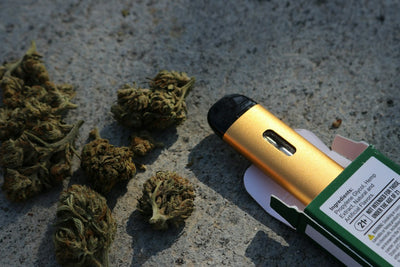
Photo by Gavin Li via Unsplash.
Most cannabis consumers have no idea that the plant's legal status under international law actually changed in December 2020. There was no ceremony, no press conference outside the Vienna International Centre, no headline that broke through the noise of a pandemic winter. A vote happened, a schedule shifted by one tier, and life went on. If you were tracking dispensary openings in Michigan or grow license applications in Malta, you probably missed it entirely.
That's not because the vote didn't matter. It's because the mechanism behind it is narrow, procedural, and almost designed to avoid public attention. Article 3 of the 1961 Single Convention on Narcotic Drugs is the only legal door through which a substance's international schedule can be changed, and in the treaty's entire history, that door has been opened for cannabis exactly once. Not twice. Once.
The 2018-2020 sequence -- from the first-ever critical review of cannabis to a razor-thin vote at the Commission on Narcotic Drugs -- is therefore the only real data point we have for how a future review would play out. Whether that future review gets triggered by a synthetic cannabinoid nobody's heard of yet, mounting evidence from a decade of national legalization experiments, or a direct push to pull cannabis out of Schedule I entirely, it will almost certainly follow the same institutional path, with the same chokepoints. This piece walks through what actually happened last time, why a technically unambiguous recommendation still took over two years to produce a narrow vote, and what would realistically have to line up for the process to run again -- or to go further than it did in 2020.
Article 3: The Only Door That Opens International Scheduling
Article 3 of the Single Convention on Narcotic Drugs is a short piece of treaty text with an outsized job: it's the sole legal channel through which any substance's international drug schedule can be altered. There is no side door. A country can't unilaterally decide cannabis or any other controlled substance should sit in a different schedule under the treaty; the change has to run through this exact provision, and it binds all 186 parties to the Single Convention simultaneously once adopted. That's a fundamentally different animal than domestic rescheduling, like the ongoing US process of moving marijuana between Controlled Substances Act schedules, which only changes how one country's law treats the drug and leaves the international framework untouched.
The process starts with an Expert Committee on Drug Dependence, known as the ECDD. No proposal to change a substance's schedule can even be formally floated until the ECDD completes what's called a critical review -- a structured scientific assessment of a substance's dependence potential, abuse liability, therapeutic value, and public health impact. This isn't a formality that rubber-stamps political preference; it's the evidentiary gate the whole system is built around.
Here's the detail that surprises people: cannabis went decades under the Single Convention, from 1961 until 2018, without ever receiving that formal critical review. It was scheduled at the treaty's founding based on assumptions and international drug-control politics of the mid-20th century, not a scientific assessment conducted under the treaty's own procedures. Every year that passed without a review was a year the original scheduling decision simply stood unexamined.
Even getting to a substantive review requires clearing a procedural bar first. The ECDD has to determine there's sufficient new information -- scientific, epidemiological, or otherwise -- to justify undertaking a critical review in the first place. That threshold decision, made before any real evidentiary debate begins, is itself a control point where a review can stall indefinitely if the committee isn't convinced the case for reconsideration is strong enough yet.
How the 2018-2020 Review Actually Ran

In December 2020, the UN Commission on Narcotic Drugs narrowly voted 27–25 to remove cannabis from Schedule IV, its most restrictive category, reflecting deep division among member states.
The actual review process began at the ECDD's 40th meeting in November 2018, when the committee conducted the first critical review of cannabis and cannabis resin in the Single Convention's history. This wasn't a single up-or-down question about cannabis broadly; the committee evaluated multiple cannabis-related substances separately, including cannabis and cannabis resin, extracts and tinctures, THC, and CBD, treating them as distinct entities with distinct risk and benefit profiles.
Findings from the review were published in January 2019, and the recommendations were more granular than most coverage at the time suggested. Rather than proposing one blanket reclassification, the committee recommended a set of changes scattered across different schedules and annexes, reflecting differentiated conclusions about each substance's abuse potential and therapeutic utility. Shortly after, the Director-General formalized this by sending a letter to the UN Secretary-General relaying the recommendations -- and that letter is the actual trigger that starts the treaty clock. Nothing before that point is binding on anything; it's the formal transmission to the Commission on Narcotic Drugs that puts the process in motion.
What followed was not a quick vote. The recommendations sat before the Commission's member states for close to two full years. That gap is worth sitting with: a technical body staffed by drug-dependence and pharmacology experts had issued its findings, and the political body still needed roughly two more years to schedule and hold a vote. That lag is itself a data point about how contested even science-backed treaty changes are once they hit a forum of national delegations balancing domestic law, diplomatic relationships, and existing prohibition frameworks.
When the vote finally happened in December 2020, the Commission approved removing cannabis and cannabis resin from Schedule IV -- the treaty's most restrictive tier, reserved for substances considered to have no offsetting therapeutic value -- by a vote of 27 to 25. Cannabis remained in Schedule I throughout, the same schedule that still includes cocaine, fentanyl, and heroin. So the headline framing many outlets used -- cannabis is no longer classified alongside heroin -- overstated what actually happened. It moved out of the harshest sub-tier, not out of the base schedule.
The same review recommended that CBD, when free of more than trace THC, receive no international control whatsoever. That outcome is instructive on its own: the ECDD process is capable of drawing sharp distinctions between cannabinoids rather than treating cannabis as one undifferentiated substance, which matters enormously for how any future review might treat isolated compounds versus the whole plant.
Why the Margin Matters More Than the Outcome

Photo by 12019 via Pixabay.
A 27-25 vote is about as close as a multilateral body gets without a tie. Shift two countries from yes to no, or even one from yes to abstain in the right combination, and the modest 2020 change fails outright. That margin is the single most important number in this entire story, because it tells you something the outcome alone doesn't: the Commission was not simply deferring to the underlying technical judgment. It was weighing that judgment against other considerations and very nearly rejecting it.
The Commission is a political body first and a scientific one only by proxy. Its member states bring domestic drug policy commitments, treaty-compliance obligations, and diplomatic alliances into a room where a scientific recommendation is one input among several, not a binding instruction. Countries don't vote as scientists; they vote as governments answerable to their own legal and political systems, some of which have built entire domestic prohibition frameworks around the existing UN schedule.
The coalition that actually formed doesn't map cleanly onto who you'd expect to support or oppose loosening cannabis controls. Russia, China, Pakistan, and Nigeria all voted against even this narrow change. The United States, in the final year of the first Trump administration, voted yes. That's not the alignment you'd predict if you assumed domestic legalization stance predicts UN voting behavior -- it suggests other factors, like broader drug-control diplomacy and each country's own treaty enforcement posture, carried real weight.
The precedent this sets for forecasting is sobering rather than encouraging. The ECDD's review found no scientific basis for cannabis's placement in the treaty's most restrictive categories, and that finding still barely survived the political process for the smaller of two possible asks -- removal from Schedule IV. Removal from Schedule I, the base schedule shared with fentanyl and heroin, would be a substantially bigger lift, requiring member states to reconsider cannabis's fundamental treaty classification rather than just its most extreme sub-tier. If the easier vote passed by two, the harder vote starts from a position where a similar or larger swing would need to reverse in cannabis's favor -- and there's no evidence in the record that such a swing is currently building.
What Would Trigger a Redo -- and What It Would Require

Photo by Christian Lue via Unsplash.
Nothing in the Single Convention caps how many times a substance can be critically reviewed. Article 3 allows new recommendations to be brought forward whenever new scientific evidence accumulates, so there's no legal barrier to a second cannabis review -- only a practical and political one. History offers a useful check on expectations here: ketamine and tramadol have each gone through repeated ECDD reviews since the early 2000s, generating substantive scientific discussion each time, without producing any change to their international scheduling status. Review is not the same thing as action. A substance can be re-examined by the same expert body multiple times and simply have the treaty status quo reaffirmed.
A realistic second cannabis review would likely need a specific trigger, not just the passage of time. That usually means either a member state formally requesting reconsideration of a substance's status, or the Secretariat deciding new evidence warrants it -- and in either case, that request needs to be backed by a documented body of research, not general sentiment that policy has moved on. The kind of evidence that moved the 2018 review forward included comparative data on therapeutic use, abuse potential relative to other controlled substances, and public health outcomes, and any redo would need an update to that evidentiary base substantial enough to justify reopening the file.
That evidentiary base is, in fact, accumulating in real time. Canada has run a fully legal national adult-use and medical market for several years now. Germany implemented a partial legalization framework more recently. Thailand cycled through a dramatic legalization-then-partial-reversal sequence. More than 40 US states now run medical or adult-use programs of varying scope. Collectively, this is the natural experiment the ECDD didn't have in 2018 when it conducted the first review -- multiple jurisdictions with years of comparable outcome data on public health, treatment admissions, and therapeutic use patterns. If that data gets systematically compiled and presented to the relevant review body, it's the most plausible evidentiary path toward a formal review request.
Even with that evidence in hand, any renewed push would face the same two-vote-margin problem the 2020 vote exposed, and there's no guarantee the same coalition reassembles. Geopolitical alignments shift: relations between major powers look different now than in 2020, and Gulf state drug policy has been evolving independently. A redo within the next 7 to 15 years is plausible, but it rests on three things lining up together: mounting comparative national data, at least one influential member state willing to formally request review, and a Commission composition no more conservative than the one that delivered 27-25 in 2020.
The Counter-Case: Why This Might Not Happen Soon

Photo by Chulho Choi via Unsplash.
There's no institutional mechanism that forces a revisit of a substance on any schedule. Unlike a domestic law with a built-in sunset clause forcing periodic reauthorization, the Single Convention's review process only moves when someone with standing decides to push it, and there's currently no comparable pressure building toward a formal cannabis redo. Momentum has to be manufactured by member states or the review body itself; it doesn't accrue automatically just because time passes or markets change.
Consider the timeline discipline the 2018-2020 process actually demonstrated. Even in a relatively favorable environment -- global legal cannabis markets expanding, a technical review already completed and unambiguous in its findings -- it still took roughly two years from the transmittal letter to an actual vote. A second attempt aimed at the much heavier target of Schedule I removal, requiring member states to reconsider cannabis's foundational treaty classification, could plausibly take longer, not shorter, given the stakes involved.
Treaty amendment fatigue is a real phenomenon in multilateral bodies. Member states that spent political capital fighting over the 2020 vote, on either side, may have limited appetite to reopen the same fight again soon. This is especially true for countries whose domestic prohibition regimes lean on the international schedule as diplomatic and legal cover -- being able to point to a UN classification insulates a government from having to justify prohibition purely on its own domestic evidentiary merits. Loosening that classification further removes a layer of that cover, which is exactly the kind of thing that generates quiet, sustained resistance rather than loud public opposition.
It's also worth being precise about what the ongoing US federal rescheduling review under the Controlled Substances Act does and doesn't do. That's a domestic process entirely separate from the UN treaty machinery, and its outcome doesn't automatically trigger, bind, or even formally influence any Article 3 action. What it could plausibly do, if the DEA moves marijuana to a less restrictive CSA schedule, is add diplomatic weight behind a future US-backed push for international review -- the same way the US yes vote in 2020 mattered even though it didn't come from a legalization-friendly administration. That's a real but indirect linkage, not a mechanical one.
The honest forecast isn't whether a redo could happen -- Article 3 permits it structurally, with no limit. It's that the specific accumulation of evidence and political triggers a redo would require is still building, not yet assembled. Watching for a formal review request is a more useful signal than watching for legalization headlines.
Treat the 2018-2020 sequence as a template rather than a guarantee. It proves the mechanism works -- a critical review can be completed, recommendations can be formally transmitted, and the Commission can actually vote to change a schedule. But it also proves how slow and politically fragile that mechanism is even when the underlying science isn't seriously contested. A committee of pharmacology and drug-dependence experts found no basis for cannabis's most restrictive treaty placements, and the political result was still a two-vote nail-biter on the smaller of the two available asks.
Two concrete things are worth actually tracking over the next decade, as opposed to general sentiment about legalization trends. First, any formal request by a member state or by the Secretariat for a new ECDD review -- that's the specific procedural act that starts the clock, not public opinion or industry pressure. Second, whether the sprawling, uncoordinated national legalization data from Canada, Germany, Thailand, and dozens of US states ever gets compiled into the kind of systematic comparative report the ECDD leaned on in 2018. Right now that data exists in fragments across different regulatory agencies and academic literatures; someone has to do the work of assembling it into a form a treaty body will act on.
A future move on cannabis's Schedule I status within the next 7 to 15 years is plausible, and the evidentiary conditions are trending in that direction. But it's a mistake to expect that outcome to arrive as a clean expression of scientific consensus. If the 2020 pattern holds, it will again come down to a handful of swing votes in a large political body weighing far more than what the science says -- which means the people actually worth watching aren't just the researchers, but whoever ends up counting to 27.
Sources
- The WHO’s First-Ever Critical Review of Cannabis | Transnational Institute
- Cannabis laws in Europe FAQ: What are countries’ international obligations to control cannabis? | The European Union Drugs Agency (EUDA)
- A House of Cards
- A House of Cards - ‘High compliance’: A legally indefensible and confusing distraction
- A House of Cards: 'High compliance': A legally indefensible ...