Rwanda's Cannabis Bet: Could It Become East Africa's GMP Export Hub?
Photo by Rwanda Lens via Pexels.
Walk into a pharmacy in Frankfurt or a licensed dispensary in Ontario and ask where the flower came from, and increasingly the answer is somewhere you wouldn't expect: Lesotho, Zimbabwe, maybe soon Rwanda. In June 2021, Rwanda's Minister of Justice signed Ministerial Order N°001, quietly opening the door to medicinal cannabis cultivation for export. Nothing about domestic consumption changed. Law 68/2018 still classifies cannabis as a controlled substance, and getting caught with even a small personal amount still carries a two-to-five-year prison sentence and fines running up to five million Rwandan francs. That contradiction -- grow it, process it, ship it, but never touch it -- isn't an oversight. It's the entire business model.
The design is a near-direct copy of Lesotho's approach: build a licensing regime aimed squarely at GMP-certified pharmaceutical export markets in Europe and North America, keep the domestic legal status untouched, and let a small number of heavily capitalized operators do the work. The flagship licensee, King Kong Organics Rwanda, was supposed to prove the model could work. Instead it's spent years behind schedule, missing basic site infrastructure, and short on cash -- forcing the Rwandan state itself to step in with new road, water and power spending to keep the project alive. That raises the real question this piece is trying to answer: does Rwanda's licensing architecture, now backed by fresh public investment, actually add up to a functioning GMP export hub within the next three to seven years? Or is this simply a slower-moving, less-publicized replay of the stalled promise Lesotho made to the world back in 2017?
The Legal Architecture: Export-Only by Design
Ministerial Order N°001 of 22 June 2021 is a narrow, purpose-built piece of regulation. It authorizes cultivation of medicinal cannabis strictly for export -- there's no provision anywhere in the text for domestic sale, and none was ever intended. What makes the structure unusual is who runs it: rather than a single cannabis authority, Rwanda split oversight between the National Agricultural Export Development Board (NAEB), which handles the agricultural licensing and export-crop side, and the Rwanda Development Board (RDB), which manages investment promotion and the commercial licensing relationship with foreign operators. Two agencies with different institutional mandates now jointly gatekeep a single crop, which is atypical compared to how most jurisdictions run cannabis licensing through one dedicated regulator.
Meanwhile Law 68/2018 hasn't moved an inch. Possession, even in small personal quantities, remains a criminal offense carrying two to five years imprisonment and fines up to FRW 5 million (roughly USD 3,500 at recent exchange rates -- a substantial sum in a country where GDP per capita sits under USD 1,000). That's not a contradiction Rwanda is trying to hide; it's the load-bearing wall of the whole framework. Keeping domestic use illegal removes the political fight over recreational or medical access at home, letting the government present cannabis purely as an agricultural export commodity, no different in principle from tea or pyrethrum, just far more lucrative per hectare.
On paper, the licensing menu is genuinely comprehensive: separate categories exist for cultivation, import, export, processing, product registration and research. That's a fuller value-chain structure than most African cannabis frameworks bothered to build in their first iteration -- Zimbabwe and Lesotho both had to retrofit processing and research licensing years after their initial cultivation-only rules. Rwanda built it in from the start.
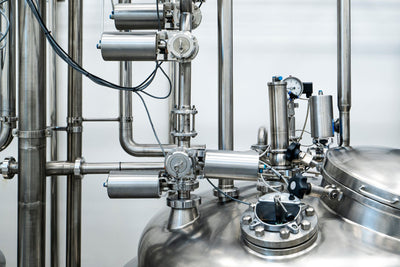
The physical security requirements tell the same story. Licensed sites must run to five hectares, sit behind double perimeter fencing, and use biometric access control -- specifications that mirror pharmaceutical manufacturing security rather than typical agricultural land use. That's a deliberate signal: Rwanda isn't positioning this as a loose pilot program to see what happens. It's designing, from the first page of regulation, for GMP pharmaceutical compliance, the same standard that governs insulin or vaccine production lines in Europe.
The Price of Entry: Capital Requirements and Who Actually Qualifies

Photo by RDNE Stock project via Pexels.
The numbers involved in Rwanda's cannabis licenses aren't scaled for local entrepreneurs. Investor briefings tied to the 2021 Order put minimum capital requirements above USD 50 million per license -- a threshold that immediately excludes small and mid-sized growers and leaves the field to well-financed foreign operators, private equity-backed cannabis companies, or state-adjacent investment vehicles. For comparison, that's a capital floor several times higher than what most Canadian licensed producers needed to get their first Health Canada cultivation license in the 2014-2018 boom years.
Beyond the capital floor, applicants must demonstrate a secured foreign offtake agreement before they're licensed at all -- meaning a buyer in Germany, the UK or elsewhere has to commit to purchasing the crop before a single seed goes into Rwandan soil. That sequencing inverts how most agricultural export industries actually develop, where production capacity typically comes first and buyers get courted afterward. Here, Rwanda is asking investors to arrive with the entire commercial relationship pre-built, which raises the bar further but also, in theory, reduces the risk of licensed land sitting idle with no market to sell into.
Additional requirements stack on top: a registered Rwandan legal entity, the biometric-secured five-hectare site described in the previous section, and ongoing compliance costs that come with running to pharmaceutical-grade security and quality standards. None of these are unusual individually for a GMP-oriented cannabis regime, but together they represent a serious ongoing cost structure layered on top of the initial capital outlay.
Licenses run for five years and are renewable -- a structure that gives investors a defined but not indefinite runway, similar to arrangements Lesotho uses for its own cannabis licenses and comparable to fixed-term agricultural concessions some Caribbean nations use for high-value pharma crops. The renewability matters: it gives Rwanda periodic leverage to revisit terms or revoke non-performing licenses, rather than locking in permanent rights regardless of delivery.
Put together, this isn't an attempt to replicate Rwanda's traditional smallholder export model -- the cooperative-based systems that built the country's coffee and tea sectors, involving tens of thousands of small farmers. This is a scarcity strategy: a handful of heavily capitalized licensees producing premium, pharma-grade product for a narrow set of international buyers, with the government betting that concentration and quality beat volume and access.
King Kong Organics: The Flagship License and Its Growing Pains

Photo by Steven Foster via Unsplash.
King Kong Organics Rwanda (often referred to as KKOG), a subsidiary tied to a US-linked parent company, became the first operator licensed to cultivate, process and export medicinal cannabis under the new framework. Its site sits on five hectares in Musanze district, in Rwanda's Northern Province near the Volcanoes region -- chosen presumably for its climate and altitude rather than proximity to Kigali. The company announced a multi-million-dollar infrastructure investment tied to the site when the license was granted, positioning itself as the proof-of-concept for the entire program.
That proof-of-concept has taken far longer than anyone advertised. Construction of the production facility ran into repeated delays connected to gaps in the most basic infrastructure -- unfinished access roads, unreliable water supply, and inconsistent power. These aren't exotic pharmaceutical-manufacturing problems; they're the same rural-infrastructure bottlenecks that have slowed agricultural investment projects across East Africa for decades. The gap became serious enough that the Rwandan state itself had to step in directly, a point worth sitting with: a government that structured its licensing regime to be hands-off and investor-funded ended up having to underwrite the basic utilities its flagship licensee needed to function.
As of May 2026, reporting put the facility at roughly 83% complete -- years behind whatever timeline was implied when the license was first announced. An 83% completion figure sounds close to the finish line, but in industrial construction the final stretch -- commissioning equipment, passing inspections, validating processes for GMP compliance -- often takes disproportionately long relative to the raw construction work.
Rwanda's own state media outlet, The New Times, reported that the slowdown wasn't purely an infrastructure story. It also pointed to funding difficulties on KKOG's side and friction between the company and RDB, the agency responsible for the investment relationship. That detail matters: it suggests the delays aren't solely a case of the state failing to deliver roads and power on time, but also a case of the licensee itself struggling to fully capitalize a USD 50 million-plus venture on the promised schedule.
Taken together, KKOG's experience is the single clearest real-world stress test available for Rwanda's cannabis framework. It shows what happens when an attractive, well-designed regulatory structure meets the ordinary friction of building industrial infrastructure in a landlocked, still-developing economy -- and the answer, so far, is years of delay even with a genuinely motivated government on the other side of the table.
Rwanda Doubles Down: Infrastructure Spending and the 134-Hectare Bet

Rwanda's state investment in cannabis-sector infrastructure is projected to nearly triple, jumping from about 3.0 billion RWF in FY2024/25 to a planned 8.2 billion RWF in FY2025/26, signaling a major scale-up of the country's medical cannabis ambitions.
Rather than let KKOG's stall sit as a cautionary tale, Rwanda has responded by spending more. State infrastructure investment tied to the cannabis licensing zones is set to nearly triple in the FY2025/2026 budget cycle, rising to roughly 8.2 billion Rwandan francs -- around five million euros. The money is earmarked specifically for access roads, water supply, electricity connections and irrigation infrastructure aimed at de-risking licensed producers like KKOG, rather than general rural development spending.
Nationally, about 134 hectares have been identified for licensed cannabis cultivation. That's a strikingly modest footprint -- for comparison, a single large-scale Canadian outdoor cannabis operation can run several hundred hectares on its own. The small total acreage confirms that Rwanda isn't chasing volume; it's betting on a small number of very high-value, very high-compliance sites producing premium GMP product per hectare, consistent with the scarcity strategy built into the licensing terms from the start.
What's notable, and worth being direct about, is the reversal this represents. The original framework was designed around private capital bearing essentially all the risk: investors had to show USD 50 million-plus in capital and a secured offtake agreement before they got a license, with the state's role limited to issuing permits and providing oversight. The 8.2 billion franc infrastructure commitment changes that calculus. The government is now effectively underwriting part of the risk it originally demanded private investors absorb entirely -- building the roads and utilities that licensees were presumably expected to either build themselves or access through existing infrastructure.
This isn't without precedent, and the precedent isn't entirely reassuring. Lesotho ran a comparable state-led infrastructure push in its own cannabis-licensing zones, aiming to solve similar power and water gaps for its licensed cultivators. The record there is mixed: public investment did unlock additional private cultivation capacity in some cases, but it didn't guarantee that offtake demand from European and North American buyers materialized on the schedule investors and officials had projected. Infrastructure is a necessary condition for a functioning export hub; it isn't a sufficient one. Rwanda can pour concrete for roads and power lines, but it can't legislate a German pharmaceutical importer into signing a contract on a particular timeline.
The Mystery Concession: Inipasvalley and 'Therapeutic Crops'
On 24 July 2026, Rwanda's Cabinet, chaired by President Paul Kagame, approved a concession agreement with a company called InipasvalleyRw Ltd for something officially termed the High-Value Therapeutic Crops Project. The name is vague by design. When The New Times directly asked RDB's CEO whether therapeutic crops meant cannabis, the answer was left unresolved -- not denied, not confirmed, just unanswered.
That ambiguity fits a broader pattern in how Rwanda has handled this entire sector. The government has generally avoided loudly branding itself internationally as a cannabis exporter, even while building out one of the more rigorous licensing frameworks on the continent. The most plausible explanation is domestic political sensitivity: Law 68/2018 still treats cannabis as a serious criminal matter carrying multi-year prison sentences, and a government that publicly celebrates cannabis export earnings risks awkward questions at home about why the same plant is a lucrative export commodity abroad and a felony offense in Kigali or Musanze. Keeping the branding vague lets Rwanda pursue the revenue without inviting that domestic conversation.
There's also a harder credential question sitting underneath all of this. The Rwanda FDA holds the legal authority to issue GMP certification to licensed producers -- the certification that actually makes Rwandan cannabis sellable into regulated European and North American medical markets. As of this writing, no licensee, including KKOG, has publicly confirmed receiving that certification. Everything about the framework -- the biometric security, the capital floors, the dual-agency oversight -- is built toward that endpoint, but the endpoint itself remains unproven in practice. A GMP-designed system that has not yet produced a GMP-certified shipment is still, functionally, a system in waiting.
Whether or not Inipasvalley turns out to involve cannabis specifically, the pattern is instructive on its own terms. Rwanda appears to be structuring its new high-value agricultural concessions -- whatever the crop -- using the same playbook it built for cannabis: large capital requirements, opaque or minimal public branding, concession agreements approved at the highest levels of government, and a preference for a small number of major licensees over broad smallholder participation. That consistency suggests this isn't an improvised, one-off experiment; it's becoming Rwanda's standard template for capturing high-value niche agricultural exports.
Rwanda vs. Lesotho: Learning From the Region's First Mover
Rwanda isn't improvising this model from scratch -- it's following a template Lesotho built first. Lesotho became Africa's cannabis-licensing pioneer starting around 2017, issuing cultivation licenses aimed at exactly the same US, Canadian and European medical cannabis markets Rwanda is now targeting nearly a decade later. Lesotho had a head start, mountainous terrain well-suited to cannabis cultivation, and early mover attention from international cannabis investors.
What Lesotho's experience actually shows, several years in, is a persistent and substantial gap between licenses issued and product reaching GMP-certified shelves abroad. That gap has run years in some cases, driven by high compliance costs relative to the size of Lesotho's economy, currency volatility, unreliable power supply, and offtake negotiations with European pharmaceutical distributors that moved far slower than initial projections suggested. Several licensed Lesotho operators that made confident announcements in 2017 and 2018 were still working toward full GMP export status years later, and some licenses lapsed or changed hands before ever shipping a commercial export batch.
Rwanda is explicitly following that same low-cost, export-only, high-value-per-hectare model rather than attempting to build any kind of domestic consumer cannabis market -- there's no ambiguity about that strategic choice, given Law 68/2018 remains fully intact. The 134-hectare national footprint and the USD 50 million-plus capital floor both mirror the logic Lesotho applied: concentrate risk and reward in a small number of serious operators rather than spreading licenses widely.
Rwanda does carry real advantages Lesotho lacked at its own starting point. Kigali has built a genuinely strong regional reputation for investment ease and logistics reliability -- it consistently ranks among Africa's more favorable environments for doing business, and Rwanda's government has shown, through the KKOG infrastructure intervention, a willingness to directly backstop stalled projects rather than let them collapse quietly. That's a meaningfully more hands-on posture than Lesotho generally took with its own struggling licensees.
The disadvantage is timing. Rwanda is entering a global medical cannabis export market that's more crowded than it was in 2017. Lesotho is still competing for the same buyers, Latin American producers in Colombia and Uruguay have scaled up meaningfully, and other African states are now exploring similar licensing frameworks. Rwanda isn't just racing against its own infrastructure timeline -- it's racing against every other jurisdiction chasing the same limited pool of GMP offtake contracts.
What Would Have to Be True for the Hub Bet to Pay Off

Photo by Terrance Barksdale via Pexels.
The bull case for Rwanda isn't hard to construct, and it's grounded in things actually happening rather than pure hope. The infrastructure spending closes the roads-water-power gap that stalled KKOG. The Musanze facility, already reported at 83% completion in May 2026, finishes construction, passes Rwanda FDA inspection, and receives GMP certification. That first successful certification becomes the proof point the entire framework has been missing -- and given that the licensing terms already screen for USD 50 million-plus capital and secured offtake agreements, a confirmed success could plausibly draw additional serious licensees within the current five-year license window, filling out more of the 134 identified hectares.
The bear case is just as grounded, because it's already partly happened once. Further delays repeat the KKOG pattern -- funding gaps, friction between operators and RDB, infrastructure that takes longer than budgeted to finish. Offtake buyers who signed agreements years earlier, expecting product on a certain timeline, walk away or renegotiate on worse terms as delays stack up; foreign pharmaceutical distributors have plenty of other supply options and limited patience for indefinite production slippage. Rwanda ends up with a handful of half-finished, over-leveraged sites and licensees unable to meet their original capital commitments -- essentially the same criticism that's been leveled at several of Lesotho's slower-moving operators over the past several years.
Three swing factors are worth watching closely over the next three to seven years, because they'll tell you which case is winning well before any official announcement does. First: whether any Rwandan-grown cannabis product actually receives, and Rwanda publicizes, an FDA GMP certificate -- the single hardest, most concrete milestone in the entire framework. Second: whether Inipasvalley's therapeutic crops project is ever confirmed, officially or through reporting, to involve cannabis. Third: whether the 134 identified hectares nationally show actual planted, producing crop rather than remaining designated-but-undeveloped land on a map.
One thing is very unlikely to happen alongside any of this: domestic decriminalization. The export-only model depends structurally on keeping cannabis illegal at home -- legalizing domestic use or possession would immediately complicate enforcement, create political friction, and blur the clean export-commodity framing Rwanda has built. Lesotho has kept the same dual-track separation for years, as have several Caribbean nations running comparable export licensing regimes alongside strict domestic bans. Rwanda has every institutional incentive to keep that pattern intact.
Measured against most first-generation African cannabis legislation, Rwanda's framework is genuinely more rigorous. The USD 50 million-plus capital floor, the biometric-secured five-hectare compounds, the dual-agency oversight split between NAEB and RDB, the full value-chain licensing categories -- none of that reads like a speculative pilot program cobbled together to capture headlines. It reads like a government that studied Lesotho's early mistakes and tried to design pharma-grade intent into the regulation from day one.
But intent isn't output, and infrastructure spending isn't a certified export shipment. The honest baseline here is King Kong Organics: a well-capitalized, first-mover licensee that is still, years after its initial announcement, sitting at roughly 83% facility completion and still missing the GMP certification that would actually validate the entire model. If that's how long it takes the flagship project to get close to the finish line even with direct state intervention and nearly tripled infrastructure spending, it's a reasonable assumption that any additional licensees drawn in by a future success story will face a similarly long runway, not a shortcut.
So the marker worth watching isn't the next Cabinet-approved concession agreement or the next ministerial order -- those are cheap to produce and Rwanda has shown it will keep the branding around them deliberately vague. The marker that actually matters is narrower and more concrete: the first confirmed Rwanda FDA GMP certificate attached to an actual, shipped export batch of Rwandan-grown cannabis. Until that specific document exists and gets publicly attached to a real shipment, everything else in this story -- the capital floors, the biometric fencing, the 134 hectares, the Inipasvalley mystery -- remains architecture without a finished building inside it.
Sources
- Rwanda: A New License Revives the Country's Ambitions in Medical Cannabis - Newsweed
- Cannabiz Africa Digs Into Rwanda's Secretive Export Only Cannabis Policy | Cannabis Law Report
- Media Report: Rwanda triples public investment in infrastructure to become African medicinal cannabis powerhouse | Cannabis Law Report
- Rwanda triples public investment in infrastructure to become an African powerhouse in medicinal cannabis – CannaReporter
- Rwandan Cabinet Meeting Approves Guidelines To Allow Growing & Export Of Cannabis In Rwanda, | Cannabis Law Report