Terpene Science: What's Real, What's Marketing
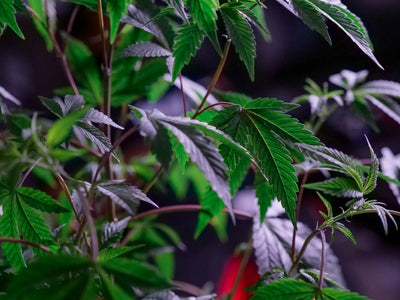
Photo by Diego Barros via Pexels.
Walk into any dispensary in 2026 and you will hear it within the first minute. A budtender explaining that limonene is for anxiety, that myrcene will knock you out, that pinene sharpens focus. They point to terpene percentages on the label with the same authority a sommelier brings to a wine vintage. And honestly, who can blame them? The story is compelling, the language is accessible, and for years, it was the only language anyone had. But here is the uncomfortable truth that most of those product descriptions quietly skip over: until very recently, almost none of those claims had ever been tested in actual human beings. The entourage effect, that beautiful idea that cannabis compounds work better together, has been repeated so often it feels like settled science. It is not. It is a hypothesis, a reasonable one, but a hypothesis nonetheless. What makes this moment in terpene research so interesting is that the data is finally starting to catch up to the marketing. A handful of researchers have actually started running controlled human trials, and the results are both validating and humbling. Limonene really does seem to take the edge off a THC high, at least in one study. But that skunky smell everyone associates with certain strains? Not a terpene at all. It is a sulfur compound that most labs are not even testing for. And those pretty terpene wheels on every certificate of analysis? They are based on testing methods that vary wildly from lab to lab, producing numbers that are more marketing than measurement. This is the story of terpenes in 2026, a field where genuine pharmacological promise exists side by side with decades of accumulated folklore, and where the gap between what people believe and what science has actually proven is still wide enough to drive a harvest through.
The One Human Trial That Actually Backs Up a Terpene Claim

Photo by Louis Hansel via Unsplash.
Most of what gets repeated about terpenes traces back to rodent studies, petri-dish receptor assays, or the kind of anecdotal chemovar comparisons that read more like tasting notes than data. That changed with a 2024 study out of Johns Hopkins that did something almost nobody else in this field has bothered to do: it tested a specific terpene claim in actual humans, using a design rigorous enough to rule out wishful thinking. Researchers had participants inhale vaporized THC alone, THC combined with d-limonene, limonene alone, or placebo, on separate sessions, with neither the subjects nor the raters knowing which was which on a given day. Every person cycled through every condition. That crossover structure means each participant serves as their own control, which matters enormously in cannabis research because people vary wildly in how they metabolize THC and how anxious they get on it to begin with.
The result: THC plus inhaled d-limonene produced significantly lower self-reported anxiety and paranoia than THC by itself. Limonene alone, without THC, did essentially nothing on those measures, which is an important control condition in its own right, since it rules out the possibility that people just felt calmer because they inhaled something citrusy and pleasant. The effect showed up specifically in the anxiety and paranoia ratings tied to THC intoxication, not as a general mood lift unrelated to the drug experience.
What makes this study more interesting than a simple this terpene reduces anxiety headline is what it did not find. Limonene did not blunt the high itself. Participants' ratings of feeling drug effect, elation, and the standard subjective intoxication measures stayed essentially the same across the THC-alone and THC-plus-limonene conditions, and cognitive performance measures were not meaningfully different either. If limonene were just a general sedative or a nonspecific dampener working through, say, slowing absorption or diluting the THC dose's perceived potency, you'd expect the whole subjective package to shrink, including the parts people actually want. Instead the anxiety and paranoia scores dropped while everything else held steady, which is the signature of a targeted pharmacological interaction rather than a blunt one.
That specificity is exactly why cannabis researchers have wanted a study like this for over a decade. The entourage effect, the idea that terpenes and cannabinoids interact to shape the overall experience, has been repeated in industry marketing since at least the mid-2010s, almost always citing Ethan Russo's 2011 review paper, which itself was a synthesis of preclinical pharmacology, not a human trial. Animal studies and in vitro receptor-binding work suggested limonene might interact with anxiety-related pathways, but preclinical plausibility and human proof are different tiers of evidence, and the industry has a long history of treating the former as though it were the latter.
The caveat matters as much as the finding. This is one study, with a specific terpene, a specific cannabinoid, and a specific outcome: acute anxiety and paranoia during THC intoxication. It says nothing about whether limonene helps with anxiety absent THC, whether it does anything for sleep, mood, or chronic anxiety disorders, and it says nothing at all about linalool's claimed sedative effects, myrcene's claimed relaxation properties, or pinene's claimed focus benefits. Those all still rest on the same thin preclinical foundation limonene did until this year. One well-designed trial is a template, not a verdict on the whole terpene category.
The Preclinical Case for an Entourage Effect -- and Its Limits

Photo by Mikhail Nilov via Pexels.
Start with what actually happened in the lab, because the terpene-and-cannabinoid story gets flattened into marketing copy so fast that the underlying data deserves a second look. In 2021, University of Arizona pharmacologist John Streicher, working out of the school's Comprehensive Pain and Addiction Center, published research showing that cannabis terpenes -- on their own, with no THC or CBD in the mix -- could activate cannabinoid receptor pathways and produce measurable pain reduction in animal models. That's a real, specific, testable claim: terpenes like linalool, beta-caryophyllene, and pinene weren't just adding scent or flavor to the experience, they were doing pharmacological work of their own, engaging some of the same signaling machinery THC uses.
The more interesting result came when Streicher's team combined terpenes with cannabinoids rather than testing either alone. Pain relief in the animal models got stronger -- an amplification effect -- but the side-effect profile didn't scale up to match. That asymmetry is the whole ballgame for anyone hoping the entourage effect is more than a branding exercise. If a terpene-cannabinoid combination could hypothetically let formulators dial down THC dose while keeping analgesic punch, and do it without a proportional rise in sedation, tolerance, or other unwanted effects, that has real implications for how pain-focused cannabis products get designed. It's the mechanistic seed of an idea that's been circulating informally in dispensary marketing for a decade, finally showing up as a controlled, quantifiable finding rather than an anecdote.
This wasn't a one-off paper. University of Arizona program listings show Streicher's lab has continued this line of work past 2021, continuing to screen both cannabinoid and non-cannabinoid constituents of Cannabis sativa for pain-relevant activity. That persistence matters -- it suggests a research program building a mechanistic map rather than chasing a single headline result, and it's the kind of steady, incremental work that eventually either holds up under replication or doesn't.
Here's the necessary caveat, and it's a big one: this is preclinical work. Animal models and cell assays tell you a mechanism is plausible and worth pursuing, not that it holds in humans at consumer-relevant doses. It has not yet gone through anything resembling the human trial that backed the limonene-anxiety finding elsewhere in the terpene literature. The gap between an activation curve in a mouse and a repeatable, dose-controlled effect in a person is exactly where cannabis science keeps stalling out.
And it stalls for a documentable reason. Schedule I status means human researchers need DEA-registered cannabis sources, layered institutional approvals, and funding streams that federal agencies have historically been reluctant to open for a Schedule I substance -- friction that has slowed exactly this kind of human follow-up for fifty years running.
The Skunk Myth: How a Peer-Reviewed Study Debunked Industry's Favorite Terpene Claim

Photo by Jeff W via Unsplash.
Walk into any dispensary and ask a budtender why a jar smells like a skunk sprayed it, and there's a decent chance you'll hear something about myrcene content, or maybe caryophyllene, delivered with the confidence of settled fact. That explanation has been repeated in strain guides, seed-bank catalogs, and grower forums for the better part of two decades. It's also wrong, and there's now a peer-reviewed paper proving it.
The terpene-as-skunk story made a certain intuitive sense, which is probably why it spread so easily. Myrcene shows up in huge concentrations in a lot of pungent cultivars, it's earthy and herbal, and caryophyllene brings a peppery, woody note that people associate with heavier, dank-smelling flower. Cultivators built entire marketing narratives around terpene percentages as a proxy for how loud a strain would smell in a bag. Breeders bred toward it. Testing labs started printing terpene wheels on certificates of analysis as if they were decoding the whole aromatic signature of the plant.
Then in 2021, researchers at Abstrax Tech published a study in ACS Omega, a peer-reviewed journal from the American Chemical Society, that identified the actual chemical source of that classic skunk smell: a previously undescribed family of volatile sulfur compounds carrying a prenyl functional group. These are not terpenes at all -- they're sulfur-based molecules, chemically distinct from the terpenoid class entirely, and they turned up in cannabis at concentrations low enough that older analytical methods had essentially missed them. The paper's authors developed detection methods sensitive enough to catch these compounds at parts-per-trillion levels, which tells you something about how easy it would have been for the earlier generation of terpene-focused research to walk right past the real culprit.
The same study made a second point that got less attention but matters just as much: when the researchers looked at terpenoids alone, they found little to no evidence that terpenes account for that skunky, sulfurous character people associate with strong cannabis. Terpenes are doing real aromatic work -- they're responsible for the citrus brightness in a Tangie, the pine in an OG-leaning cultivar, the fruit-forward top notes in things like Gelato phenotypes. What they are not doing is producing the skunk. That's a separate chemical system layered on top.
The finding has held up. It's still getting cited in scientific and industry circles years later -- CannMed 2026 presentations have referenced the Abstrax sulfur-compound work as foundational, which for a single 2021 paper is a reasonably long shelf life in a field that moves as fast as cannabis chemistry currently does. What's notable is that Abstrax itself, a company that manufactures and sells terpene products for the industry, now states plainly in its own materials that terpenes' importance to Cannabis sativa aroma has been overemphasized. That's not a competitor or a skeptic saying it -- it's the company with the most to gain from terpene hype, walking part of it back because their own data forced the issue.
The practical upshot: a terpene percentage on a certificate of analysis tells you almost nothing about whether a product will smell skunky. If you want to know that, you'd need testing for sulfur compounds most labs still aren't running.
Why Terpene Testing on Labels Still Can't Be Fully Trusted

Photo by Trnava University via Unsplash.
The terpene percentage on a jar comes from the same testing pipeline that's been catching cannabis products contaminated with banned pesticides, mold, and heavy metals for the better part of a decade. That's worth sitting with before you trust a number printed next to a strain name. Terpene assays aren't run in some separate, more rigorous lab track built specifically for aroma chemistry -- they're run by the same facilities, often the same technicians, using the same chromatography equipment that's already been shown, repeatedly and in multiple states, to produce results that don't hold up under scrutiny.
Colorado's regulatory apparatus is generally considered one of the more mature systems in the country, having had over a decade to iron out testing protocols since adult-use sales began in 2014. Even so, on January 8, 2026, the state issued its first cannabis recall of the year after products that had initially cleared testing failed a subsequent retest for chlorfenapyr, a pesticide not approved for use on cannabis. That sequence -- pass, then fail, on the same product -- is the part that matters. It means the first test wasn't wrong because someone skipped a step; it means variability in sampling, instrument calibration, or lab methodology can produce a false clean result even inside a system with mandatory testing, licensing, and audit trails. If that's happening with pesticide screening, which has clearer regulatory thresholds and more standardized methods than terpene analysis does, there's no reason to assume terpene numbers are somehow more reliable. If anything, they're less constrained, since most states don't require terpene testing at all -- it's typically voluntary, marketing-driven data.
Some industry blog roundups have circulated claims about a $1.2 million UCLA terpene validation study and new 2026 California grant funding aimed at standardizing lab-testing templates and terpene reference standards. Those specifics haven't turned up in any primary source -- no press release from UCLA, no line item in California Department of Cannabis Control grant records that I could independently confirm. That doesn't mean the underlying need isn't real; standardization efforts are exactly what this space is missing. But until there's a citable study, a named principal investigator, or an actual grant number, treat it as a signal to watch rather than evidence that the problem is being solved.
The deeper issue is that there's no universally agreed reference standard for terpene measurement the way there is for, say, THC potency testing under most state frameworks. Two accredited labs can run the same flower sample and report meaningfully different terpene profiles depending on extraction solvent, GC-MS calibration curves, and how they handle degradation during storage and transport. That gap between what's printed on the label and what's been independently, consistently verified is exactly the space marketing language moves into -- filling uncertainty with confident-sounding percentages that few consumers, or regulators, are positioned to challenge.
What Rescheduling Could -- and Couldn't -- Fix

Photo by Phil Hearing via Unsplash.
The DEA proposal to move cannabis from Schedule I to Schedule III has been sitting in administrative limbo since the process kicked off in 2024, and as of late 2025 there's no final rule. The public comment period drew tens of thousands of submissions, an administrative law judge process got invoked, and hearings have been delayed repeatedly. Anyone writing about terpene research or cannabinoid pharmacology needs to check DEA.gov directly before asserting anything about rescheduling as settled fact — it isn't, and treating it as a done deal is the kind of error that undermines otherwise careful science writing.
It's worth being precise about what rescheduling would actually change, because the popular framing — that Schedule III would suddenly unlock cannabis research the way a light switch unlocks a room — doesn't match how this has played out with other controlled substances. Look at ketamine, moved to Schedule III in 1999, or more recently the DEA's 2020 rule easing some restrictions on cannabidiol research. In both cases, the expansion of DEA-registered study protocols and NIH funding lines didn't happen in the following quarter. It took two to four years for institutions to update their own compliance infrastructure, for DEA registration backlogs to clear, and for grant review panels to start treating the substance as routine rather than exceptional. The FDA's 2018 approval of Epidiolex, a purified CBD drug, is instructive here too — it took years of Schedule I-era trial data collection under special exemptions before that approval, and the regulatory apparatus around it remained unusually cautious even after approval.
If rescheduling does go through, the realistic expectation is a similar slow build rather than an overnight surge. Researchers should see fewer bureaucratic obstacles to importing standardized terpene compounds, easier IRB approvals for human trials, and probably more studies resembling the small limonene inhalation trials that have started trickling out of a few university labs — assuming, again following the ketamine and CBD precedent, that this materializes over a three-to-five-year horizon rather than immediately upon a rule taking effect.
The counter-case matters just as much. Schedule III drugs still require DEA registration to handle, manufacture, or distribute, and interstate commerce restrictions on cannabis products remain largely intact regardless of federal scheduling — that's a function of the Controlled Substances Act's distribution provisions, not something rescheduling alone resolves. A terpene researcher in Colorado still can't simply ship extracted limonene across state lines to a collaborator in Massachusetts the way a pharmaceutical company ships an approved compound. That gap is exactly why Schedule III cannabis research won't instantly resemble a normal pharma pipeline — the infrastructure for interstate, federally sanctioned trafficking of the raw material isn't part of the rescheduling conversation at all.
And even in a best-case regulatory environment, rescheduling does nothing to fix the absence of standardized terpene reference materials or uniform testing protocols across state-legal markets — that's a separate, state-by-state regulatory patchwork problem that federal scheduling changes simply don't touch.
Conclusion
So where does that leave the consumer standing in a dispensary, squinting at a terpene profile and trying to decide which cartridge to buy? In a better position than they were five years ago, but also in a more complicated one. The research is finally moving forward. The Johns Hopkins limonene study is exactly the kind of rigorous human trial the field has been desperate for, not because it proves everything, but because it proves something that can be replicated and tested further. It gives researchers a template, a design they can adapt for linalool, for myrcene, for all the other terpenes sitting on shelves right now with no human data behind them. And the preclinical work on terpene-cannabinoid interactions for pain is genuinely interesting, a plausible mechanism that deserves the kind of follow up it has not yet received.
But the debunking matters just as much as the confirming. The skunk myth took years to unravel, and it only got corrected because someone finally asked the right question with the right equipment. That kind of correction is going to keep happening as analytical methods get more sensitive and as researchers start asking questions that the marketing departments never bothered to ask. Terpenes do real aromatic work, they shape the sensory experience of cannabis in ways that matter to consumers, and some of them almost certainly have pharmacological effects that are worth understanding. But that does not mean every claim on every package is true. It does not mean the numbers printed on every label are reliable. And it definitely does not mean the entourage effect is a settled fact just because it sounds good in a sales pitch.
The rescheduling conversation adds another layer of uncertainty and opportunity. If the DEA eventually moves cannabis to Schedule III, the bureaucratic friction on human research will ease, but not overnight. It will take years for the infrastructure to catch up, for grant panels to shift their priorities, and for university compliance offices to update their protocols. That timeline matters because terpene research is still at the very beginning of its human-testing phase. The preclinical work is solid, the mechanistic hypotheses are plausible, and the first human trial is encouraging. But that is early stage science by any reasonable standard.
The realistic takeaway is this: terpenes are not bunk. They are real compounds doing real things in real plants, and some of them are almost certainly doing real things in human bodies too. But they are not magic, and they are not all equally studied. The responsible posture is curiosity paired with skepticism, excitement about what the next few years of research will bring, but also a clear eyed recognition that most of what is being sold today is based on hope and inference rather than evidence. The studies are coming. The data is accumulating. And one day, probably sooner than people expect, we will actually know which terpenes do which things and at which doses. Until then, enjoy the aromas, appreciate the complexity, but take the label claims with a grain of salt and a healthy awareness that science is still catching up to the shelf. The conversation about terpenes is not finished. In many ways, it is just beginning.
Sources