The Next Cannabis Service Economy: Where the Real Opportunity Is
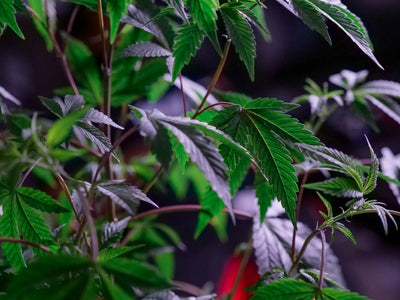
Photo by Trista Le via Unsplash.
Three regulatory threads are unspooling at once right now, and none of them have finished. The Justice Department is mid-process on moving marijuana from Schedule I to Schedule III, a move ordered by the White House on December 18, 2025 but nowhere near settled in practice. Congress redefined hemp in November 2025 based on total THC rather than the old delta-9-only line, which means the beverage and edibles business built on that old loophole now has a countdown clock. And 24 states now run adult-use markets that look nothing alike -- different lounge rules, different tax structures, different build-out speeds -- which is a very different industry than the tidy, federally-settled version people keep predicting.
None of that mess is bad news if you're building a business. It's the opposite. Messy, unresolved regulatory environments are exactly where service industries get born, because someone has to interpret the rules while the rules are still being written. The plant-touching gold rush of the 2010s -- growers, dispensary brands, extraction startups -- was never where the durable money ended up. The durable money went to the businesses that never touched a leaf: the compliance consultants, the inspectors, the software integrators, the armored car companies. That pattern is repeating now, louder, because the regulatory surface area is bigger than it's ever been.
This piece walks through four specific places that pattern is showing up today: the consulting vacuum created by a two-step, unfinished rescheduling process; the hospitality and inspection bottleneck forming around consumption lounges; the logistics strain hitting states whose markets are growing faster than their operators can staff; and the reformulation scramble the hemp-THC redefinition is about to force on an entire beverage category. Then we'll look at who's actually equipped to build in these lanes, and why the answer often isn't who you'd expect.
The Rescheduling Gray Zone Is a Consulting Goldmine

Photo by Pavel Danilyuk via Pexels.
Start with what actually happened, because the sequence matters more than the headline. On December 18, 2025, the White House issued an executive order directing the Attorney General to reschedule marijuana from Schedule I to Schedule III under the Controlled Substances Act. That sounds like a single clean action. It wasn't. Acting Attorney General Todd Blanche split it into two steps. The first, an order issued April 23-24, 2026, downscheduled only two narrow categories: FDA-approved marijuana drug products and state-licensed medical marijuana. Everything else -- meaning the recreational marijuana sold in dispensaries across 24 adult-use states -- got kicked to a separate rulemaking process.
That process is still running. The DEA issued a notice of proposed rulemaking on April 28, 2026, and held a hearing that ran from June 29 through no later than July 15, 2026. As of this writing, the federal legal status of recreational marijuana is genuinely undecided. Not undecided in a rhetorical sense -- undecided as in there is no final rule. The order itself goes further, explicitly declining to resolve how the law should treat marijuana sold as a food, a dietary supplement, or an unapproved drug. That's three separate regulatory categories with no assigned home.
This is precisely the condition that historically manufactures a consulting industry almost overnight. When Colorado and Washington legalized recreational sales in 2012-2014, nobody in state government had settled how federal 280E tax rules would apply to plant-touching businesses, so a wave of cannabis-specific tax consultants filled that gap before the IRS ever issued clean guidance. Seed-to-sale tracking software companies emerged the same way -- states mandated traceability before anyone had built compliant systems, so companies like Metrc filled the interpretive space between the law's intent and its mechanics. The current gray zone is the same shape: businesses operating recreational marijuana products today need someone to tell them how to behave under a federal classification that hasn't landed yet, because waiting for certainty isn't a business strategy.
The honest counter-case is that this window might be short. If the DEA rulemaking resolves cleanly and the recreational category gets folded into Schedule III without drawn-out litigation, a lot of this ambiguity-driven demand could evaporate within a single rulemaking cycle -- realistically months, not years. Consultants who build a practice purely around interpreting unsettled federal status should assume their runway is finite and plan the next act accordingly.
Consumption Lounges: Hospitality Nobody's Built Yet

Photo by Yunus Tuğ via Pexels.
Fifteen states now authorize some form of commercial or regulated on-site cannabis consumption. That number sounds like a market. It mostly isn't one yet, because permission to open a venue and an actual open venue are two very different milestones, and a lot of those fifteen states are stuck on the first one. Right now the states with real, walk-in consumption lounges are California, Colorado, Illinois, Michigan, Nevada, New Jersey, and New Mexico -- seven states turning fifteen states' worth of legal permission into physical, staffed, operating rooms.
Massachusetts just became the eighth, and it's worth pausing on. The state approved consumption lounge rules in December 2025, with regulations taking effect January 2, 2026, making it the first New England state to have a regulated on-site consumption framework. Other Northeast states with mature adult-use markets but no lounge infrastructure -- think Connecticut, Rhode Island, Maine -- now have a working template sitting next door. Whether they copy it quickly or slowly is an open question, but the regulatory blueprint no longer has to be invented from scratch.
Nevada is the sharpest example of the gap between permission and reality. The state has 23 conditional lounge approvals sitting unopened, stalled specifically on inspections. That's not a hypothetical opportunity -- it's a defined backlog with a knowable number attached to it. A consulting or inspection-readiness service that specializes in getting a conditionally-approved lounge through Nevada's specific inspection requirements has a target list of exactly 23 named prospects today, which is about as concrete as a business opportunity gets in this industry.
New Jersey shows a related pattern at the municipal level. Its early lounges have clustered in a handful of towns -- Atlantic City, Merchantville, and an approved site in Newark -- because local zoning and municipal approval, not just state licensing, determines whether a lounge actually opens. Operators who understand a specific town's zoning board better than a generic cannabis retailer trying to pivot into hospitality have a real structural edge, not just a marketing one.
There's a useful precedent here from a completely different industry. When states began legalizing on-premise beer sales at breweries in the early-to-mid 2010s, a first wave of taproom-licensing consultants and hospitality-space designers emerged specifically because brewers knew how to make beer, not how to run a public venue or navigate a liquor-license hearing. Cannabis lounges are hitting the identical seam: growing and retailing cannabis is a different skill set than running hospitality, and that gap is where the service money sits.
Build-Out States Need Logistics, Not Just Licenses

In their early legal adult-use markets, New York generated nearly double Ohio's sales—$1.6 billion in its second year compared to Ohio's $836 million in its first year—highlighting New York's stronger initial market performance.
New York's adult-use market nearly doubled in its second full year of operation, reaching roughly $1.6 billion in sales. That's not steady growth -- that's the kind of expansion that outruns whatever supply chain, security staffing, and inventory systems an operator built for year one. Ohio, coming from a standing start, did $836 million in adult-use sales in its first year alone. When a market goes from zero to hundreds of millions in twelve months, the operators inside it are, almost by definition, understaffed and under-systemized relative to demand, because nobody builds infrastructure for a market that doesn't exist yet.
New York, Ohio, and Minnesota are the three states expected to add the most licensed operators, retail locations, and general operational complexity over the next 12 to 24 months -- more than any other segment of the industry right now. That's a specific, near-term window for logistics-focused businesses, not a vague long-term trend.
This is close to a rerun of what happened in Colorado and Washington between 2014 and 2016. The first wave of consistently profitable non-plant-touching businesses in those states wasn't growers or brands -- it was security firms, point-of-sale and inventory software providers, and third-party delivery and logistics operators. Plant-touching margins got squeezed by price compression almost immediately as more licenses came online; the service layer around them didn't face that same commodity pressure, because good compliance software or reliable security doesn't get undercut the way a pound of flower does.
The specific niches worth naming in today's build-out states: compliance-focused staffing agencies that can supply workers who already understand track-and-trace obligations rather than training them from zero; track-and-trace software integrators who connect a retailer's point-of-sale system to state-mandated seed-to-sale platforms; retail buildout and construction specialists who know a given state's zoning quirks well enough to avoid the permitting delays that kill smaller operators; and armored cash-transport services, which remain necessary because federal banking access is still constrained under the current Schedule I/III ambiguity, leaving much of the industry cash-heavy in a way most retail sectors haven't been in decades.
Florida is worth flagging as a market to watch, not one to build for yet. Adult-use is back on the November 2026 ballot after falling just short in 2024, pulling 55.9% against the state's 60% supermajority requirement. A win would instantly activate sales at hundreds of already-licensed medical locations, which would be a genuinely fast on-ramp for logistics providers. But that 60% bar has already stopped one well-funded campaign, and betting operational resources on a ballot measure clearing a threshold it just missed is a different risk profile than serving states where the market already exists.
The Hemp-THC Redefinition Is Rewriting the Beverage Business

Photo by Keegan Checks via Pexels.
Congress passed legislation in November 2025 that redefines hemp based on total THC content instead of the delta-9-only threshold the 2018 Farm Bill established. That single definitional change reaches directly into the hemp-derived THC beverage and edibles market, an entire product category that has operated inside the gap the 2018 bill left open -- selling drinks and gummies with intoxicating levels of hemp-derived THC that were technically legal because delta-9 alone stayed under 0.3% by dry weight, even when total THC content told a very different story.
One detail in the redefinition matters more than the rest: a key legal cutoff tied to the new total-THC standard disappears in November 2026. Products and business models built around the old loophole now have a defined expiration date attached to them, not an indefinite one. That's a fundamentally different planning problem than the open-ended uncertainty around federal rescheduling -- there's an actual calendar date to work backward from.
That deadline is what creates the service opportunity. Beverage makers and edibles brands built on the old total-THC math now need lab testing to know exactly where their existing formulations land under the new rule, recipe reformulation to bring products back under whatever line survives, and legal review to make sure the reformulated product doesn't just trade one compliance problem for another. That's a genuinely specific, billable service line -- reformulation consulting -- and it has a hard deadline attached, which tends to concentrate demand rather than spread it out.
There's a clean precedent for how this plays out. After the FDA started clarifying its stance on CBD in the years following the 2018 Farm Bill, a wave of hemp companies had to hire regulatory-affairs specialists just to figure out what they were legally allowed to claim on a label, let alone sell. Companies that didn't adapt lost shelf space at retailers unwilling to carry legally ambiguous products. The hemp-THC redefinition looks like the same forced-adaptation cycle, compressed into a shorter window because there's a specific November 2026 date driving it rather than a slow drift of agency guidance.
What's genuinely unresolved, and worth saying plainly: nobody yet knows how enforcement will treat existing inventory once the cutoff hits, or whether any grandfathering provision will apply to products already on shelves. Businesses in this space are making reformulation decisions on incomplete information, which is itself part of why the consulting demand exists -- someone has to help make a judgment call in the absence of a clear enforcement signal.
Who's Actually Positioned to Build These Businesses

Photo by Kampus Production via Pexels.
Look across all four niches -- rescheduling-gap consulting, lounge hospitality and inspection readiness, build-out logistics, and hemp-beverage reformulation -- and one thing is consistent: none of them require touching the plant. That's not incidental. Non-plant-touching businesses can generally access normal commercial banking and SBA-adjacent financing in ways plant-touching operators still can't, because federal banks remain cautious as long as marijuana's Schedule I/III status is genuinely unresolved. A service business built around compliance, inspection, or logistics can open a checking account and get a line of credit without needing the DEA to finish its rulemaking first. That's a structural financing advantage, not just a regulatory footnote.
The people best positioned to build these businesses often aren't cannabis industry veterans at all. Alcohol hospitality licensing specialists already know how to navigate a municipal zoning board and a liquor-style consumption permit, which ports directly into cannabis lounge development. Food-and-beverage compliance experts already know how to manage a reformulation deadline and a lab-testing protocol, which ports directly into the hemp-THC beverage problem. Pharmaceutical regulatory-affairs professionals already know how to read an unfinished federal rule and build a compliance posture around it before the rule is final. General contractors with multi-state licensing experience already know how to get a retail buildout through varied local permitting processes. Cannabis experience helps, but the underlying skill set is regulatory fluency in an adjacent industry, and that transfers.
The clearest risk sits with the consulting niche specifically. If the DEA rulemaking resolves faster and cleaner than the current pace suggests -- a single final rule that folds recreational marijuana into Schedule III without extended litigation -- a meaningful share of ambiguity-driven consulting demand could shrink quickly, because that demand exists to interpret uncertainty that would then be gone.
The logistics and hospitality niches look more durable, and here's the reasoning: even after federal rescheduling is fully resolved, states will still set their own build-out pace, their own lounge inspection standards, their own zoning rules. New York, Ohio, and Minnesota's operational growth over the next two years isn't waiting on the DEA -- it's a function of state licensing decisions that are already in motion. Federal clarity would remove one layer of uncertainty, but it wouldn't touch the fact that every state runs its own version of this industry at its own speed. That's a business built on structure, not on a temporary gap, and structure tends to outlast arbitrage.
What's forming around cannabis right now looks less like the plant-touching gold rush that defined the 2010s and more like the compliance-and-logistics economy that grew up around alcohol after Prohibition ended state by state rather than all at once. That earlier process took decades to fully shake out, produced wildly inconsistent state-by-state rules, and rewarded the people who understood licensing paperwork and distribution logistics far more reliably than it rewarded the people who just made a good product. Cannabis is tracking that same uneven, technical path, just compressed into years instead of decades because information and capital move faster now.
If there's one practical takeaway here, it's that the smartest opportunities aren't found by guessing which state legalizes next or which ballot measure clears its threshold. They're found by looking at where rules and demand already exist but haven't been connected yet. Nevada's 23 stalled lounge approvals, sitting there today waiting on inspections, are a more concrete business opportunity right now than Florida's ballot measure, which needs 60% of voters to agree on something that fell just short at 55.9% two years ago. One of those is a known backlog with a phone number attached to each entry. The other is a bet on an electorate.
Every timeline mentioned in this piece deserves to be treated as provisional, and that's worth saying outright rather than implying. The DEA's rulemaking on recreational marijuana could land faster than expected, slower than expected, or get tied up in litigation that resets the clock entirely. The November 2026 hemp-THC cutoff could come with grandfathering provisions nobody has drafted yet, or none at all. Florida's ballot measure could clear 60% this time, or fall short again the way similar supermajority-threshold measures have in other states. None of that uncertainty is a reason to wait on the sidelines -- it's the reason the service layer exists in the first place. Somebody has to make sense of it while it's still moving, and that's a paid job right now, not a hypothetical one.
Sources
- 2026 Outlook: Cannabis Industry Matures Despite Challenges; Cultivation and Post-Harvest Tech Take Center Stage | Cannabis Business Times
- Best Marketing Agencies for Regulated Industries in 2026
- Cannabis Industry Growth Forecast: Markets Scaling The Fastest in 2026
- Cannabis Industry 2026: The Trends, Forecasts & Market Shifts Shaping the Year
- 2026 Outlook: Cannabis Industry Matures Despite Challenges; Cultivation and Post Harvest Tech Take Center Stage