The Next Decade of Cannabis Retail: Consolidation, Data, and the Amazon Question
Photo by Cova Software via Unsplash.
On July 27, 2026, SNDL closed a deal that would have looked implausible three years earlier: it absorbed Parallel's entire Florida, Texas, and Massachusetts retail footprint in one transaction, adding 249 stores to its network overnight. Not through organic buildout, not through a slow license-by-license grind, but through a single acquisition of a company that had been circling distress for over a year. That's not a footnote in a trade publication. That's the shape of where cannabis retail is headed, compressed into one signing date.
Three forces are converging right now to push a stubbornly fragmented, state-by-state industry toward something that looks more like ordinary consumer retail. First, a partial federal rescheduling action in April 2026 that, while narrower than headlines suggested, opened a real (if limited) federal registration pathway for medical operators. Second, a hemp policy overhaul in November 2025 that is quietly closing off the gray-market intoxicating-hemp channel that's been undercutting licensed dispensaries for years. Third, and least visible to casual observers, is the economics of loyalty data -- the same force that consolidated grocery and pharmacy retail a generation ago, now playing out in cannabis on a compressed timeline.
Put those three together and you get a plausible answer to a question that gets asked at every cannabis industry conference: is there an Amazon of weed coming? The honest answer isn't a clean yes or no -- it's a case built carefully from what's actually happening in distribution contracts and hemp-brand pivots, not from wishful analogy. We'll get there, but only after walking through the evidence.
Why April 2026 Changed the Math for Every Operator

Photo by Remington Wigzell via Unsplash.
The date that actually matters here is April 24, 2026, when Acting Attorney General Todd Blanche signed an order placing FDA-approved marijuana products and state-licensed medical marijuana products into Schedule III. The Federal Register notice followed on April 28 (91 FR 22777), and DEA published its hearing schedule order on June 24, setting an expedited hearing process in motion beginning June 29. For an industry that watched the previous rescheduling push stall for years under administrative review, having actual dates on a calendar changed how operators modeled their own balance sheets.
The nuance that got lost in a lot of the initial coverage matters enormously for anyone trying to plan five years out: this is a partial reschedule. It creates a federal registration pathway and 280E tax relief specifically for state-licensed medical marijuana operators and FDA-approved products. Recreational marijuana -- the bulk of actual retail volume in mature adult-use states like Colorado, California, and Illinois -- stays Schedule I federally, untouched by this order. That distinction is the difference between a modest tax and compliance win for a subset of operators and an industry-wide reset.
DEA didn't just publish an order and leave operators to figure out logistics on their own. It opened a Medical Marijuana Dispensary Registration Portal on April 29, with a $794 annual application fee -- a genuinely low number, low enough that it reads less like a regulatory moat and more like an invitation. Compare that to the legal and compliance overhead most multi-state operators already carry, and $794 is close to a rounding error. That's a real, low-friction data point, not spin: it suggests DEA wants adoption, not just a paper pathway nobody uses.
The temptation is to read this as the leading edge of full descheduling arriving any minute. History argues for patience instead. The closest domestic analog is alcohol after Prohibition's repeal in 1933, when federal law stopped criminalizing alcohol nationally but left individual states -- and even individual counties -- to set wildly different rules on distribution, sale, and taxation for decades afterward. Some counties in the U.S. remain dry today, nearly a century later. Partial federal action historically precedes full uniform treatment by years, sometimes generations, not fiscal quarters. Anyone building a five-year plan around imminent full descheduling is reasoning from hope, not precedent.
The Consolidation Wave: Who Bought Whom in 2026

The SNDL-Parallel deal dwarfs other 2026 cannabis consolidation activity, involving roughly 249 stores compared to much smaller-scale transactions like Sunderstorm-Lime and the single-unit Wyld-Grön, BellRock, and Vireo-Eaze deals.
SNDL-Parallel is the headline deal, but it's not an outlier -- it's the visible peak of a pattern that ran through the first seven months of 2026. On January 7, Sunderstorm announced it was acquiring Lime, a brand whose 2025 retail sales came in around $14.5 million, down 30% year-over-year. That's not a growth acquisition. That's a distressed-asset pickup, the kind of deal where the buyer is paying for shelf space, licenses, and maybe a customer list, not for momentum.
The rest of the year followed the same script with different names attached. Wyld acquired Grön. KEY Investment Partners took BellRock Brands through receivership -- a legal process, worth noting, that exists specifically for companies that can't pay creditors and can't find a buyer fast enough to avoid court involvement. Vireo Growth absorbed Eaze, once one of the more recognizable names in cannabis delivery and e-commerce, now folded into a larger operator's portfolio rather than continuing as an independent brand.
Look at those four deals side by side and a pattern snaps into focus: struggling multi-state operators and once-prominent brands are being absorbed rather than filing for straightforward bankruptcy and liquidating. Receivership and distressed M&A are doing the consolidation work that public capital markets currently can't finance directly, because cannabis companies still can't access normal bankruptcy protections under federal law (Section 280E and the plant's Schedule I status make Chapter 11 impractical for most plant-touching businesses) and can't easily raise fresh equity on major exchanges. So instead of an orderly bankruptcy wave, the industry is getting a quieter, deal-by-deal absorption wave -- functionally similar in outcome, messier and slower in process.
None of this is guaranteed to keep accelerating at the current pace. If credit markets tighten further -- and cannabis lending has already been more expensive and scarcer than conventional commercial credit for years -- some of these distressed assets simply won't find buyers and will liquidate instead of consolidate. The opposite risk cuts the other way too: if full descheduling arrives faster than the historical pattern suggests it should, smaller operators could suddenly regain access to public equity and conventional debt, giving them a lifeline that makes them acquisition targets less attractive than survivors. Both scenarios are plausible; neither is the base case right now.
The Hemp Shelf-Clearing: November 2025's Total THC Standard

Photo by Erik Mclean via Pexels.
If April 2026 was about federal registration, November 12, 2025 was about federal enforcement of a very different kind -- and its effects are already reshaping which retail channels have a future. That's when Congress enacted the most consequential change to federal hemp policy since the 2018 Farm Bill first legalized hemp and inadvertently created the loophole that intoxicating hemp products have exploited for years.
The new standard is specific and unforgiving: total THC capped at 0.3%, combined with a strict 0.4 milligram total THC limit per container. That second number is the one doing the real work. A 0.3% concentration cap alone left room for products with enough total mass or serving size to still deliver a meaningful dose. The per-container milligram cap closes that loophole directly, and it bans nearly every intoxicating hemp-derived product currently sold outside licensed dispensaries -- the delta-8 gummies at gas station counters, THC seltzers on convenience store shelves, and the entire online direct-to-consumer hemp-beverage category that grew explosively in the vacuum the 2018 Farm Bill left open.
The connection to the consolidation wave in the previous section isn't incidental -- it's structural. Intoxicating hemp products have functioned for years as a gray-market alternative to state-licensed dispensary retail: no age-gated dispensary visit required, no state excise tax, available anywhere with a cash register. Shrinking that alternative doesn't create new dispensary customers out of nothing, but it does push existing intoxicating-cannabinoid demand back toward the licensed channel, reinforcing exactly the retail consolidation happening in state markets. Fewer viable outside options means the value of an established, compliant dispensary footprint -- the kind SNDL just tripled down on with Parallel's stores -- goes up.
What's genuinely unresolved is the enforcement timeline and how existing hemp brands respond. Do they simply shut down the intoxicating SKUs and retreat to non-intoxicating CBD, or do they pivot into state-licensed THC markets using their existing consumer brand recognition and fulfillment infrastructure? That second path is exactly what Edible Arrangements attempted with Edibles.com, which we'll get to later -- and it's the clearest live case study for whether a hemp-adjacent brand can convert into a licensed cannabis retail player rather than simply disappearing when its old product category gets regulated out of existence.
What Loyalty Data Is Actually Telling Retailers

Photo by Kampus Production via Pexels.
Strip away the deal headlines for a moment and look at what the underlying sales numbers actually say. U.S. regulated cannabis sales are forecast at $30.5 billion for 2026, a 4.9% rebound after 2025 sales fell to somewhere in the $28.6 to $29.6 billion range. That's the first real growth signal the industry has had in roughly two years, after a stretch where oversupply, price compression, and illicit-market competition ate into topline revenue almost everywhere.
Inside that rebound, one demographic detail stands out to anyone building a retail strategy: millennials contribute 41% of total revenue, with an average order value of $52.68. That's the behavioral profile retailers are now designing loyalty programs around -- not the stereotype of the college-age occasional buyer, but a demographic in its 30s and 40s with disposable income, brand preferences, and repeat-purchase habits that reward personalization rather than one-time discounting.
Here's the part that actually explains why acquirers are paying premiums for chains like Parallel rather than building new stores from scratch: consolidation hands the acquirer something a standalone operator structurally can't build alone -- pooled purchase-history data across hundreds of locations. A single 20-store chain has a customer database. A 249-store network spanning three states has a dataset large enough to actually segment by purchase frequency, product category migration, price sensitivity, and loyalty-tier behavior in ways that make personalized offers statistically meaningful rather than a guess. That data asset is arguably worth more to SNDL long-term than the real estate or the licenses themselves.
This is not a new playbook -- it's an old one arriving late to cannabis. Grocery and pharmacy retail went through nearly identical consolidation in the 1990s and 2000s, when chains like Kroger and CVS built loyalty-card programs specifically to generate purchase-history data at a scale independent grocers and pharmacies couldn't match, and used that data to justify premium acquisition prices for smaller regional chains. Cannabis retail is running the same economic logic a few decades later, compressed into a shorter window because the industry itself is younger.
The complication that grocery and pharmacy never had to deal with: cannabis purchase data is fragmented by state-mandated seed-to-sale tracking systems -- Metrc in most states, BioTrackTHC in others -- that weren't built for cross-state data portability and generally weren't designed with retailer analytics as a priority at all. A chain operating in Florida, Texas, and Massachusetts inherits three separate compliance data systems, not one unified customer view. True cross-state personalization at the level pharmacy chains take for granted requires either federal regulatory harmonization or a lot of unglamorous API integration work that's still largely unbuilt. The data advantage is real, but it's earned through engineering effort right now, not handed over automatically by the acquisition itself.
Is There Really an Amazon of Weed?

Photo by Hyundai Motor Group via Unsplash.
Ask around any cannabis trade show and someone will eventually ask when Amazon is finally going to sell weed. The honest answer is: there's no literal Amazon cannabis retail entry today, and there's a specific reason for that -- Amazon has stayed out deliberately, because the conflict between Schedule I federal status (or now, Schedule III for a narrow medical subset) and interstate commerce law makes a national e-commerce cannabis platform legally untenable for a company with Amazon's regulatory exposure and shareholder scrutiny.
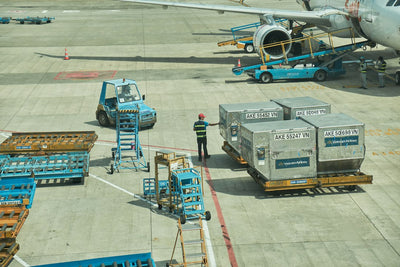
The company that's actually earned the Amazon of weed comparison isn't a retailer at all -- it's Nabis, a B2B cannabis distributor. The clearest evidence of what Nabis is solving comes from Glass House Brands, a cultivator that sold 643,000 pounds of cannabis last year and still churned through four failed distributors before landing on Nabis. Read that number carefully: a company moving that much product at that scale couldn't find reliable distribution logistics for years. That's the real story cannabis retail's future has to reckon with -- not that nobody wants an Amazon-style platform, but that the underlying logistics infrastructure to support one has been genuinely fragile until very recently.
The more literal retail analog to an Amazon-style entry is Edible Arrangements' pivot. Edible Brands launched Edibles.com nationwide last spring, taking an established consumer fulfillment brand -- one already built around gifting, delivery logistics, and a recognizable name -- directly into THC-infused product territory. It's not Amazon entering cannabis, but it's the closest thing so far to a mainstream consumer retail brand making that jump deliberately, rather than a cannabis-native startup trying to build brand trust from zero.
Put those two data points together and a more realistic near-term picture emerges: the future isn't Amazon.com adding a flower category to its marketplace. It's Amazon-style logistics sophistication -- reliable cold-chain-equivalent distribution, inventory visibility, reduced distributor churn -- getting built by specialists like Nabis and then layered underneath existing dispensary chains and hemp-adjacent brands that are already positioned to sell direct to consumers.
Here's the speculative read, and it should be labeled as exactly that: full federal descheduling would remove the interstate commerce barrier that currently makes a true national cannabis e-commerce platform structurally impossible, regardless of who operates it. Until that barrier falls -- and per the alcohol precedent discussed earlier, that could be a matter of years rather than months -- any Amazon of weed comparison describes logistics sophistication and distribution reliability, not literal national retail entry. Anyone selling you the second interpretation is selling a narrative the current legal structure doesn't support yet.
What This Looks Like by 2030

Photo by Tiger Lily via Pexels.
Extrapolate the current deal pace forward and the shape of 2030 starts to come into focus, with appropriate caveats. At least five notable acquisitions closed in the first seven months of 2026 alone -- SNDL-Parallel, Sunderstorm-Lime, Wyld-Grön, KEY-BellRock, Vireo-Eaze. If that rate holds or accelerates, as the distressed-asset dynamics in Section 2 suggest it will while credit stays tight, expect the population of genuinely independent multi-state operators to shrink meaningfully by decade's end. The alcohol distribution industry took roughly 15 to 20 years post-repeal to consolidate from a chaotic multitude of local operators into the regional and national distributor networks that dominate today -- a reasonable outside timeline to keep in mind rather than expecting cannabis to compress the same structural shift into three or four years.
The medical-only federal registration pathway is the detail worth watching most closely, more than any individual acquisition. If DEA's portal proves workable in practice -- if that $794 fee and the registration process actually functions smoothly at scale over the next year -- expect real political pressure to build for extending comparable federal treatment to adult-use products. But that step requires Congressional action, not DEA administrative authority alone, which is a considerably higher bar than what got cleared in April 2026. DEA can reschedule within its existing statutory authority; opening interstate adult-use commerce requires new legislation, and Congress has moved on cannabis policy at a genuinely glacial pace for over a decade.
New business categories are opening up in the meantime, and they're worth naming specifically rather than gesturing at vaguely. Data and loyalty analytics vendors built specifically for cannabis retail's fragmented seed-to-sale systems. Receivership and distressed-asset specialists who understand cannabis-specific licensing transfer rules well enough to do what KEY Investment Partners did with BellRock. Compliant hemp-to-THC brand conversion services, helping intoxicating-hemp brands displaced by the November 2025 rules migrate into state-licensed markets instead of disappearing. And logistics providers modeled explicitly on what Nabis built for Glass House Brands, not on Amazon's consumer-facing marketplace model.
None of this is guaranteed to play out on schedule. A change in DEA leadership or a new administration could stall or reverse the rescheduling hearing process entirely -- administrative rulemaking has been undone by successor administrations before, and cannabis policy has whipsawed with changes in DOJ and DEA leadership repeatedly over the past fifteen years. Continued credit tightening could slow acquisition financing to the point where distressed operators simply liquidate instead of getting absorbed. And state-level political backlash against out-of-state consolidators buying up local dispensary licenses is a live possibility in markets that built residency or local-ownership requirements into their licensing rules specifically to prevent this kind of outside consolidation.
None of what's happening right now is hype dressed up as inevitability. A fragmented, badly over-licensed industry is meeting genuine federal movement for the first time since the 2018 Farm Bill, and the result is a correction -- distressed assets finding buyers, gray-market alternatives shrinking, and data economics finally rewarding scale the way they have in every other mature consumer retail category. That's not a story about disruption. It's a story about an industry finally behaving like one.
If you want a single number to track over the next year that will tell you more than any acquisition headline, it's adoption of DEA's medical-only registration portal. A $794 fee and a functioning process are meaningless if operators don't actually use them at scale. High adoption signals the federal government building real infrastructure cannabis businesses want to engage with. Sluggish adoption signals operators still don't trust the process enough to bet compliance dollars on it -- and that distrust would tell you the historical caution about full descheduling timelines is well-founded.
As for the Amazon question: the resolution probably won't look like a press release. It'll look like Nabis, or a company like it, quietly becoming the default logistics layer under enough dispensaries and hemp-brand conversions that nobody bothers writing the trend piece anymore, because it will have just become how cannabis retail works. The most consequential infrastructure shifts rarely announce themselves. They just show up one day as the boring, obvious way things are done.
Sources
- Big Day for Cannabis Consolidation — and a Reality Check on Exports
- 2026 Cannabis Retail Trends: What to Expect in the Evolving Industry - IndicaOnline
- 2026 Cannabis Consolidation: Mergers, Battles & Partnerships
- Cannabis Retail Trends 2026 | Flowhub
- Business Issues/Benchmarks > Mergers and Acquisitions in the Cannabis Market | Cannabis Business Times