What a Treaty Change Would Actually Mean for Cannabis Trade
Photo by Bilal Ahmed via Pexels.
Here's the thing that doesn't add up if you look at it straight on: something like two dozen countries now run functioning legal cannabis programs, from Thailand's dispensaries to Germany's pharmacy shelves to the patchwork of US state markets moving billions of dollars a year. And yet the underlying treaty architecture that every one of those countries signed onto still says, in plain language, that cannabis production has to be limited to medical and scientific purposes. Not adult-use. Not recreational. Medical and scientific, full stop. Canada has a national adult-use market. Uruguay legalized cannabis for personal use back in 2013. Neither country has ever tried to export a gram of that recreational supply across a border, because the treaty obligation everyone quietly works around at home becomes very hard to work around the moment goods cross a customs line.
That gap between domestic reality and treaty text is the actual story of international cannabis commerce right now, and it's not being resolved the way most people assume. There's no treaty rewrite on the table, no scheduled UN vote to watch for on a calendar. What's happening instead is a reinterpretation project, playing out in the wording of Federal Register notices, in a legal adviser's remarks to the Commission on Narcotic Drugs, and most visibly in the US Drug Enforcement Administration's April 2026 move to shift FDA-approved marijuana products from Schedule I to Schedule III. That single action, and the treaty-compliance language wrapped around it, tells you more about where international cannabis trade is headed over the next five years than any speculation about a future Vienna summit. The question worth sitting with is whether this kind of interpretive drift and compliance-infrastructure building can get the industry most of the way to a real global market, or whether at some point the actual treaty text has to change before commerce can scale past its current, carefully bounded medical lane.
The 1961 Convention Is Still the Load-Bearing Wall

Photo by Hugo Magalhaes via Pexels.
The document doing all the real work here is the Single Convention on Narcotic Drugs of 1961, as amended by the 1972 Protocol. It's been ratified by 186 countries, which makes it about as close to universal as international drug law gets, and it doesn't just list cannabis as controlled -- it builds an entire licensing system around cultivation, production, manufacture, trade, and transport of scheduled narcotics. Nothing crosses a border legally under this framework without government-issued import and export authorizations tracking back to a licensed, monopoly-style national purchasing body.
Legal analysts who've spent time with the treaty text are fairly consistent on the core reading: member states are obligated to limit cannabis production to medical and scientific purposes. That's not an implication pulled from context -- it's close to the literal language governing how a scheduled narcotic is supposed to move through a compliant national system. Which means, strictly speaking, any commercial adult-use program -- Canada's, Uruguay's, the various US state markets -- exists in a kind of quiet non-compliance that no country has been eager to litigate at the international level.
That's exactly why you've never seen a country attempt to export recreational cannabis internationally. Canada runs a national adult-use retail market domestically and simultaneously operates a legal medical cannabis export program, but those are two entirely separate supply chains under separate compliance logic. The adult-use side stays sealed inside Canadian borders. The export side runs through the same licensing mechanics used for any other scheduled narcotic -- think of how morphine or codeine crosses borders today. Under Articles 23 through 28 of the Convention, medical cannabis exports require the destination country's import authorization, matched against the exporting country's export authorization, typically routed through a government agency that holds monopoly purchasing authority for that narcotic domestically. It's a slow, bureaucratic, quota-driven system, and it's also the only door currently open for cannabis to move between countries without contradicting the treaty. Everything else -- every recreational market on earth -- stays domestic because the moment product crosses a border, there's no compliant paperwork trail available for it to travel on.
December 2020: The Only Real Vote So Far

Photo by Héctor Berganza via Pexels.
If you want the one moment where the treaty machinery actually creaked open, even slightly, it happened on December 2, 2020. The UN Commission on Narcotic Drugs voted 27 to 25 to remove cannabis and cannabis resin from Schedule IV -- the most restrictive tier, reserved under the Convention for substances considered to have little to no therapeutic value, alongside things like heroin. Cannabis stayed in Schedule I, still controlled, but the vote formally separated it from that most-punitive category for the first time since the treaty was drafted.
The vote didn't happen in a vacuum. It followed the World Health Organization's 2018 critical review of cannabis and cannabis resin, which recommended broader rescheduling changes based on accumulated pharmacological and clinical evidence. Notice the gap: recommendation in 2018, vote in 2020. Two years for the WHO's scientific findings to work through the CND's political process, and even then the outcome was a narrow, split vote on a single scheduling tier rather than the sweeping rescheduling the WHO review had actually recommended. That timeline and that outcome are the best data point we have for how treaty-level cannabis policy actually moves at the UN -- slowly, incrementally, and by the thinnest of margins even when the underlying science is fairly settled.
None of this changed legalization status anywhere. Countries with adult-use programs didn't gain any new legal cover, and countries without medical programs weren't compelled to create one. What the vote did was create a formal, citable acknowledgment that cannabis has recognized medical value under international law -- and that acknowledgment turns out to matter more as precedent than as policy. It's directly cited in the 2026 US DEA rescheduling action as part of the argument that moving marijuana to Schedule III domestically is consistent with, rather than a departure from, US treaty obligations. A four-year-old, narrowly-passed UN vote is doing quiet legal work today in a completely different country's regulatory rulemaking -- which tells you something about how thin the connective tissue is between international drug law and the domestic policy built on top of it.
The 2026 US Move and Its Treaty Framing

Photo by Nataliya Vaitkevich via Pexels.
On April 22, 2026, Acting Attorney General Todd Blanche signed DEA rule AG Order No. 6754-2026, moving FDA-approved marijuana products from Schedule I to Schedule III, effective April 28, 2026. On its face this looks like a domestic regulatory story -- and for most practical purposes, for now, it is one. But the framing in the Federal Register notice is worth reading closely, because it doesn't present the move as the US bending or ignoring its treaty obligations. It presents rescheduling as required by them, citing the DEA Administrator's statutory duty to schedule controlled substances in a manner consistent with US obligations under the 1961 Single Convention.
That's a notable rhetorical inversion. For decades, the standard read was that anything short of the treaty's strict medical/scientific limitation put a country on shaky treaty ground. Here, a member state is instead arguing that keeping FDA-approved cannabis products bottled up in Schedule I -- alongside heroin, with no accepted medical use recognized under federal law -- is itself the thing out of step with treaty obligations, given the 2020 CND vote and accumulated FDA approvals for cannabis-derived medicines. It's the same treaty, cited as the reason to loosen restriction rather than the reason to hold the line.
Complicating the picture further, a separate and much broader DEA hearing on full marijuana rescheduling ran June 29 through July 15, 2026 -- a parallel track addressing the more sweeping question of moving marijuana broadly, not just FDA-approved products, out of Schedule I. The narrower April action and the broader summer hearing aren't the same proceeding, and treating them as one story flattens an important distinction: one is a narrow, already-finalized rule; the other is an open, contested process with a much larger scope and much less certain outcome.
Perhaps the most telling reaction came from the International Narcotics Control Board, the treaty's own monitoring body. A Secretariat representative's public response amounted to noting that the INCB had taken note of the executive order -- not endorsing it, not objecting to it. That kind of calculated neutrality from the body whose entire job is policing treaty compliance is itself a signal. A major signatory justifying a domestic scheduling change by invoking treaty compliance, rather than apologizing for treaty deviation, and getting a shrug rather than a rebuke in response, marks a real shift in how this particular treaty is being used in practice.
The Quiet Reinterpretation Happening at State Department Level

Photo by Karson via Unsplash.
The more consequential shift isn't happening in a Federal Register notice at all -- it's happening quietly inside the State Department's Office of the Legal Adviser. Legal commentators tracking this have pointed to remarks by legal adviser Virginia Patt Prugh before the Commission on Narcotic Drugs, which reframe the Single Convention's core purpose. Instead of treating the treaty as a mandate for domestic prohibition of cannabis markets, this reading positions it primarily as an instrument against cross-border trafficking -- policing how narcotics move between countries, not dictating what a country permits within its own borders.
That's not a small distinction. It's the difference between a treaty that requires the US, or any signatory, to keep cannabis illegal domestically, and a treaty that mostly cares about what crosses borders and how. If the trafficking-focused reading holds, a huge amount of what state-legal cannabis markets already do becomes far easier to square with treaty text, even without changing a word of the Convention itself.
And this isn't a one-off remark -- it's a paper trail with a visible build. It follows a December 2025 Trump executive order addressing cannabis policy, and it builds on a 2024 Office of Legal Counsel opinion that laid groundwork for this interpretive approach. Stack the OLC opinion, the executive order, and the CND remarks together and you get roughly two years of accumulating institutional position, not a single improvised statement.
Here's why this matters more than it might sound like it should: treaties aren't static documents that only change through formal amendment votes. International law also evolves through state practice -- how signatory countries actually interpret and apply treaty language over time, especially when done consistently and articulated openly rather than quietly ignored. This is the same general mechanism, incidentally, by which plenty of international law has shifted historically without a single line of text being rewritten. A dominant signatory building a consistent interpretive position, repeated across multiple institutional channels, is exactly the kind of practice that can eventually reshape how a treaty functions even absent a new protocol.
The counter-case deserves equal weight, though. One country's legal reinterpretation, however well-documented, doesn't bind the other 185 signatories. Russia, China, Singapore, and a number of Gulf states have consistently shown no appetite whatsoever for loosening cannabis controls, and the INCB or any individual member state remains free to challenge this US reading publicly. What's happening right now is soft-law drift -- real, worth watching closely, but nowhere near settled international doctrine.
Commerce Is Already Moving Without Waiting for the Treaty

In 2025, Canada supplied nearly as much medical cannabis to Germany (93,006 kg) as all other countries combined (108,088 kg), highlighting Canada's outsized role as a single-country supplier to the German market.
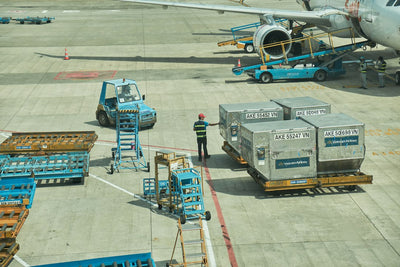
While the interpretive arguments play out in legal filings, actual product is already moving across borders in real volume, entirely within the existing medical/scientific treaty framework. Germany imported 201,094 kilograms of medical cannabis in 2025. Canada supplied roughly 93,006 kg of that total -- about 46% of everything Germany brought in -- making it by a wide margin Germany's largest single source country. That's not a pilot program or a symbolic trade relationship. That's a functioning, treaty-compliant pharmaceutical supply chain operating at meaningful scale, built entirely on the licensing and government-authorization mechanics described earlier, without waiting on any reinterpretation or rescheduling news.
Canada isn't the only exporter making this work. GMP-certified suppliers in Colombia, Thailand, North Macedonia, and South Africa are all expanding production capacity aimed at exactly this kind of medical export trade. None of them are waiting on Vienna. What they're doing instead is investing in pharmaceutical-grade cultivation and processing infrastructure -- Good Manufacturing Practice certification, consistent dosing and testing standards, traceable chain-of-custody documentation -- that satisfies the import requirements of destination countries like Germany right now, under the treaty as it already exists. It's proof that the compliance pathway isn't theoretical. It's a real door, already open, that simply requires a fairly expensive and rigorous kind of infrastructure to walk through.
Which makes it worth looking at where the actual near-term risk to that trade sits -- and it isn't in Vienna or Geneva. It's in Berlin. A pending amendment to Germany's MedCanG law would ban mail-order pharmacy distribution of cannabis, a channel that's become a significant route for patients accessing imported product. That amendment passed only a first reading in the Bundestag in December 2025 and has stalled since -- unsurprising, given that the CDU holds just 328 of 630 seats and the SPD, its coalition partner, opposes the measure. It's stuck, not dead, and its fate over the next year will do more to shape actual German import demand than anything happening at the treaty level.
That's the distinction worth holding onto: treaty compliance governs whether cross-border medical cannabis trade is legally possible at all, but domestic retail regulation in the destination country governs how much of that legally possible trade actually happens. Germany could keep the treaty fully satisfied and still choke off a meaningful chunk of import demand through a change to its own pharmacy distribution rules.
What Actual Treaty-Level Change Would Take -- and What It Would Unlock

Photo by Markus Spiske via Pexels.
Reasoning from the one real precedent available, the 2020 vote, a full rescheduling of cannabis out of Schedule I entirely would almost certainly require another WHO critical review cycle followed by another CND vote. The 2018-to-2020 gap between WHO recommendation and CND vote suggests this kind of process runs on a timeline measured in years, not months -- and that's before accounting for how much more contested a Schedule I exit would be compared to the narrower Schedule IV removal that barely passed 27-25 last time.
Even a favorable outcome wouldn't create anything resembling a free global market. This is worth being blunt about: the licensing and monopoly requirements under Articles 23 through 28 would almost certainly still apply to commercial cannabis trade even if cannabis exited Schedule I completely, the same way they apply today to opium and coca-derived pharmaceutical trade despite those substances having established, decades-old medical supply chains. Government-authorized import and export quotas, national purchasing monopolies, licensed production ceilings -- that machinery isn't specific to cannabis's current scheduling tier. It's baked into how the Convention handles all narcotic commerce, full stop. A rescheduling vote changes which drugs the machinery applies to, not whether the machinery exists.
Here's the more speculative read, and it should be labeled as such: if the US, Germany, and other large cannabis markets keep normalizing domestic adult-use programs while simultaneously treating the treaty as trafficking-focused rather than prohibition-focused, that accumulating state practice could eventually generate enough pressure for a formal amendment -- following roughly the same pattern by which the 2018 WHO review eventually produced the 2020 vote. But that outcome depends on enough large economies aligning around the same interpretive position at the same time, and right now that alignment simply hasn't happened. It's a plausible path, not a forecast with a date attached.
The countervailing case is straightforward and shouldn't be waved away: 186 countries actually have to reconvene and agree on any formal change, and a meaningful bloc among them -- Russia, China, Singapore, several Gulf states -- have shown zero appetite for loosening cannabis scheduling under any circumstance. Treaty reform requires consensus-adjacent processes even when a formal supermajority isn't strictly required, and that kind of broad buy-in looks unlikely on any predictable timeline. Which points to the realistic near-term path: not a treaty rewrite, but more countries copying the compliance-infrastructure model Germany, Canada, and the GMP-exporting countries have already built -- working inside the existing medical/scientific lane rather than waiting for it to widen.
The treaty text itself hasn't moved since that narrow 2020 vote, and given the timeline of the only precedent we have, it may not move again for years. But treat that as a fact about the document, not about the system it governs -- because the meaning of that text is already shifting, through how the US frames its own scheduling decisions, how Germany's State Department counterpart reads trafficking versus prohibition, and how GMP-exporting countries quietly build the infrastructure to trade within the existing rules rather than around them.
If that pattern holds, the near-term winners in international cannabis commerce won't be the countries positioned to benefit from some future clean rewrite of the Single Convention. They'll be the ones building pharmaceutical-grade compliance infrastructure right now -- GMP certification, traceable supply chains, government-authorized import/export relationships -- the same playbook Canada, Colombia, Thailand, North Macedonia, and South Africa are already running. That's a bet on infrastructure and licensing know-how outcompeting a wait-and-see approach to international law, and the 201,000-kilogram German import market suggests it's already paying off for the countries that made the bet early.
Which is why the domestic regulatory fights deserve at least as much attention as anything happening at CND sessions in Vienna. Germany's stalled mail-order pharmacy amendment isn't a footnote to the treaty story -- for actual trade volume, it may end up mattering more than any UN vote on the horizon. Watch the Bundestag as closely as you'd watch the INCB, in other words. The treaty sets the outer boundary of what's possible; domestic politics in the destination markets increasingly decides how much of that possibility gets used.
Sources
- Cannabis Europa London 2026: The Global Cannabis Industry Meets at a Turning Point
- Why Business Lawyers and Lawmakers Must Master the U.S. Reinterpretation of the Single Convention: Treaty Flexibility as the Foundation for Durable Cannabis Reform – WeedPress: The Paper Trail
- US Cannabis and International Treaties | Vicente LLP
- Treaty Obligations Meet Constitutional Reality: How Article 36 of the Single Convention Preserves U.S. Flexibility on Cannabis Policy – WeedPress: The Paper Trail
- Single Convention on Narcotic Drugs