What Cannabis Rescheduling's Long History Says About Where It's Headed
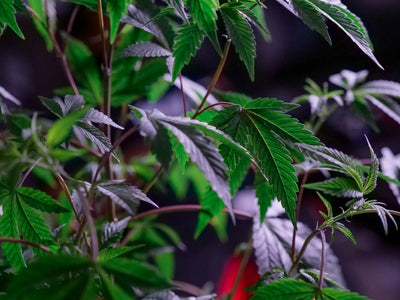
Photo by Leandro Paes Leme via Pexels.
Two years ago this spring, the Department of Justice put its name behind something that had never actually happened in the fifty-plus year history of the Controlled Substances Act: a formal proposal to move marijuana off Schedule I. As of mid-2026, that proposal still hasn't crossed the finish line. Part of it has moved -- FDA-approved cannabis medicines and state-licensed medical marijuana now sit on Schedule III -- but the broader question DOJ actually proposed in May 2024 is still sitting in front of an administrative law judge, with no announced date for a final answer.
If this feels like deja vu, that's because it is. NORML's first rescheduling petition dates to 1972. A second run through the system in 1995 ended in a 2001 denial. A third attempt, built on petitions filed in 2009 and 2011, got rejected in 2016. Each time, the story followed roughly the same arc: a petition generates real momentum, DEA opens a hearing process, and then the hearing process itself becomes the place where that momentum dies, usually years after the political moment that produced it has passed.
The 2024-2026 cycle is the fastest version of this story yet, and it's also the version with the most direct presidential involvement in DEA history -- an executive order literally instructing the agency to speed up. And yet even with that pressure, the same administrative machinery that stalled the 1972, 1995, and 2011 petitions is still running the clock. That repetition is the most useful piece of evidence available for figuring out where this one actually lands, because DEA's hearing process has a documented track record, and that track record is the closest thing to a crystal ball anyone writing about this honestly has.
The 2024-2026 Timeline, Compressed

This timeline tracks six sequential milestones in the cannabis rescheduling process from May 2024 through July 2026, showing a steady, evenly-paced progression toward completion. The chart highlights the multi-year regulatory journey involving DOJ, Treasury, and DEA actions following the April 23 order.
Start with the plain facts. On May 21, 2024, DOJ published a Notice of Proposed Rulemaking to move marijuana from Schedule I to Schedule III, a move that lined up with HHS's August 2023 recommendation finding that cannabis has a currently accepted medical use and a lower abuse potential than the drugs it was grouped with, including heroin and LSD. The public reaction was enormous: the NPRM drew more than 42,000 comments, one of the largest responses to any DEA rulemaking on record, dwarfing typical rulemaking dockets that draw a few hundred submissions.
DEA announced a formal hearing in August 2024, which is standard procedure when a rulemaking draws this much controversy and this many requests to participate. What wasn't standard was what happened next: procedural fights over who could participate and on what terms, including a granted interlocutory appeal, effectively froze the hearing in place through the rest of 2024 and all of 2025. No testimony was taken. No evidence was heard. The docket simply sat.
That stalemate is what pulled the White House in. On December 18, 2025, President Trump signed Executive Order 14370, explicitly directing DEA to expedite the rescheduling process. It was an unusually direct instruction from the executive branch into an agency proceeding that's supposed to run on its own administrative logic, insulated from that kind of political nudging.
Even that didn't produce quick movement. Four more months passed with no visible action, which is what prompted Rep. Steve Cohen of Tennessee to publicly question the delay in April 2026, asking why an executive order aimed at this exact bottleneck hadn't actually broken it. The gap between the order and any DEA response is itself the data point worth sitting with: presidential pressure got applied, and the agency's internal clock barely moved. That's not proof the order failed -- something did eventually happen, which the next section covers -- but it's a useful early signal that DEA's process has its own gravity, one that doesn't necessarily bend just because the White House says so.
The April Order: A Partial Win With a Built-In Catch

Photo by Terrance Barksdale via Pexels.
Something did finally move. Acting Attorney General Todd Blanche issued a Final Order between April 22 and 24, 2026, and it took effect April 28 once published in the Federal Register. On paper, this looked like the breakthrough advocates had waited two years for. In practice, it was something narrower and more surgical.
The order reclassified two specific categories to Schedule III: FDA-approved marijuana-derived medications and state-licensed medical marijuana. That's a real, legally binding change, and it matters for the handful of FDA-approved cannabinoid drugs already on the market and for the tax and banking pressure facing state medical programs. But it's also a much smaller move than what DOJ proposed back in May 2024, which contemplated a blanket rescheduling of marijuana as a substance, full stop.
Everything outside those two lanes -- which is to say the overwhelming majority of the industry, including every adult-use recreational product sold in states like Colorado, California, or Michigan -- legally remains Schedule I. That's worth sitting with, because it means the plant itself hasn't actually been rescheduled in any comprehensive sense. What changed is a set of specific, narrowly defined use-cases carved out of a broader Schedule I classification that otherwise still applies.
Synthetically derived THC got the same treatment: it stays on Schedule I under the April Order, a distinction that lands directly on top of the fast-growing intoxicating hemp product market, where delta-8 and other lab-converted cannabinoids have built a multibillion-dollar retail category by exploiting exactly this kind of definitional gap.
The order didn't stop there, though. It simultaneously set up an expedited hearing, slated to begin June 29, 2026, specifically to take up the broader rescheduling question DOJ originally proposed in 2024. In effect, the Final Order resolved the narrow, easy part of the question while sending the hard, consequential part -- does marijuana as a whole belong on Schedule III -- into exactly the kind of DEA administrative hearing process that has swallowed every previous rescheduling attempt for years at a time.
A Hearing Stacked Against the Outcome

Photo by Michael D Beckwith via Unsplash.
The hearing that opened June 29, 2026 is where the process's real character shows up, and the roster tells you most of what you need to know. On June 18, 2026, DEA announced the seven parties selected to participate as designated participants in the proceeding. All seven opposed rescheduling.
The list included Smart Approaches to Marijuana (SAM), the leading national anti-legalization advocacy group; the National District Attorneys and Sheriffs Association (NDASA); the Tennessee Bureau of Investigation; and four states -- Nebraska, Idaho, Indiana, and Louisiana -- each of which has taken a restrictive line on cannabis policy at the state level. Not one designated participant supported the move DOJ itself had proposed two years earlier.
That produced immediate, pointed criticism from NORML and the National Cannabis Industry Association (NCIA), both of which had sought participant status and argued that a hearing meant to evaluate a rulemaking DOJ itself authored shouldn't be structured so that only opponents of that rulemaking get a formal seat at the table. Whatever the legal justification DEA offered for its selections, the optics are hard to separate from the outcome: a hearing record built almost entirely from one side's evidence and cross-examination strategy is a hearing record that tends to produce one kind of recommendation.
Chief Administrative Law Judge Derek Julius presided over the proceeding, which ran for seventeen days of testimony. It was not televised, livestreamed, or broadcast in any form -- anyone who wanted to observe had to show up in person at the hearing location, a limitation that sharply narrowed who could actually watch the government's own evaluation of the country's most consequential drug policy question in a generation unfold in real time.
That opacity isn't new. It echoes complaints raised about DEA's handling of the 1995 and 2009-2011 petition cycles, where advocates similarly argued that closed-door or narrowly attended hearings let the agency shape outcomes with minimal public visibility into how evidence was actually weighed. The pattern of restricted access isn't a one-off feature of this hearing; it's closer to a house style.
Why This Isn't DEA's First Rescheduling Fight -- and What Those Fights Teach

Photo by Pixabay via Pexels.
None of this is DEA's first rodeo, and the agency's history with rescheduling petitions is the single best predictor available for how this one plays out. NORML filed the first petition to reschedule marijuana in 1972. It took sixteen years -- until 1988 -- for a DEA administrative law judge, Francis Young, to actually issue a recommendation, and when he did, he recommended rescheduling, finding cannabis had a currently accepted medical use. The DEA Administrator overruled that recommendation anyway, which is the part of the story that matters most: the agency's own judge can rule one way, and the agency's own leadership can simply reject it.
The pattern repeated. A second petition filed in 1995 wound through the system for six years before being rejected in 2001. A third round, built on petitions filed in 2009 and 2011, dragged on even longer and was ultimately denied in 2016 -- forty-four years after NORML's original filing, the plant was still sitting on Schedule I.
Look at the shape of all three cycles side by side and the structure is nearly identical: years of procedural delay before a hearing even gets underway, an administrative hearing that produces a record shaped heavily by who gets to participate, and a final decision that arrives long after the political conditions that triggered the original petition have shifted or evaporated entirely. Congress never forced the issue in any of these cycles. Courts didn't either. The place where rescheduling momentum has historically gone to die is DEA's own internal hearing and decision process -- not the legislative branch, not the judiciary, but the agency itself, using authority Congress delegated to it decades ago.
The 2024-2026 cycle has broken that pattern, but only partway. It reached a partial Schedule III reclassification faster than any of the three prior cycles ever got to any final decision at all, and the reason is structural: this round started from HHS's own 2023 scientific recommendation, filed through the government's own regulatory apparatus, rather than from an outside petition DEA had every institutional incentive to slow-walk. That head start bought speed on the easy carve-outs. Whether it buys speed on the harder, comprehensive question is the open question the current hearing is supposed to answer -- and history suggests skepticism is the more defensible starting position.
The Courts Are Now a Second Track

Photo by KATRIN BOLOVTSOVA via Pexels.
While the administrative hearing runs its course, a second track has opened up in federal court, and it's running on its own separate clock. Three petitions now challenge the validity of the April Order at the D.C. Circuit Court of Appeals.
The most direct of these was filed May 22, 2026 by Nebraska, Indiana, and Louisiana -- three of the same states that later showed up as designated participants opposing rescheduling in the DEA hearing. Their argument is that DOJ exceeded its statutory authority by issuing a partial reclassification -- moving medical and FDA-approved products to Schedule III -- while a comprehensive rulemaking on the broader question was still pending. DOJ's response to that petition was due July 2, 2026, which means the litigation track and the administrative hearing track have been running in parallel for weeks, each capable of producing outcomes that affect the other.
History offers a useful caution here about how much weight to put on the courts as the path to resolution. Cannabis policy has rarely been settled by litigation alone, and the most significant Supreme Court cannabis case of the modern era cuts against the idea that courts are a shortcut to loosening federal control. In Gonzales v. Raich (2005), the Court affirmed federal authority to regulate purely intrastate, non-commercial marijuana cultivation under the Commerce Clause -- a ruling that expanded federal reach rather than narrowing it, over a dissent that argued the opposite. That's the closest historical precedent for how the D.C. Circuit is likely to approach a challenge like this one: courts have tended to defer to federal regulatory authority over cannabis rather than use judicial review to force policy in either direction.
The more speculative, but reasoned, read is this: a ruling against DOJ in the current case wouldn't rescheduled anything -- it would more likely vacate or remand the April Order, sending the process back toward square one and adding months, possibly years, to a timeline that's already run past two years. That's the realistic downside case, and it deserves to be taken seriously precisely because litigation has historically been a delay mechanism in cannabis policy far more often than a resolution mechanism.
What Happens After July 15 -- and the Hemp Wildcard

Photo by Eir Health via Unsplash.
Closing arguments in the DEA hearing wrapped July 15, 2026, ending seventeen days of testimony. Both sides reportedly characterized the close of the hearing in broadly positive terms -- though given the one-sided participant list, positive descriptions from designated participants who opposed rescheduling all along should be read with real caution about what positive is actually measuring.
Post-hearing briefs are due August 17, 2026. Beyond that date, there's no announced timeline for either the ALJ's recommendation or, more importantly, the DEA Administrator's final decision -- and the Administrator, as the 1988 precedent shows, is under no obligation to accept whatever the ALJ recommends. Judge Francis Young's 1988 recommendation to reschedule took the Administrator effectively no time at all to reject once it landed. There's no guarantee the reverse -- a recommendation against rescheduling being overturned in favor of it -- would move any faster, and there's no historical case of that ever happening.
If the current cycle followed the multi-year gaps that separated recommendations from final agency action in the 1988 and 2001 cycles, a final decision could easily stretch well past 2027. Executive Order 14370 is the wildcard that makes this cycle different from its predecessors -- it puts sustained political pressure on DEA to move faster than its own history suggests it will, and that pressure is real. But pressure and precedent are pulling in opposite directions here, and betting confidently on either one overriding the other requires more certainty than the record currently supports.
Layered on top of all this is a hemp wildcard that guarantees the story doesn't end even once DEA rules. A 2025 law changes the federal definition of hemp effective November 2026, narrowing what legally counts as hemp in ways that will collide directly with the Schedule I/III line the April Order just drew around synthetic THC and intoxicating hemp products -- the delta-8 and similar cannabinoid categories that have built a substantial retail business on ambiguity in that exact definition. Even a rescheduling decision favorable to the industry won't resolve that collision. It will just relocate where the next boundary dispute happens, from DEA's hearing room to whatever agency ends up enforcing the new hemp definition against products that no longer fit cleanly on either side of the line.
Line up 1972, 1995, 2011, and 2024 and the shape doesn't change much: a petition or proposal generates real momentum, DEA opens a hearing, and the hearing becomes the place where that momentum either dies outright or gets diluted into something much narrower than what was originally proposed. The current hearing's seven-participant, all-opposition witness list isn't a break from that pattern. It's a fairly faithful continuation of it, dressed in 2026 procedural language instead of 1988's.
What is genuinely different this time is the executive order. EO 14370 shows that a president can apply enough pressure to force a partial administrative outcome -- the April Order's carve-out for medical and FDA-approved products is real, and it happened faster than anything in the prior three cycles managed. But the order hasn't yet forced the harder step, and there's no evidence in the record so far that it will. The final decision on comprehensive rescheduling still depends on a career DEA process that has outlasted political pressure before, and on D.C. Circuit litigation that, per Gonzales v. Raich, has historically been more inclined to affirm federal control than loosen it.
Whatever the ALJ recommends and whatever the Administrator ultimately decides, one thing is already locked in regardless: the November 2026 hemp definition change guarantees this isn't the last federal line that needs redrawing. Cannabis policy in the US has never resolved into a single clean moment -- it's moved in a series of boundary shifts, each one creating a new edge case that the next rulemaking, hearing, or court challenge has to deal with. Anyone waiting for a tidy, final answer on rescheduling is waiting for something the last fifty years of DEA history says doesn't actually happen.
Sources
- Cannabis Rescheduling: DOJ, Treasury, and DEA Updates Since the April 23 Order | Foley Hoag LLP
- Federal rescheduling resources - Department of Cannabis Control
- Marijuana Rescheduling Regulatory Actions | DEA.gov
- Duane Morris LLP - Relief, Finally? DEA Issues Order Expediting Cannabis Rescheduling to Schedule III
- List of 2026 United States cannabis reform proposals