Whiskey Rebellion Excise Law and the Coming Cannabis Tax Stamp
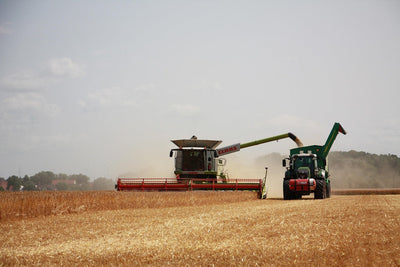
Photo by Smithsonian via Unsplash.
In the fall of 1791, a federal excise officer rode into the hill country of western Pennsylvania carrying paperwork for a tax almost nobody there intended to pay. Whiskey wasn't a luxury in that region -- it was currency. Farmers distilled their corn surplus into spirits because grain was too bulky and perishable to haul over the mountains to eastern markets, and whiskey didn't spoil. When Alexander Hamilton's new federal government demanded a cut of every gallon, collectors found themselves tarred, feathered, and run out of the backcountry. It took the better part of three years for that resentment to curdle into an armed uprising, and it took nearly 13,000 militiamen -- with George Washington himself riding partway out to review them -- to put it down.
That episode gets taught as a quaint footnote about an early test of federal authority. It's also, mechanically, the direct ancestor of how states tax marijuana today and a preview of how Washington will likely tax it federally once it finally gets around to doing so. Proof-of-payment stamps, reliance on informants and after-the-fact enforcement, and a structure that lands hardest on the smallest, least-capitalized producer -- all of that shows up in Kansas's and North Carolina's current drug tax stamp laws almost unchanged in spirit from 1791.
As of October 2026, there's still no federal cannabis excise tax on the books. But at least 22 cannabis-related bills are sitting in Congress right now, several of them lifting their tax architecture nearly line for line from the existing federal tobacco excise system -- permits, bonded facilities, physical or digital stamps affixed to packaging. History doesn't repeat, but tax enforcement on a contested agricultural commodity tends to rhyme. What follows is a look at why the Whiskey Rebellion's pattern is a genuinely useful lens for predicting how a future federal cannabis tax stamp regime will actually function on the ground -- and why that outcome probably won't be the clean, hemp-forward amnesty a lot of industry observers are quietly assuming.
1791: How the Whiskey Tax Actually Worked -- and Who It Crushed

Photo by Tom Fisk via Pexels.
Hamilton's 1791 excise on distilled spirits wasn't a minor revenue tweak -- it was the first major federal tax on a domestically produced good, built specifically to retire Revolutionary War debt that the states had failed to cover on their own. On paper it looked neutral: a per-gallon tax applied to a product every distiller made. In practice the law let large commercial distillers, concentrated in eastern cities, pay a flat annual rate that worked out to a substantial volume discount. Small backcountry farmer-distillers, who ran smaller stills intermittently, paid by the gallon at a much higher effective rate. The tax wasn't just unpopular -- it was structurally rigged to favor the producers who already had capital and scale.
That mattered more in western Pennsylvania than it would have almost anywhere else, because whiskey functioned as the region's de facto money supply. Cash was scarce on the frontier, and a jug of whiskey could buy tools, settle debts, or pay a hired hand in a way that raw corn couldn't. Taxing whiskey wasn't like taxing a specialty good -- it was like taxing the only liquid asset a cash-poor economy had.
The enforcement mechanism compounded the injury. Noncompliance wasn't a local civil matter; it was a federal crime, and federal crimes got adjudicated in federal court -- often in Philadelphia, hundreds of miles from the farms in question. A backcountry distiller summoned over a disputed tax bill faced a multi-week round trip away from his land and livestock just to answer the charge, which functioned as its own penalty regardless of the case's outcome.
Resistance built in stages. It started with tax collectors getting tarred and feathered and their records burned, escalated through years of low-grade intimidation, and culminated in the armed uprising of 1794, large enough that Washington called out a militia force of nearly 13,000 men and rode out to review them in person -- the only time a sitting U.S. president has personally led troops into the field.
The lesson that survives, stripped of the musket-and-powder theatrics, is a structural one: flat per-unit or stamp-based taxes reliably burden the smallest, least-capitalized producer harder than the large incumbent, unless lawmakers deliberately design the rate structure to prevent that. Nobody built that protection into the 1791 law. Nobody has fully built it into cannabis tax law yet either.
State Drug Tax Stamps Are Already Running the Whiskey Rebellion Playbook

Photo by geralt via Pixabay.
Kansas, Nebraska, and North Carolina currently run literal drug tax stamp programs for marijuana, and the mechanics map onto 1790s excise enforcement closely enough that it's worth walking through exactly how Kansas's version works. Anyone in possession of marijuana is required to purchase a tax stamp from the Kansas Department of Revenue and affix it to the product's packaging as proof the tax has been paid. The stamp can be bought anonymously, and it's valid for three months. That anonymity is the detail that gets cited as evidence these laws are evenhanded -- you're not required to identify yourself as a drug dealer to pay your drug tax. In practice almost nobody buys the stamp prospectively, because doing so would be a confession of intent to possess an illegal substance under state criminal law. The stamp program isn't really a revenue mechanism. It's a loaded gun that only goes off after police find marijuana some other way.
Kansas imposes a tax of $3.50 per gram on unstamped marijuana once possession exceeds 28 grams, and state law explicitly allows law enforcement to report unstamped possession directly to the Department of Revenue. That's tax collection operating as a parallel criminal charge -- the same person arrested for possession gets hit with a separate civil tax assessment for the exact same conduct, stacking consequences the way an additional charge would.
North Carolina's version adds a procedural wrinkle that makes the enforcement logic even clearer. State law bars Department of Revenue employees from disclosing a stamp purchaser's identity to police, backed by a Class 1 misdemeanor penalty for violating that confidentiality. Yet the statute also directs 75% of collected assessments back to the law enforcement agency that investigated the underlying case, with the remaining 25% going to the General Fund. The anonymity provision and the enforcement-funding provision aren't in tension by accident -- they're two halves of a system designed to look voluntary on paper while functioning as an after-the-fact assessment tool that finances the agencies that make the arrests.
This is the same structural DNA as the whiskey excise, compressed into modern statutory language: nominal voluntary compliance up front, real money flowing toward enforcement against people who were never going to be customers for the stamp in the first place.
The 22-Bill Traffic Jam: What Congress Is Actually Proposing Right Now

Photo by Gagan Kaur via Pexels.
No federal cannabis excise tax exists as of October 2026. What exists instead is a jam of at least 22 cannabis-related bills moving through Congress, several of which borrow their tax architecture nearly line for line from the federal tobacco excise system. That borrowing isn't incidental -- tobacco is the closest existing precedent Congress has for taxing a federally regulated, historically contraband-adjacent plant product at scale, and legislative staff tend to reach for the nearest working model rather than invent one from scratch.
The Cannabis Administration and Opportunity Act, reintroduced July 16, 2026 by Senators Cory Booker, Chuck Schumer, and Ron Wyden, would deschedule cannabis entirely and establish a 10% federal excise tax inside a new regulatory framework built largely around existing alcohol and tobacco enforcement structures. The MORE Act, filed as HR 5068, takes a parallel approach -- creating a new federal excise tax and directing the revenue toward community reinvestment programs aimed at communities most affected by prior drug enforcement. MORE currently carries 62 sponsors, more than any other cannabis bill filed during the 2025-2026 session, which is the clearest available signal of where political momentum in the House actually sits right now.
STATES 2.0 represents the lighter-touch alternative. Rather than building a federal tax-and-permit apparatus, it would bar federal enforcement against operators compliant with their state's law and proposes comparatively low tax rates -- closer to a non-interference posture than a Hamilton-style excise regime. It's the bill most likely to appeal to operators who've watched tobacco-style compliance costs and want no part of them.
The tobacco borrowing matters at the mechanical level, not just rhetorically. Tobacco's federal excise system runs on manufacturer permits issued by the Alcohol and Tobacco Tax and Trade Bureau, physical tax stamps or meter impressions affixed to packaging, and bonded warehouses where product sits until tax liability is settled. That's the same proof-of-payment logic that defined the 1791 whiskey excise and defines Kansas's stamp law today, just with more paperwork and a federal agency behind it.
Complicating all of it is that rescheduling itself has stalled on a separate track. DEA's Schedule III proceeding was stayed on September 29, 2026, while Administrative Law Judge Derek C. Julius considers whether to admit a new GAO report into the record. Smart Approaches to Marijuana and the states of Idaho, Indiana, and Nebraska are actively pushing to extend that delay past the 2026 midterms. No excise architecture gets finalized while the scheduling question underneath it remains open.
Projecting the Pattern Forward: Who a Federal Cannabis Stamp Regime Will Actually Burden

The MORE Act (HR 5068) has far more legislative support than its peers, boasting roughly 62 sponsors compared to just 10 for STATES 2.0 and 3 for the CAOA.
Here's where the historical pattern turns into forecasting, and it's worth being explicit that this section is reasoned extrapolation, not established fact. If Congress ultimately adopts something close to the tobacco-style stamp-and-permit system that CAOA's and MORE's drafting language gestures toward, compliance costs will scale with bonding requirements, recordkeeping obligations, and licensing overhead. Those costs don't scale evenly -- a multi-state operator with existing compliance staff absorbs a new federal permit requirement far more easily than a single-site craft grower does. That's functionally the same dynamic that let large eastern distillers pay a flat rate in 1791 while backcountry farmers paid per gallon at a punishing effective rate. The instrument is different; the incumbent-favoring mechanism is the same.
There's a real counter-case here, grounded in what actually happened to liquor taxation after 1791. The federal liquor tax system went through the Civil War-era 1862 reforms and further revisions over subsequent decades, and it eventually built in tiered rates and exemptions that reduced the burden on smaller producers. That didn't happen because Congress got it right the first time -- it happened after decades of sustained lobbying and political pressure. The design flaw in the original whiskey excise was fixable. It just wasn't fixed on the first attempt, and there's no obvious reason to assume cannabis tax legislation will skip that lag.
There's also a darker continuity worth naming. Kansas-style stamp laws already demonstrate that states use tax noncompliance as a backdoor enforcement charge against unlicensed sellers, stacked alongside a separate drug charge. A federal version could do the same thing to the existing illicit and gray-market supply chain even after broader legalization -- using revenue law to reach conduct that drug law can't cleanly prosecute, the way federal tax charges, not liquor-trafficking charges, were what finally convicted Al Capone in 1931. That's not a hypothetical mechanism; it's a documented prosecutorial strategy with a direct historical precedent.
The biggest grain of salt applies to the whole exercise: all of this assumes Congress passes a comprehensive federal bill at all, rather than the current patchwork of Schedule III administrative action layered over inconsistent state law -- which, given the stalled DEA proceeding, is the more conservative and arguably more likely near-term outcome. For the optimistic, small-producer-friendly version to materialize, Congress would need an explicit tiered-rate carve-out written in from the start. The Craft Beverage Modernization Act of 2017, which established tiered federal excise rates for small brewers and distillers, is a real, directly applicable template lawmakers could lift wholesale. Whether they will is an open question.
What Business Owners and Cultivators Should Actually Watch For
For operators trying to plan around a moving target, the time horizons matter more than the specific bill number. In the near term -- the next one to three years -- expect state-level tax stamp laws like Kansas's and North Carolina's to persist or even spread, regardless of what happens with federal Schedule III status. These are state revenue tools that exist independently of federal scheduling, and nothing about rescheduling cannabis to Schedule III repeals a state's authority to run its own stamp program.
In the medium term -- three to seven years out -- if a federal excise bill does pass, expect a transition period modeled closely on tobacco's existing permit system: TTB-style bonded facility requirements, physical or digital stamp affixation on packaging, and compliance deadlines that smaller operators have a documented history of underestimating. Tobacco manufacturers who've operated under this system for decades still trip over permit renewal and bonding requirements; a cannabis industry encountering it for the first time should expect a rockier adjustment, not a smoother one.
Over the long term -- seven to fifteen years -- the Craft Beverage Modernization Act precedent suggests tiered small-producer rates could eventually get added to whatever federal cannabis excise structure emerges. But the historical sequence suggests that correction tends to arrive only after an initial flat-rate period produces visible market consolidation first. That's roughly the 1791-to-1862 timeline for liquor taxation, compressed into a faster modern legislative cycle but following the same shape: implement first, fix the regressive design only once the political cost of not fixing it becomes undeniable.
The practical takeaway for cultivators and small operators is to start building the recordkeeping and bonding infrastructure now -- batch tracking, chain-of-custody documentation, the kind of paper trail that already exists in regulated tobacco and alcohol production. That's the same operational backbone a federal excise regime will require regardless of which bill, or which administrative pathway, ultimately wins out. Building it early isn't wasted effort even if the specific federal framework changes shape before it arrives.
And the honest caveat: nobody can currently say with confidence whether CAOA, the MORE Act, STATES 2.0, or some fourth compromise bill becomes the eventual template, and the stalled DEA Schedule III proceeding means even the scheduling baseline underneath all of this isn't settled as of October 2026. Plan for the pattern, not for a specific bill number.
The through-line from 1791 to Kansas's drug tax stamps to the 22 bills currently stalled in Congress isn't that history is repeating itself beat for beat. It's that excise enforcement on a federally contested agricultural product keeps presenting lawmakers with the same binary choice: tax it like tobacco -- stamps, bonding, permits, a proof-of-payment paper trail -- or invent something genuinely new. Given the drafting language already visible in CAOA and the MORE Act, Congress looks set to choose the familiar path again, the same way it reached for existing excise machinery in 1791 rather than designing bespoke rules for a brand-new frontier economy.
The real lesson of the Whiskey Rebellion was never that taxing whiskey was inherently illegitimate -- it's that Congress didn't correct the design's regressive burden on small producers until decades of accumulated political pressure forced tiered rates into the system in the 1860s and beyond. Expect a similar lag with cannabis, unless the Craft Beverage Modernization Act's tiered-rate model gets pulled forward deliberately, by name, into whatever federal cannabis tax bill eventually clears both chambers. That precedent exists and is directly applicable; whether anyone with leverage insists on using it from day one is a political question, not a technical one.
In the meantime, the bottleneck to watch isn't the tax language at all -- it's DEA's stayed Schedule III proceeding. No excise architecture gets finalized while the underlying scheduling question remains open, and with Smart Approaches to Marijuana and three states actively pushing to extend that stay past the 2026 midterms, the fight over where cannabis sits on the federal schedule could easily outlast this news cycle entirely. The stamp regime is coming eventually. The timeline for it starts the day scheduling stops being contested, and that day hasn't arrived yet.
Sources
- 2026 Cannabis Policy Reform Legislation and Voter Measures
- Cannabis tax relief is here, for some
- U.S. Congress: Every Cannabis Bill Under Consideration in 2026, From Nationwide Descheduling to Housing Protections
- Hemp on the Hill: Congress Buys More Time - Brewers Association
- Federal Cannabis Overhaul Signed Into Law · CannIntel