Australia's Early Hemp Trials and the Ban That Followed
Photo by Peter Janssen via Pexels.
Australia now licenses hemp growers. Yet its drug laws arrived state by state, across a span of 25 years, starting with South Australia in 1934 and ending with Tasmania in 1959.
That gap is the thread of this article. Hemp fibre and the drug plant are the same species, Cannabis sativa, and one legal system had to decide what to do with both. It first treated the plant as a crop, then folded it into drug control, and later carved hemp back out.
A few caveats up front. The research behind this piece is thin. The 1930s to 1950s dates come from a single UNODC study, and the account of early colonial hemp rests on secondary reports that should be checked against primary archives such as Trove and the State Library of NSW. Anything about current law should be confirmed with the regulators themselves, because the rules keep changing.
Key takeaways
- Australian states passed drug-control laws one by one after the 1925 Geneva Convention took effect in 1928, from South Australia in 1934 to Tasmania in 1959.
- Hemp's story in Australia runs from colonial fibre ambitions to prohibition, then to tightly licensed revival, and each stage is documented unevenly.
- Current hemp, food and medicinal cannabis rules sit with federal and state regulators, so readers should check them directly before acting.
Hemp in the Early Colony
To understand why anyone planted hemp in a new colony, start with sea power. Hemp was a strategic fibre for naval and merchant shipping in that era, the raw material for rope, sailcloth and rigging. A settlement on the far side of the world that could grow its own would, in theory, ease a long supply line.
Reports say hemp was grown or trialled after the First Fleet arrived in 1788, and that Governor Arthur Phillip's administration promoted fibre crops. I could not confirm either claim from a primary source, so treat both as unconfirmed. The place to test them is the digitised colonial record on Trove and the collections of the State Library of NSW, where early correspondence, gazettes and newspapers should show what was actually sown, where, and by whom.
Why trials faded is harder to say. Plenty of fibre crops struggled in the early colony, but I have no source tying hemp's fate to a specific cause, and I will not guess at soil, labour or climate. The honest summary is that the record, as far as this research reaches, is thin.
One point is solid, though, and it matters for everything that follows. Nothing in this era treated the plant as a criminal matter. Hemp was agriculture, discussed alongside flax and other fibres, and the idea of policing it as a drug had not yet arrived.
Geneva 1925 and the International Push
The shift came from outside Australia. The 1925 Geneva Convention on Opium and Other Drugs came into force in 1928, according to the UNODC study Drug Policy and Results in Australia, published in October 2008. Treaties of this kind pushed governments, national and sub-national, toward formal drug-control legislation.
Now the caveat. That UNODC report is old, and I did not read it closely enough to confirm that it ties these laws specifically to cannabis or hemp. The Geneva era is best understood as the general push toward drug control. Whether and when cannabis was named in each Australian statute is a separate question that needs checking against the legislation itself.
Australia's federal structure explains the shape of what followed. States hold most criminal and health powers, so a treaty obligation could not simply become one national statute. Each state legislature had to act for itself, on its own schedule and in its own wording.
The result was a patchwork rather than a single law. That is why the next section reads as a list of separate dates, not one decisive moment.
State by State: The 1934 to 1959 Timeline

Photo by Fabian Kleiser via Unsplash.
The UNODC report gives the order in which states passed drug-control laws. Here is the sequence as the source presents it.
| State | Year of drug-control law |
|---|---|
| South Australia | 1934 |
| New South Wales | 1935 |
| Queensland | 1937 |
| Western Australia | 1950 |
| Tasmania | 1959 |
From first to last, that is 25 years. There was no single national moment of prohibition. Three states moved within three years of each other in the mid-1930s, then two more followed after long gaps.
Two jurisdictions are missing. The source's wording suggests Victoria and the federal level moved on their own timelines, but I did not see those dates, and they are unconfirmed. They must be verified before anyone relies on this table as a full national picture.
One further limit. These were general drug-control laws, and I am not claiming that each one named cannabis or hemp. Until someone reads the statutes or finds a source saying so, the table shows when states built drug-control frameworks, not when they banned the plant.
How Cannabis Ended Up on the Poisons Schedules

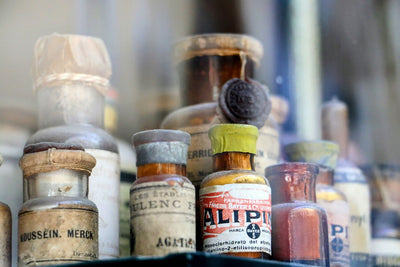
Photo by lovingimages via Pixabay.
Australian states regulate drugs largely through poisons and drugs schedules, lists that sort substances by the level of control they carry. Reports say cannabis was added to these schedules in the early to mid 20th century. I could not verify exact dates for any state, so none are given here.
The practical effect of scheduling is easy to describe. Possession, supply and cultivation became offences, and the rules applied to the plant as a category. Hemp fell under the same regime as the drug plant.
That is the structural problem for anyone wanting to grow fibre. The scheduling approach, as described in these reports, made no legal distinction between low-THC fibre varieties and high-THC cannabis. A paddock of industrial hemp and a concealed crop of the drug plant were, on paper, the same species and the same offence.
I have deliberately not put arrest figures or enforcement statistics here. None appear in the research, and inventing them would add false precision to a story that already has gaps. What the framework shows is how a fibre crop vanished into a drug category without anyone needing to target it directly.
The Licensed Return of Hemp and Medicinal Cannabis

Photo by Nicole Parker via Unsplash.
The reversal has run on separate tracks, and each needs its own check. Industrial hemp cultivation reportedly returned under state licensing in the 1990s, with Tasmania among the first. That is unverified; state agriculture departments are the right source once consulted.
Food came later. Hemp seed foods were reportedly approved for human consumption by Food Standards Australia New Zealand, effective 12 November 2017. Confirm that on foodstandards.gov.au before quoting it.
Medicine followed its own path. Medicinal cannabis has reportedly been legal federally since the Narcotic Drugs Amendment Act 2016. The Therapeutic Goods Administration (tga.gov.au) and the Office of Drug Control (odc.gov.au) publish the current rules and should be the reference point.
The ACT's 2020 personal-possession law is a separate track again, and its details should be confirmed on ACT legislation sites.
Laws change. I did not check recent state reviews, such as Queensland's, so nothing here reflects the 2026 position. Readers should verify current rules for their own situation with the relevant regulator.
The lesson of the timeline is how slow and uneven prohibition was, arriving one state at a time rather than in a single stroke. It came through treaty obligations and state parliaments over decades, with 25 years between the first and last state law in the UNODC account. The reversal has been just as piecemeal. Hemp, food and medicine each reopened through a different door, run by a different regulator.
What remains unsettled is mostly the record itself. Whether hemp was really sown after 1788, what the 1930s laws actually said about cannabis, and when Victoria and the federal government acted are all open questions. Archives like Trove and the State Library of NSW could answer them, and until someone does, this history has holes worth admitting.