Bangladesh's Ganja Seizures Show a Policy Frozen in Place
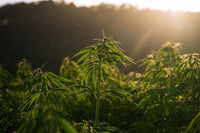
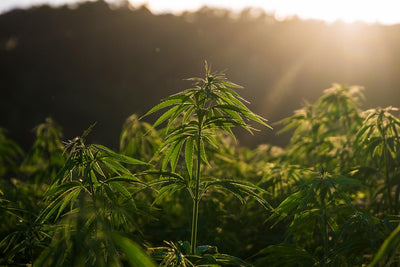
Photo via Unsplash.
On September 9, 2026, members of the Border Guard Bangladesh's Feni Battalion-4 intercepted a shipment of 34 kilograms of Indian cannabis moving through the Chhagalnaiya border area. No arrests made headlines, no minister issued a statement, and within a week the story had vanished from the news cycle entirely. That's not because the seizure was unusual — it's because this exact scene, give or take a few kilograms, plays out along the Bangladesh-India frontier almost every week.
Scroll through BGB press releases from just the past two months and a pattern emerges quickly: cannabis seizures cluster in the range of single-digit to low-hundred-kilogram amounts, showing up as one line item among several substances rather than as the operation's main event. Compare that to yaba, the methamphetamine-caffeine pill flooding in from Myanmar, where hauls routinely run into the hundreds of thousands of tablets, and the imbalance becomes hard to ignore. Cannabis, on paper, is treated as a dangerous narcotic under Bangladesh's Narcotics Control Act, carrying penalties from 15 years to life imprisonment. In practice, along the border and in the streets, it barely registers as a priority.
That gap — between statutory severity and operational indifference — is the real story here. It's not a sign of reform, and it's not a crackdown either. It's a policy that has been sitting untouched for so long that enforcement patterns and public tolerance have simply drifted along without it.
A Pattern of Small Hauls Along the Border
Lay the BGB's own recent press releases side by side and the picture is remarkably consistent. On September 9, 2026, Feni Battalion-4 seized 34 kilograms of Indian cannabis in the Chhagalnaiya border area. A day earlier, on September 8, the 61 BGB recovered 21 kilograms of Indian cannabis valued at roughly Tk 73,500 in Munshitarai, Lalmonirhat — found alongside yaba tablets, liquor, and bidis in what looks like a routine mixed-contraband haul rather than a targeted cannabis operation. Go back a month further and the numbers barely shift. On August 11, BGB units across three separate districts — Brahmanbaria, Cox's Bazar, and Kushtia — recovered a combined 100 kilograms of cannabis, 7,100 yaba tablets, one firearm, and a batch of Indian leaf cigarettes, resulting in four arrests. Five days before that, on August 6, the Feni Battalion seized cannabis valued at about Tk 90 lakh in a single operation, while separately the 15 BGB in Lalmonirhat picked up six kilograms of cannabis along with cough syrup and a motorcycle used for smuggling.
What stands out isn't any single number — it's the sameness. Whether the haul is 6 kilograms or 100, whether it's reported from Feni, Lalmonirhat, Brahmanbaria, or Kushtia, the seizures sit comfortably within a narrow, unremarkable band. They read less like evidence of an active law enforcement priority and more like background noise: the kind of thing BGB units report because it happened during a patrol, not because cannabis smuggling triggered the operation in the first place. Multiply that pattern across dozens of press releases over a few months and you get a rhythm, not a campaign — steady, low-stakes, and largely uneventful by design or by neglect, depending on how you want to read it.
Cannabis Is the Sideshow, Yaba Is the Headline

Recent BGB seizures highlight the scale of cross-border trafficking, with an Aug 24 haul of 450,000 Yaba tablets far outweighing cannabis seizures of 100kg (Aug 11) and 34kg (Sept 9).
Set those cannabis figures against what BGB units are pulling in of yaba during the same stretch and the contrast becomes almost jarring. On August 24, 2026, BGB seizures in a single reporting window included 3 kilograms of methamphetamine in one operation and, separately, 450,000 illicit yaba tablets in another. Four hundred fifty thousand tablets, moved in one sweep, dwarfs anything reported for cannabis across the entire period — and this wasn't even an isolated spike. Yaba busts running into the tens or hundreds of thousands of tablets show up in BGB reporting with a regularity that makes the kilogram-scale cannabis hauls look almost incidental by comparison.
That's reflected in how the press statements themselves are structured. Cannabis, more often than not, appears as an accompanying item — mentioned in the same paragraph as liquor, bidis, cough syrup, or a smuggling motorcycle, rather than as the stated target of the operation. Yaba, by contrast, tends to anchor the release. The language, the emphasis, the sequencing all point toward where BGB command actually directs its intelligence and manpower along the frontier.
None of this means cannabis moves through the border unnoticed. It means cannabis enforcement, as practiced, is largely a byproduct of operations built around methamphetamine trafficking networks. Units patrolling for yaba shipments happen to intercept cannabis along the way, log it, and move on. There's no equivalent evidence of dedicated cannabis interdiction campaigns, no special task forces, no elevated seizure-value thresholds triggering ministerial attention the way large yaba busts sometimes do. The scale gap isn't just a statistical curiosity — it's a fairly direct readout of where Bangladesh's counter-narcotics resources and political attention are actually concentrated, and cannabis isn't it.
Across the Border, India Treats Cannabis Very Differently

Photo by Thắng-Nhật Trần via Pexels.
Cross the frontier into India and the enforcement posture looks noticeably different. On September 18, 2026, an Indian paramilitary border force seized approximately 325.5 kilograms of suspected cannabis in Arunachal Pradesh's West Kameng district — a single haul roughly ten times the size of Bangladesh's largest recent cannabis seizure. That case was processed as a formal matter under India's Narcotics Drugs and Psychotropic Substances Act, generating the kind of structured legal follow-through and media coverage that Bangladesh's weekly kilogram-scale seizures simply don't produce.
The comparison matters because both countries are working the same porous, forested, hard-to-monitor frontier zones. Geography alone doesn't explain why one side of the border treats a 325-kilogram cannabis seizure as a case worth building a legal record around, while the other side logs 21 or 34 kilograms as a routine footnote alongside liquor and bidis. If smuggling volumes were dramatically different on each side, that might account for the gap. But there's no strong reason to believe Bangladesh's actual cannabis trafficking flows are an order of magnitude smaller than India's — only that what gets caught, reported, and prosecuted diverges sharply.
That divergence points toward something more like policy posture than raw enforcement capacity. India's NDPS framework, whatever its own inconsistencies, still channels larger cannabis seizures into formal legal processing with some regularity. Bangladesh's Narcotics Control Act technically allows for equally serious, even harsher, consequences — but the seizures rarely reach a scale or profile that forces that machinery into motion. Even summed across weeks, Bangladesh's cannabis hauls stay small enough to be absorbed quietly into routine BGB reporting rather than becoming the kind of case that demands a courtroom outcome. That's not an accident of geography. It's a reflection of where cannabis sits on the list of things Bangladeshi enforcement actually treats as urgent.
Fifteen Years on Paper, Tolerance in the Streets

Photo via Unsplash.
The legal architecture is not ambiguous. Bangladesh's Narcotics Control Act, originally enacted in 1990 and substantially updated in 2018, classifies cannabis alongside other dangerous narcotics. Simple possession can draw up to 15 years in prison; trafficking charges range from five years to life imprisonment, depending on quantity. On paper, this is one of the more punitive cannabis regimes in the region.
In daily practice, that severity rarely translates into consistent prosecution of ordinary users. A May 2026 investigation by Netra News documented how police raids targeting cannabis users are frequently filmed by officers or bystanders and shared on social media — turning what the law frames as a serious narcotics offense into a kind of viral public spectacle rather than a case pursued through the courts with any consistency. The same investigation found that Bangladesh's drug enforcement apparatus disproportionately catches the poorest users, who cycle repeatedly through arrest and release without the resources to avoid re-arrest or navigate the legal system, while wealthier users and larger networks face comparatively less exposure.
There's a historical irony sitting underneath all of this. Bangladesh — as part of undivided Bengal — was once a significant global cannabis-producing region, organized enough that farmers formed the Naogaon Ganja Cultivators' Cooperative Society in 1917 to coordinate cultivation and sale. Ganja wasn't a fringe crop; it was a recognized agricultural product with organized producer interests decades before prohibition arrived. That prohibition, when it came, was driven substantially by international pressure — colonial-era and later global anti-narcotics conventions — rather than by any groundswell of domestic demand to criminalize the plant. The 15-year sentence on the books today sits on top of that history somewhat awkwardly, a legal inheritance from external pressure applied to a substance that had deep, organized agricultural roots inside the country long before anyone in Dhaka decided it needed banning.
No Reform on the Horizon

Photo via Pexels.
None of this is building toward reform. Public opinion in Bangladesh on cannabis remains genuinely divided rather than trending in any particular direction — there's no visible surge of polling, editorial pressure, or grassroots campaigning suggesting the public mood is shifting toward decriminalization. What activism does exist pushing for looser cannabis laws is limited in scale and has yet to find real political traction in a legislature focused on other priorities.
Analysts watching Bangladeshi drug policy don't see signs of an amendment to the Narcotics Control Act on the near-term horizon. There's no pending bill, no ministerial commission, no signal from major political parties that cannabis policy is even on the agenda for debate. The steady, low-intensity rhythm of BGB border seizures — those weekly kilogram-scale hauls tucked in among yaba busts and liquor confiscations — mirrors that political stillness almost perfectly. Enforcement continues because the law requires some enforcement activity, not because anyone in government is recalibrating how seriously to take cannabis relative to methamphetamine or other narcotics.
That puts Bangladesh somewhat out of step with a broader regional and global conversation. Thailand decriminalized and then partially recriminalized cannabis within a few turbulent years. India's states debate hemp cultivation policy with increasing openness. Globally, dozens of jurisdictions have moved toward medical or recreational legalization frameworks over the past decade. Bangladesh's policy conversation, by contrast, remains largely disconnected from any of that momentum — not actively resisting reform so much as simply not engaging with the question at all. The 15-year sentence stays on the books, the border seizures stay small and routine, and the gap between law and practice stays exactly where it's been for years.
Add up every cannabis seizure reported by BGB units over these past few months — the 34 kilograms in Feni, the 21 in Lalmonirhat, the 100 spread across three districts, the six kilograms found with a smuggling motorcycle — and you still land well short of a single large yaba bust from the same period. That's the tell. This steady drip of modest hauls isn't evidence of a crackdown gaining momentum or a law finally being taken seriously after decades on the books. It's evidence of a policy running on autopilot, enforced just enough to generate a press release, never enough to suggest anyone in Dhaka is treating cannabis as an urgent problem.
It's worth sitting with the historical irony a bit longer. This is a country whose farmers organized the Naogaon Ganja Cultivators' Cooperative Society back in 1917, coordinating cultivation and sale of a crop that was, at the time, simply agriculture — not contraband. A century later, the same plant carries a potential 15-year prison sentence for simple possession, a law imported largely under international pressure rather than grown from domestic consensus. That history doesn't sit comfortably next to current statute, and nobody in a position to change it seems particularly bothered by the discomfort.
Barring a shift in public activism or political will that isn't currently visible on the horizon, expect more of exactly this: kilogram-range cannabis seizures quietly logged alongside far larger yaba busts, filed, reported, and forgotten within the week. The law stays harsh. The enforcement stays incidental. And nothing about that combination looks likely to change anytime soon.
Sources
- Bangladesh's border force seizes over 100,000 illicit tablets | Ghana News Agency
- BGB seizes Indian drugs, smuggled goods worth Tk60 lakh in Kushtia | District
- BGB seizes contraband goods, drugs worth Tk 3.63 crore in separate border drives | Others
- BGB seizes drugs, firearms, fertiliser, smuggled goods in eight drives | Others
- BGB recovers yaba, drugs, medicines, arrests 2 | Others