Bhang, Kif, and Boat Noodles: Cannabis in World Cuisine
Photo by stevepb via Pixabay.
Long before "cannabis edibles" became a marketing category in Denver or Amsterdam, cooks in India, Morocco, and Thailand were already grinding cannabis leaf into paste, folding it into candy, and simmering it into broth. These weren't experiments born of legalization debates or dispensary menus -- they were kitchen practices passed down through generations, tied to specific festivals, specific regions, specific recipes with names and histories attached to them.
Three traditions make the point clearly. In India, bhang -- a paste made from ground cannabis leaves and flowers -- gets whisked into drinks and sweets during Hindu festivals, a practice with roots that stretch back to the Vedic period. In Morocco, kif is smoked through a distinctive long-stemmed pipe while majoun, a cannabis-infused confection built on honey and nuts, gets passed around at gatherings that sometimes carry Sufi religious weight. In Thailand, cannabis root once flavored the broth in boat noodle soup, a street food staple, while old cookbooks call for tender ganja leaves in curry.
None of this is fringe. The Asian Cannabis Report estimates that roughly 15 million people in India -- close to 1% of the country's population -- consume bhang every year, mostly during Holi and Maha Shivaratri. That's not a subculture. That's a mainstream seasonal food custom on the scale of eggnog at Christmas, and it deserves to be understood as a living tradition with deep roots, not a novelty dressed up in cannabis-leaf branding.
Bhang: India's Vedic-Era Kitchen Staple

Photo by Pixelsnap Visualz via Unsplash.
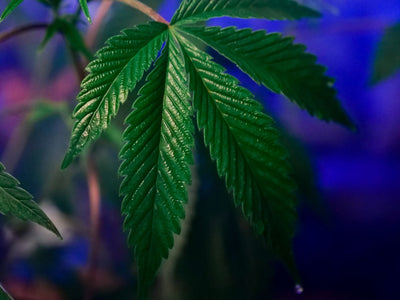
Bhang starts as a paste. Cannabis leaves and flowers get ground down, sometimes with a mortar and pestle, sometimes with more modern equipment, until they form a dense green material that can be worked into liquids or dough. From there it goes in two directions: drinks like thandai and lassi, where the paste gets blended with milk, spices, and sugar, or sweets like gujiya and pakora, where it's folded into the filling or batter before frying.
The textual record for this practice is unusually long. References to cannabis cultivation appear in the Vedas, with scholars dating some of that material to roughly 1500 BC, and by around 1000 BC there's documented use of cannabis in drink and food preparations specifically. That's not a rough guess pieced together from folklore -- it's a written tradition that predates most of the world's current religions.
Bhang's modern high points are Holi, the spring festival of color, and Maha Shivaratri, the night devoted to Shiva, who is himself associated with cannabis in Hindu tradition. Consumption spikes hard in cities like Mathura and Varanasi during Holi, where bhang is treated less as an intoxicant to hide and more as a ritual food to share, often distributed openly at temples and street stalls.
Outside observers documented all this centuries ago. The Portuguese physician Garcia de Orta described bangue in detail in his 1563 text Coloquios dos simples e drogas da India, one of the earliest European medical texts on South Asian plants. Three decades later, the Dutch traveler Jan Huyghen van Linschoten devoted three pages to it in his own 1596 account -- not as a curiosity glimpsed once, but as an established part of daily and ritual life he felt needed real explanation.
India's current law reflects that long history awkwardly. The 1985 NDPS Act criminalized cannabis broadly but carved out an exception for bhang, and enforcement varies wildly by state. In Varanasi, government-licensed Bhang Shops operate in plain sight, selling bhang lassi to tourists and pilgrims alike, a legal quirk that only makes sense once you know how far back the custom goes.
Morocco's Kif and Majoun: From Sebsi Pipe to Sweet Jam

Photo by Rachid Oucharia via Unsplash.
Kif isn't cannabis flower smoked on its own -- it's dried, crumbled cannabis mixed with tobacco, traditionally packed into the narrow bowl of a sebsi, a long wooden pipe with a small clay or metal head. The ritual of preparing and passing a sebsi has its own etiquette in Morocco, closer to how a hookah gets shared than how a joint gets passed. Eating cannabis, rather than smoking it, shows up in a different preparation entirely: majoun, a chewy candy or jam that blends cannabis with honey, chocolate, and nuts. Majoun has historically been shared at social gatherings and, in some contexts, used within Sufi religious practice, where altered states of consciousness carried spiritual meaning rather than recreational intent.
Kif use expanded significantly during the Saadian dynasty in the 16th and 17th centuries, a period that also produced real theological debate. Islamic scholars disagreed, sometimes sharply, over whether kif's mild intoxication fell under the same prohibitions as wine, and that argument never fully resolved -- it just got absorbed into regional practice, tolerated in some areas and condemned in others.
That ambiguity persists in Moroccan law today, just in a modernized form. In June 2021, Morocco's parliament legalized cannabis cultivation for medical, cosmetic, and industrial purposes, a major policy shift for a country long associated with illicit hashish production in the Rif Mountains. Recreational kif, though, remains technically illegal, even as it continues to be smoked openly and tolerated widely in practice.
The state has also started addressing the human cost of decades of prohibition. In 2024, King Mohammed VI pardoned nearly 5,000 people who had been convicted over illegal cannabis cultivation, most of them small farmers rather than traffickers. And in 2025, Morocco shipped its first legal hashish export -- 50 kilograms sent to Australia's medical cannabis market -- turning a centuries-old cash crop into a legitimate line item in international trade for the first time.
Thailand's Ganja Cuisine: Boat Noodles and Ancient Cookbooks

Photo by Markus Winkler via Pexels.
Thailand's oldest known cookbook, Mae Khrua Hua Pa, was first printed in 1908, and it includes a recipe for eel curry that calls specifically for tender ganja leaves. That single line in a century-old text undercuts any assumption that cannabis cooking in Thailand is a recent tourist-driven fad tied to the country's 2022 decriminalization -- it was written down as ordinary kitchen practice well over a hundred years ago.
The more famous example is boat noodle soup, a rich, dark broth sold from small boats along Bangkok's klongs and now a staple of Thai street food more broadly. Traditional recipes use cannabis root, not the leaves or flowers, infused into the broth for flavor and depth rather than for any strong psychoactive effect -- root contains far less THC than the rest of the plant, which is likely exactly why it became the kitchen ingredient of choice.
Dr. Waleerat Kraikosol of Chao Phraya Abhaibhubejhr Hospital has traced herbal cannabis use in Thailand back to the Sukhothai Kingdom, roughly 1239 to 1438 CE, when dried, ground cannabis leaves were mixed with honey and used as a sleep aid. That folk remedy, simple as it sounds, is thought to have evolved over the following centuries into the broth and curry preparations Thai cooks still use today -- a straight line from home medicine to restaurant menu spanning nearly 800 years.
Even the word ganja carries its own migration story. It likely reached Thailand by way of Jamaica rather than directly from India. Between 1845 and 1917, roughly 40,000 Indian indentured laborers were brought to Jamaica to work sugar plantations, bringing cannabis and the Hindi-derived word ganja with them. From there the term spread through global trade and migration networks before resurfacing in Southeast Asian cooking -- a reminder that food words, like foods themselves, rarely travel in a straight line.
Why These Traditions Endured Where Others Were Erased

Photo by Jameson Berrios via Unsplash.
What kept these traditions alive while so many other regional drug customs got stamped out by colonial and post-colonial law is, in large part, religion. Bhang's tie to Hindu festival worship of Shiva gave it a cultural legitimacy that was hard to legislate away entirely, even under British colonial drug policy and later Indian federal law. Kif and majoun's association with Sufi practice in Morocco provided similar cover -- authorities could restrict recreational use in theory while religious and social custom kept it functioning in practice.
The colonial-era written record is oddly revealing on this point. When Garcia de Orta and Jan Huyghen van Linschoten documented bangue in the 1500s, they weren't writing moral condemnations -- they were cataloguing a plant of trade and medical interest, the same way they'd write about pepper or cinnamon. Criminalization came centuries later, layered on top of practices that European observers had once simply treated as regional fact.
Legal ambiguity itself has turned out to be more durable than anyone might expect. India's state-by-state patchwork under the NDPS Act and Morocco's 2021 law, which legalized cannabis for medical, cosmetic, and industrial use while leaving recreational kif in a gray zone, both function less as clear prohibition and more as a permissive fog that longstanding food customs slip through relatively undisturbed.
Global cannabis reform is now starting to intersect with these old traditions in new, concrete ways. Morocco's 2025 hashish export to Australia's medical market is a direct product of a legal framework built on top of a centuries-old cultivation base in the Rif. That kind of overlap matters, because it complicates a narrative that's become common in Western cannabis media -- the idea that cannabis food and drug culture is a modern, Western-driven invention that other countries are only now catching up to. The record shows the opposite sequence in several places.
Set side by side, bhang, kif and majoun, and Thailand's ganja-infused broths show cannabis operating as a normal culinary ingredient across three very different religious and legal systems -- Hindu festival food, a preparation tied to Sufi practice in an Islamic country, and a Buddhist kingdom's folk medicine turned street food. In none of these places did cannabis arrive as a countercultural import. It arrived as food, and stayed as food, often for over a thousand years before anyone in the West started talking about edibles.
That history is doing real work right now. As countries like Morocco and Thailand rewrite their cannabis laws -- Morocco moving toward legal hashish exports, Thailand having briefly decriminalized cannabis outright before tightening rules again -- reformers in both places have pointed to these older food traditions as evidence that cannabis use has legitimate, non-Western precedent going back centuries, not something imposed by outside legalization movements.
Anyone curious enough to actually try bhang lassi in Varanasi, majoun at a Moroccan gathering, or a bowl of boat noodles made the old way should keep one thing in mind: tolerance is not the same as legality, and legal status here shifts enormously by country and even by region within the same country. Checking current local law before assuming a centuries-old custom is automatically permitted now is just common sense -- these traditions have survived by adapting to legal gray zones, not by ignoring them.