Bhutan's Wild Cannabis: From Pig Feed to a Post-2020 Grey Zone
Photo by Maria M. via Pexels.
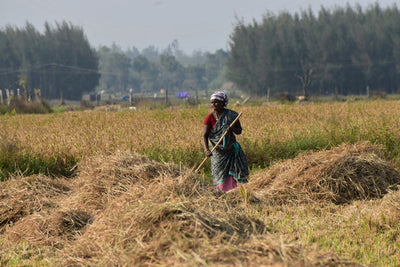
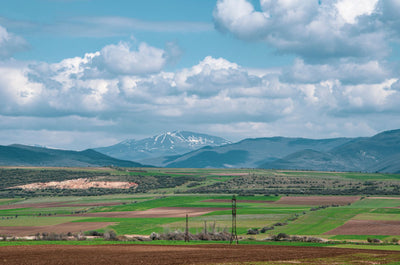
Drive the switchback roads above Thimphu or Punakha in late summer and you'll see it everywhere, growing in drainage ditches, at the edges of barley fields, in the gravel shoulders of highway construction sites: cannabis, tall and rangy, nobody's crop. No one planted it. No one waters it. It just comes up every year the way crabgrass does in a Midwestern lawn, except this particular weed happens to be the most tightly regulated plant on earth in most of the rest of the world.
For generations, Bhutanese farmers didn't think of it as a drug at all. They fed it to pigs, chopped it into their feed to fatten them before slaughter, and stripped its stalks for coarse fiber used in rope and cloth. That's a genuinely odd starting point compared to how almost every other country on the planet has related to this plant, and it's the key to understanding why Bhutan's cannabis policy looks so strange from the outside today. In late 2020, the government announced it would legalize recreational marijuana sales within nine months -- a headline that stunned South Asia watchers given Bhutan's reputation for cautious, consensus-driven governance. Then the deadline passed without a single legal dispensary opening. What's left now is neither old-fashioned prohibition nor anything resembling legalization. It's a genuine grey zone, and understanding it means looking at Bhutanese farming tradition, courtroom statutes, and -- more than anything else -- Bhutan's one overwhelming trading relationship, with India.
A Weed Nobody Planted: Cannabis as Pig Feed and Fiber

Photo via Pexels.
The plant growing wild across Bhutan's mid-altitude valleys is a narrow-leaf sativa landrace sometimes called Thimphu cannabis, a strain with Southeast Asian roots known among the people who do notice it for a sweet-and-sour taste and a long, cerebral high. But for most of Bhutanese history, almost nobody was smoking it. In Dzongkha it's called kenam, and its two traditional uses had nothing to do with intoxication: farmers fed the chopped plant to pigs to help fatten them for slaughter, and they processed the stalks into coarse fiber for textiles and rope, the same way hemp was used across much of pre-industrial Asia and Europe before synthetic fibers took over.
Bhutanese officials who've spoken about the country's drug history often trace the shift in public awareness to a single policy moment: the 1999 legalization of television. Before that, Bhutan was one of the last countries on earth without broadcast media, and the government's decision to open the airwaves also opened a channel for outside youth culture, foreign films, and the recreational framing of cannabis that the rest of the world had long since settled into. It's a striking data point that Bhutan's first recorded drug-abuse arrest didn't happen until 1989, in Gelephu, and that as late as 2002 the International Narcotics Control Board noted in its own reporting that Bhutan had no documented history of cannabis abuse.
That timeline matters because it reframes what's actually being told here. This isn't primarily a story about drug enforcement policy evolving in response to addiction or crime. It's a story about a plant that spent centuries completely outside the category of drug in Bhutanese life -- livestock feed and fiber, full stop -- only being pulled into that category once broadcast television, and later tourism and smartphones, imported a framework that didn't previously exist on the ground.
When the Government Started Counting: Seizures and the 2011 Penal Code
Once Bhutan started opening up through broadcast media and, soon after, a carefully managed tourism industry, its government began treating cannabis less as a non-issue and more as a genuine public-health and youth-behavior concern. The seizure numbers from that period tell the story bluntly: Bhutanese authorities confiscated about 4 kilograms of cannabis in 2010. The following year, that figure jumped to 75 kilograms. That's not a gradual uptick -- it's a sign that both actual use and enforcement attention shifted hard and fast within a single year.
The 2011 penal code update formalized cannabis as a controlled substance for the first time in a way that gave courts clear sentencing guidance. Simple possession became a misdemeanor carrying up to three years in prison. Possession with intent to sell, once quantities crossed 50 grams, escalated to a felony carrying up to nine years. These weren't token numbers -- they put Bhutan's cannabis penalties in a similar range to other South Asian jurisdictions with far longer histories of drug enforcement.
What distinguished Bhutan's approach even at this early stage was the discretion built into the system. Courts retained the authority to waive incarceration for offenders who agreed to enter counseling or rehabilitation programs instead, an option that reflects Bhutan's broader Gross National Happiness-inflected philosophy of governance, which prioritizes social reintegration and psychological wellbeing over pure punishment in a lot of its domestic policy. This wasn't drug-war rhetoric transplanted wholesale from Washington or Delhi; it was Bhutan trying to fit an imported legal category onto a local situation using its own institutional instincts.
This 2011 framework turned out to be foundational. It set the legal baseline that the 2015 Narcotic Drugs, Psychotropic Substances and Substance Abuse Act would later formalize and expand, and it's the same baseline that the 2020 reform push would attempt, and ultimately fail, to meaningfully unwind.
The Nine-Month Promise: Bhutan's 2020 Legalization Announcement

Photo via Pexels.
In late 2020, Bhutan's government made an announcement that caught almost everyone covering South Asian drug policy off guard: it would legalize recreational marijuana and allow retail sales within nine months. For a country known internationally for cautious, deliberate governance and a careful curation of its global image, this was a sharp reversal, and it was reported as a potential first for the entire South Asian region -- no neighboring country, including India, Nepal, or Bangladesh, had anything close to a legal recreational cannabis retail framework.
Nine months came and went. No retail licensing framework materialized, no dispensaries opened, and the ambitious legalization plan was never formally implemented. What emerged instead, under a newly elected government, was something much narrower: a bill aimed at decriminalizing possession of up to 50 grams and reducing fines for people caught with cannabis for the first time. That's a meaningful change for ordinary Bhutanese citizens facing minor possession charges, but it's a world away from the retail legalization that had been floated a year earlier.
Then-Prime Minister Dr. Lotay Tshering was unusually direct about why the bigger plan had been shelved. He stated plainly that the sale of cannabis could not be legalized in Bhutan, full stop, closing the door on the commercial retail model that had generated international headlines. At the same time, he pointed to a separate and much narrower cabinet decision: allowing a private company to cultivate marijuana for research purposes in Samtse, under the authority of the existing 2015 Act. Tshering was careful to draw a clear line between that research cultivation program and anything resembling commercial legalization -- one is a controlled, government-sanctioned experiment with a specific research mandate, the other would have meant an open retail market. Only the first survived.
Why India Has the Final Word

Photo by K via Pexels.
Tshering's explanation for walking back full legalization wasn't framed around morality, public health, or even domestic enforcement capacity. It was blunt and economic: Bhutan has no trade agreement with India that covers marijuana, and India is, without real competition, Bhutan's dominant trading and economic partner. He also noted that New Delhi remains strictly opposed to cannabis legalization at the national level, even as individual Indian states have started their own separate conversations about hemp cultivation and medical cannabis policy.
That asymmetry matters enormously given Bhutan's geography. Bhutan's economy and nearly all of its import and export routes run through India, primarily via land crossings like Phuentsholing. There's no meaningful port access, no alternative major trading partner positioned to absorb a legal Bhutanese cannabis export industry, and no obvious domestic market large enough to sustain a retail industry on its own given Bhutan's population of under 800,000. Unilateral legalization, in that context, would be close to commercially meaningless -- Bhutan could legalize sales domestically, but without Indian cooperation on trade, transit, and banking, there's no path to building an actual industry around it, and significant risk of friction with its most important neighbor and economic patron.
This is really the core insight of Bhutan's cannabis story: the brake on reform isn't internal cultural resistance or enforcement capacity, since Bhutan's institutions clearly had the legal infrastructure and political will to move toward decriminalization. The brake is external dependency, a small landlocked kingdom calibrating its domestic drug policy against the preferences of the one country whose cooperation its entire economy depends on.
The Samtse research-cultivation permit is best understood in that light. It's not a loophole or a half-measure -- it's Bhutan deliberately testing exactly how far the 2015 Act's existing language can stretch for scientific and pharmaceutical research purposes, without ever crossing the line into commercial retail that would require the kind of cross-border trade cooperation India currently won't offer.
The Law on the Books Today: Schedule II, the BFDA, and Border Screening

Bhutan's cannabis penalties escalate sharply with offense severity, from about 3 years for personal possession to roughly 20 years for trafficking—a nearly sevenfold increase.
The law currently governing cannabis in Bhutan is the Narcotic Drugs, Psychotropic Substances and Substance Abuse Act of 2015, amended in 2018, which replaced an earlier 2005 Act and classifies cannabis as a Schedule II controlled substance. Administration of the Act now sits with the Bhutan Food and Drug Authority, which absorbed the regulatory responsibilities once held by the Bhutan Narcotics Control Authority. Criminal cases arising under the Act are prosecuted through the Royal Court of Justice, Bhutan's judicial branch.
Under Section 124, possession of cannabis for personal use is treated as a misdemeanor, carrying a sentence range of one to three years. Once quantities cross defined trafficking thresholds, Section 117 escalates the charge to a felony, with sentencing ranging from five years up to life imprisonment -- a significant jump that reflects how seriously Bhutanese law treats distribution and trafficking compared to simple possession.
Enforcement isn't theoretical. Customs officers working under the Department of Revenue and Customs actively screen for cannabis at Bhutan's main points of entry: Paro International Airport, the land crossing at Phuentsholing on the Indian border, and the Samdrup Jongkhar crossing further east. Tour-group baggage is a routine focus for these screenings, since Bhutan's tourism model concentrates most visitors into organized group itineraries, and concealment attempts inside luggage are a recurring category of case that customs officers are trained to watch for.
It's worth saying clearly: laws and enforcement priorities shift, and Bhutan's cannabis framework has already changed meaningfully twice in the past decade and a half. Anyone traveling to Bhutan, doing business there, or researching its drug policy for academic or legal purposes should verify the current state of the law directly rather than relying on any single summary, this one included.
It's tempting to read Bhutan's 2020-21 episode as a failed legalization story, a government that got cold feet or buckled under some unnamed domestic pressure. That's not quite what happened. It's closer to a government running headlong into the actual limits of its own sovereignty, discovering that legalizing a plant domestically means very little when your only significant trading partner won't recognize it as a legal commodity and controls nearly every road and port your economy depends on.
The grey zone persists for a second, deeper reason too: feral cannabis in Bhutan was never culturally coded as a vice to begin with. It was pig feed. It was fiber. The entire Western apparatus of drug scheduling, criminal penalties, and moral panic got bolted onto a plant that most Bhutanese farmers over the age of fifty still mentally file next to fodder crops, not narcotics. Bhutan is, in effect, legislating an imported framework onto a plant its own agricultural tradition never treated as dangerous, and that mismatch is exactly why the policy keeps lurching between decriminalization bills and research permits instead of settling anywhere clean.
If there's a real trigger to watch for future movement, it's probably not another Bhutanese election cycle or cabinet reshuffle. It's India. Individual Indian states are already experimenting with their own hemp and medical cannabis frameworks, and any meaningful shift at the national level in New Delhi -- a loosened trade posture, a formal hemp export policy, anything that changes how cannabis is categorized for cross-border commerce -- would do more to move Bhutan's policy than any amount of domestic political will. Bhutan has already shown it's willing to legislate boldly. What it's waiting on now isn't courage. It's permission from next door.
Sources
- In the Land of the Thunder Dragon, only the pigs get high - Mugglehead Investment Magazine
- Cannabis in Bhutan
- Unusual Facts About Bhutan - Breathe Bhutan
- Is Weed Legal in Bhutan? 2026 Cannabis Laws & Penalties
- 8 Reasons Why Bhutan is the Perfect Destination for the Socially Conscious, Culturally Curious Traveler - Culture-ist