Canada's Hemp Export Rules Meet a Moving EU Target
Photo by Robert So via Pexels.
Introduction
If you run a Canadian hemp operation and your export plan assumes that a cultivation licence and a shipping container are all you need to reach European buyers, you're about to learn a hard lesson in regulatory geography. The path from a field in Saskatchewan to a processing facility in Germany is paved with paperwork, and the rules on one side of the Atlantic don't always line up with the rules on the other, even when the numbers look the same. Canada's industrial hemp regime, folded into the Cannabis Act, treats hemp as cannabis for licensing purposes, which means every export shipment needs its own permit, and every product category faces its own set of permissions. Seed and grain move under one set of rules; whole plant material and extracts require a completely different licence track. And just when you think you've got the Canadian side figured out, you hit the European Union's novel food wall, where CBD ingestibles have been left in regulatory limbo after the Commission quietly terminated the authorization process for good. Meanwhile, Health Canada is finally consulting on a long-overdue overhaul of its hemp regulations, but that reform won't land until at least 2027, and it won't fix the fundamental mismatch between what Canada lets you export and what Europe actually lets you sell. This isn't a story about one simple rule change or a single barrier you can clear with enough patience. It's a layered, shifting landscape where timing, product type, and destination country all matter more than the THC percentage on your certificate of analysis.
What Canada Actually Requires to Export Hemp
Start with the paperwork, because that's where most export attempts either take shape or fall apart. Hemp cultivation, processing, and cross-border movement in Canada run through the Industrial Hemp Regulations (SOR/2018-145), which were folded in under the Cannabis Act when it replaced the previous federal framework governing cannabis. That regulatory shift mattered more than it sounds: hemp is legally cannabis in Canada, low-THC or not, and every permission a shipper needs traces back to that classification. There's no separate hemp-only statute floating free of the cannabis regime.
Holding a hemp cultivation licence doesn't automatically let you ship seed or grain across a border. Sections 9 and 13 of the regulations spell out that import and export activities have to be specifically listed on the licence itself. Health Canada issues licences with defined activity scopes, and if seed export isn't named on yours, you can't do it until you apply to have that authorization added. This trips up a fair number of first-time exporters who assume a cultivation licence is a general-purpose hemp business licence. It isn't.
Even with export rights on the licence, there's no annual blanket authorization that covers every load leaving the country that year. Each shipment needs its own export permit, and Health Canada reviews these case by case -- destination country, quantity, product form, and documentation all get checked before a permit is issued. Exporters selling into Germany or the Netherlands on a rolling basis end up filing repeatedly, shipment by shipment, rather than banking one approval for the whole season.
Product type is another place people get caught out. A hemp licence covers seed and grain movement, not whole plant material. Stalks, leaves, and other plant parts fall outside what a hemp licence permits for export -- moving those requires a licence under the Cannabis Regulations instead, the same framework that governs marijuana businesses. A company set up purely as a hemp grain operation generally isn't positioned to also export baled stalk or leaf biomass without a separate authorization covering that different regulatory track.
Applications for export permits go to a dedicated Health Canada inbox set up specifically for industrial hemp processing, not a general departmental address. Health Canada has set a non-binding service standard of 30 business days for processing, with an internal target of hitting that window in 85% of cases -- worth noting that it's a target, not a guarantee, so building slack into shipping schedules against European buyer deadlines is just practical planning.
Scale-wise, the program is real but not sprawling: as of October 2024, Canada had 737 industrial hemp licences on the books, 643 of them for cultivation specifically, alongside 93 approved cultivars cleared for the 2026 growing season.
A Regulatory Overhaul Is Coming, Just Not Yet

Photo by AymaneJed via Pixabay.
Exporters banking on a lighter-touch hemp regime shouldn't hold their breath just yet. Health Canada published a Notice of Intent in the Canada Gazette, Part I on May 15, 2026, formally kicking off consultation on amending the Industrial Hemp Regulations -- the framework that governs everything from seed sourcing to how much THC a stalk can carry before it stops being hemp and starts being cannabis in the eyes of the law. The department's stated rationale is straightforward: parts of the current regulatory load don't line up with the actual risk hemp poses. A field of fibre-and-grain hemp bred to sit well under the legal THC threshold doesn't need the same scrutiny as a psychoactive cannabis crop, and Health Canada is finally saying so in writing.
The scope of the consultation was broad enough to touch nearly every operational pressure point growers and processors deal with. Licensing came up, including how long approvals take and what renewal should look like. So did cultivation practices, THC testing protocols (a perennial complaint given how sampling and lab turnaround times can hold up a harvest), import and export procedures, rules around selling flowering hemp material, and record-keeping obligations that some in the industry argue exist mostly to generate paperwork rather than catch actual problems. For an export-oriented sector trying to serve European CBD buyers who have their own documentation demands, any streamlining on the Canadian side would matter.
The comment period closed June 30, 2026, giving industry roughly six weeks to weigh in -- a tight window, but not unusual for this kind of notice. What comes next is the slow part. Health Canada isn't expected to publish an actual proposed regulatory text in the Canada Gazette, Part II until around spring 2027, and that's the point where formal drafting, further comment, and eventual implementation timelines would start to take shape. Nothing changes operationally in the meantime.
It's also worth being clear about what won't loosen up no matter how the reform lands. Health Canada has signaled that controls preventing illicit cannabis from being disguised as low-THC hemp will stay firmly in place, as will the reporting Canada is obligated to provide under its international drug-control commitments. And cannabinoid extraction -- the CBD processing step that turns raw hemp biomass into the oils and isolates actually shipped to buyers in Germany, the Netherlands, or elsewhere in the EU -- sits entirely outside this consultation. That activity remains governed by existing cannabis processing licence requirements, untouched by whatever emerges from this hemp-specific review.
The EU Just Slammed a Door on CBD as Food

Photo by antonio filigno via Pexels.
On February 20, 2026, the European Commission quietly closed the book on a question the CBD industry had been waiting years to see answered. Through a pair of implementing decisions, Brussels terminated the novel food authorization procedures for both CBD extract (case NF/2020/2161) and hemp/Cannabis sativa L. preparations (NF/2020/2026) — and did so without adding either to the Union list of authorised novel foods. No transition period, no partial approval, no consolation prize. The applications were simply closed out.
That distinction matters more than it might sound. The novel food framework isn't a formality — it's the gate CBD has to pass through before it can be legally marketed as a food or food supplement anywhere in the EU's single market. With that gate now shut on these applications, CBD stays off the Union list at the EU level, meaning there's still no lawful path to sell it as an edible, tincture-as-supplement, or functional food ingredient under harmonized European rules. For Canadian hemp processors who spent the past several years building CBD isolate and distillate supply chains aimed at European wellness retailers, this is the regulatory floor falling out from under a specific product category.
The scale of what just got shelved is worth sitting with. Since the novel food consultation process opened, more than 200 separate CBD applications have been submitted by companies hoping to get their specific formulations cleared. As of the Commission's February decision, roughly 17 of those were still active under review by the European Food Safety Authority. The rest had already fallen away through withdrawal, incomplete data packages, or EFSA's persistent, unresolved questions about long-term toxicology data — particularly around liver function and reproductive health, the two areas EFSA has flagged repeatedly since it paused its safety assessments pending more research.
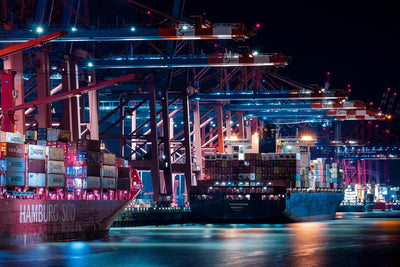
None of this touches hemp cultivation itself. The EU-wide 0.3% THC threshold for industrial hemp remains untouched by this decision and continues to govern what Canadian growers can legally export as raw fiber, seed, or grain. But CBD as a finished consumer product now sits in a strange, unsettled tier: not banned outright, but stripped of any EU-level pathway to legitimacy as a food. What happens next to a shipment of CBD oil landing at Rotterdam or Hamburg depends entirely on which customs desk and which national food authority it happens to cross.
THC Limits, Compared: Canada vs. the EU

Canada and the European Union both cap industrial hemp's THC content at the same legal limit of 0.3%, showing regulatory alignment between the two regions.
On paper, Canada and the EU look like they're speaking the same language. Health Canada's Industrial Hemp Regulations set the allowable THC threshold for approved cultivars at 0.3% on a dry-weight basis, measured in the flowering heads and leaves. The EU's agricultural subsidy framework, which governs which hemp varieties farmers can legally grow and still collect subsidies for, also caps THC at 0.3% -- a figure raised from the long-standing 0.2% limit as part of a prior reform. Two regulators, same decimal point. That convergence gets cited constantly by trade consultants pitching Canada as a natural fit for EU-bound hemp, and it's not wrong, exactly. It's just incomplete.
The number matching doesn't mean the testing behind the number matches. Health Canada requires pre-harvest sampling within a defined window before the crop is cut, using a whole-plant composite method that pulls from the top third of multiple plants across a field. EU member states, by contrast, largely follow the sampling and analysis method laid out in Commission Delegated Regulation frameworks tied to the bloc's agricultural subsidy rules, which specify their own timing windows and averaging methods -- and individual member states sometimes layer on national variations in how labs are accredited or how many samples constitute a valid test. A crop that reads comfortably under 0.3% under Health Canada's protocol isn't guaranteed to read the same way under a French or German lab's methodology, particularly if sampling happens at a different point in the plant's maturation. THC accumulates as the plant flowers, so timing differences of even a week or two can shift results meaningfully.
The bigger structural gap is what each jurisdiction is actually regulating. Canada's rules are built around cultivation and movement -- who can grow hemp, under what license, and what paperwork accompanies it out of the country. The EU's rules pick up on the other end, sorting hemp-derived products into regulatory categories: novel food, conventional food, cosmetic ingredient, or something else entirely, each with its own approval pathway and, in the case of novel food, its own pre-market authorization process under the Novel Food Regulation.
That's the trap. A shipment can leave Canada fully compliant -- correct cultivar, verified THC content, clean export documentation -- and still sit at an EU port of entry because customs or a national food safety authority classifies the finished product differently than the exporter assumed. CBD isolate destined for a cosmetic formulation faces one set of rules; the same compound marketed in an ingestible tincture triggers novel food scrutiny entirely separate from anything Health Canada ever asked about. THC compliance gets the shipment to the border. It doesn't get it through.
What This Means for Canadian Exporters Right Now

Photo by Wolfgang Weiser via Pexels.
Strip away the policy noise and the practical picture for a Canadian exporter shipping to Europe this quarter is narrower than most trade decks suggest. Seed and grain remain the workable lane. Cold-pressed hemp seed oil, hulled seed, protein powder, seed cake for animal feed — these move under established commodity frameworks without triggering the heavier controlled-substance apparatus that governs flower, leaf, and extract. If your business plan leans on whole plant material — biomass, trim, or extract destined for further processing in the EU — you're in a different regulatory category entirely, one that requires a separate Health Canada Cannabis Regulations export licence layered on top of your existing industrial hemp registration. That licence is not a formality; it demands its own security clearances, tracking obligations, and import authorization from the receiving country's competent authority before a shipment can even be scheduled. Companies budgeting timelines around seed-export experience routinely underestimate how much longer the plant-part pathway takes.
For anyone eyeing the EU's CBD food and supplement market specifically, the homework has to happen before contracts get signed, not after. Orally consumed CBD extracts sit in novel food limbo at the EU level, and until that status shifts, there is no EU-wide green light to chase. What actually matters is how individual member states have chosen to interpret and enforce that gap — and those interpretations diverge sharply. A product that clears customs and sells retail in one capital can be seized as an unauthorized novel food two borders over. Building a European CBD ingestible business without a country-by-country legal opinion isn't cutting corners, it's building on sand.
Pharmaceutical-grade hopefuls should stop treating EU-GMP certification and EudraGMDP listing as a milestone to hit once volume justifies it. Buyers in that segment won't sign off-take agreements without it, full stop, which makes the audit and listing process a day-one capital cost rather than a growth-stage upgrade.
It's also worth being blunt about timing: Health Canada's domestic hemp reform proposal, even on an optimistic spring 2027 track, changes nothing about how Brussels or individual EU regulators treat imported cannabinoid products. These are independent regulatory clocks running on separate continents, and conflating them is a planning mistake. Structure this year's shipments around the rules sitting on the books today.
Conclusion
If there's a single thread running through all of this, it's that the hemp export business is no longer a straightforward commodities trade. It's a regulatory chess match, and the board keeps changing. The Canadian side is in flux, with Health Canada's proposed reforms promising to ease some of the operational friction around licensing and testing, but those changes won't take effect for at least another year and won't touch the extract-processing side at all. The European side is even messier, with the novel food door slammed shut on CBD, leaving national authorities to interpret the void however they see fit. A shipment that passes muster in one member state can be seized in the next, and no amount of Canadian compliance will change that.
For exporters already in the game, the smart money is on sticking with seed, grain, and cold-pressed oil—the product categories that move under established commodity rules and don't trigger the heavier controlled-substance apparatus. Anyone banking on CBD isolate or distillate for the European wellness market needs to have a country-by-country legal strategy and a deep understanding of what each customs desk is actually enforcing, not what the EU's framework says on paper. And for the hopefuls eyeing pharmaceutical-grade contracts, EU-GMP certification isn't a future milestone—it's a day-one requirement that buyers won't negotiate on.
The regulatory divergence between Canada and Europe isn't going away. The two systems are built on different assumptions, different risk appetites, and different timelines. Health Canada's domestic reform will make life easier for Canadian growers, but it won't make Brussels any friendlier to CBD edibles. The only way to survive in this environment is to treat compliance not as a hurdle to clear once, but as an ongoing cost of doing business that shapes every shipment, every contract, and every product decision. The days of assuming that a low-THC crop and a shipping manifest are enough are over. The new reality is that the paperwork is the product, and the regulatory clock is always ticking.
Sources
- Is CBD legal in Europe in 2026? - Essentia Pura
- EU-GMP Certification for Cannabis: The Complete 2026 Gui | GrowerIQ
- CBD Import Regulations Europe 2026: UK & EU Guide | Hurcann
- Hemp CBD Legalization World Map: January 2026 Updated – Business Plan Templates
- EU CBD Novel Food: 2026 EFSA Safe Level | GrowerIQ