CBD for Anxiety Research in Czechia: What We Know
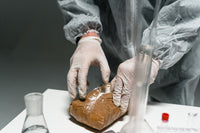
Photo by Elsa Olofsson via Unsplash.
Klecany sits just north of Prague, a campus of low buildings and tree-lined paths that houses the National Institute of Mental Health, known by its Czech initials NÚDZ. It is the kind of place where a cannabidiol-for-anxiety project would make sense. Czechia has spent more than a decade treating cannabis as a policy question to be managed rather than a moral panic to be fought.
I could not find a primary source describing any NÚDZ study on CBD and anxiety, so I do not describe its design, size, funding or status here.
So this article does something different from a standard trial write-up. It separates what is established from what still needs verification, and it gives you a working map: what the evidence on CBD and anxiety says, how Czech law shapes cannabinoid research, and what to look for in a trial registry before believing a headline.
Key takeaways
- Czechia has allowed prescribed medical cannabis for years, which gives domestic researchers a legal base to study cannabinoids.
- Human evidence for CBD and anxiety is promising but rests mostly on small or short studies, not large trials.
- Any claim about a specific NÚDZ anxiety trial should be checked against its registry entry before readers act on it.
What NÚDZ is, and what can and cannot be confirmed
NÚDZ is the Czech national research institute for mental health. It is based in Klecany, close to Prague, and its work covers psychiatry, neuroscience and the study of mental disorders. A public institute with that remit is a natural home for clinical research on anxiety treatments, which is why the idea of a CBD project there is plausible.
A CBD project there is plausible, but I found no sourced confirmation of one, so its design, sample size, funding and timeline stay out. Guesses would be worse than blanks.
You can check this yourself in a few minutes. Three places matter:
- The institute's own website, nudz.cz, including its news and research pages.
- ClinicalTrials.gov, searching for cannabidiol and anxiety alongside the institute's name.
- CTIS, the EU Clinical Trials Information System, which covers trials authorized under the EU regulation.
A genuine registry entry has recognizable features: a named principal investigator, a registration number, a recruitment status such as not yet recruiting or active, and a stated primary outcome measure. If an entry has none of these, treat it with suspicion.
The same rule applies to social media posts and news aggregators. A headline claiming NÚDZ is testing CBD for anxiety stays unconfirmed until it matches the institute's site or one of the registries. Repetition across sites that copy each other is not corroboration.
What the research on CBD and anxiety actually shows

Photo by CBD Infos via Unsplash.
Animal studies are the most consistent part of the picture. In rodents, CBD has repeatedly reduced anxiety-like behavior in standard tests. That is a useful signal for researchers, but animal results do not translate directly to patients, and plenty of compounds that calm a mouse have done nothing for people.
Human data is thinner. It includes small experimental studies, such as simulated public-speaking tests in people with social anxiety, where CBD has been compared against placebo in a single session. There are also open-label case series, in which everyone knows they are taking the product. Those can suggest a direction, but they cannot rule out expectation effects. Large randomized trials in people with diagnosed anxiety disorders remain scarce.
Dose is a second problem: studies vary in amount, formulation and treatment length, which makes results hard to compare, and in my view that is the biggest obstacle to a firm conclusion. There is no agreed clinical dose for anxiety, and anyone quoting one as settled is overstating the evidence.
Regulation reflects this uncertainty. The only CBD medicine authorized in the EU is Epidyolex, approved for certain seizure disorders. Use for anxiety is therefore off-label, or it happens in the supplement and hemp-product market with no medicinal approval behind it.
This is where a well-run placebo-controlled trial from a public psychiatric institute would add real value. It could standardize the dose, use validated anxiety scales and follow participants properly after treatment. Those are the features the field currently lacks.
The Czech legal backdrop for cannabinoid research
Czechia legalized prescription medical cannabis in the 2010s. Doctors prescribe it and pharmacies dispense it, with oversight from the State Institute for Drug Control, known as SÚKL. That framework gives clinicians a legal route to cannabis-based treatment and gives researchers a regulated setting to work in.
The country's pragmatism goes back further. For years now, possession of small amounts has been handled outside the criminal code, a long-running approach that predates many European debates on the subject.
The bigger question is adult-use regulation. Government plans to regulate adult-use cannabis, along with related addiction legislation, were in progress as of earlier reporting. I could not confirm where they stand now, so check current reporting before relying on any description of them.
Consumer CBD occupies a murkier space. Products sit under hemp rules and EU novel-food requirements, and that gray area means quality and legal treatment can vary from one product to the next. It is one reason clinical-grade research is more valuable than anything found on a shop shelf: a trial uses a defined product at a defined dose.
Laws change quickly. Before acting on anything here, check the Ministry of Health at mzcr.cz and SÚKL for the rules currently in force.
How to read a trial like this when results arrive

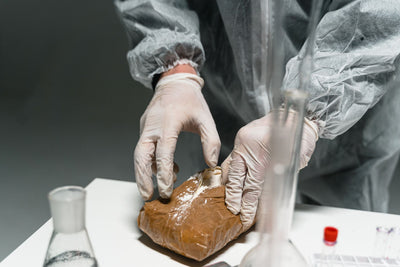
Photo by Jahra Tasfia Reza via Pexels.
When results from any CBD anxiety trial arrive, start with design. Was it randomized? Was there a placebo arm? Were participants and staff blinded? How many people took part, and how long did treatment last? A short study of a few dozen people tells you far less than a longer study of several hundred.
Next, look at the primary outcome. Validated anxiety scales such as the Hamilton Anxiety Rating Scale carry more weight than patient impressions alone. Be wary if the headline result is a secondary measure while the primary outcome quietly missed.
Safety reporting deserves equal attention. A credible report covers:
- Sedation and daytime drowsiness.
- Liver enzyme changes.
- Interactions with other medications that are processed by the same liver enzymes.
Then ask what kind of study it was. A pilot or feasibility study tests whether a design works and whether people will stay enrolled. A confirmatory trial is built to answer the clinical question and can change practice. Reporting a pilot as proof is a common error.
Finally, check the product. Pharmaceutical-grade CBD isolate and a full-spectrum extract containing other cannabinoids are different things, and results do not carry across formulations. A positive finding for one says little about the CBD oil sold in a wellness shop.
What this means for people dealing with anxiety

Photo by ovariancancer1 via Pixabay.
Current evidence does not support replacing established treatments, such as psychotherapy or prescribed medication, with CBD products. If something is working, changing it on the strength of a promising but unfinished research area is a poor trade.
Quality is the next practical issue. Over-the-counter CBD is uneven, and what the label says may not match what is in the bottle. A product that lists CBD content per dose and shows an independent lab result is the minimum to ask for.
CBD can also interact with other medications. Anyone taking prescriptions should talk to a doctor or pharmacist before starting, especially if the drugs are processed by the liver enzymes mentioned above.
In Czechia, the pathways differ. A physician can discuss whether medical cannabis is appropriate for a patient, within the prescription system overseen by SÚKL. Wellness-shop CBD sits outside that clinical pathway, with no medical supervision and no guarantee about what is in it.
The real story is the gap between public appetite and proof. Interest in CBD for anxiety is high, shelves are full, and the high-quality human evidence is thin. A well-designed trial from a public institute is exactly the kind of work that would narrow that gap, whether it ends up showing a benefit or not.
Until a NÚDZ study can be verified, I would treat claims about it as rumor. Open the institute's site, search ClinicalTrials.gov and CTIS, and look for a principal investigator, a registration number and a stated primary outcome. If those line up, you have a story. If they do not, you have a rumor.
Sources
- Cannabis for Anxiety and Mood Disorders - 1
- Researchers examine how CBD and therapy combo may have greater effects on anxiety - School of Medicine News - Wayne State University
- CBD for anxiety: Capsules almost halve chronic symptoms
- The acute effects of cannabidiol on emotional processing and anxiety: a neurocognitive imaging study
- Cannabidiol as a Treatment for Social Anxiety Disorder (R61)
- CBD for Anxiety: What the Research Actually Shows