Did the Nile Delta Really Supply Hemp Sailcloth?
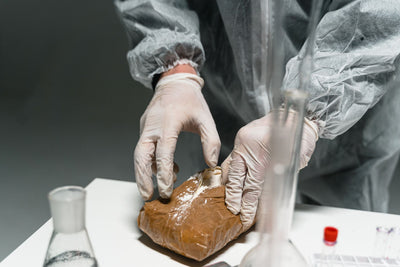
Photo by cottonbro studio via Pexels.
Canvas is cannabis in disguise. The English word comes from Latin cannabis, which borrowed it from Greek kannabis, and that single etymological fact is why a certain story about Egypt keeps circulating.
The story says the Nile Delta once grew hemp, wove it into sailcloth and shipped it to fleets around the Mediterranean. It sounds plausible. I could not find evidence that holds it up, and I am not going to repeat it as fact.
What follows is the real picture: what Egyptian sailors actually used for sails and rope, where hemp sailcloth came from in the documented record, and what is truly known, and still argued over, about cannabis in ancient Egypt.
Key takeaways
- Egyptian ships are documented with linen and papyrus, not hemp, so the Nile Delta hemp-canvas story lacks solid support.
- The word canvas descends from cannabis, but hemp sailcloth became a major trade good in Europe long after pharaonic Egypt.
- Evidence of cannabis in ancient Egypt, such as mummy studies, is disputed, and Egyptian law today prohibits cannabis.
The Claim, and Why It Sounds Believable

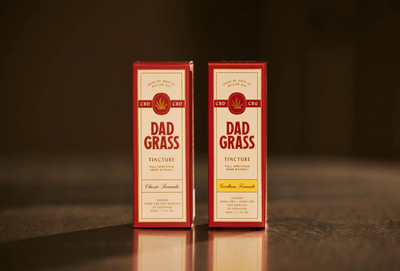
Photo by hervé Huguet via Pexels.
The version you will see online runs roughly like this. Egypt cultivated hemp in the Nile Delta, women and workshops wove it into heavy canvas, and merchants sold it to shipping fleets across the Mediterranean.
It borrows its credibility from a genuine fact. Canvas descends from cannabis, so hemp clearly has a deep link to sailcloth. A reader who learns that will naturally assume the story must have a historical base somewhere.
But etymology only goes so far. It tells us hemp was the classic sailcloth fiber in some places and periods. It says nothing about whether Egypt was one of them, or whether Egypt exported anything of the kind.
The research behind this piece turned up no solid source for Delta hemp exports. That is where the article starts, not something to bury at the end.
So the method here is simple. Look at what ships carried, what fibers survive in the archaeological record, and what texts and trade records actually say. Then see whether the hemp claim survives any of those three tests.
What Egyptian Sails and Rigging Were Actually Made Of

Photo by Teona Swift via Pexels.
Egypt's dominant textile was flax linen, and scholars generally describe Egyptian ship sails as linen. Flax was grown along the Nile, spun, and woven at every scale, from fine garments to coarse cloth.
Rope was a different matter. Papyrus fibers were used for cordage, and the same reed gave Egyptians lightweight boats for Nile travel. Palm fiber also served for rope, as did other plant fibers. Naming them matters, because the phrase plant material hides exactly the distinctions this debate turns on.
We have a good visual record of seagoing vessels. The reliefs of the Punt expedition in Hatshepsut's temple at Deir el-Bahari show ships under sail, rigged and loaded for a long voyage. They are among the best-known images of Egyptian shipping.
Reliefs do not tell you the fiber, though. Paint and carving show a sail, not a thread count or a plant species.
Identifying a fiber takes analysis. Surviving textile and rope fragments have to be examined under a microscope or otherwise tested, and the results published. Anyone claiming hemp in an Egyptian sail or rope should be able to point to those lab results. If they cannot, the claim is an assumption.
Where Hemp Sailcloth Really Came From
Hemp sailcloth and rope became strategically important to European maritime powers long after the pharaohs. The documented supply chains belong to the early modern world, not the Bronze Age Nile.
Russia and the Baltic are commonly cited as major hemp suppliers to naval powers such as Britain. Exact dates and volumes need checking against specialist maritime histories before anyone quotes them. The broad pattern, though, is well established in that literature.
Italy is the other name that comes up. Italian hemp-growing regions are associated with Venetian shipbuilding and its Arsenal, which needed enormous quantities of cordage and cloth. Which regions, and in which periods, is a detail to verify rather than assume.
The reasons are practical. Hemp is strong, and it resists rot better than many fibers in the damp, salty conditions aboard ship. A navy that depended on rigging had every reason to secure a dependable supply.
Set that beside Egypt. For Russia, the Baltic and Italy there are records of a trade, even if the details need checking. For the Nile Delta there is no comparable paper trail that I could find. The gap is the point.
What Is Known, and Disputed, About Cannabis in Ancient Egypt

Photo by hayriyenur . via Pexels.
Cannabis in ancient Egypt is a real subject, but a murky one. The best-known claims are cannabis pollen reportedly found with the mummy of Ramesses II, and a 1992 study by Balabanova and colleagues reporting drug compounds in mummies.
The Balabanova results were widely criticized. Contamination and the plausibility of the findings were among the objections. Anyone relying on them should read the primary papers and the published criticism, not a summary of either.
Some textual and residue findings have also been read as pointing to medicinal or ritual cannabis use. These are contested. They are best treated as open questions, not settled history.
Suppose some of it holds up and Egyptians did know cannabis. That would still not establish a hemp textile industry. Knowing a plant as medicine or incense is a long way from growing it by the field for sailcloth.
Firmer evidence of hemp fiber use, if it exists, would sit in the archaeobotany literature: identified plant remains, dated contexts, published methods. That is the place to look.
Egypt and Cannabis Today

Photo by Dimitra M.K via Pexels.
Cannabis is illegal in Egypt under its anti-narcotics framework, generally cited as Law 182 of 1960. Laws change and amendments happen, so verify the current text.
Egypt also has a place in the international history of drug control. It is associated with the 1925 Geneva international opium conference, where control of hashish was a major issue. The exact role of the Egyptian delegation should be confirmed against conference records.
Enforcement is a matter for the Anti-Narcotics General Administration. That is the institutional fact, and this article offers no commentary on the policy.
As for fiber, I found no confirmed Egyptian hemp industry, historical or modern, that would connect to the Delta canvas story.
Readers who need current specifics for any practical purpose should check the Egyptian Ministry of Health and recent news sources. I could not confirm whether anything has changed as of November 2026.
The Nile Delta hemp-canvas fleet makes a good story precisely because the word canvas hides a real cannabis connection. A neat etymology feels like evidence. It is not evidence of a trade.
Next time a hemp history claim lands in your feed, ask three things. Which fiber, exactly? Which lab identified it? What records show it was traded? If none of those has an answer, the claim is a story, however good.