France's CBD Flower Ban Reversal: What Changed on Retail Shelves
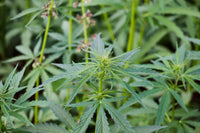
Photo by CRYSTALWEED cannabis via Unsplash.
Walk into a French hemp shop in early 2022 and you'd have found something strange: the shelves where flower used to sit were bare, but the CBD oils and extracts a few feet over were selling just fine. Same plant, same cannabinoid profile, same 0.3% THC ceiling — but one form was contraband and the other was commerce. That contradiction didn't survive long. Shops and growers sued almost immediately, and over the following year France's highest administrative court dismantled the ban in two stages before settling the question for good.
The Conseil d'État's December 29, 2022 decision, n°444887, annulled the flower ban as disproportionate, leaning on European Court of Justice precedent from the 2020 Kanavape case that had already established CBD isn't a narcotic. Flower and resin shelves have stayed put ever since — genuinely stable, which is rare in this industry. But stability in one product category didn't mean stability across the board. By 2026, France had opened a new front entirely, this time over gummies, oils, and teas sold as food supplements. This piece traces that whole arc: the 2021 arrêté that tried to split hemp into legal and illegal halves, the annulment that reunited them, and the edibles fight now sitting in front of the Conseil d'État again.
The 2021 Ban That Tried to Split Hemp in Two

Photo by Leandre C via Unsplash.
The arrêté signed on December 30, 2021 drew a line that made sense to bureaucrats and almost no one else. It barred the retail sale, possession, and consumption of raw hemp flowers and leaves by consumers — the actual bud, the thing you'd put in a grinder or a tea infuser. But the same text left the door wide open for that identical flower to be processed into extracts for industrial and commercial CBD products: oils, tinctures, cosmetics, whatever came out the other end of an extraction facility. The plant going in was the same plant. The THC content, capped at 0.3% under French and EU rules, didn't change depending on whether it was sold whole or run through a CO2 extractor first.
January 2022: An Emergency Brake on the Ban

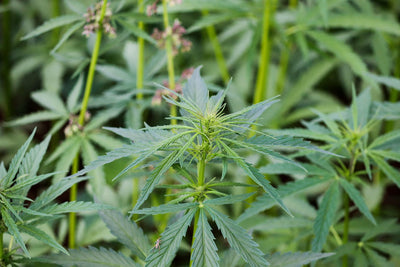
Photo by succo via Pixabay.
Retailers didn't wait long to test the arrêté in court, and they didn't have to wait long for an answer either. In January 2022, just weeks after the order took effect, the Conseil d'État granted an emergency suspension — a référé-suspension — that let flower sales resume on a provisional basis while the full case worked its way through the system. Emergency suspensions in French administrative law aren't granted lightly; a judge has to find both urgency and a serious doubt about the legality of the contested measure. Getting one this fast, this early, was a strong tell about where the eventual merits ruling would land.
The December 2022 Ruling That Settled the Question

Photo by Terrance Barksdale via Pexels.
Eleven months after the emergency suspension, the Conseil d'État delivered its final word. Decision n°444887, dated December 29, 2022, annulled the 2021 arrêté in its entirety. The court's language was direct: the prohibition on raw flower and leaf sales was disproportionate relative to the actual risk these products posed, given that their THC content sat under the legal threshold and posed no narcotic effect under the standard the CJUE had already laid out. That reasoning tied explicitly back to Kanavape — the 2020 EU ruling establishing that CBD extracted from the whole hemp plant doesn't qualify as a narcotic drug under European free-movement law, and that member states can't restrict its circulation on that basis.
The practical upshot has held for nearly four years now: fleurs et résines de chanvre under the 0.3% THC line can be sold legally to private individuals in France, provided the hemp comes from EU-catalogued varieties approved for cultivation. That's the baseline the industry has built around since early 2023, and it's the part of the French CBD market that's actually been boring — in a good way. One caveat worth repeating for anyone sourcing or selling commercially: THC thresholds, catalogued-variety requirements, and labeling rules are the kind of thing French regulators revisit, so treat any figure here as a starting point for verification rather than a permanent fact.
2026: The Fight Moves to Edibles

Photo by Erin_Hinterland via Pixabay.
Flower and resin, as of October 2026, remain exactly where the 2022 ruling left them — untouched, legal, stable. The fight has simply moved to a different shelf. On May 15, 2026, France implemented a ban on unauthorized ingestible CBD products: candies, teas, capsules, and oils marketed as food supplements, all pulled under the EU's Novel Food regulation, which requires pre-market safety authorization for ingredients without a documented history of consumption before 1997. Vaporization resins and cosmetics weren't touched. Flower wasn't touched. This was specifically about anything you're meant to swallow.
What made this land hard was the speed and the source. The Direction Générale de l'Alimentation announced a doctrine change in April 2026 ordering the withdrawal of any food product mentioning cannabidiol on its label, regardless of how much CBD the product actually contained. That reversed a control framework the DGAL itself had operated under since 2022 — a framework under which nearly 800 CBD food supplements had been formally registered on Compl'Alim, the government's own official declaration platform for food supplements. Industry groups say the shift came with no consultation period, no phase-in, nothing — products that had been legally registered one month were being ordered off shelves the next.
Industry Pushback and the Numbers at Stake

Pharmacies bear the brunt of the CBD edibles ban, with around 20,000 affected outlets—roughly eight to ten times more than the 2,000 hemp producers and 2,500 specialized shops impacted.
The industry didn't sit on this. On June 10, 2026, two trade unions, UIVEC and UPCBD, filed with the Conseil d'État, asking for an emergency suspension of the DGAL's control plan along with a full annulment on the merits. The unions put real numbers behind the filing: they value the broader CBD sector at roughly €200 million, spanning about 2,000 hemp producers, 20,000 pharmacies that carry CBD products, and 2,500 shops specializing in the category. Inside those specialized shops specifically, ingestible products reportedly account for around 40% of sales — which is exactly why this fight carries more weight for retailers than the 2021-2022 flower dispute did. Flower was never the biggest line item for most of these businesses; gummies and oils are.
The emergency hearing didn't go the industry's way. On July 10, 2026, the Conseil d'État rejected the référé, leaving the foodstuff ban in force. That's a real setback, but it's not the final word, and conflating the two would be a mistake. A rejected référé means the judge didn't find sufficient urgency or doubt to justify an immediate suspension — it says nothing about whether the DGAL's underlying plan survives scrutiny on the merits. UPCBD president Paul Maclean has said the hearing judge signaled the substantive case would be decided on its own timeline, with a ruling expected in autumn or winter 2026. Until then, the ban stays, and ingestible products stay off shelves.
What's Next: A Tobacco-Style Tax on Smokable CBD

Photo by Andrew Dawes via Unsplash.
There's a second pressure point building alongside the court case, and this one comes from the budget rather than the bench. France's 2026 finance bill, the PLF 2026, includes Article 23, which proposes a tobacco-style excise tax on smokable CBD products — flower and pre-rolls specifically. If that passes, it would be new territory for a product category that's otherwise emerged from the 2022 litigation completely unscathed. Flower won its legal fight outright; it's never faced a direct fiscal penalty the way tobacco or alcohol does. An excise tax wouldn't ban anything, but it would change margins and retail pricing in a market that's gotten used to operating without that kind of friction.
Put the two developments side by side and you get the actual calendar that matters for anyone in this business: the Conseil d'État's merits ruling on edibles, expected sometime in autumn or winter 2026, and the PLF 2026 budget debate running on its own parliamentary clock. Either one could move independently of the other, and either one could reshape what a French CBD shelf is allowed to look like going into 2027.
Four years, two separate legal fights, two different outcomes so far. Flower went through the courts and came out the other side with a clean win — the 2022 annulment settled the question of raw plant sales about as definitively as French administrative law settles anything. Edibles are still mid-fight, with an emergency loss behind them and a merits ruling still ahead. Those aren't the same case wearing different clothes; they're genuinely separate battles over separate product categories, decided on separate timelines.
What that pattern suggests is that French regulators aren't interested in settling CBD's legal status as a single, unified question. They're testing it category by category — flower, then extracts, then edibles, soon possibly smokable products via taxation — which means a shop selling flower, oil, and gummies side by side is currently operating under three different regulatory postures for three items sitting a few inches apart on the same shelf. That's an awkward way to run a retail sector, but it's the actual state of play right now.
For anyone sourcing or selling CBD in France, two dates are worth circling: the Conseil d'État's expected autumn/winter 2026 ruling on the merits of the edibles ban, and wherever the PLF 2026 debate over Article 23 lands. Either one has the capacity to redraw the map again, the way December 2022 did for flower. Given how this sector's legal history has gone so far, betting on permanence in any single ruling would be a mistake.