How Hemp Rope Rigged the Ottoman Navy's Fleets
Photo by Alexy 📷 via Unsplash.
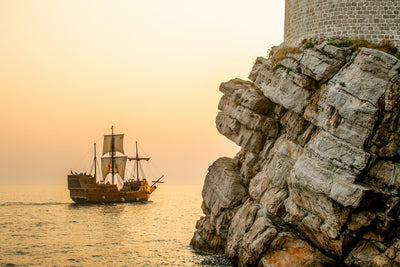
Before a single cannon fired, an Ottoman galleon had to be tied together — mast to deck, anchor to hull, sail to yard — by thousands of meters of hemp rope. That rope didn't appear by accident at the dockside in Istanbul. It traveled a long chain of custody that began in the hills above the Black Sea coast, where villagers in places like Kastamonu and Amasya grew, retted, and spun hemp fiber under terms the Ottoman state itself dictated. The empire didn't just use hemp. It managed hemp, as a strategic commodity on par with timber and iron, because a fleet without cordage was a fleet that couldn't sail.
That supply chain ran for generations, surviving sultans, wars, and the transition from galley to galleon to steam. It even outlived the empire that built it, carrying into the early Turkish Republic before fading when synthetic fiber and new ship technology made hemp rope obsolete. What's striking, looking at Turkey's hemp sector today, is how closely the modern licensing map traces the old naval supply routes — same provinces, same logic of state oversight, just with a different end product in mind.
Why a Navy Runs on Fiber, Not Just Firepower

Photo by PeterKraayvanger via Pixabay.
Rigging a wooden warship meant stringing together an entire structural system out of fiber. Standing rigging held the masts upright against wind load. Running rigging worked the sails. Anchor cables, some as thick as a man's forearm, had to hold tens of tons of ship against open-water currents without snapping. None of this was decorative — a parted anchor cable in a storm could mean losing the vessel outright, and a frayed halyard could leave a warship unable to maneuver in battle. Firepower meant nothing if the ship carrying the guns couldn't stay rigged, steered, and anchored.
The quantities involved were substantial. A single large galleon of the 16th or 17th century could require cordage running into the tens of tons once all the standing rigging, running rigging, and spare cable were accounted for — and that cordage wore out constantly from salt exposure, chafing, and storm stress, meaning a standing fleet needed continuous resupply, not a one-time outfitting. This turned hemp from a farm product into a readiness metric. The Ottoman state treated it that way, issuing mandates that directed specific regions to grow hemp for military use rather than leaving the crop to find its own buyers in open markets. Production quotas, delivery schedules, and pricing were all state concerns, administered with the same seriousness as grain for the army or timber for the shipyards.
What's notable is the durability of this arrangement. The mandate system wasn't a wartime emergency measure that lapsed in peacetime — it persisted as standing policy for centuries, adjusted under different sultans but never abandoned, and it carried on past the fall of the sultanate itself into the early years of the Turkish Republic, when the successor state inherited both the naval needs and the agricultural infrastructure that had been built to serve them.
The Black Sea Hemp Belt

Photo by Markus Winkler via Pexels.
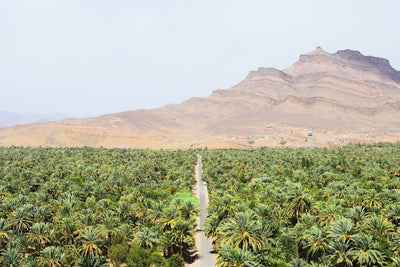
The empire's hemp fiber production centered on a cluster of provinces along and behind the Black Sea coast: Zonguldak, Kastamonu, Ordu, Amasya, Çorum, Samsun, and Yozgat. These were not interchangeable farming regions chosen for convenience — they shared river valleys and a climate suited to hemp's growing cycle, along with access to retting ponds and streams needed to break down the stalks into usable fiber before transport. Further south and west, İzmir and Burdur developed a different specialty, focusing on hemp seed rather than fiber, while Malatya and Şanlıurfa produced both fiber and seed, giving the empire a geographically diversified hemp economy rather than a single-point source.
Kastamonu's rise to prominence is well documented under Suleiman the Magnificent, who reigned from 1520 to 1566. During his rule, Kastamonu became one of the navy's key hemp suppliers, and the state established a dedicated hemp commission in nearby Samsun to oversee collection, grading, and shipment of the fiber toward the coast. That commission structure is itself telling — it shows an administrative apparatus built specifically around hemp logistics, not a general agricultural office handling hemp as one crop among many.
The roots of this regional specialization go back further still. From the 1300s through the mid-1400s, Black Sea coastal towns stretching from Sinop to Rize were already established centers of hemp cultivation and rope making, well before Suleiman's reign formalized the supply relationship. Geography did much of the work here: these towns sat at the intersection of hemp-suitable farmland and maritime access, letting growers move retted fiber down to the coast without the spoilage and cost that long overland hauls would have added. The Black Sea hemp belt wasn't designated by bureaucratic fiat so much as it grew out of what the land and water already made possible.
From Field to Fleet: The Supply Chain to the Imperial Arsenal

Photo by schuetz-mediendesign via Pixabay.
Hemp yarn bound for the navy came from across Ottoman territory in theory, but in practice the overwhelming share moved through a handful of named production centers: Kastamonu, Samsun, Sinop, Küre, and Ayandon. These places functioned as the first link in a supply chain with a single destination — the Tersane-i Amire, the Imperial Arsenal in Istanbul, where raw yarn arrived to be twisted, laid, and finished into the actual rope that would rig the fleet. The arsenal wasn't just a shipyard; it was the empire's rope-making headquarters, converting a steady inland stream of fiber into a naval-grade finished product.
The scale of this operation at its peak is worth sitting with: the navy was purchasing roughly 5,000 metric tons of hemp yarn annually to keep its fleet properly rigged. That's not a seasonal order — it reflects a standing, year-round procurement relationship between the state and hemp-growing provinces, with transport and taxation of the crop managed centrally to make sure the arsenal never ran short.
Storage was taken just as seriously as procurement. In 1626, under admiral Catalcali Hasan Pasha, the arsenal complex added the Leaden Cellar, a dedicated storage facility that held hemp rope alongside nails, cannon, sail cloth, and anchors — the full inventory of critical war materiel in one guarded location. Housing rope in the same vault as cannon says plainly how the Ottoman naval command ranked it: not a consumable supply item, but a strategic asset requiring the same security as weaponry.
This was, in effect, a centrally planned military supply chain running on 16th- and 17th-century infrastructure — taxation set on hemp-growing districts, transport routes controlled to move yarn toward Istanbul, and storage secured at the arsenal, all oriented toward one goal: a fleet that could be rigged and resupplied on the state's timetable, not the market's.
Samsun and the Arsenal Towns

Photo by S K via Pexels.
Samsun did more than grow hemp — it built ships with it. The Samsun maritime arsenal ranked second only to Sinop in overall ship production within the empire, and that output rested heavily on the local hemp fiber and rope industry sitting right next door. Having fiber production, rope-making, and shipbuilding co-located meant the region wasn't just exporting raw material to be finished elsewhere; a meaningful share of the cordage used on Samsun-built vessels likely never had to travel far before being worked into rigging.
Sinop and Samsun together formed a kind of twin-engine arsenal system, anchoring both the shipbuilding and cordage sides of naval production in one stretch of Black Sea coast. That pairing linked raw fiber cultivation to finished vessels within a single regional economy, which is a fairly efficient arrangement by the logistics standards of the period — far less exposure to the delays and losses that came with moving bulky raw hemp long distances by cart or riverboat.
The scale this industry eventually reached is documented in late Ottoman agricultural statistics: by 1897, official records show 442,202 bushels of hemp planted across 87,920 decares of Ottoman land. Those numbers reflect a centuries-old crop that had grown into a substantial, measurable share of imperial agriculture by the late 19th century, even as naval technology was beginning to shift away from pure sail power.
Rope-making itself was a defined trade, not a generic rural handicraft. Twisting fiber into cable strong enough for naval anchor duty required skill passed down through practiced hands, and production in towns like Samsun was scheduled around the arsenal's shipbuilding and refitting calendar rather than run as an independent cottage craft selling into open markets. The rope-maker's output was, in a real sense, dictated by the navy's own production schedule.
Collapse and a Modern Revival

Photo by Pixabay via Pexels.
The hemp economy that had underpinned Ottoman naval power for centuries didn't survive the technological shift of the early 20th century intact. Following World War I, cultivation went into steep decline as synthetic fibers and changing naval propulsion — steam and later diesel replacing sail, steel cable replacing natural fiber rigging — eroded the demand that had sustained hemp farming in the Black Sea provinces for generations. The crop that had once been a matter of fleet readiness became, within a few decades, largely irrelevant to military planners.
The legal and institutional revival came much later. On September 29, 2016, Turkey's Ministry of Food, Agriculture and Livestock published the Regulation on the Cultivation and Control of Hemp in the Official Gazette, reopening legal cultivation across 19 provinces — a list that pointedly included historic hemp towns like Kastamonu, Samsun, Amasya, and Ordu. The choice of provinces wasn't arbitrary; it mapped directly onto the old Ottoman hemp belt. In 2019, President Erdoğan backed a renewed push to revive the sector specifically in its historic home region, framing it as both an agricultural and industrial opportunity for areas that had grown hemp for centuries.
The growth since has been measurable and fairly rapid: production rose from just 280 tonnes in 2020 to more than 1,700 tonnes by 2024, a sixfold increase in four years. Most recently, a regulatory update dated January 31, 2026 expanded licensed cultivation to 21 provinces, with licensing now covering fiber, seed, stalk, and cannabis-derived products — a broader product scope than the Ottoman navy ever needed, but one still administered under the same instinct for state-managed licensing rather than an open market.
Laws and provincial lists do get revised, so anyone looking at cultivating or working with hemp in Turkey should check the current Official Gazette text rather than rely on any single year's figures. But the pattern across centuries is hard to miss: Turkey has consistently treated hemp as a resource worth managing centrally, whether the end product was anchor cable or industrial fiber.
Line up the 2016 cultivation list next to a map of Suleiman-era hemp provinces and the overlap is almost exact — Kastamonu, Samsun, Amasya, Ordu, the same Black Sea towns that once shipped retted fiber down to the Tersane-i Amire now hold the licenses to grow hemp again. That's not coincidence or nostalgia driving policy; it's geography and institutional memory doing what they've always done, pointing cultivation back toward land and climate that proved themselves centuries ago.
What makes the story worth telling isn't just the rope-to-regulation throughline, though that's a clean one. It's that Turkey never really had a hemp market in the Western free-trade sense to begin with — from the sultan's mandate to the 2026 licensing expansion, the state has been the one deciding who grows it, where, and for what purpose. Seen that way, the current regime isn't a new experiment bolting modern agricultural policy onto old farmland. It's the same administrative habit the empire built around its navy, simply pointed at a different set of products now that no fleet needs rigging.