How Slovenia's Novel Food Rules Snag CBD Exports to Italy
Photo by GB The Green Brand via Pexels.
There's a warehouse outside Ajdovscina with pallets of CBD extract sitting exactly where they've sat for weeks, waiting on paperwork that has nothing to do with what's actually in the bottles. The chemistry checks out. The THC content is within legal limits, the extraction process is documented, the lab reports are clean. None of that matters at the Italian border, because the thing blocking the trucks isn't a customs officer worried about drug content -- it's a classification entry in an EU database that most consumers have never heard of and most hemp farmers wish they hadn't.
Trace the problem back far enough and it lands on a single afternoon: October 16, 2018, when the European Union's Novel Food PAFF Committee updated its catalogue to list cannabinoid extracts as novel foods. That one administrative move, made under Regulation 2015/2283, quietly reclassified an entire category of hemp-derived products across all 27 member states. It wasn't aimed at Slovenia specifically -- this is an EU-wide rule, not a Ljubljana invention -- but Slovenia's small domestic market makes the consequences unusually sharp there. A country of two million people can't absorb much CBD extract on its own. Italy, with a consumer base ten times that size and a border running right along Slovenia's hemp-growing regions, is the market that actually matters. And it's exactly the market this rule locks out.
The 2018 PAFF Committee Decision That Changed Everything

Photo by Christian Lue via Unsplash.
Regulation 2015/2283 exists to make sure foods without a documented history of significant consumption inside the EU before May 15, 1997 get safety-vetted before they reach store shelves. That cutoff date matters more than anything else in this story, because it's the entire legal basis for what happened next. On October 16, 2018, the Novel Foods PAFF Committee -- the technical body that maintains the EU's Novel Food Catalogue -- added an entry covering Cannabis sativa L. extracts and the cannabinoids derived from them, including synthetic versions of naturally occurring compounds like CBD.
The logic the Committee gave was straightforward on paper: nobody could produce convincing evidence that cannabinoid extracts, in concentrations beyond what's naturally present in traditional hemp foods, were consumed in the EU at any meaningful scale before 1997. Hemp seeds, hemp seed oil, and hemp flour had that history and stayed exempt. But the moment cannabinoids get added to or concentrated within those products -- say, a hemp seed oil boosted with CBD isolate -- the whole product falls under the novel food umbrella.
The catalogue entry wasn't narrowly written, either. It swept in extracts from other cannabinoid-containing plants beyond Cannabis sativa L. itself, closing off obvious workarounds before they started. And novel food status carries a specific, heavy consequence: pre-market authorization. A product can't legally be sold as a food or food ingredient anywhere in the EU until it clears that authorization process. Not in Slovenia, not in Italy, not in France or Germany. The entry effectively froze the entire ingestible CBD category in place while the authorization machinery ground forward at its own pace.
Who Regulates What Inside Slovenia
Inside Slovenia, the regulatory picture splits between two agencies that don't talk to each other about CBD in any coordinated way, and that gap is where a lot of confusion lives. JAZMP -- the Javna agencija za zdravila in medicinske pripomocke, Slovenia's medicines and medical devices agency -- handles anything making a medicinal or therapeutic claim. If a CBD product is marketed as treating a condition or sold as a registered supplement, JAZMP is the relevant authority, and that track runs entirely separate from food regulation.
On the agricultural side, the Ministry of Agriculture, Forestry and Food licenses hemp growers, sets planting rules, and enforces the THC threshold in the field. Slovenia has a functioning, legal hemp cultivation sector under this ministry's oversight -- farmers can grow it, harvest it, and process it into extract without breaking any domestic law.
The problem shows up in the space these two agencies don't cover. A CBD oil intended for oral use as an everyday product -- dropped under the tongue, added to food, sold as a wellness item rather than a medicine -- isn't an approved pharmaceutical, so JAZMP has no pathway for it. It's also not an authorized novel food, so it can't legally enter commercial food channels either. Domestically, Slovenian producers can grow the plant and manufacture the extract without issue. The wall appears at the exact moment that extract is offered for sale as something meant to be swallowed.
This fragmented, agency-by-agency approach isn't unique to Slovenia -- several EU countries split CBD oversight between medicines regulators, food safety bodies, and agricultural ministries in comparable ways. But the fragmentation compounds when two neighboring countries each have their own version of the same disconnected system, since there's no single office in either country that can simply clear a shipment and call it done.
Why the Italian Border Is Where This Bites Hardest

Photo by Daniil Yakovchik via Unsplash.
Italy doesn't make this easier. On top of the EU-wide novel food requirement, Italy layers its own national and regional rules on CBD that have shifted repeatedly over the past several years, creating a moving target for anyone trying to plan a supply chain around it. A Slovenian exporter isn't clearing one hurdle to reach Italian shelves -- they're clearing the EU-level bar and then whatever Italy's domestic authorities happen to be enforcing that season.
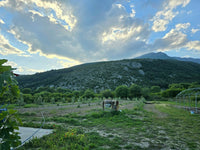
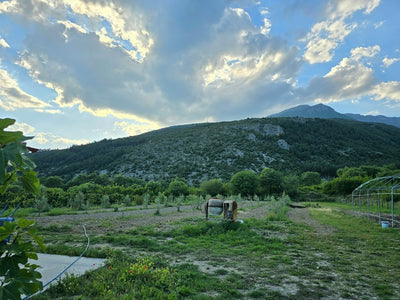
This matters intensely in specific parts of Slovenia. Hemp cooperatives in the Vipava Valley and the broader Goriska region sit close enough to the Italian border that Trieste and the Friuli-Venezia Giulia market were always the obvious destination for anything grown or processed there. Producers built drying facilities, extraction lines, and packaging capacity with that cross-border sale specifically in mind -- not because the domestic Slovenian market demanded it, but because Italy's much larger population of CBD consumers did.
Under EU law, any oral CBD extract crossing that border without novel food authorization is technically an unauthorized food product, full stop. That means a shipment can be seized or turned back at customs even when every other document -- THC testing, cultivation license, origin certification -- is in perfect order. Italian enforcement has swung between stricter and looser interpretations of its own domestic CBD rules over the years, which means a producer who moved product successfully last year has no guarantee the same routine works this year.
Faced with that uncertainty, plenty of Slovenian companies have simply stopped trying to sell ingestible CBD across the border and pivoted to categories the novel food catalogue doesn't touch: cosmetics, topical pet products, and raw industrial hemp fiber. None of that satisfies the actual Italian demand -- Italian consumers are looking for oils and edibles, not hemp lotion -- but it's the only lane that keeps trucks moving legally.
The Novel Food Authorization Path -- and Why Few Bother

Photo by AhmadArdity via Pixabay.
There is, technically, a legal door open here. A company can submit a novel food dossier to the European Food Safety Authority containing toxicology studies, proposed maximum use levels, and a full safety assessment, and if EFSA approves it, that specific product gets a legal pathway to sale across the entire EU. In practice, almost nobody walks through that door, and the reasons are mostly financial rather than scientific.
Assembling a dossier that meets EFSA's standard means funding toxicology studies from scratch, and the process routinely stretches across several years with costs that run into the hundreds of thousands of euros before a single euro of product revenue comes back. For a small or mid-sized Slovenian hemp processor -- and the vast majority of them are exactly that -- this is simply not a number the business can absorb. It's a cost structure built for a large multinational supplement or pharmaceutical company, not a family-run cooperative in the Vipava Valley.
Even companies with the resources to try haven't had an easy run. Across recent EFSA review cycles, most submitted CBD novel food applications have stalled, with the agency requesting additional safety data on questions like liver function effects and reproductive toxicity before it will move applications forward. No Slovenian company has yet secured a completed novel food authorization for a CBD extract product -- and for that matter, very few applicants from anywhere in the EU have crossed that finish line either.
So the workarounds multiply. Some Slovenian producers reclassify their extract as a cosmetic or aromatherapy product, changing labeling and intended use without changing the underlying chemistry. Others sell raw biomass or CBD isolate to buyers abroad, letting a downstream company in another jurisdiction take on the compliance headache of turning it into a finished, sellable food product. Both approaches keep revenue moving, but neither gets Slovenian CBD extract into an Italian grocery store or pharmacy shelf as the finished, branded product its own processors actually want to sell.
What Reclassification Would Mean for the Trade Route

Photo by Andrey Karpov via Pexels.
If even one CBD extract clears full EU novel food authorization, the effect wouldn't stay contained to whichever company filed the dossier. Once EFSA approves a specific formulation and use level, it establishes a template and a precedent that other compliant Slovenian producers could reasonably follow, opening a genuine legal pathway into the Italian food market for the first time since 2018.
Until that happens, the situation on the ground stays uneven in a way that frustrates honest operators more than it deters anyone determined to cut corners. Enforcement isn't consistent across the EU's internal borders -- some shipments of unauthorized CBD extract move through informally without ever being flagged, while others get stopped and seized on what can feel like arbitrary timing. That inconsistency punishes the producers trying to stay fully compliant just as much as it fails to stop the ones who aren't.
Industry groups across the EU hemp sector have lobbied on two fronts: pushing EFSA to move faster through its review backlog, and separately, pushing to revisit the pre-1997 consumption history argument that got cannabinoid extracts classified as novel in the first place. Some argue traditional hemp preparations with naturally occurring cannabinoid content did have documented historical use in parts of Europe, which could theoretically support removing certain extracts from the catalogue entirely rather than requiring a full novel food dossier. Neither push has moved the catalogue entry yet.
Slovenia, on its own, has essentially no leverage to force either outcome. It's a small producer nation inside a 27-member bloc, and novel food policy gets decided at the EU level, not by any single member state's agriculture ministry. That leaves Slovenian exporters in the position of having built real processing capacity, real cross-border relationships, and real product -- with their prospects tied entirely to a Brussels-based regulatory timeline they have no real say in.
What's striking about this bottleneck is how little it has to do with the actual product. Slovenian CBD extract isn't dangerous, isn't poorly made, and isn't short on demand across the border -- it's simply stateless the moment someone tries to sell it as food outside Slovenia's own borders. Farmers can grow the plant legally. Processors can extract it legally. The entire supply chain works right up until the point of sale, where a 2018 committee decision turns a compliant product into an unauthorized one overnight.
Nothing about that changes until a CBD extract clears the full EFSA novel food process, and right now there's no company anywhere in the EU close enough to that finish line to say when it might happen. Until then, expect Slovenian producers near the Italian border to keep doing what they're already doing: selling cosmetics, pet topicals, and raw biomass, while the oils and edibles Italian consumers actually want sit in warehouses or get rerouted through non-food channels that were never the plan.
The next real shift in this trade relationship won't come from a policy announcement in Ljubljana or Rome. It'll come from an EFSA safety assessment clearing its final hurdle -- and anyone tracking this route would do better watching that pipeline than watching either capital.