Inside Rwanda's Export-Only Medical Cannabis Experiment
Photo by Moosa Moseneke via Unsplash.
Rwanda's cannabis policy runs on a strange dual logic. Grow it, process it, load it onto a plane bound for Frankfurt or Toronto, and you're operating within a legitimate, government-sanctioned industry. Smoke it in Kigali, or even hold a gram in Musanze, and you're committing a crime that can put you in prison for up to two years. That's not a loophole or an oversight — it's the entire design. Since Cabinet approved the regulatory framework in October 2020, formalized into law the following June, Rwanda has built a medical cannabis industry with zero domestic market by intention, aimed entirely at foreign buyers and foreign capital.
The logic tracks with how Rwanda has approached other high-value sectors: control access tightly, demand serious money up front, and let export contracts do the work that a domestic retail market would otherwise do elsewhere. Nearly six years on, though, the flagship project under this framework — a company called King Kong Organics — sits unfinished, its founder publicly complaining about undisbursed funds and land-title snags. And just as that story was becoming impossible to ignore, Rwanda's Cabinet approved a second, considerably murkier concession with a company called InipasvalleyRw Ltd. Whether that's Rwanda doubling down on a model that works, or repeating a pattern before fixing what broke the first time, is the question worth sitting with.
The Cabinet Decision That Started It All

Photo by Egor Kunovsky via Pexels.
The policy's origin point is precise: October 12, 2020, a Cabinet meeting chaired by President Paul Kagame, where ministers signed off on regulatory guidelines governing the cultivation, processing, and export of what Rwandan officials call high-value therapeutic crops — the bureaucratic euphemism under which cannabis sits alongside things like certain high-value horticultural products. The Rwanda Development Board, the agency that would go on to handle investment licensing, was careful from the outset to draw a hard line in its public messaging: the new investment framework, RDB said explicitly, does not touch cannabis's illegal status for personal consumption inside Rwanda. This was never framed as decriminalization. It was framed as an export industry.
That Cabinet decision got its legal teeth eight months later, in Ministerial Order N° 001 of 22 June 2021, signed by the Minister of Justice. The Order lays out the mechanics for cultivation, production, processing, sale, and export of cannabis for medicinal purposes, and it splits implementation across three institutions rather than housing it in one. The National Agricultural Export Development Board (NAEB) handles the export and trade side — the licenses tied to actual shipments leaving the country. RDB handles investment licensing, meaning it's the gatekeeper for who gets to set up cultivation and processing operations in the first place. The Rwanda Food and Drugs Authority sits alongside both, responsible for GMP certification, since any product destined for pharmaceutical-grade markets abroad needs to clear manufacturing-practice standards recognized by importing countries.
What hasn't moved an inch since 2020 is the domestic criminal code. Possession or use of cannabis within Rwanda remains a criminal offense, punishable by up to two years in prison. There's no medical patient registry, no dispensary framework, no path for a Rwandan citizen to legally access the product their country now cultivates and exports. The entire regulatory apparatus exists to serve buyers outside Rwanda's borders, which is precisely why every subsequent rule in the licensing process — offtake agreements, capital thresholds, security requirements — is built around proving a company can deliver product to a foreign market, not around serving patients at home.
How the Licensing Process Actually Works

Photo by panumas nikhomkhai via Pexels.
Rwanda doesn't hand out one all-purpose cannabis license. The framework splits licensing into separate classes for cultivation, processing, and export, and a company typically needs to clear more than one to actually get product out the door. This matters practically: winning a cultivation license doesn't automatically mean you can process what you grow, and neither guarantees you can legally ship it anywhere. Each stage has its own review.
Before RDB takes an applicant seriously at all, they generally need to show a signed offtake agreement with a foreign buyer — proof that there's an actual market waiting on the other end, not just a business plan. This is the clearest signal of how export-first the whole system is: Rwanda isn't licensing speculative growers hoping to find a buyer later. It's licensing companies that already have one.
Physical infrastructure requirements are strict too. Cultivation sites must have biometric access control, and applicants must operate through a registered Rwandan corporate entity rather than a foreign shell. Capital requirements are steep — investor briefings tied to the Ministerial Order reportedly cited minimum thresholds exceeding $50 million, a figure that immediately narrows the applicant pool to well-capitalized international operators rather than local agribusinesses.
The application itself runs through Irembo, Rwanda's government services portal, which routes cultivation applications to the Rwanda Inspectorate, Competition and Consumer Protection Authority (RICA) for a field visit. RICA's review is supposed to take 14 days and is free of charge — a detail Rwanda tends to highlight as evidence of its efficient, low-friction bureaucracy compared to some neighbors. Hemp seed imports require joint sign-off from both RDB and NAEB, and no cannabis shipment leaves the country without a NAEB export license tied to a verified foreign buyer on record. Every checkpoint, in other words, exists to confirm the product is leaving, not staying.
King Kong Organics: The First License, and Its Troubles
King Kong Organics, operating as a subsidiary of KKOG Global, became the first company to secure a five-year RDB cultivation license under this framework — the proof-of-concept case everyone watching Rwanda's cannabis sector has been tracking. The company committed heavily to its Musanze District site, sinking roughly $10 million into machinery, facility construction, land acquisition, and contractors, including imported genetically modified cannabis seed brought in to establish its initial crop.
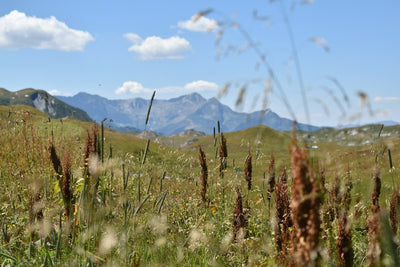
Musanze sits in Rwanda's volcanic highlands, near the base of the Virunga range — the same region famous for mountain gorilla tourism. The altitude, rich volcanic soil, and cooler climate are exactly the conditions that make it attractive for a high-value crop like cannabis, which is part of why the region was chosen over Rwanda's lower, warmer zones. It's good land for the crop. It's turned out to be considerably harder ground for the business side of the project.
At a May 13, 2025 parliamentary budget hearing, RDB's CFO, Joseph Cedrick Nsengiyumva, told lawmakers the KKOG facility was 83% complete — a figure that, on its face, suggested the project was in its final stretch. It wasn't. By late July 2026, The New Times reported the project had stalled outright, with the company's CEO pointing to funding shortfalls and unresolved land-title issues as the cause. Reny Joseph, the company's founder, has said publicly that Rwanda has failed to disburse $2.5 million committed under a signed memorandum of understanding, despite what he describes as repeated follow-up with government counterparts.
Whatever combination of financing gaps, bureaucratic delay, and title disputes is actually responsible, the practical result is the same: nearly six years after Cabinet approved the framework, the flagship license Rwanda has pointed to as proof its model works is sitting unfinished, roughly four-fifths built, with no confirmed completion date.
A New Deal, and New Questions
On July 24, 2026, Rwanda's Cabinet approved a concession agreement with a company called InipasvalleyRw Ltd for what's being described as the High-Value Therapeutic Crops Project — the same euphemistic language Rwanda has used for cannabis since the original 2020 Cabinet decision. Whether this new concession is specifically a cannabis operation, though, is genuinely unclear. RDB has not confirmed the details publicly, and queries from reporters seeking clarification went unanswered as of this writing. That's a notable departure from how Rwanda handled the KKOG announcement, which came with far more public detail about the license class, the site, and the company's plans.
What is documented is money. Cannabiz Africa has reported that Rwanda tripled its cannabis-related infrastructure budget for the current financial year, to roughly $5 million — a substantial jump that suggests the government is treating this sector as a continuing priority rather than a stalled experiment, whatever is happening with KKOG on the ground.
The timing is what makes this worth flagging. Rwanda approved a new, less-transparent concession in the same window that its first licensee's project was being publicly reported as stalled and underfunded. That sequencing reads less like a government pausing to diagnose what went wrong with KKOG's land title and disbursement issues, and more like one betting that a second, better-resourced entrant can succeed where the first stumbled — or hedging in case KKOG never finishes at all.
Rwanda's stated ambition throughout has been consistent: position itself as a low-cost, well-governed regional producer of medical cannabis for export markets, competing on price and regulatory clarity against other African jurisdictions chasing the same buyers. The InipasvalleyRw concession fits that ambition on paper. Whether it fits it in practice depends on details Rwanda hasn't yet made public.
What This Says About Rwanda's Bet on High-Value Crops
Rwanda's export-only cannabis model isn't really a cannabis policy so much as an extension of how the country handles high-value sectors generally. Coffee and mineral exports both follow a similar pattern: tight state control over licensing, heavy emphasis on attracting serious foreign capital, and relatively little domestic retail complexity to manage. Cannabis just slots into an existing playbook. The government isn't building a new kind of regulatory instinct here — it's applying one it already trusts.
The trouble is that KKOG's stall isn't a paperwork problem. A company that's 83% built, has sunk $10 million of its own money into the ground, and is still waiting on $2.5 million in government-committed disbursement is running into real infrastructure and financing gaps, not bureaucratic friction that a faster Irembo turnaround would fix. Land-title disputes in particular are the kind of issue that licensing reform on paper doesn't solve, because they sit outside the cannabis-specific regulatory framework entirely, in Rwanda's broader land administration system.
The $50 million-plus capital threshold does real work in shaping who even gets a shot at this. It rules out virtually every domestic agribusiness and most mid-sized international cannabis companies, leaving a pool of maybe a handful of global operators with both the balance sheet and the risk appetite for a frontier market like Rwanda's. That's presumably intentional — Rwanda wants operators capable of surviving delays like KKOG's — but it also means the sector's fate rests on very few companies succeeding or failing.
Rwanda isn't alone in chasing this model. Lesotho was Africa's early mover on export-oriented medical cannabis licensing, and Zimbabwe and South Africa have both pursued similar frameworks aimed at the same international buyers. Rwanda's pitch is that it can undercut them on cost while offering cleaner governance and a faster licensing process. That's a reasonable pitch. It's just not yet been proven by a single finished, exporting facility.
On paper, Rwanda's framework is about as legally tidy as export-oriented cannabis policy gets on the continent: a clear Cabinet decision, a specific Ministerial Order, defined institutional roles across RDB, NAEB, and the Rwanda FDA, and a licensing pathway with published timelines. That's more than several regional competitors can claim. But laws and org charts aren't what determine whether product actually leaves the country. Execution is, and execution is exactly where this story currently lives — in a stalled Musanze facility, an undisbursed $2.5 million, and a land title that apparently still isn't settled six years after Cabinet gave the whole idea its blessing.
InipasvalleyRw's concession is now the thing to watch, precisely because it will answer a question KKOG's troubles have left open: is Rwanda capable of closing the financing and land-administration gaps that tripped up its first licensee, or does the pattern repeat with a new company and a new name? A tripled infrastructure budget suggests the government believes in the fix. It doesn't prove one exists yet.
For any investor sizing up Rwanda against Lesotho, Zimbabwe, or South Africa, the licensing rules are the easy part to evaluate — they're published, specific, and reasonably clear. The harder, more decisive due diligence is on disbursement track records and land-title clearance, the parts of this that don't show up in a Ministerial Order but are exactly what determined whether $10 million turned into a working export facility or a half-built site in the volcanic highlands.
Sources
- Rwanda: Medical Cannabis Facility 83 Percent Complete, Rdb Confirms - allAfrica.com
- Rwanda to grow medical cannabis, strictly for export | Macau Business
- Cannabiz Africa Digs Into Rwanda's Secretive Export Only Cannabis Policy | Cannabis Law Report
- Media Report: Rwanda triples public investment in infrastructure to become African medicinal cannabis powerhouse | Cannabis Law Report
- Rwanda: A New License Revives the Country's Ambitions in Medical Cannabis - Newsweed