Inside South Africa's Hemp Master Plan and Its Rural Payoff
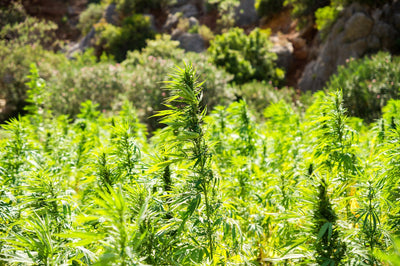
Photo by Antoinette Plessis via Unsplash.
Six years is a long time to spend turning a Cabinet resolution into a working policy, but that's roughly the timeline South Africa has been on since July 2019, when Cabinet directed the development of a national strategy to industrialise and commercialise dagga. What started as a fairly narrow instruction has grown into a nine-pillar national hemp and cannabis master plan, now coordinated out of the Department of Trade, Industry and Competition rather than the agriculture department that originally held the file. The stakes have grown along with the bureaucracy: a Localisation Support Fund study released in March 2026 projects the domestic hemp market will reach R40 billion by 2040, up from an estimated R7.3 billion in 2025.
What separates this plan from a typical agricultural strategy is how explicitly the government frames it as rural labour policy first and crop policy second. Officials keep returning to job numbers, permit counts by province and poverty-alleviation language rather than talking about hemp the way you'd talk about any other export commodity. And yet, even with the legal THC limit raised and more than 1,700 permits issued since 2022, the growers actually holding those permits say two things are still missing: somewhere to sell processed volume, and a real seat at the table where the rules get written.
From Cabinet Decision to DTIC Mandate
The origin point is specific and traceable: in July 2019, Cabinet took the decision to direct government toward a national strategy for industrialising and commercialising dagga, using the plant's Afrikaans-derived common name in the official record rather than the more clinical "cannabis." Minister Thoko Didiza was tasked with convening an interdepartmental committee to build that strategy out, pulling in universities alongside the relevant government departments and agencies to work through everything from cultivar research to seed certification. That committee structure is part of why the plan took years rather than months to reach its current form.
The bigger structural shift came in September 2024, when coordination responsibility moved from the Department of Agriculture, Land Reform and Rural Development to the DTIC. The rationale was consolidation: hemp and cannabis touch agricultural production, health regulation, trade policy and justice enforcement all at once, and having DALRRD run point on a file that was increasingly about market development and export competitiveness had started to create friction. Housing it at DTIC put policy and regulatory oversight under one roof, at least on paper.
What emerged is a plan built around nine pillars, covering regulatory services, seed systems, research and development, market development, and inclusive participation, among others. It's a deliberately broad architecture, meant to touch the whole value chain from certified seed through to export-ready product rather than treating hemp as purely a cultivation question. DTIC doesn't run this alone, either: it coordinates directly with DALRRD on farming and land issues, the Department of Health on THC thresholds and product safety, and the Department of Justice on the criminal law dimensions that still shadow anything cannabis-related in South Africa. That interdepartmental coordination is, by most accounts, still a work in progress six years in.
Why Rural Communities Are the Whole Point

Photo by Jennifer Coffin-Grey via Unsplash.
Strip away the pillar diagrams and interdepartmental committees, and the plan's stated purpose comes down to five things: economic development, job creation, inclusive participation, rural development and poverty alleviation. Notice what's not on that list as a standalone goal -- industry growth for its own sake, or export revenue as an end point. Those things matter to the plan, but they're framed as mechanisms for the rural development outcome, not the outcome itself.
DTIC Director-General Simphiwe Hamilton has made that framing explicit, describing the export-driven hemp and cannabis sector as a leading labour-absorbing industry in many of the country's rural communities. That's a specific and fairly bold claim for a sector this young, and it's backed by numbers the department cites regularly: more than 90,000 people currently employed across the value chain, with a government target of 130,000 jobs. Getting from one figure to the other is effectively the master plan's job description.
The permit data backs up where this employment push is actually landing. Since 2022, DALRRD and other authorities have issued 1,725 hemp permits covering roughly 29,000 hectares of cultivation, concentrated heavily in Gauteng, KwaZulu-Natal and the Eastern Cape. These aren't randomly distributed provinces -- they're farming regions with some of the country's highest unemployment rates, particularly in the Eastern Cape's former homeland areas and KwaZulu-Natal's rural districts. That geography is precisely why government messaging keeps hemp positioned as a poverty-alleviation tool rather than a niche cash crop for commercial farmers who already have capital and land access. Whether that positioning survives contact with the realities of who can actually afford to become a permit holder in the first place is a separate question, and one growers themselves have started raising.
The Numbers Behind the R40 Billion Projection

South Africa's hemp market is projected to grow rapidly, rising from R7.3 billion in 2025 to R40.4 billion by 2040—more than a fivefold increase over 15 years.
The R40 billion figure making headlines comes from a specific study, not a government press release aspiration. The Localisation Support Fund released its findings on March 4, 2026, at an event in Johannesburg, with backing from the Presidency, the Industrial Development Corporation and DTIC itself. The research was carried out by Zageta Solutions working alongside the University of Cape Town's Development Policy Research Unit, giving the projection an academic grounding that earlier hemp market estimates in South Africa have sometimes lacked.
The growth curve the study lays out is steep: from R7.3 billion in 2025 to R17.7 billion by 2030, and on to R40.4 billion by 2040. That's better than doubling in five years and roughly quintupling over fifteen. Government has attached a rough annual growth target of around 10% to the current legal sector, which the study estimates is already worth about R14 billion -- a figure that on its own suggests the legal, regulated side of the industry has grown faster than public attention to it might suggest.
The more interesting number, though, came from DTIC official Ncumisa Mcata-Mhlauli, who noted that the full market -- legal activity plus illicit trade -- is estimated at around R28 billion currently. That's roughly double the R14 billion legal-sector figure, and the gap tells its own story. It means something close to half of all hemp and cannabis economic activity in South Africa right now sits outside regulated, taxed, permitted channels. Closing that gap, not just growing the legal pie, is arguably the harder and more politically sensitive part of hitting R40 billion by 2040. A market can grow on paper while the informal side simply grows alongside it unless enforcement, pricing and access to legal permits change in tandem.
The Missing Piece: Processing Infrastructure

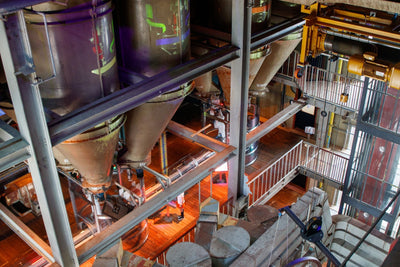
Photo by Los Muertos Crew via Pexels.
Ask anyone actually farming hemp in South Africa right now what's holding the sector back, and permits aren't usually the first answer -- processing is. The March 2026 Localisation Support Fund report flags a lack of industrial-scale processing infrastructure as the single biggest bottleneck limiting the sector's growth, and it's not a subtle problem. A farmer can hold a valid permit, plant a legal crop and harvest it successfully, and still have nowhere reliable to sell it if there's no decorticator, fibre mill or extraction facility within economic reach.
This is a pattern that shows up in nearly every emerging hemp market worldwide, from the American Midwest after the 2018 Farm Bill to parts of Eastern Europe: cultivation capacity races ahead of the fiber, hurd and extraction infrastructure needed to turn raw stalks into finished textiles, building materials, paper or cannabinoid products. South Africa's 29,000 hectares of permitted hemp cultivation means little economically if the bales sit in storage because there's no facility nearby capable of processing them at volume. Permit holders end up bearing all the agronomic risk of the crop without a guaranteed route to market on the other end.
Government has moved on one lever it controls directly. On December 1, 2025, a regulatory change raised the legal THC limit for industrial hemp from 0.2% to 2% -- reportedly making South Africa the only country in the world permitting an industrial hemp threshold above 1% total THC. The logic is straightforward: at 0.2%, farmers can lose an entire crop to destruction if lab testing shows even a slight overage, often due to environmental stress rather than genetics. A 2% threshold gives growers meaningfully more breathing room to plant without that existential risk hanging over harvest season. It's a genuinely farmer-friendly change. But it addresses cultivation risk, not market access -- it doesn't build a single processing plant, and industry voices have been clear that without that infrastructure, a higher THC ceiling just means more legally compliant hemp with nowhere to go.
Growers Say They're Being Left Out of the Room

Photo by falco via Pixabay.
The clearest signal that policy design and grower reality haven't fully aligned came at a parliamentary briefing in March 2026, where Ben Sassman of Hemp 4 Life testified that DALRRD has issued more than 371 hemp permits under its own separate tracking. Sassman's more pointed point wasn't about the permit count, though -- it was that current licence and permit holders appear not to have been meaningfully consulted in developing the master plan they're now expected to operate under. That's a serious complaint for a policy whose entire justification rests on rural economic inclusion.
It captures a tension that keeps surfacing across this file: a plan built top-down through interdepartmental committees, universities and consultants, being handed to farmers who were growing and applying for permits while that architecture was still being assembled around them. Inclusive participation is literally one of the plan's nine pillars, which makes the gap between stated intent and grower experience on the ground more conspicuous rather than less.
That tension is about to get tested in a very concrete way, on a tight timeline. The Hemp and Cannabis Commercialisation Policy is expected to reach Cabinet and open for public comment by April 2026, with DTIC aiming to finalise both policy and supporting legislation by the end of the 2026/2027 financial year. Beyond that, an Overarching Cannabis Bill is scheduled for introduction in Parliament by mid-2027, intended to consolidate existing legislation, including the 2024 Cannabis for Private Purposes Act, into a single coherent legal framework. Whether growers like Sassman get genuine input during that April 2026 public comment window, rather than a formality after the substantive decisions are already locked in, will say a lot about whether the plan's rural-development framing holds up once it's actual law.
South Africa has assembled the pieces that usually take countries far longer to get in place: permit numbers in the thousands, a credible academic growth projection, an interdepartmental structure with actual coordination between trade, agriculture, health and justice, and a THC threshold generous enough to take crop-failure risk off the table for farmers. That's a lot more than most emerging hemp markets can claim at this stage.
But projections on paper don't process a single bale of fiber, and 29,000 hectares of permitted cultivation means little without somewhere to sell what comes off that land. The R40 billion figure for 2040 is a plausible number built by credible researchers, not a fantasy -- but it's contingent on decisions that haven't been made yet, chiefly whether processing capacity gets built at the pace cultivation has, and whether the roughly R14 billion currently sitting in illicit channels can be pulled into the regulated market rather than growing alongside it.
The more telling variable, though, isn't the THC limit or the pillar structure -- it's whether permit holders like Sassman get real influence over the Commercialisation Policy before it locks in, or whether the April 2026 Cabinet review and public comment period turn out to be procedural steps around decisions already made elsewhere. Watch that Cabinet moment, and watch whether DTIC hits its 2026/2027 legislative deadline with grower input baked in rather than bolted on. Those two markers, more than any market-size projection, will show whether this plan actually delivers for the rural communities it was named for -- or whether it becomes another well-structured strategy that grew the export numbers while leaving the people it was supposed to employ still waiting for a processing plant to open nearby.
Sources
- R40bn opportunity for hemp industrialisation in South Africa requires policy support – LSF study
- South Africa Hemp Cultivation Regulations 2026: Complete Guide
- Localisation Support Fund Study Identifies R40 Billion Opportunity to Industrialise Hemp in South Africa - AgriFocus Africa
- South Africa Cannabis Master Plan: Ramaphosa's 2026 Vision | GrowerIQ
- R40bn hemp opportunity could drive South Africa’s green industrialisation, study finds