Inside South Korea's Tight Cannabis Laws and Narrow CBD Exceptions
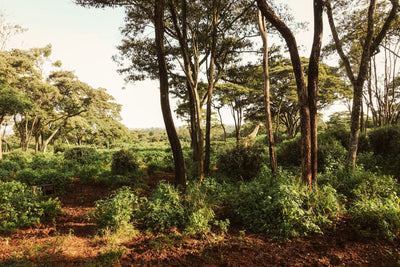
Photo by NK Lee via Unsplash.
Walk into a pharmacy in Seoul and ask about CBD oil, and you will get a flat no, usually followed by a slightly alarmed look. Walk a few blocks to Gangnam and you'll find wellness shops selling hemp-seed everything, because hemp seed itself is treated differently than the plant's resin or flower. This contradiction sits at the center of how South Korea handles cannabis: a country with some of the harshest narcotics enforcement in East Asia, and also the first country in that region to put medical cannabis into law, back in 2018.
The distance between "legal medical cannabis" on paper and what an actual patient, let alone a curious tourist, can get their hands on is enormous. This isn't a loophole quietly tolerated by regulators who look the other way. It's a narrow, heavily supervised exception carved into an otherwise unforgiving criminal code, and Korean authorities have shown no interest in letting it widen informally. A June 2025 Supreme Court ruling shut down one of the few gray areas that had existed around cosmetic CBD, even as lawmakers in 2026 pushed bills that would, for the first time, let Korea grow cannabis domestically for pharmaceutical use. Those two developments are pulling in opposite directions, and understanding why tells you a lot about how this country actually thinks about the plant.
The Narcotics Control Act: What's Actually Illegal

Photo by 12019 via Pixabay.
Everything about cannabis outside that one medical channel runs through South Korea's Narcotics Control Act, a law that absorbed the country's original 1976 Cannabis Control Act when the government consolidated its various drug statutes in 2000. Use, possession, cultivation, and trafficking are all treated as narcotics offenses, full stop, with no distinction made for personal quantities or first-time offenders the way some jurisdictions carve out.
The penalties scale with what you're accused of. Simple possession or use can get you up to five years in prison or a fine as high as 50 million KRW, somewhere in the range of 35,000 to 40,000 US dollars depending on the exchange rate. Supply and cultivation carry stiffer exposure, up to ten years, reflecting how Korean law treats growing or distributing cannabis as a more serious act than merely consuming it.
What trips up a lot of people, especially Korean nationals living or studying abroad, is Article 3 of the Korean Criminal Act, which establishes nationality-based jurisdiction over certain offenses. In plain terms, a Korean citizen who legally smokes cannabis in Toronto, Bangkok, or a legal-market US state like Colorado can still be prosecuted back home for that act, even though it broke no law where it happened. Most countries don't reach across their own borders this way for drug offenses; Korea does. Every year, Korean universities and consular offices field cases of students and expats who assumed that legality abroad meant safety at home, and found out otherwise only after returning.
2018: East Asia's First Medical Cannabis Law

Photo by analogicus via Pixabay.
In November 2018, Korea's National Assembly amended the Narcotics Control Act to permit medical use of cannabis-derived medicines, making it the first country in East Asia to legalize medical cannabis in any form. Japan, Singapore, and China had nothing comparable at the time, and most still don't. It was a genuinely notable move for a country that otherwise polices drugs with some of the region's toughest penalties.
But access runs through exactly one door: the Korea Orphan and Essential Drug Center, a government body that handles import of a short, specific list of approved cannabis-derived medicines. There's no network of licensed dispensaries, no system where a physician can exercise broad clinical judgment the way doctors do under medical cannabis programs in the US or Canada. A patient applies through this single centralized import process, and the center sources the product from abroad.
The approved medicines themselves are narrow. Epidyolex, the pharmaceutical-grade CBD formulation, and Sativex, a cannabis-derived oromucosal spray, are the designated products cleared by the Ministry of Food and Drug Safety. The indications tied to these approvals are severe and specific: Dravet syndrome and Lennox-Gastaut syndrome, both rare and difficult-to-treat forms of childhood epilepsy, are the conditions most often cited as qualifying. This isn't a program built around chronic pain, anxiety, or the broader wellness framing that drives medical cannabis demand elsewhere. It exists for a small number of patients with specific, serious neurological conditions.
Everything else stays banned. Consumer CBD oils, gummies, tinctures, and cosmetic products remain illegal regardless of the 2018 law, no matter how they're marketed or how low their THC content claims to be. The 2018 amendment opened a door for medicine. It did not open one for the broader CBD wellness market that has flourished in the US, UK, and much of Europe.
The 2025 Supreme Court Ruling That Closed a CBD Loophole

Photo by 2541163 via Pixabay.
For a while, some Korean cosmetics and wellness companies found a technical argument that let them import CBD for topical and cosmetic products. The logic rested on which part of the hemp plant the CBD came from: extract it from stems, the argument went, rather than flower or resin, and it might fall outside the plant-derived restrictions under the Narcotics Control Act. Lower courts had allowed this reasoning to stand in a handful of cases, and it became a quiet but real pathway for cosmetic CBD imports.
That pathway closed in June 2025, when South Korea's Supreme Court reversed those lower court rulings. The court's reasoning was direct: CBD constitutes hemp under the Narcotics Control Act regardless of which part of the plant it was extracted from. It didn't matter whether a company sourced it from stem, stalk, or flower; the chemical compound itself is what the law restricts, not the plant part it came from. That ruling eliminated the main legal argument Korean companies had been using to justify cosmetic and consumer CBD imports.
The timing is worth sitting with. While regulators in parts of Europe, several US states, and elsewhere have been loosening restrictions on hemp-derived CBD for cosmetics and consumer goods, Korea's top court moved the opposite direction, closing a gap rather than widening one. It's a clear signal of which way Korean jurisprudence leans when cannabis compounds show up in gray areas: toward stricter reading of existing law, not toward accommodation.
It's worth being precise about what the ruling did and didn't touch. Pharmaceutical CBD, specifically Epidyolex, remains legal and accessible through the dedicated medical import channel run by the Korea Orphan and Essential Drug Center. The 2025 ruling targeted cosmetic and consumer-facing CBD, not the narrow medical exception. Korea's courts drew a sharper line between medicine and consumer product, rather than rejecting CBD outright in every context.
Growing Cannabis Legally: Inside Korea's Regulatory Sandbox Zones
If medical cannabis access in Korea runs through one import channel, domestic cultivation runs through an even narrower pipeline: two regulatory sandbox zones, one in Andong in North Gyeongsang Province and another in Yeoncheon in Gyeonggi Province, where limited cannabis cultivation is permitted under direct government oversight for research and pharmaceutical purposes.
Andong's facility, established in 2020, is built around smart-farm cultivation methods paired with heavy surveillance: 24-hour CCTV monitoring and QR-coded tracking that follows individual plants from seed through to final product. Officials point to roughly six years of operation without any reported leakage of plant material as proof the controlled-zone model works as designed, an argument they've used to justify expanding activity at the site rather than loosening oversight.
That expansion is now underway. NeoCannBio broke ground on Korea's first GMP-certified CBD active pharmaceutical ingredient facility in October 2026, a step toward producing pharmaceutical-grade CBD domestically rather than relying entirely on imports. Days later, on October 12, 2026, the company signed a memorandum of understanding with North Gyeongsang Province and Andong City to build a full end-to-end medical cannabis production hub, with investment plans in the range of 175 billion won between 2027 and 2030, a substantial commitment for what remains a tightly restricted sector.
Separately, a June 3, 2026 memorandum of understanding between NeoCannBio and the international engineering firm AtkinsRéalis set a goal of building facilities aligned with EU GMP standards, aimed specifically at producing generic alternatives to Epidiolex at roughly one-third the cost of importing it. That cost figure matters because it speaks directly to the core complaint driving these projects: Korean patients dependent on imported Epidyolex pay a premium for a drug that could, in theory, be made domestically for far less, if the law allowed it.
The 2026 Push to Legalize Domestic Production

Photo by baragaon22 via Pixabay.
The regulatory sandbox zones and NeoCannBio's facilities are infrastructure waiting for a legal green light, and 2026 is when that green light started to look plausible. In March 2026, lawmakers from both major parties introduced competing amendments to the Narcotics Control Act: Seo Mi-hwa of the Democratic Party and Kim Hyeong-dong of the People Power Party each put forward proposals aimed at revisiting how CBD is classified under Korean law.
That bipartisan interest is notable on its own. Drug policy in Korea doesn't typically attract cross-party consensus, and having legislators from both sides independently push for a review of CBD's legal status suggests this has moved past a fringe policy interest into something with real institutional momentum.
Kim's bill, formally introduced around July 6, 2026, is the more detailed of the two. It would reclassify cannabis-derived medicines with demonstrated medical benefit as psychotropic drugs rather than narcotics, a distinction that matters enormously under Korean law because narcotics classification carries far heavier cultivation and manufacturing restrictions than psychotropic classification does. That reclassification is the legal hinge that would, if passed, open the door to domestic manufacturing in a way the current framework doesn't allow.
The bill also proposes establishing a Medical Narcotics Raw Material Management Center, a dedicated body that would oversee domestic cultivation of cannabis specifically for pharmaceutical raw materials, essentially formalizing and scaling up what the Andong and Yeoncheon sandbox zones have been doing on a limited, experimental basis.
The argument behind all of this is straightforward and largely about cost and supply security. Korea's current system depends entirely on imported Epidyolex and Sativex, both expensive and both subject to foreign supply chains that Korean regulators don't control. For families managing Dravet syndrome or Lennox-Gastaut syndrome, that dependency translates into real cost and access barriers. Domestic production is pitched as a fix for exactly that problem. None of it touches recreational use, and none of it touches consumer CBD products like oils or cosmetics. These proposals are strictly about widening the existing narrow medical pipeline, not about loosening the broader ban that still governs everything else.
What South Korea has built doesn't map neatly onto either model that usually dominates cannabis policy conversations. It isn't the liberalization wave running through the US and Canada, where recreational markets and broad medical discretion have become normal. It also isn't the zero-tolerance stance of neighbors like Japan and Singapore, where medical cannabis essentially doesn't exist as a legal category. Korea sits in its own lane: a tightly state-controlled medical channel, run through a single government import center and two surveilled cultivation zones, bolted onto a criminal law that treats everything outside that channel with real severity.
The 2025 Supreme Court ruling and the 2026 domestic-production bills look contradictory at first glance, but they're actually consistent with each other once you see the underlying logic. Korea isn't relaxing its overall stance on cannabis. It's sharpening the line between medicine and consumer product, closing gray-market pathways on the cosmetic and wellness side while cautiously investing in infrastructure and legislation to make the narrow medical system more self-sufficient. Stricter on one side, marginally more open on the other, both moves driven by the same instinct to keep tight state control over who gets access to what.
For anyone with Korean citizenship or family ties, the practical lesson is not subtle. Article 3's nationality-based jurisdiction means legality in Thailand, Canada, or a US legal-market state provides zero protection back home, and Korean prosecutors have shown they will act on it. That's not fine print buried in a travel advisory. It's the operative rule, and it's worth treating as seriously as any other law you'd actually be prosecuted under.