

Inside the Dutch Coffeeshop System: How It Legally Works
Photo by Markus Winkler via Pexels.
Walk into a coffeeshop in Amsterdam, buy a few grams of cannabis over the counter, and you've just participated in something that is, on paper, a criminal act in a country famous for tolerating it. That contradiction trips up nearly every first-time visitor. Cannabis has never actually been legal in the Netherlands. It's illegal to possess, illegal to grow, illegal to sell — and yet thousands of transactions happen daily in storefronts with menus, staff, and tax filings.
The mechanism that makes this possible has a name most people outside the Netherlands have never heard: gedoogbeleid. It translates roughly to "tolerance policy," and it's a peculiarly Dutch legal invention — not a statute passed by parliament, but a set of prosecutorial guidelines that tell police and prosecutors when *not* to enforce a law that remains fully on the books.
This isn't legalization dressed up in different language. It's a nearly 50-year-old policy of selective non-prosecution, built around narrow, specific, enforceable conditions. Nothing about it is permanent, and nothing about it is guaranteed. Understanding exactly how those conditions work — what triggers tolerance, what withdraws it, and where the whole framework still doesn't add up — explains both why this system has survived five decades of political churn and why it's now facing its first serious structural overhaul.
Gedoogbeleid: Tolerance Without Legalization
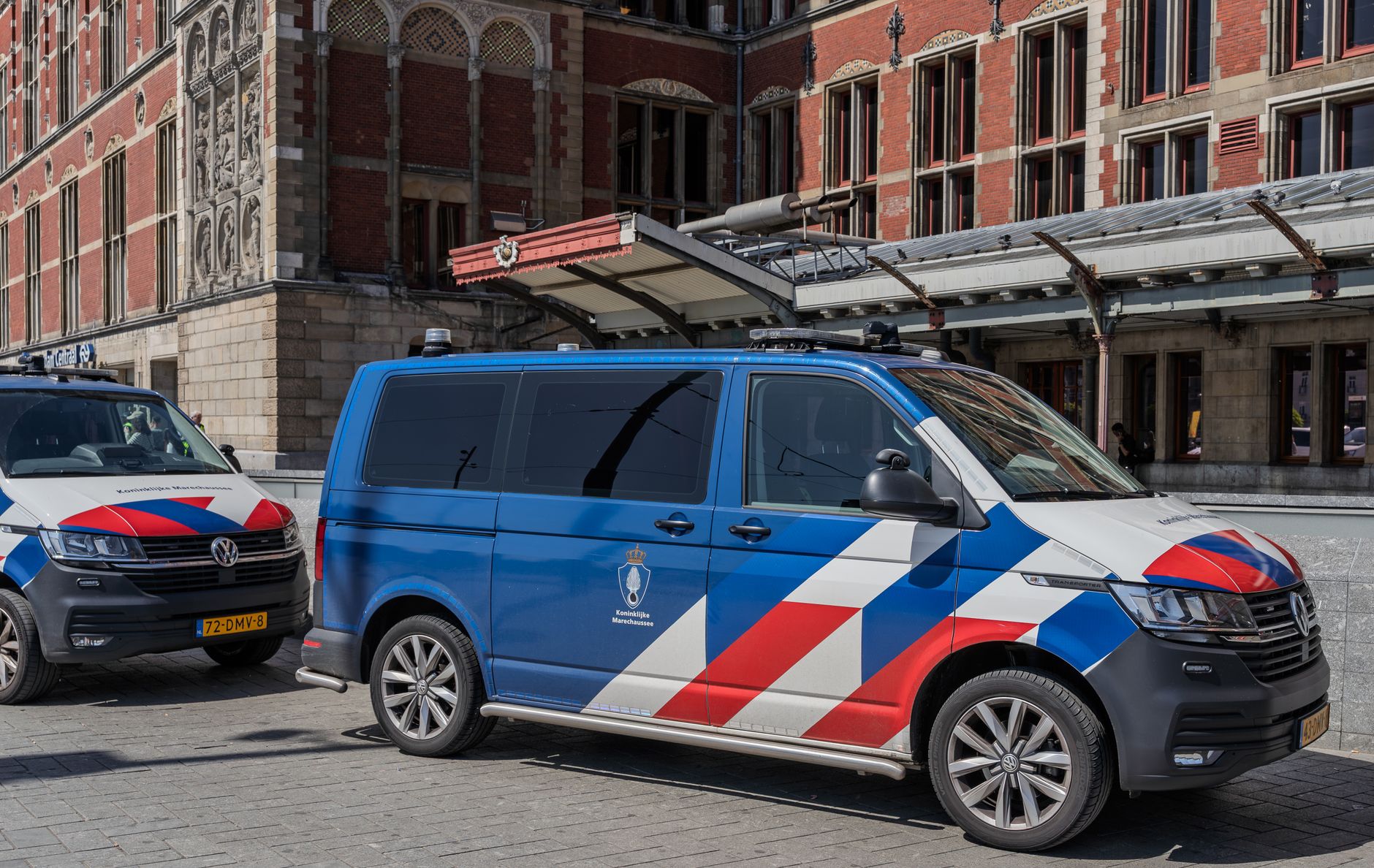
Photo by Martijn Stoof via Pexels.
Start with the plain legal fact: cannabis possession, cultivation, and sale are criminal offenses under the Opium Act, the same statute that governs heroin and cocaine in Dutch law. There is no separate cannabis statute carving out an exception. What exists instead is gedoogbeleid — a formal set of prosecutorial guidelines issued by the Openbaar Ministerie, the Dutch Public Prosecution Service, instructing prosecutors to deprioritize enforcement when certain conditions are met. It's an administrative choice about where to spend enforcement resources, not a change to what's legal.
The policy traces back to the 1976 revision of the Opium Act, when Dutch lawmakers made a deliberate distinction between 'hard drugs' (heroin, cocaine, and similar substances carrying serious health risks) and 'soft drugs' like cannabis. The goal wasn't to endorse cannabis use — it was to keep cannabis users out of criminal circles trafficking in harder substances, on the theory that forcing all drug users into the same black market did more social damage than tolerating a lower-risk one separately.
Practically, this is why an individual in the Netherlands can possess up to 5 grams of cannabis, or cultivate up to 5 plants for personal use, without facing prosecution. Cross either threshold and tolerance evaporates — the conduct becomes something prosecutors are instructed to pursue.
The distinction between tolerance and legality isn't academic. Police and prosecutors retain full legal authority to act against cannabis activity at any time; they're choosing not to, under current guidelines, not because the law forbids them from doing otherwise. That reversibility is baked into every coffeeshop's existence. No shop operates with a guarantee — it operates with a standing administrative decision that can be revisited, tightened, or withdrawn, which is precisely why compliance with the conditions attached to that tolerance matters so much.
The AHOJ-G Rules Coffeeshops Must Follow
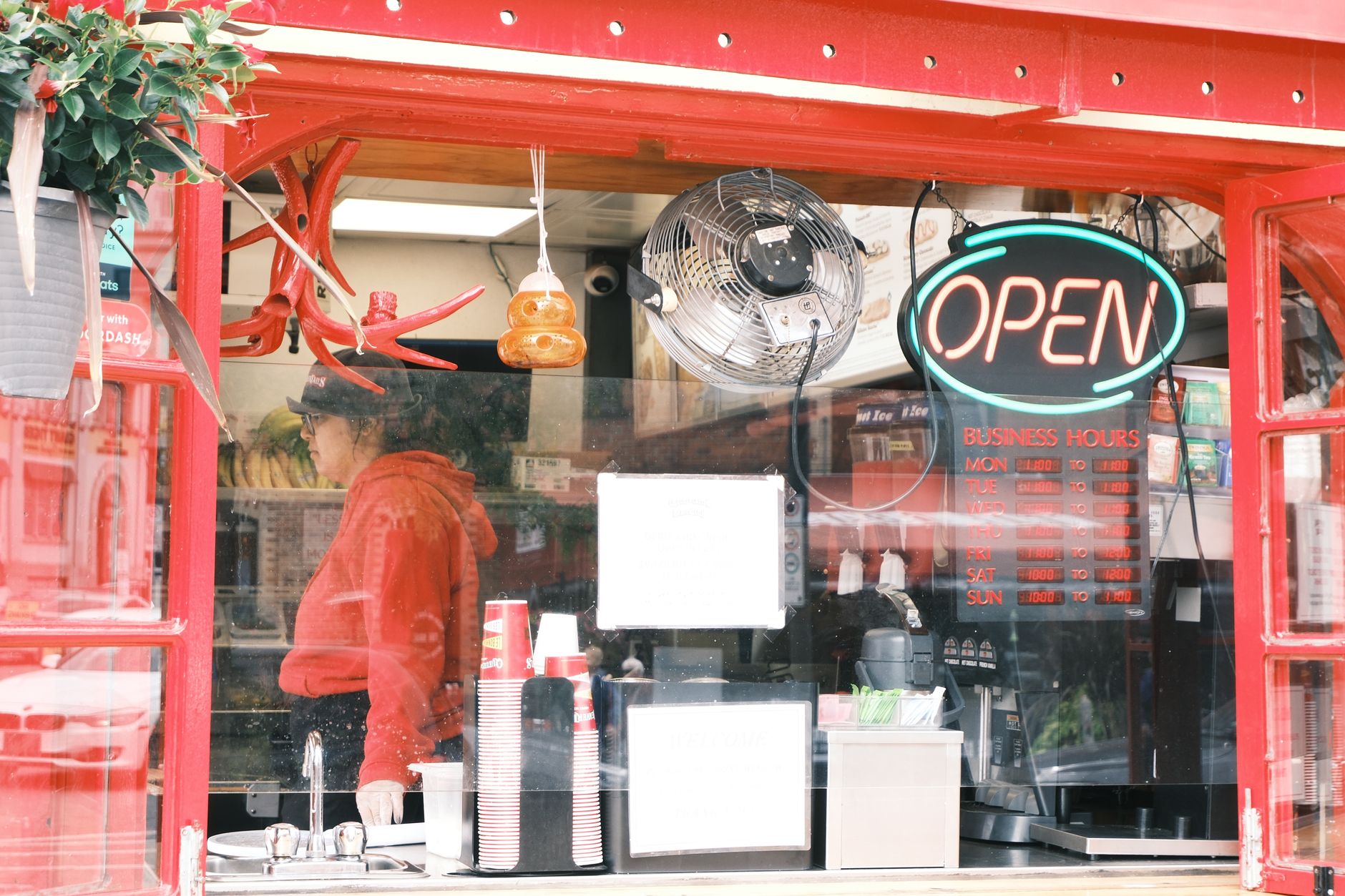
Photo by Afeez Adeleke via Pexels.
Coffeeshops that want to keep operating live inside an operational checklist known by the acronym AHOJ-G, a set of conditions the Openbaar Ministerie uses to decide whether a given shop still qualifies for tolerance. Each letter stands for something specific, and violating any single one can end a shop's run regardless of how well it handles the others.
The 'A' bans Affichering — advertising. Coffeeshops can't post cannabis menus in their windows, run promotional signage, or advertise strains online beyond a basic business listing, the kind you'd expect from any retail storefront. The 'H' bars Harddrugs entirely — no heroin, cocaine, MDMA, or other Opium Act 'hard drug' on the premises, full stop. The 'O' prohibits Overlast, meaning nuisance to the surrounding neighborhood: loitering, noise complaints, traffic congestion, or anything that turns a shop into a local irritant. The second 'O' bars sales to anyone Onder de 18 jaar — under 18 — enforced through mandatory ID checks at the door, which staff apply strictly given how much rides on that single rule. And 'G' caps on-site stock at 500 Grams, the Grote hoeveelheden limit.
Municipalities then layer their own conditions on top of this national baseline. Some cities cap the total number of licensed coffeeshops allowed within their borders; others enforce buffer zones, commonly around 250 meters, keeping shops a fixed distance from schools. These local rules vary enough that a shop's obligations in Utrecht won't necessarily match one in Rotterdam.
Crucially, enforcement of AHOJ-G runs through two separate tracks. Breaking one of these conditions can trigger criminal exposure through the prosecutorial system, but it can also trigger something faster and more final: a mayor's administrative power to suspend or permanently close a shop's operating license, independent of any criminal case. That dual exposure — prosecutorial tolerance on one side, mayoral licensing authority on the other — means a coffeeshop can lose everything through either channel, and it only takes one.
The 500-Gram Limit and the Backdoor Problem
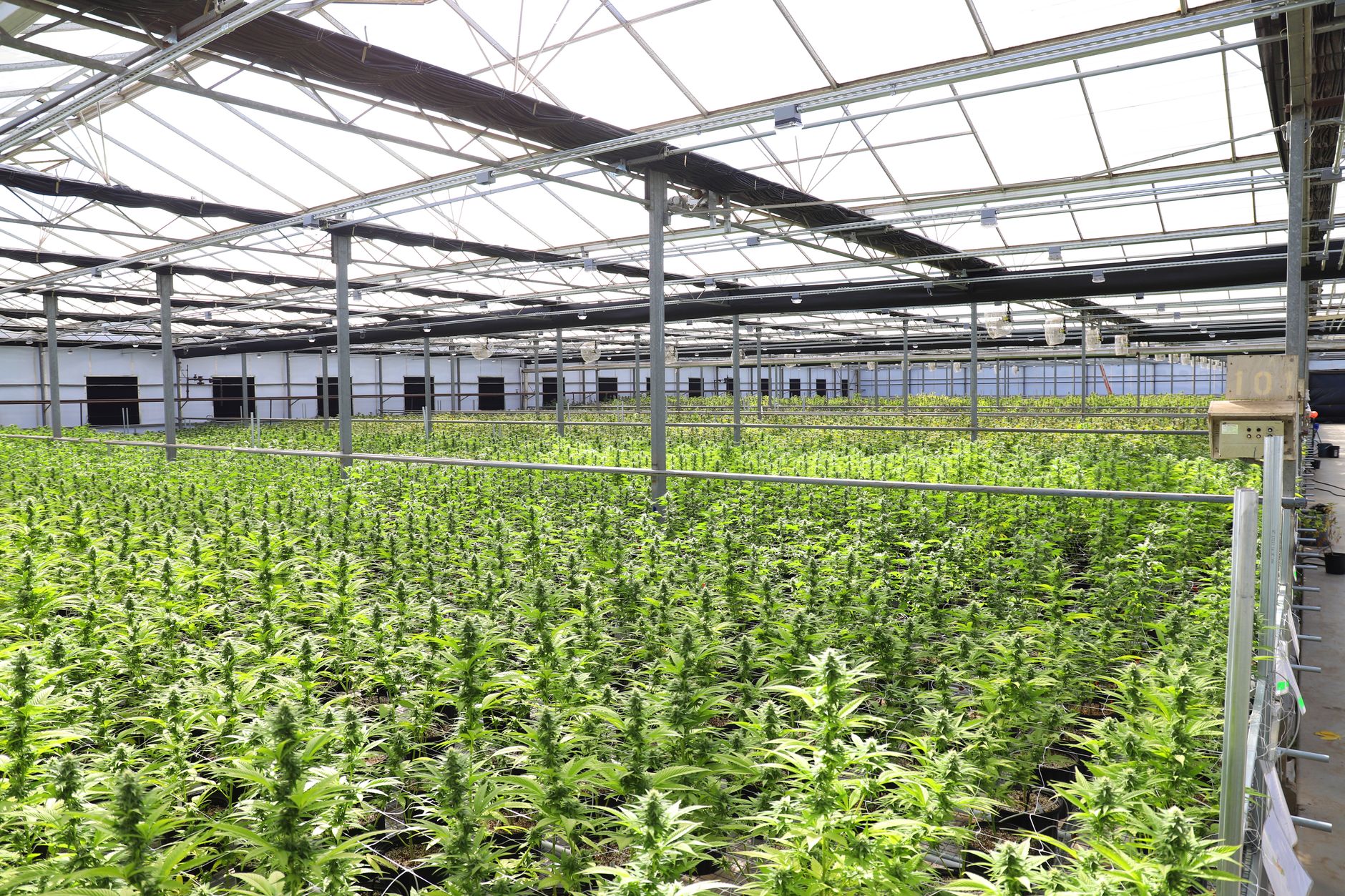
Photo by Cannafornia via Pexels.
The 500-gram ceiling on coffeeshop inventory was designed to limit nuisance and prevent shops from becoming de facto wholesale operations. It works, in the narrow sense that it keeps retail-level stock modest and inspectable. But it creates an obvious question nobody in the original 1976 framework fully answered: where does that cannabis come from before it reaches the counter?
The answer is the achterdeur probleem — the 'backdoor problem' — and it's the single most cited flaw in the entire Dutch system. While retail sale enjoys prosecutorial tolerance under AHOJ-G, cultivation and wholesale distribution enjoy no such protection. Growing cannabis at commercial scale and supplying it to coffeeshops remains fully criminal under the Opium Act, with no equivalent tolerance guideline covering the supply side. A grower who produces the cannabis a licensed shop legally sells is, in the eyes of the law, committing a straightforward crime.
That mismatch means the entire retail system — orderly, licensed, ID-checked, capped at 500 grams — sits on top of a supply chain that operates completely outside the law. Nobody regulates the pesticide use, the labor conditions, the transport, or the pricing at the cultivation level, because none of it is supposed to exist in the first place.
The consequences go beyond quiet hypocrisy. That unregulated supply gap has fueled a persistent illegal cultivation sector, including large-scale grow operations that Dutch authorities have repeatedly linked to organized crime — the same criminal networks the 1976 reforms were partly designed to separate cannabis users from. Successive Dutch government reviews and parliamentary reports have flagged this front-door/back-door mismatch as the system's central structural weakness, the one gap that decades of coffeeshop refinement never closed. Retail could be as clean and orderly as any European storefront while the wholesale layer underneath it remained lawless. That contradiction sat largely unaddressed for nearly fifty years.
The 2023 Wietexperiment: Testing a Legal Supply Chain

Photo by Diego Barros via Pexels.
In December 2023, the Netherlands finally began testing a direct fix. The wietexperiment — a closed-chain pilot program — allows a fixed set of licensed growers to supply cannabis legally to a limited group of participating coffeeshops, for the first time creating a supply route with no criminal exposure at any link.
Ten designated growers received licenses to cultivate cannabis specifically earmarked for the shops enrolled in the pilot, under government oversight covering production standards and traceability from seed to sale. Participating municipalities include cities like Breda and Tilburg, chosen to test whether a fully regulated, closed supply chain can function in practice, running in parallel with the older tolerance-based model still governing the rest of the country.
The design is deliberately incremental. Rather than rewriting national drug law in one move, the government set up a bounded trial with a defined run and a decision point at the end — expand regulated cultivation nationwide, adjust the model, or let it lapse and fall back to the status quo. That caution reflects just how politically and legally sensitive touching the Opium Act's cultivation provisions has been for decades; no government wanted to gamble the whole coffeeshop system on an untested overhaul.
Early results have been humbler than backers hoped. Supply shortages surfaced quickly, with licensed growers struggling to scale production fast enough to match participating shops' demand, and logistical delays slowed the rollout further. None of that is surprising to anyone who's watched other jurisdictions try to formalize markets that operated informally for a long time — the licensing, quality-control, and distribution infrastructure required doesn't materialize overnight just because a pilot program says it should. What the early hiccups mostly demonstrate is the scale of the gap being closed: fifty years of unregulated backdoor supply doesn't convert into a clean regulated chain in a single legislative cycle.
Local Control, Coffeeshop Numbers, and the Cannabis Tourist Question
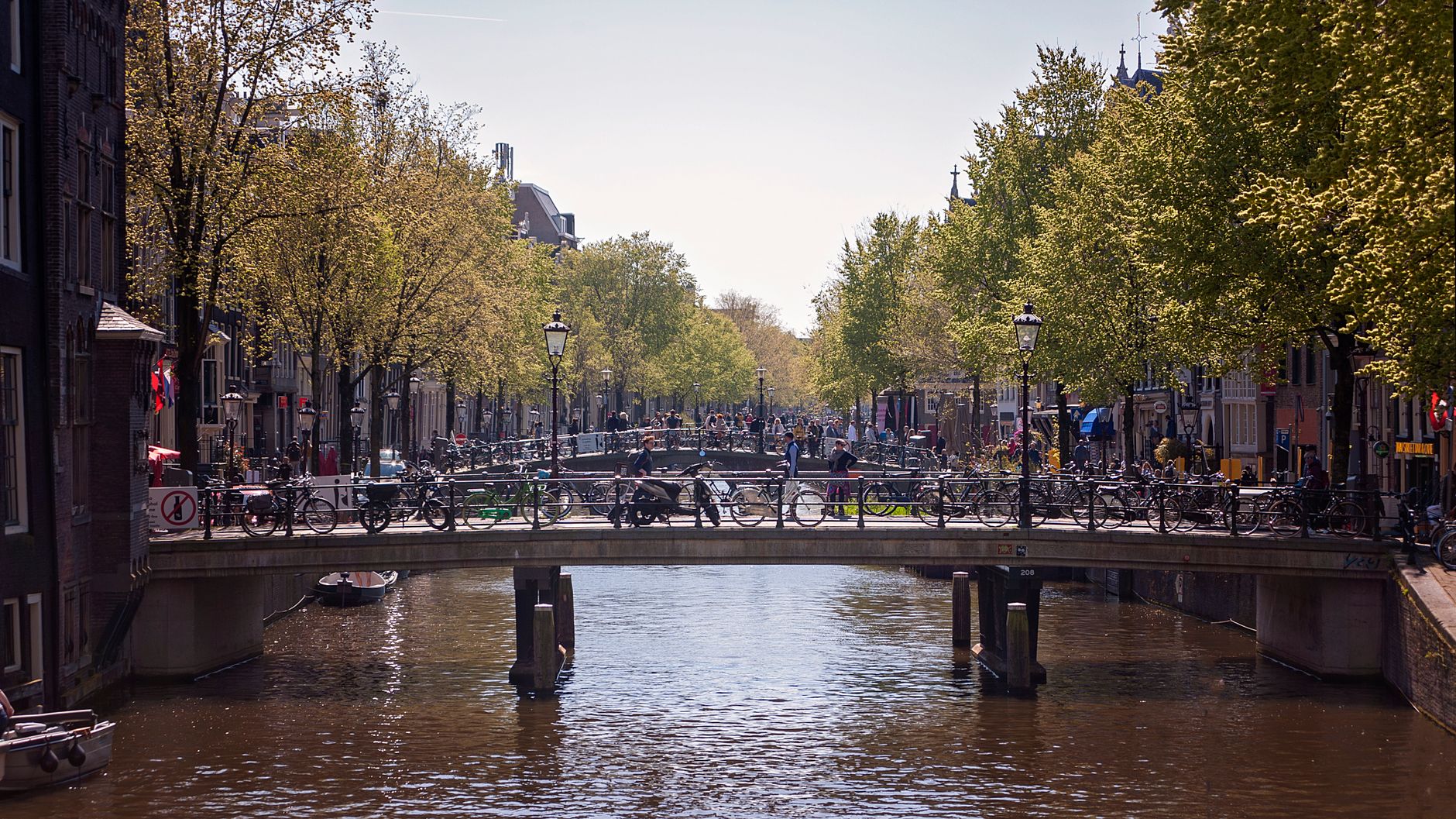
Photo by Marcelo Verfe via Pexels.
Even with supply-side questions unresolved, the retail landscape has been shrinking for years. The number of licensed coffeeshops nationwide has fallen from roughly 1,500 in the mid-1990s to under 550 today, as municipalities tighten licensing criteria or, in a growing number of towns, adopt outright zero-coffeeshop policies. That decline isn't a national mandate — it's the cumulative effect of local governments each making their own call.
Border cities have dealt with a particular version of this pressure: cannabis tourism from neighboring countries with stricter laws. Maastricht, sitting close to the Belgian and German borders, introduced the Wietpas, a residency requirement restricting coffeeshop purchases to Dutch residents, aimed at curbing the cross-border traffic that had turned some shops into destinations for day-tripping foreign buyers. Enforcement of that residency rule has varied in intensity over the years, loosening and tightening depending on local political pressure and neighboring complaints.
Amsterdam faces its own version of the same tension, at a much larger scale. City officials have floated restricting coffeeshop access to Dutch residents only, weighing tourism revenue that cannabis-curious visitors bring against neighborhood complaints about overcrowding, public nuisance, and the strain tourist foot traffic puts on the historic center. Nothing about that debate is settled, and proposals have shifted back and forth as councils change.
What ties all of this together is a basic structural fact: municipalities, not the national government in The Hague, decide how many coffeeshops operate locally and where they're permitted. That produces a genuine patchwork — some towns license none at all, some cap numbers tightly, others take a more permissive approach — and it means every coffeeshop answers to two separate authorities simultaneously. It needs a local operating license from its municipality, and it needs continued prosecutorial tolerance from the Openbaar Ministerie. Either one can end the business independently of the other, which is the clearest evidence that nothing about this system was ever meant to feel permanent.
What keeps the coffeeshop system running isn't legal tidiness — it's that it's a durable compromise, tolerated conduct wrapped tightly around enforceable conditions that prosecutors and mayors revisit year after year rather than settle once and for all. That's an unusual way to run a retail market for half a century, but it's also precisely why the system has outlasted so many political cycles: nobody had to pass a sweeping legalization bill, and nobody had to fully criminalize a practice millions of Dutch residents and visitors had come to expect.
The wietexperiment matters because it's the first real attempt in decades to address the backdoor contradiction directly, rather than just managing its symptoms with tighter AHOJ-G enforcement or municipal license caps. Whether it expands nationally or gets quietly shelved, it's the first time policymakers have tried closing the gap between legal retail and illegal supply instead of living alongside it.
For other countries studying the Dutch model as a reference point, the lesson sitting underneath all of this is worth sitting with: a tolerance policy can regulate how cannabis is sold at the counter without ever resolving where it legally came from. The Netherlands proved that gap can be managed, sometimes for decades, but managing it isn't the same as closing it — and the wietexperiment is the first honest attempt to find out if closing it is even possible within a framework this old.
Sources
- Dutch Coffeeshops: Tolerance Policy, 2026 Legal Pilot & Amsterdam Tourist Rules | Swallow's Notes
- Netherlands Cannabis Laws 2026: Coffeeshops, Tourist Rules & the Weed Experiment
- Is Cannabis Legal in the Netherlands? - Cannabis Europa
- Toleration policy regarding soft drugs and coffee shops | Government.nl
- Is Weed Legal in Netherlands? 2026 Cannabis Laws Explained


