Ireland's Cannabis Debate: Assembly Shifted Opinion, Not Law
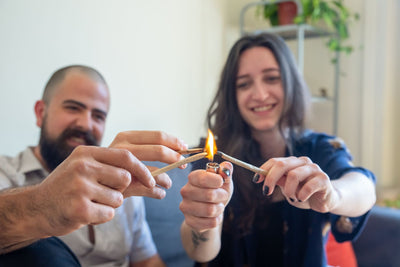
Photo via Unsplash.
One vote. That's the margin by which Ireland's Citizens' Assembly on Drugs Use decided, in October 2023, not to recommend a legal, regulated cannabis market. Thirty-nine of the ninety-nine members present backed a health-led approach instead; thirty-eight wanted legalisation and regulation outright. Flip one person's ballot and the headline out of that final meeting in Dublin Castle would have been entirely different, and quite possibly the national conversation since would have moved in a different direction too. Instead, Ireland got something messier and more honest: proof that the country is split almost exactly down the middle on what to do about cannabis, even among a group of randomly selected citizens who spent months immersed in expert testimony.
That razor-thin split sits at the centre of a real tension in Irish drug policy right now. Officialdom has drifted, gradually and somewhat reluctantly, toward health-led language -- ministers talk about treating drug use as a health matter rather than purely a criminal one. At the same time, broader public enthusiasm for actually legalising cannabis has cooled rather than hardened, according to the polling that's emerged over the past couple of years. That's not the direction reform advocates expected a few years back, and it complicates any straightforward story of progress.
What follows traces that arc: from the ninety-nine citizens in Dublin Castle through a Joint Oireachtas Committee that spent two years picking through the Assembly's recommendations, into a government that keeps reaching for cautious, health-framed language while declining to actually legislate, and finally to where public opinion sits today -- which turns out to be less settled than either side of the debate would like to admit. As of October 2026, nothing has passed into law. The recommendations exist; the statute books haven't moved.
99 Citizens, One Vote That Changed the Conversation

Photo by jarmoluk via Pixabay.
The Citizens' Assembly on Drugs Use was established in 2022, one of several such assemblies Ireland has used in recent years to work through contentious policy questions by handing them to a randomly selected cross-section of the public rather than leaving them entirely to politicians. Ninety-nine members sat through expert briefings, submissions, and deliberation over several sessions before reaching their sixth and final meeting in October 2023. On the broad question of whether Ireland should keep criminalising drug possession for personal use, the result wasn't close at all: 85 percent voted against maintaining the status quo, with just 11 members voting to keep criminal penalties in place. That's about as clear a mandate as a citizens' assembly produces on anything.
Cannabis was a different story entirely. When the Assembly turned to the specific question of what should happen to cannabis policy, the vote split 39 to 38 in favour of a health-led approach over full legalisation and regulation. A single vote decided it. Given that the same room of people had just voted overwhelmingly against criminalisation in general, the near-even split on cannabis specifically says something important -- there was no consensus on where health-led decriminalisation should end and a regulated commercial market should begin, even among people who'd spent months studying the evidence.
The Assembly's final report, published in January 2024, contained 36 formal recommendations. Recommendation 17 is the one that matters most for cannabis: it called for a health-led approach to drug use generally, including the removal of criminal penalties for possession for personal use. It didn't call for legalising sale and supply of cannabis, because the vote hadn't supported that.
What's notable is how Irish media and policy commentators have talked about this since. The 85 percent figure against criminalisation gets cited, but it's the 39-38 cannabis split that keeps resurfacing in debate, precisely because it's such a vivid illustration of how finely balanced the country actually is on the specific question of legal cannabis, as opposed to the more general question of decriminalising drug use.
From Citizens' Recommendations to a Dáil Committee
Recommendations from a citizens' assembly don't automatically become law in Ireland -- they go to the Oireachtas, Ireland's parliament, for consideration. In May 2024 the 33rd Dáil established a Joint Committee on Drugs Use specifically to work through what the Assembly had proposed, bringing together TDs and senators from across party lines to hear evidence and draft a response. That committee took its time. Its Final Report didn't land until 24 June 2026, more than two years after it was formed.
The committee's headline recommendation, Recommendation 126, calls for the repeal of Section 3 of the Misuse of Drugs Act 1977 -- the provision that criminalises simple possession -- and its replacement with a system that offers health supports rather than criminal sanction for personal possession. That's a substantial ask, and it tracks closely with what the Assembly itself had proposed back in 2023.
On cannabis specifically, though, the committee ran into almost exactly the same wall the Assembly had hit. Members came one vote short of recommending full regulation and legalisation of cannabis. Instead, Recommendation 125 settled for calling for a continued health-led response and further debate on cannabinoid possession policy -- language that's notably non-committal compared to Recommendation 126's clear call on decriminalisation generally. It's striking that two separate bodies, convened eighteen months apart with completely different membership, arrived at nearly identical one-vote deadlocks on the same narrow question.
The committee didn't limit itself to possession policy. It also recommended expanding the Medical Cannabis Access Programme, Ireland's limited scheme for prescribing cannabis-based treatments, pushing for broader eligibility criteria than the programme currently allows. That recommendation sits alongside the possession questions as part of a broader package the government now has to decide whether, and how, to act on.
Why the Government Keeps Choosing Caution
Government ministers have gotten comfortable with health-led language over the past couple of years, but comfortable language hasn't translated into legislation. No bill has emerged that actually removes criminal penalties for drug possession, cannabis included, despite two separate bodies recommending exactly that. The gap between rhetoric and statute is where Irish drug policy currently sits.
The Department of Health's consultation on the National Drugs Strategy 2026-2029 is a good illustration of the pattern. The draft strategy commits to prioritising health supports and harm reduction over criminal sanctions as a matter of stated policy direction. It stops well short, though, of committing to the legislative change -- repealing or amending Section 3 of the Misuse of Drugs Act -- that would actually decriminalise possession. It's a strategy document, not a bill, and the distance between the two is doing a lot of work here.
There is some genuine appetite for movement within government. Minister of State James Lawless has spoken publicly in favour of decriminalisation as a first step, pointing to Portugal's model -- where possession for personal use was decriminalised while sale and trafficking remain criminal offences -- as a template worth examining for Ireland. That's a meaningful signal from inside government, even if it hasn't yet produced draft legislation.
Meanwhile, the Medical Cannabis Access Programme is under its own formal review, launched in April 2026, with Health Minister Jennifer Carroll MacNeill commissioning Professor Shane Allwright to assess whether eligibility should be widened. The programme's track record helps explain why reformers keep pushing: since accepting its first patient in 2021, MCAP has enrolled just 74 patients nationally. For a scheme that's been running for roughly five years, that's a strikingly small number, and it's become a recurring talking point for anyone arguing the current system is too restrictive to serve the patients it was designed for.
Put plainly: as of October 2026, every recommendation from the Assembly and the committee remains exactly that -- a recommendation. Nothing has been enacted.
What the Public Actually Thinks -- And How It's Moved

Support for regulating cannabis in Ireland fell from 66% in 2021 to 50% more recently, narrowing the gap with the 40% who now favor keeping it banned.
Academic researchers have tracked Irish attitudes toward cannabis for close to two decades using consistent survey methodology on the 15-to-64 population, and the long-run trend does show movement toward tolerance. Agreement with permitting recreational cannabis use rose from 19.1 percent in the 2006/07 survey wave to 29.9 percent by 2019/20 -- a meaningful, gradual climb over thirteen years that tracks with wider European trends toward more liberal attitudes on the drug.
More recent EU-wide polling complicates that trend line considerably. A survey found that only 50 percent of Irish respondents now support regulating cannabis, a sharp drop from 66 percent recorded in a comparable poll in 2021. Over the same stretch, the share saying cannabis should continue to be banned outright climbed to 40 percent, up 15 percentage points from the earlier survey. That's not a gentle cooling -- it's a fairly steep reversal in just a few years, and it runs in the opposite direction from where the longer academic trend line had been pointing.
Taken together, these numbers tell an uncomfortable story for anyone expecting a straight line toward legalisation. Official Ireland -- the Citizens' Assembly, the Oireachtas committee, government ministers reaching for health-led language -- has drifted toward accepting decriminalisation as the sensible, evidence-based position. Public enthusiasm for going further, toward an actual regulated and legal cannabis market, has moved the other way over roughly the same period.
That gap between institutional consensus and public sentiment matters practically. It helps explain why politicians who might otherwise be tempted to champion full legalisation keep retreating to the safer, narrower ground of decriminalisation and health-led framing. Decriminalisation carries less political risk precisely because it doesn't require convincing a public that's grown more skeptical of legal cannabis sales, just more comfortable with not prosecuting people for possession. Reading the committee's one-vote-short result on regulation alongside this polling, the caution starts to look less like institutional timidity and more like a reasonably accurate reflection of where the country actually stands.
Decriminalisation, Not Legalisation, Is the Likely Next Step
Line up the Assembly's 39-38 vote and the committee's one-vote-short result on cannabis regulation, and a pattern becomes hard to ignore: Ireland isn't split on whether drug possession should be criminalised -- 85 percent of the Assembly settled that question decisively. It's split specifically on whether cannabis should move all the way to a legal, regulated commercial market. That's a narrower and more specific disagreement than headlines sometimes suggest, and it points toward a fairly predictable next step.
A Portugal-style model has emerged, more by default than by grand design, as the position reform-minded figures like James Lawless seem most comfortable backing. Under that approach, possessing cannabis for personal use would no longer be a criminal matter, handled instead through health-oriented referral pathways, while growing, selling, and trafficking the drug would remain illegal. It's a model with two decades of data behind it from Portugal itself, which gives Irish policymakers something concrete to point to rather than having to theorise from scratch.
The legislative mechanics favour this path too. Decriminalisation requires repealing or amending a single section -- Section 3 -- of the Misuse of Drugs Act 1977. That's a far narrower piece of legislative work than designing and standing up a regulated commercial cannabis industry, with all the licensing, taxation, and retail infrastructure that would entail. Governments tend to prefer the smaller lift, especially on an issue where public opinion has recently cooled rather than firmed up around support for legal sales.
Even the modest end of reform moves slowly here, though. MCAP's enrollment of just 74 patients since 2021 is a reminder that Ireland's political system doesn't rush these things even when the policy change in question is medical and comparatively uncontroversial. A regulated adult-use cannabis market, requiring public buy-in that the recent polling suggests isn't currently there, remains a considerably more distant prospect than decriminalisation of personal possession.
The question hanging over Irish drug policy has quietly changed shape over the past three years. It's no longer really whether reform happens at all -- both the Citizens' Assembly and the Oireachtas committee have made clear that criminalising personal possession has lost its legitimacy among the people who've studied the issue closely. The real question now is what shape reform takes, and the evidence assembled across two institutional processes and multiple rounds of polling points pretty clearly toward decriminalisation rather than a regulated legal cannabis market arriving anytime soon.
The one-vote margins that keep turning up -- 39-38 at the Assembly, one vote short at the committee -- aren't statistical noise. They're a fairly accurate snapshot of a country whose political leadership is genuinely no more decided on full legalisation than the public it represents. That's precisely why incremental, health-framed reform keeps winning out over bolder proposals: it's the path that doesn't require anyone to resolve a disagreement that two separate representative bodies, working independently, both ended up deadlocked on.
Two things worth watching will tell us whether any of this converts from recommendation into actual law. The first is the finalised National Drugs Strategy 2026-2029, which will show whether the Department of Health's health-led rhetoric gets backed by legislative commitments or stays aspirational. The second is the outcome of Professor Allwright's review of the Medical Cannabis Access Programme -- a much smaller, more contained test case, but one that will say a lot about how quickly Ireland's political system is willing to move even when the reform in question is narrow, medical, and relatively uncontroversial. Given MCAP's five years and 74 patients, nobody should expect speed. But the direction of travel, however slow, does seem set.
Sources
- Drug, alcohol and tobacco policy documents
- Citizens' Assembly recommends change in laws criminalising drug possession for personal use
- Ireland's Cross-Party Drug Committee Calls for Full Decriminalisation. The Government Has Already Said No
- Committee backs major overhaul of Irish drug laws
- Citizens' Assembly votes for health-led approach to drug use rather than legalisation