Morocco's Kif Law: Legal Cannabis, Still-Stigmatized Rif
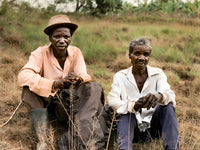
Photo by Julia Çarı via Pexels.
Drive into the hills above Chefchaouen or Ketama and you'll see terraced fields of cannabis running up slopes too steep for much else, a crop that's been grown openly in the Rif for generations even while Moroccan law treated it as contraband. That contradiction is exactly what Law 13-21 was supposed to resolve. Passed in 2021 and pushed through its implementing decree that August, the law legalized cultivation of cannabis for medical, cosmetic, and industrial purposes, giving Morocco's kif farmers a legal pathway for the first time since the plant was banned outright decades ago.
But the law is narrower than it sounds, and the problem it was meant to fix runs deeper than statute books can reach. Recreational use stays illegal. And the stigma attached to growing kif didn't originate with any modern drug law at all -- it traces back to a 1954 dahir, a royal decree issued under the French protectorate, that criminalized cultivation and trade and effectively branded Rif farmers as outlaws for the better part of a century. Five years into the new legal regime, Morocco looks like two different countries stacked on top of each other: a small, government-sanctioned export industry shipping product to pharmacies in Europe and Australia, and tens of thousands of families still growing the same crop their grandparents grew, mostly outside the system, mostly unchanged by the law that was supposed to be their rehabilitation.
What Law 13-21 Actually Legalized

Photo by Anatol Rurac via Unsplash.
Law 13-21 is deliberately narrow. It legalizes cultivation, processing, and commercialization of cannabis for medical, pharmaceutical, and industrial applications -- things like CBD oil, cosmetic extracts, and pharmaceutical compounds. It does not touch recreational consumption, which remains a criminal offense under Moroccan law regardless of where or how the plant was grown. That distinction matters enormously for how the law actually functions on the ground: a farmer can now hold a legal cultivation permit while the finished product he's used to seeing sold informally in his own village is still illegal to smoke.
The institution built to administer all this is ANRAC, the National Agency for the Regulation of Activities relating to Cannabis, established on June 3, 2022, and headquartered in Rabat under the authority of the Ministry of Interior. Housing the agency under Interior rather than Agriculture or Health is itself a signal -- this is as much a security and control apparatus as an economic development project. Mohammed El Guerrouj has served as Director General since September 2022, and his agency is the sole gatekeeper for licensing: it authorizes cultivation plots, approves processing facilities, and tracks the chain of custody from seed to export.
What the 2021 law did not do is repeal the 1954 dahir. That older decree, issued under the French protectorate, remains the legal bedrock criminalizing kif cultivation and trade outside the narrow carve-outs ANRAC now administers. Law 13-21 sits on top of it rather than replacing it, which is a technical detail with real consequences -- it means the default legal status of growing cannabis in Morocco is still prohibition, with the 2021 reform functioning as a regulated exception rather than a wholesale legalization. That layering is also the root of the cultural problem explored later in this piece: the dahir didn't just criminalize a plant, it criminalized an entire region's primary livelihood for seventy years, and no single licensing agency undoes that kind of history quickly.
The Numbers: Legal Industry Still a Fraction of the Crop

Legal cannabis cultivation in Morocco jumped from 300 hectares in 2023 to 2,700 in 2024, but this still represents only a tiny fraction of the estimated 60,000 hectares under total cultivation nationwide.
The scale mismatch here is the story. As of 2026, ANRAC reported 5,765 operational authorizations, according to researcher Mouloud Ziani in an interview with Morocco World News. That sounds like meaningful uptake until you compare it to the total footprint of Moroccan cannabis cultivation, which independent estimates put at 50,000 to 70,000 hectares. Authorized cultivation area did grow fast in relative terms -- from under 300 hectares in 2023 to roughly 2,700 hectares in 2024 -- but even a ninefold increase leaves the legal sector covering somewhere around 4-5% of total acreage.
Chakib El Khayari, who heads the National Collective for Cannabis Legalization, puts a human number on that gap: he estimates 60,000 families depend on cannabis cultivation for their livelihood, and fewer than one in ten growers are legally registered with ANRAC. That's not a rounding error. It means the legal framework, five years on, is still describing the exception rather than the rule in the Rif's cannabis economy.
Downstream infrastructure is catching up faster than the growers themselves. Five processing plants are now operational with a combined capacity of 560 tons, and eleven more are under construction -- a real signal of investment confidence even if the raw material feeding those plants still comes disproportionately from licensed, rather than traditional, growers. On the product side, 141 cannabis-derived products now hold registration with Morocco's medicines agency, covering everything from pharmaceutical extracts to cosmetic formulations. That's a functioning regulatory pipeline. What it isn't yet is a pipeline that most Rif farming families have found a way into.
Building a National Brand for Export

Photo by CRYSTALWEED cannabis via Unsplash.
Morocco didn't just write a licensing regime -- it designed a brand. The official export logo pairs a red frame with a cannabis leaf at its center, deliberately echoing the color and geometry of the national flag. It's a calculated piece of visual diplomacy: this is state-sanctioned cannabis, not the informal kif trade the world has associated with the Rif for decades, and the government wants that distinction visible on every box that leaves the country.
The first real test of that branding was modest almost to the point of being symbolic. In April 2024, Morocco sent its first legal export shipment -- just 3 kilograms -- to Europe. That's not a commercial volume by any measure; it's a proof of concept, a way of demonstrating that the licensing, testing, and customs chain actually works end to end before scaling it up.
The scale-up came faster than the shipment size suggested it might. By the 2025 season, Morocco's Agency for Medicines and Health Products had issued 67 marketing authorizations -- 26 for cosmetics and 41 for dietary supplements -- and the first shipments under this expanded program reached Australia and the Czech Republic, broadening the export map well beyond the initial European test run.
There's an irony sitting at the center of this whole branding effort, though. The indigenous Beldia landrace -- also spelled Beldiya -- is the plant variety most closely tied to Rif heritage and the one the national branding campaign leans on hardest as an authenticity marker. But Beldia's naturally high THC content disqualifies it from most international markets, which typically cap THC for cosmetic and supplement products. Legally, Beldia is restricted to medical and pharmaceutical use only, meaning the crop variety that best represents the region's actual history is the one with the narrowest legal export lane.
Bled du Kif: Where the Stigma Comes From

Photo by pierre matile via Pexels.
To understand why legalization alone doesn't dissolve the stigma, you have to go back to how that stigma formed. Academic research on the Rif traces it to the interaction between the 1954 dahir's blanket prohibition and the decades-long reality that growers kept cultivating anyway, openly, because kif was the only crop that reliably grew on the region's poor, mountainous soil and generated real income. That standoff between formal law and lived economic necessity produced a derogatory shorthand still used across Morocco today: bled du kif, the land of kif -- a label that reduces an entire region to its illicit crop.
The stigma didn't stay confined to the fields. Because the Rif became so specialized in cannabis as an economic base, money earned there and later invested elsewhere in Morocco -- in Tangier, Casablanca, Rabat -- was frequently assumed to be drug money, regardless of its actual source. A Rifan businessman opening a shop or buying property in another city could find himself facing suspicion simply by association with his home region, whether or not he'd ever touched the cannabis trade himself.
Analysis from POMEPS, the Project on Middle East Political Science, describes this as a pattern of collective stigmatization: the Rif's association with the illicit drug trade extended to anyone with ties to the region, not just the farmers directly growing kif. It became an identity marker imposed from outside, attaching to merchants, students, and migrants alike.
And this predates cannabis in important ways. The Rif is home to a large Amazigh population that has long felt politically marginalized relative to the central governing axis of Rabat and Casablanca -- a grievance rooted in decades of uneven development, infrastructure neglect, and underrepresentation in national politics. The kif stigma didn't create that marginalization; it layered onto it, giving an existing sense of being treated as peripheral a new, drug-shaped justification. That's why the cultural problem here is bigger than cannabis policy -- it's a regional identity problem that cannabis law can address only partially.
Legal Status Without Social Rehabilitation
Ask a Rif farmer what actually changed in 2021 and you get answers about fear more than income. One grower put it simply: now, I can say without fear that I am a cannabis farmer. That's the real, tangible shift Law 13-21 delivered -- not necessarily wealth or market access, but the ability to state your occupation out loud without risking arrest. For a region where cultivation was a prosecutable offense for seventy years, that's not nothing. But it's also not the same as social rehabilitation.
Industry observers watching Morocco's rollout describe the core challenge in almost exactly those terms: transforming a culture long associated with marginality into one seen as legal, profitable, and respected isn't something a single piece of legislation accomplishes. It's a slow institutional and cultural process that runs on a timeline measured in a generation, not a legislative session.
There are signs the government understands this and is trying, at least rhetorically, to accelerate it. Rif cooperatives are now described in official communications as partners in an industry that blends tradition and modernity -- language that would have been unthinkable from Rabat a decade ago, when the same cooperatives' crop was simply contraband. That's a genuine reversal in framing, even if the lived reality for most farming families is moving considerably slower than the press releases suggest.
The gap between legal status and public perception is precisely why ANRAC's licensing numbers look the way they do -- a small fraction of the estimated 60,000 cannabis-dependent families formally registered. Paperwork, land titling, and proof of prior cultivation are real administrative hurdles, no question. But reputation is doing at least as much work in keeping people out of the system as bureaucracy is. Registering with a state agency means stepping into visibility after decades of necessary invisibility, and that's a harder adjustment than filling out a form.
What Morocco has demonstrated over the past five years is that writing a legal framework is the easy part. ANRAC can issue licenses, build processing capacity, and design a flag-colored export logo faster than a region can shed seventy years of being treated as a synonym for crime. The law moved in months; the culture is still moving in years, maybe decades, and conflating the two timelines is the mistake outside observers keep making when they call Law 13-21 a solved problem.
The Beldia landrace is the cleanest illustration of that mismatch anywhere in this story. It's the variety most tied to Rif heritage, the plant the national branding campaign leans on to signal authenticity and tradition -- and it's also, because of its naturally high potency, the variety least able to clear the THC thresholds that international cosmetic and supplement markets require. The crop most identified with the region's actual history is legally boxed into the narrowest commercial lane available. That's not a bureaucratic oversight; it's a fairly precise metaphor for the whole situation.
Anyone tracking this story going forward should watch the licensing rate inside that 60,000-family base more closely than they watch export totals or new country destinations. Shipments to Australia or the Czech Republic make for good headlines, but they tell you about market access for an already-licensed minority. Real change -- the kind that actually closes the gap between legal status and social standing -- will show up first as a rising share of registered growers among Morocco's traditional cannabis-farming households. Until that number moves meaningfully past the current single digits, the Rif will remain exactly what it's been since 2021: a region with a legal cannabis industry operating on top of, rather than in place of, the informal economy the law was written to replace.
Sources
- Moroccan Researcher: Cannabis Legalization Will Be Judged in the Rif, Not in Rabat
- Morocco's cannabis policy aims high, but faces resistance in its bid to formalize a deeply rooted informal economy
- National Agency for the Regulation of Cannabis-related Activities (Morocco)
- Cannabis in Morocco
- Morocco Advances Regulated Use of Therapeutic Cannabis - ANRAC - عربي