Morocco's Kif Tradition: From Rif Hillsides to Global Hashish Market
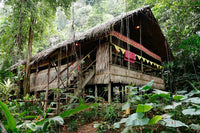
Photo by Moussa Idrissi via Pexels.
Long before any Westerner typed the words "Moroccan hashish" into a travel journal, farmers in the Rif Mountains were already growing cannabis the way their grandparents had taught them. The crop has been part of the Rif's agricultural fabric since the 15th century, worked into terraced plots between towns that most of the world still can't find on a map. What outsiders "discovered" in the 1970s was a tradition already five hundred years deep -- not a new scene, just a new audience.
That history makes what's happened in the last three years genuinely striking. Morocco went from being the planet's largest source of illicit hashish to building, almost overnight by policy standards, a formal and licensed cannabis economy. The 2021 passage of Law 13-21 set the legal machinery in motion, and the numbers since then have moved fast: legal cultivators grew from about 430 farmers to roughly 5,000, and production volume climbed nearly 14-fold. Yet even with that expansion, the illicit trade still dwarfs the legal one in pure economic terms -- a gap in price, not just scale, that tells you most of what you need to know about where this is headed.
Five Centuries in the Rif: How Kif Became Hashish

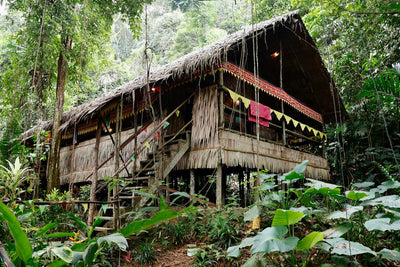
Photo by Ryutaro Tsukata via Pexels.
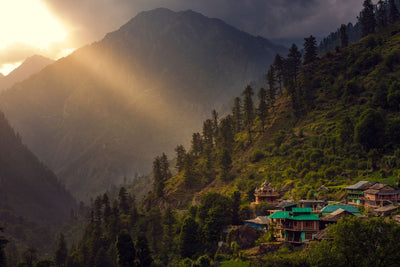
The story usually gets told starting in the hippie trail era, but that's only the last chapter. Cannabis arrived in the Rif Mountains in the 15th century, brought along trade routes by Arab merchants moving through North Africa, and it took root in a landscape that turned out to suit it well -- steep, sun-exposed slopes around towns like Ketama and Chefchaouen, with poor soil for most staple crops but good drainage and strong light for cannabis. For centuries what locals grew and consumed wasn't hashish at all. It was kif: finely chopped cannabis flower mixed with tobacco, smoked through a long, narrow pipe called a sebsi. Kif was a household custom, woven into daily and social life in Rif villages generations before anyone pressed resin into blocks for export.
Hashish production -- sieving the plant's resin glands into a compressible powder -- existed in the region too, but Morocco's international reputation for it is much younger than the plant itself. That reputation really formed in the early 1970s, when travelers on the overland route to Asia, the so-called hippie trail, routed through northern Morocco and stopped in towns like Chefchaouen and Ketama. They found cheap, potent hashish, bought it, smoked it, and talked about it when they got home. Demand followed, and so did Morocco's name.
None of this happened because of state planning. It happened because small farming families in the Rif passed down cultivation knowledge -- seed selection, timing, sieving technique -- the way other families pass down olive or argan know-how, with zero formal regulation involved. By the 2000s, that informal expertise had scaled into dominance: Morocco was widely considered the world's top hashish producer, and a 2010 estimate put the country's cannabis resin output at 760 tons. A 2012 study later ranked Afghanistan ahead of Morocco in resin production, but by then the Rif's reputation as hashish country was already permanent.
Law 13-21: Morocco Legalizes Cannabis, With Limits
Law 13-21, passed by Morocco's parliament in 2021, didn't legalize cannabis the way some might assume. Recreational use remains fully illegal under Moroccan law -- the statute opened the door specifically for medical, cosmetic and industrial applications, nothing broader. It's a narrow legalization built around commerce and regulated supply chains, not personal consumption.
To administer it, Morocco stood up a dedicated regulator: the National Agency for the Regulation of Cannabis-related Activities, or ANRAC, established on June 3, 2022 under the authority of Minister of Interior Abdelouafi Laftit, with Mohammed El Guerrouj appointed as Director General. Housing the agency under the Interior Ministry rather than, say, an agriculture or health ministry says something about how Rabat views this project -- as much a matter of security and control as of economic development.
Geographically, the law didn't open cultivation nationwide. It restricted legal growing to three provinces -- Al Hoceima, Chefchaouen and Taounate -- which happen to be the historic heartland of kif farming in the Rif. That's not a coincidence; it's the policy's central logic. Rather than invent a cannabis industry from zero somewhere convenient, the government built the legal framework around the exact communities that had been growing cannabis illicitly for generations, with the explicit goal of pulling existing farmers into a taxed, documented system instead of leaving them in the shadow economy.
The licensing structure reflects that ambition to cover the entire chain, not just the farm gate. ANRAC issues separate permits for cultivation, processing, marketing, export, seed import and transport. Every link in the supply chain needs its own paperwork, which gives the agency visibility -- and leverage -- at each stage from seed to shipment.
A Legal Industry Scaling Fast

The number of registered legal cannabis farmers in Morocco surged more than tenfold, from just 430 in 2023 to 5,000 in 2025, reflecting rapid growth in the country's legalized cannabis sector.
Three growing seasons into the program, the licensing numbers show a system scaling with real momentum. In a single recent year, ANRAC issued 4,147 new licenses, pushing the total count of active permits to 5,765 heading into the 2025 season. That's a lot of paperwork processed for an agency that didn't exist before mid-2022.
Break down that 5,765 figure and cultivation clearly dominates: 5,492 permits cover growing specifically, benefiting 5,318 registered farmers. The remaining 273 licenses are spread across processing, marketing, export, seed import and transport, held by 183 separate operators -- a much smaller, more specialized tier sitting above the farming base.
The farmer count itself tells the clearest story of how fast this moved. Legal participation went from roughly 430 farmers in 2023 to approximately 5,000 by 2025 -- better than a tenfold jump in two years. Production volume scaled even faster: legal output rose nearly 14-fold over the same period, reaching close to 4,200 tons.
None of that growth happened passively. It reflects a deliberate, well-resourced government push to formalize what had been, for decades, one of the largest illicit cannabis economies anywhere in the world. Getting thousands of farmers who'd spent their whole working lives outside any regulatory system to register, report, and operate under a state agency's oversight isn't a small administrative lift -- it requires trust-building, outreach, and presumably some tolerance for farmers who move slowly or partially into compliance. The scale of the numbers suggests Morocco has, at least for now, found a formula that gets a meaningful share of that population to opt in rather than stay underground.
Enforcement Tightens: License Revocations and the 2026 Harvest
Fast licensing growth has come paired with equally fast enforcement, and the fall of 2026 brought a reminder that ANRAC isn't just handing out permits -- it's also pulling them back. In October 2026, the agency revoked 1,490 licenses for noncompliance. Of those, nearly 1,300 belonged to growers, with the remaining roughly 190 spread across other parts of the licensed chain.
The operator-side revocations broke down with some specificity: 60 in seed imports, 45 in processing and manufacturing, 35 in marketing, 31 in exports, 12 in seed exports, and 7 in transport. That spread suggests compliance problems weren't concentrated in one weak link -- they showed up across the full licensing structure ANRAC built, from the people bringing in planting material to the ones shipping product out.
The revocations landed in the middle of an active harvest season. The 2026 harvest of Beldia, Morocco's local landrace variety, covered 1,100 hectares -- about 60% of the total area planted with Beldia that year. Taounate province led the pace, with 92% of its Beldia area harvested by the time these figures were reported. Around 1,800 farmers, organized through 154 cooperatives, took part in bringing in that Beldia crop -- a reminder that the cooperative model, not solo farming, is how much of this formal sector actually operates on the ground.
Alongside Beldia, harvesting of imported cannabis varieties began in October 2026 and was expected to continue through December. That's worth noting on its own: Morocco's legal industry isn't just preserving its traditional landrace genetics, it's actively diversifying into introduced strains, presumably chasing different cannabinoid profiles or yields for the industrial and medical markets it's trying to serve. Between the license purge and the varietal expansion, the 2026 season looks like the point where ANRAC started acting less like a licensing office and more like a regulator with teeth.
From Rif Fields to 15 Export Markets

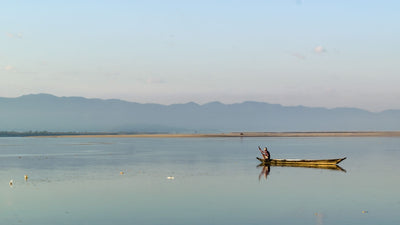
Photo by hunt-er via Pixabay.
Exports are where this program's ambitions become concrete. As of October 19, 2026, Morocco's legal cannabis resin was reaching 15 countries, including France, Switzerland, Portugal, Luxembourg, the Czech Republic, Australia and South Africa -- a list that spans Europe and stretches to the Southern Hemisphere, far beyond the traditional hashish-consuming markets that built Morocco's old reputation.
Rabat is also playing defense on branding. Morocco is pursuing trademark protection abroad specifically to safeguard its cannabis identity -- the idea being that Moroccan-origin cannabis resin should carry recognized provenance the way Champagne or Parmigiano-Reggiano does for other regions. That protection has already been confirmed in Luxembourg and Portugal, with active efforts underway in Germany, Spain and Belgium.
Domestically, the medical and industrial side has grown in step with the export push. By July 2026, 141 cannabis-based products were registered with AMMPS, Morocco's pharmaceutical and health products authority, and those products were being sold through more than 600 authorized points of sale nationwide. That's a real domestic market forming underneath the export story, not just a shipping operation.
Processing capacity is scaling to match. Five processing plants are currently operating, with combined capacity of 560 tons, and eleven more facilities are under construction -- a clear bet from investors and the government alike that export demand will keep climbing.
But the number that cuts through all of this growth is the price gap. Legal farmers are currently paid roughly 50 dirhams per kilogram of raw plant material. On the illicit market, that same kilogram fetches roughly 2,500 dirhams -- fifty times more. No amount of licensing infrastructure changes the basic math a Rif farmer does at harvest time when that gap exists.
Strip away the licensing statistics and export lists, and Morocco's cannabis program comes down to one uncomfortable number: 50 dirhams versus 2,500. That fifty-to-one price gap between the legal and illicit markets is the single biggest threat to the entire formalization project. Regulation can issue all the permits it wants, build processing plants, and sign trademark agreements with half of Europe, but none of that matters if a farmer can earn fifty times more money by selling into the shadow trade that's existed in the Rif for generations. A licensing system only replaces a black market when it can out-compete it economically, and right now, it very plainly can't.
What makes Morocco worth watching globally isn't just the price gap, though -- it's the shape of the experiment itself. This is a country taking a centuries-old illicit crop economy, one that built an international reputation over fifty years of hashish smuggling, and threading it into a licensed, taxed, exporting industrial sector, all while keeping recreational use fully criminalized at home. Few countries are attempting anything structurally similar: legal industrial and medical cannabis sitting right next to a fully illegal domestic consumption market, both drawing from the same farms and the same families.
If there's a signal worth tracking going forward, it's enforcement, not growth. ANRAC pulling back nearly 1,500 licenses in a single cycle -- after years of expanding the program as fast as it could -- suggests the agency understands that credibility, not just scale, is what will determine whether this system actually holds. A regulatory program that only ever grows its license count without ever revoking a bad actor isn't really regulating anything. Morocco just showed it's willing to do both. Whether that's enough to close a fifty-to-one price gap is a separate question entirely, and the next few harvest seasons should start answering it.
Sources
- Moroccan Researcher: Cannabis Legalization Will Be Judged in the Rif, Not in Rabat
- National Agency for the Regulation of Cannabis-related Activities (Morocco)
- Inside Morocco’s Cannabis Culture and Legal Industry Shift: From Kif to Clinics
- Morocco's exports of legal cannabis have expanded to 15 countries
- ANRAC Director: Over 140 Therapeutic Cannabis Products Produced in Morocco