Namibia's Cannabis Reform Stalls in a Wider Healing-Law Gridlock
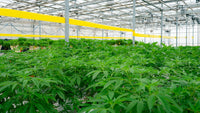
Photo by BOVISTAS via Pexels.
Somewhere in the last year, a claim started making the rounds that Ovambo traditional healer networks in northern Namibia have been quietly organizing against a pending hemp bill, protecting their turf as herbalists against a wave of legal cannabis. It's a tidy story -- old medicine versus new law, indigenous knowledge versus commercial hemp. It's also not backed by anything in Namibia's legislative record. There is no hemp bill currently before Namibia's Parliament, and there is no documented instance of Ovambo healer networks organizing against one, quietly or otherwise.
What is real, and on the books, is considerably less mythologized. Namibia still criminalizes cannabis under a law passed in 1971, with penalties that can run 20 to 40 years in prison. Separately, and with no connection to cannabis at all, a bill meant to formally register and regulate traditional health practitioners has been sitting in Parliament since 2014, untouched for twelve years. Two different pieces of unfinished legislative business, in two different policy lanes, both frozen by the same kind of institutional inertia. That's the actual story here -- not a culture clash, but a government that has let two separate reforms gather dust for over a decade. This piece sorts out what's documented from what's assumed, and looks at why Namibia keeps producing this particular flavor of legislative paralysis.
Setting the Record Straight on the 'Hemp Bill'
Start with the plain facts, because they get lost fast once a catchy narrative takes hold. As of research conducted in 2026, no hemp-specific bill has been tabled before Namibia's National Assembly. Cannabis in Namibia is governed by the Abuse of Dependence-Producing Substances and Rehabilitation Centres Act of 1971, a piece of pre-independence legislation that classifies cannabis as a Schedule 3 substance alongside other tightly controlled drugs. Layered on top of that is the Combatting of the Abuse of Drugs Bill of 2006, which sets out some of the harshest penalties in southern Africa: 20 to 40 years imprisonment, or fines ranging from NAD 300,000 to NAD 500,000, applied even to someone caught with cannabis for the first time. There's no tiered system that distinguishes a first-time user from a repeat trafficker in terms of statutory exposure.
Who's Actually Pushing for Reform

Photo by RDNE Stock project via Pexels.
The people actually pushing on Namibia's cannabis laws aren't traditional healers -- they're a small, identifiable set of advocacy groups who've been at this for years with little to show for it. The Cannabis and Hemp Association of Namibia, Ganja Users of Namibia, and the Rastafari United Front have carried most of the public-facing reform effort, framing their case around medicinal use and the economic upside of a regulated hemp industry rather than around recreational access. In April 2020, GUN and RUF activists formally submitted a petition to the Speaker of Parliament asking lawmakers to revisit the country's cannabis laws. It went nowhere. No formal government response followed, and the groups had to resubmit the same petition in July 2020, essentially asking Parliament to acknowledge they'd already asked once.
The Real Healer Story: A Bill Gathering Dust Since 2014

Photo by julian mora via Unsplash.
If there's a genuine story about stalled reform and indigenous practice in Namibia, it's not about hemp at all -- it's about the Traditional Health Practitioners Bill, first tabled in 2014, which still hasn't come to a vote twelve years later. Namibia's Ministry of Health and Social Services has never issued a public explanation for the delay, and Parliament's Portfolio Committee on Health hasn't scheduled the bill for debate in any recent session that's been publicly reported. The bill would formally register practitioners, something roughly analogous to what South Africa attempted with its own Traditional Health Practitioners Act, giving healers legal standing and creating a mechanism for the health ministry to recognize them as part of the broader care system rather than treating them as an informal, unregulated sector.
Why Healers Keep the State at Arm's Length

Photo by Lisa Hobbs via Unsplash.
What makes healers hard to legislate for isn't unique to Namibia, and it isn't really about cannabis at all -- it's a pattern that shows up across southern Africa wherever governments try to formalize indigenous medicine. Traditional healing in Ovamboland, as in much of the region, is transmitted through family lineage and long apprenticeship under an established healer, not through a curriculum a ministry could accredit or a certificate a registrar could stamp. Asking a healer trained that way to submit to state licensing isn't just bureaucratically awkward, it can feel like a category error -- as though the state is trying to file paperwork for a relationship rather than a credential.
Two Bills, One Pattern

Photo by proudlyswazi via Unsplash.
Namibia's position in the region has gotten harder to ignore. South Africa decriminalized private cannabis cultivation and use back in 2018 following a Constitutional Court ruling, and Zimbabwe has issued licenses for medical cannabis cultivation aimed squarely at export markets. Namibia, sitting between both, has kept in place some of the harshest cannabis penalties on the continent -- 20 to 40 years for an offense that carries a fine and a warning in South Africa. That contrast gets sharper when you set it next to the government's total non-movement on regulating traditional healing, a practice that functions as primary healthcare for a large share of Namibia's rural population, particularly in the north.
The version of this story where Ovambo healer networks are quietly strangling a hemp bill in its crib is a good story. It's just not the one the record supports. There is no hemp bill to block, and there is no documented healer opposition campaign against cannabis reform. What's actually there is a Namibian government that has let two entirely separate pieces of legislation -- one on drug policy, one on indigenous medicine -- sit without a floor vote for well over a decade, for reasons that have far more to do with bureaucratic drift than any organized resistance from any community.
If Namibia wants a piece of the regional hemp export market that Zimbabwe and increasingly South Africa are already building out, or if it wants to give traditional healers the legal recognition that countries like South Africa have already extended to theirs, the missing piece isn't public consensus or healer buy-in. It's a Portfolio Committee willing to put either bill on a calendar. Until that happens, the honest thing to watch isn't rumor circulating about who's supposedly blocking reform -- it's Parliament's own bill tracker, and whether either piece of legislation finally gets a scheduled debate.
Sources
- MPs oppose bill on traditional healers - The Namibian
- Traditional Healers Still Waiting on Their Bill Since 2014 Bil - The Villager Newspaper
- Public health and traditional medicine in Namibia 1 (24) Maylin Meincke
- Traditional healing remains relevant - New Era
- Muti or medicine debate continues - The Namibian