Nigeria's Cannabis Enforcement Under the NDLEA
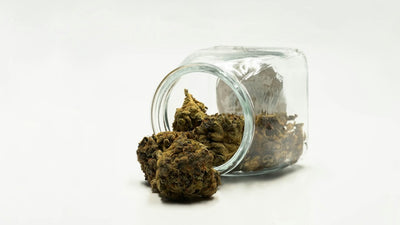
Photo by Studio32 via Pixabay.
The plantation at Eko Camp, in Ilushi, Esan South East Local Government Area of Edo State, covered 1.646 hectares. NDLEA operatives, backed by soldiers, destroyed it, and the agency put the estimated yield at 4,115.53 kg of cannabis.
That raid is typical of how Nigeria's drug agency reports its work: a location, a hectare count, a weight, an arrest. This article follows the same wire-service logic. Every figure below comes from press reports of NDLEA statements, not from audited data, and should be read as an agency claim.
Two enforcement streams run through those statements. One targets home-grown cannabis from forest farms and the trucks and buses that move it. The other targets imported high-potency and synthetic products, sold as Loud, arriving through Lagos ports and airports.
Key takeaways
- NDLEA chairman Buba Marwa says cannabis made up 75% of the 16 million kg of illicit substances seized nationwide over six years.
- Enforcement runs on two tracks: raids on domestic farms in Edo and Ondo, and interdiction of imported Loud at Lagos ports.
- These figures are agency claims from press reports; statutory penalties and any reform bills should be verified independently.
The Agency and Its Stated Numbers
The National Drug Law Enforcement Agency is led by Chairman/CEO Brig. Gen. (retd) Buba Marwa. Femi Babafemi, the Director of Media and Advocacy, issues the routine seizure statements that feed most Nigerian news coverage of drug enforcement.
The headline number comes from a report dated Nov 5, 2026. Speaking in Edo State, Marwa said cannabis made up 75% of the 16 million kg of assorted illicit substances the agency seized nationwide over the last six years. He linked those volumes to domestic cultivation.
Edo supplied its own figures. Marwa cited more than 30 tonnes of illicit substances seized in the state and 1,200 suspects arrested. The Oba of Benin, Oba Ewuare II, praised the agency at the same event.
A caveat applies to all of this. The numbers come from press reports of agency statements. I did not review independent audits or official NDLEA publications, so none of the totals can be checked against a primary source here.
Marwa also says the agency does not only arrest. He described counselling, treatment and rehabilitation as part of the NDLEA's work alongside enforcement. The reports reviewed offer no data on how many people use those services, so the scale of that side of the mandate is unclear.
Farm Raids in Edo and Ondo
Marwa tied the high cannabis tonnage to domestic cultivation and named Edo State as one of the growing areas. The raids support the claim, at least in the agency's telling. Forest camps in Ilushi appear repeatedly.
At Eko Camp, besides the 1.646-hectare plantation, operatives arrested Christiana Uboi, 50, with 301 kg of processed cannabis. A further 176 kg was recovered. In early February 2026, a raid at Ebora Camp, also in Ilushi, destroyed over 4,063 kg of skunk on 1.6 hectares.
Ondo State is the second front in these reports. On Oct 25, 2026, operatives raided farms in Ijare forest, arrested four suspects and recovered 16 bags of processed cannabis weighing 180 kg.
Soldiers recur in these accounts. Forest camps are remote and hard to reach, and the reports describe army support for the NDLEA on the Eko Camp raid and others.
Marwa has also asked for help beyond force. He appealed to traditional rulers to assist in tackling drug abuse and illicit cultivation, which makes sense when the crop grows on land those rulers know far better than any federal agency does. The Oba of Benin's public praise suggests at least some of that cooperation exists, though the reports do not say what form it takes.
Highway and Interstate Trafficking
Once harvested, the crop has to travel. Many of the agency's larger seizures happen on roads, not in forests.
On Oct 25, 2026, operatives intercepted 537 kg of skunk in a Volkswagen LT 28 bus on Kudirat Abiola Way, Ikeja, Lagos. The load was moving from the Island to the Mainland. Other recent cases from the reports:
- Sokoto: a 68-year-old man was arrested with 236.6 kg of skunk.
- Kano: a raid at Tashan Banke arrested seven suspects and recovered 178.85 kg of cannabis, plus diazepam, tramadol, Exol-5 and pregabalin.
- Oyo: 309.5 kg of Ghanaian Loud was seized at Idere road, Igboora, in a follow-up operation.
- Delta: Innocent Ekpe, 49, was arrested in Asaba on Sept 16 with 292.48 kg of cannabis. The agency alleged he was impersonating a police officer.
The Kano raid shows a pattern in how the agency frames its caseload. Cannabis often turns up next to pharmaceutical opioids and sedatives, so the NDLEA tends to present cases as drug-market busts, not as plant-only offences.
The Ekpe allegation is only that, an allegation from the agency. The reports reviewed do not say how the case has progressed.
Ports, Airports and the Rise of Loud

Photo by Md Sihabul Islam via Pexels.
Imported product is the newer stream. NDLEA statements use the term Loud for high-potency or synthetic cannabis products, with reported origins including Canada, Thailand and Ghana.
In early February 2026, the agency seized 1,183 kg of Canadian Loud in 55 jumbo bags at Tincan Seaport, Lagos. Total seizures that week came to nearly 10 tonnes.
Airports feature too. At a Nov 5, 2026 briefing at the Office of the National Security Adviser in Abuja, Francis Okogun, Assistant Director, Media and Advocacy, described the arrest of three South African nationals. One was a woman arrested at Port Harcourt airport in October 2026 with 32.74 kg of synthetic cannabis, called Thai Loud. The same briefing covered 5.75 kg of heroin found in another woman's luggage.
Investigations into suspected international networks were reported as ongoing. No outcome has been published in the material reviewed.
One further item needs a flag. An aggregator summary reports 1.49 tonnes of Loud seized at the Apapa and Lekki ports, valued at over ₦4.4 billion. It is labelled disputed on the page, and I could not verify it. It is not treated as fact here.
Reading the Seizure Data

The February Tincan Loud seizure dwarfs all others at 1,183 kg, more than double the next largest haul (Ikeja skunk at 537 kg) and over six times the smallest reported seizure of 178.85 kg in Kano.
Naira values make seizures sound precise. A Sept 21, 2026 Pulse report cited over 1.3 million tramadol pills and 6,000 kg of cannabis worth ₦3.4 billion, including one Lagos seizure valued at ₦1.811 billion.
Those valuations are agency estimates. They swing with assumptions about street price, and the reports do not explain the method behind them.
Tonnage has its own distortion. Cannabis dominates the totals because it is bulky and grown inside the country. A few kilograms of heroin or a suitcase of synthetic product weigh almost nothing against a bus full of skunk, yet the seizure weight says little about relative harm.
Treat unusual items with care. One aggregator page reports the arrest of a 101-year-old woman in Ogun State for alleged cannabis selling. It sits on a site that also carries disputed claims, and I could not confirm it. It should not be repeated as fact.
What Readers Should Verify
Some gaps in this reporting matter for anyone with a real stake in the law. I could not confirm the current statutory penalties under the NDLEA Act, so I describe only the general framework: Nigerian federal law treats cannabis as a controlled drug and the NDLEA enforces it. Laws change, and penalties for cultivation, possession and trafficking should be checked against the current text.
I also could not confirm any pending medical-cannabis or legalization bills in the National Assembly, and I do not assert that any exist. Anyone relying on such a measure needs to check the Assembly's own records.
Official 2026 year-to-date arrest and conviction totals were not found either. Without them, conviction rates remain unknown. Arrests are not convictions, and the reports reviewed do not track cases through court.
The practical advice is simple:
- Treat every agency figure as a claim until a primary source supports it.
- Check ndlea.gov.ng for official statements and publications.
- Consult court records or a Nigerian lawyer for anything affecting a particular situation.
Seizure tonnage proves the agency is active. It does not show whether supply is shrinking, because that would take conviction data and independent audits that the public record reviewed here does not offer. A record 10-tonne week and a quieter one look alike if nobody counts what reaches the market.
The pairing of forest raids and port interdiction points to two different fights. Destroying a hectare of plants in Ilushi depends on soldiers, local rulers and long treks through bush. Stopping a container of Loud depends on intelligence, customs scrutiny and cross-border cooperation. The NDLEA is running both at once, and its published numbers do not yet show which one is working.
Sources
- Nigeria: NDLEA Intercepts Large Consignments of Illicit Drugs in 7 States - allAfrica.com
- NDLEA seizes 30 tonnes of illicit drugs, arrests 1,200 suspects in Edo - Businessday NG
- NDLEA arrests two cocaine couriers with 200 wraps, woman with 266 rounds of AK-47 ammunition in Abuja - Vanguard News
- Fake police, mechanic arrested as NDLEA seizes 1.3m tramadol pills, 6,000kg cannabis worth ₦ 3.4bn
- Nigeria Arrests S/African Woman Using 3-Year-Old Son To Smuggle Heroin
- NDLEA intercepts large consignments of illicit drugs in 7 states - Vanguard News